House Training a Dachshund
House Training a Dachshund
House training a dachshund isn’t always easy, here’s how we finally cracked it at home with Harvey our dachshund, plus mistakes I’d never make again.
James
Posted on November 5, 2025.
Updated on July 22, 2026.
Table of Contents
- 1.Key Takeaways on House Training A Dachshund
- 2.Understanding the Dachshund’s Potty Training Challenges
- 3.Setting a Schedule
- 4.Reward-Based Reinforcement
- •Choosing the Right Reward
- •The Timing Factor
- •Pairing Rewards With Routine
- •Catching Them in the Act
- •Using Rewards to Build Independence
- •Adapting Rewards for Weather and Seasons
- •When to Fade Out Food Rewards
- •Combining Rewards With Other Training Goals
- 5.Managing Accidents
- 6.Preventing Accidents Before They Happen
- -More from This Series — Dachshund Obedience & Training
- -Disclaimer
Share

The first night Harvey came home, Caitlin my wife to be at the time both thought we had prepared for everything — bed set up, toys ready, treats stocked for good behaviour. What we hadn’t factored in was the 2 a.m. surprise on the living room rug. That was my welcome to the reality of house training a dachshund. It’s a stage every owner and partners involved goes through, and for this breed, it can test your patience more than almost any other.
Dachshunds are famously clever, but that intelligence comes with a streak of independence. They don’t see the point in rules unless those rules work in their favour, which makes potty training dachshunds a unique challenge. Add in their small bladders, especially as puppies, and you’ve got a situation where timing, consistency, and understanding their body language matter more than anything else.
According to the American Kennel Club, the key to housebreaking a dachshund — or any dog — is supervision and routine. But with a breed as quick to learn bad habits as they are good ones, the approach has to be tailored. In this guide, I’ll walk through tried-and-tested dachshund toilet training tips, from crate training to managing overnight accidents, and explain why some common “quick fixes” can actually slow your progress.
Key Takeaways on House Training A Dachshund
Fact | Why It Matters |
|---|---|
Dachshunds have small bladders, especially as puppies. | They physically need more frequent toilet breaks than larger breeds. |
Consistent schedules speed up house training. | Regular meal times and potty breaks help your dachshund learn faster. |
Crate training can be an effective tool. | It uses a dog’s natural instinct to keep their sleeping space clean. |
Accidents will happen, even with progress. | Patience prevents setbacks and builds trust. |
Reward-based reinforcement works best. | Positive associations make the behaviour stick. |
Supervision is key during the learning phase. | Prevents bad habits from forming when you can’t correct them immediately. |
Outdoor access should be quick and easy. | Reduces the chance of an accident before reaching the right spot. |
Understanding the Dachshund’s Potty Training Challenges
If you’ve ever spoken to a dachshund owner about house training, you’ve probably heard the same knowing laugh before they answer. This isn’t because it’s impossible — far from it — but because dachshunds have a reputation for taking their time when it comes to mastering bathroom habits.
There are a few reasons for this. First, dachshunds are a small breed with proportionally small bladders. This means they physically can’t hold it as long as larger dogs, especially in puppyhood. Even adult dachshunds might need more frequent breaks than you expect, particularly after meals, naps, or bursts of play.
Second, dachshunds were bred to work independently. This can translate into a streak of self-determination when it comes to toilet training — if they don’t see the point in going outside right now, they may simply find a corner indoors that suits them. According to the American Kennel Club, small breeds in general often require more patience during house training, and dachshunds are no exception.
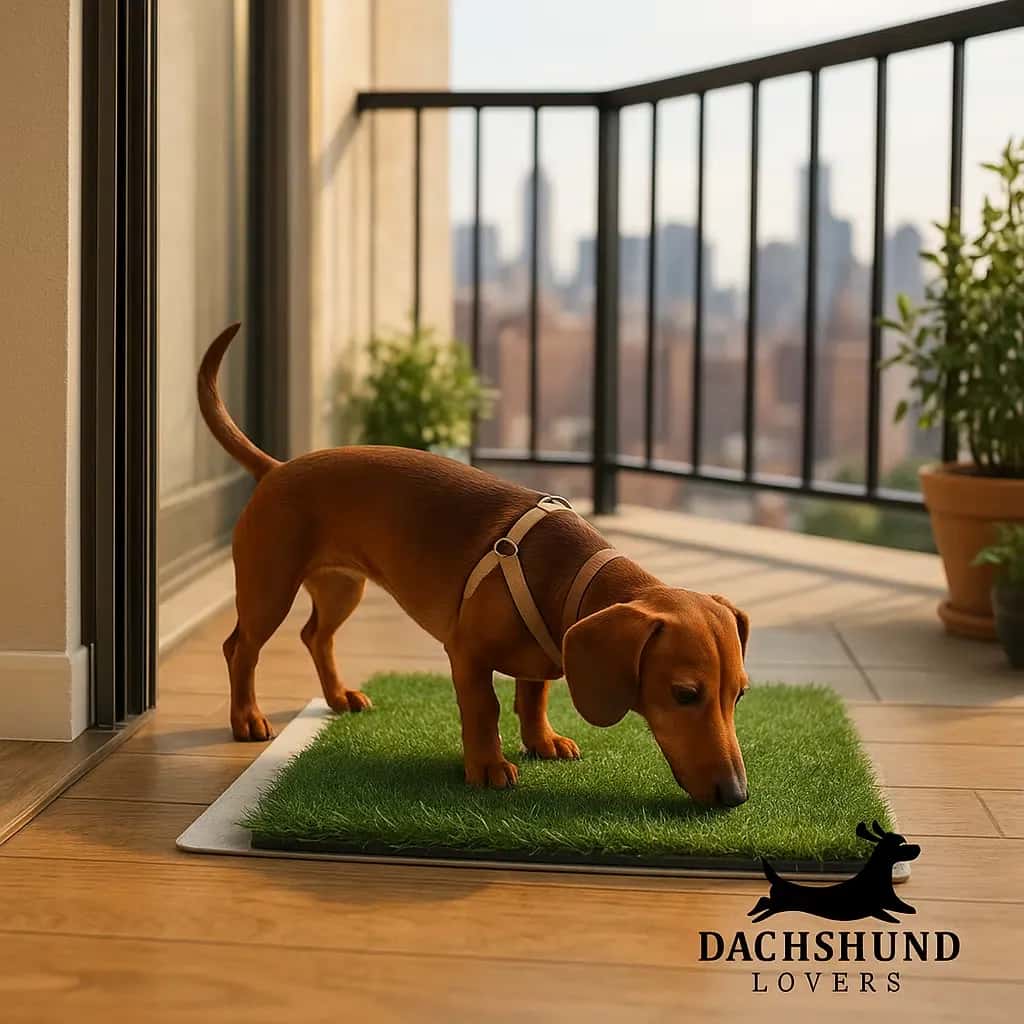
Environmental factors also play a role. On rainy or cold days, many dachshunds seem to decide the great outdoors isn’t worth it. This is where owners need to be proactive — providing quick access to a sheltered outdoor area, or even using an indoor potty pad during extreme weather, can prevent setbacks. We literally have to force and carry Harvey to make sure he does his business.
If you’re just starting your training journey, you might also want to read our guide on Dachshund Training, which covers the breed’s unique temperament and how it affects learning new behaviours. Understanding the mindset behind your dachshund’s actions is often the key to long-term success.
Setting a Schedule
When it comes to house training a dachshund, consistency is your best ally. Dogs thrive on routine, and dachshunds — with their sharp memory and strong sense of habit — respond especially well to predictable timing. A good schedule not only reduces accidents but also helps your dachshund understand exactly what’s expected of them.
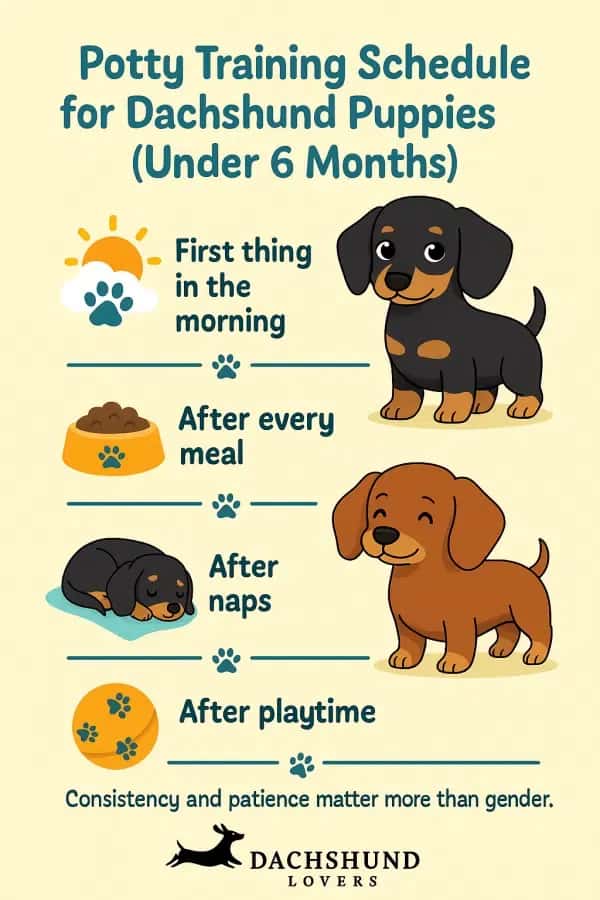
Start with frequent trips outside, especially in the early days. For puppies under six months, aim for bathroom breaks:
- First thing in the morning
- After every meal
- After naps
- After playtime
- Just before bed
That can mean going out every 2–3 hours during the day. Even adult dachshunds benefit from a consistent schedule, particularly if they’re newly adopted or adjusting to a new environment.
The Humane Society of the United States emphasises that frequent, predictable opportunities to go outside set dogs up for success and minimise the risk of accidents indoors (source). It’s not about waiting for them to “ask” — it’s about anticipating their needs before they have to.
It also helps to pair each outing with a cue word or phrase, such as “go potty” or “outside.” Over time, your dachshund will begin to associate that phrase with the action you want.
If you’re struggling with consistency because of work or other commitments, consider using a trusted dog walker or neighbour to maintain the routine. The more consistent the schedule, the faster your dachshund will connect the dots.
For further tips on reinforcing bathroom habits while maintaining overall behaviour boundaries, you can explore our guide on Reactive Dachshund Training, which covers how to keep your dog’s focus in different environments — a skill that can also be useful for outdoor potty trips.
Reward-Based Reinforcement
When it comes to house training a dachshund, the golden rule is this: what gets rewarded gets repeated. That might sound simple, but in practice it’s about perfect timing, consistency, and an understanding of what actually motivates your dog.
With Harvey, I learned early on that a generic “good boy” wasn’t enough. He wanted the jackpot reward — a tiny cube of cooked chicken. The moment I switched from dry treats to something he considered irresistible, his interest in doing his business outside increased dramatically.
The American Kennel Club calls this “marking the behaviour,” meaning you must clearly and immediately show your dachshund which behaviour is earning the reward (source). For house training, that means rewarding within seconds of them finishing outside. If you wait until you’re back inside to hand over the treat, your dachshund might think they’re being rewarded for walking through the door — not for toileting in the right place.
Choosing the Right Reward
Not all rewards are created equal. A dry biscuit might be fine for teaching “sit” in the lounge room, but house training often calls for something your dachshund values above almost everything else. Think:
- Small pieces of cooked chicken or turkey
- Cheese (in moderation)
- Freeze-dried liver treats
- A quick game with their favourite toy
The key is to reserve this reward for house training only. If they get it all the time, it loses its impact.
Some dachshunds, especially those with a lower food drive, respond better to play or praise. In those cases, have a favourite tug toy ready to bring out only after they toilet in the right spot, or make a big fuss with pats and excited, high-pitched praise.
The Timing Factor
Timing is everything. If you miss the moment, the learning connection weakens. I like to carry a small pouch of rewards in my pocket whenever I’m actively house training, even if we’re just going into the garden.
Here’s the step-by-step:
- Take your dachshund to the designated toileting area.
- Wait patiently — no rushing or tugging on the lead.
- The second they finish, say your chosen cue word (“Good outside!” or “Well done!”) and hand over the reward.
- Follow with praise or a quick play if that’s their style.
The verbal cue is important because it helps them associate the action with the praise, even when you eventually fade out the food reward.
Pairing Rewards With Routine
Dachshunds thrive on routine, and house training is no different. Take them outside at predictable times — after waking, after meals, after play sessions, and before bed. Each successful trip should end in the same reward sequence.
Over time, this predictable routine helps create a strong mental link between “going outside” and “getting something wonderful.”
If you’ve already read our main Dachshund Training guide, you’ll know this concept mirrors the way we teach loose-leash walking or a reliable “come when called” — repetition, reward, and timing work together.
Catching Them in the Act
One of the hardest parts of house training is dealing with accidents. If you catch your dachshund mid-accident inside, the goal isn’t to frighten them but to redirect them. A gentle clap or “Outside!” can interrupt the behaviour. Then calmly lead them outside to finish. If they do, reward as usual.
If you don’t catch them in the act, resist the urge to scold. Dogs don’t connect delayed punishment with past actions — they live in the moment. Clean the spot with an enzymatic cleaner to remove the scent, which prevents them from returning to the same place.
The RSPCA Australia strongly advises against punishment-based approaches, noting that they can damage trust and make toilet training harder in the long run (source).
Using Rewards to Build Independence
One overlooked benefit of reward-based house training is how it can help your dachshund feel more confident when toileting alone. Many owners accidentally create “toilet on command only when you’re watching” dogs because they always hover.
To avoid this, start rewarding from a short distance once your dachshund is confident in the routine. For example, you might stand by the door and toss the treat or toy to them after they finish. This builds independence and prepares them for times when someone can’t be outside with them.
Adapting Rewards for Weather and Seasons
If you live somewhere with cold, wet winters — and if you’ve ever seen a dachshund in the rain, you’ll know they’re not fans — rewards can be even more important. Harvey hated going out in the rain, so I’d double the reward value: a high-value treat followed by a few minutes wrapped in a warm towel inside.
In summer, a quick game in the garden after toileting was enough to keep him motivated. Adjusting your rewards seasonally keeps your dachshund engaged no matter the conditions.
When to Fade Out Food Rewards
You don’t have to give treats forever, but you do need to maintain praise or some form of positive feedback. Once your dachshund is reliably going outside, start giving treats intermittently — maybe every second or third success — while always giving verbal praise.
Over time, your dachshund learns that toileting outside is simply part of the daily routine, but the possibility of a treat keeps them hopeful and engaged.
Combining Rewards With Other Training Goals
House training isn’t an isolated skill. You can use this time to reinforce other commands. For example:
- Ask for a “sit” before opening the door to go outside.
- Reward them for waiting calmly at the threshold.
- Use a release word (“OK!”) before allowing them to roam the garden.
This layered training approach means you’re not just teaching where to toilet — you’re building a more responsive and well-mannered dog.
Managing Accidents
No matter how well you plan your house training routine, accidents will happen — especially in the first few weeks. The goal is not to eliminate every slip-up instantly, but to handle them in a way that teaches your dachshund what to do, without creating fear or confusion.
When Harvey was a puppy, there was a week where it felt like every time I turned my back, I was discovering a little “training reminder” in the hallway. What I learned quickly was that my reaction mattered more than the accident itself. If I responded with frustration, Harvey became wary — not of doing the wrong thing, but of me catching him. If I responded with calm consistency, the learning stuck.
Why Punishment Backfires
According to the RSPCA Australia’s pet behaviour guidelines, punishment after an accident doesn’t work because dogs don’t make the connection between your reaction and what they did minutes earlier. They learn in the moment — so the only effective corrections are those given during or immediately before the unwanted behaviour. Even then, the correction should be gentle interruption, not intimidation.
Raising your voice or “rubbing their nose in it” only creates anxiety, which can make accidents more frequent. A stressed dachshund may even begin hiding when they need to relieve themselves, making the problem harder to solve.
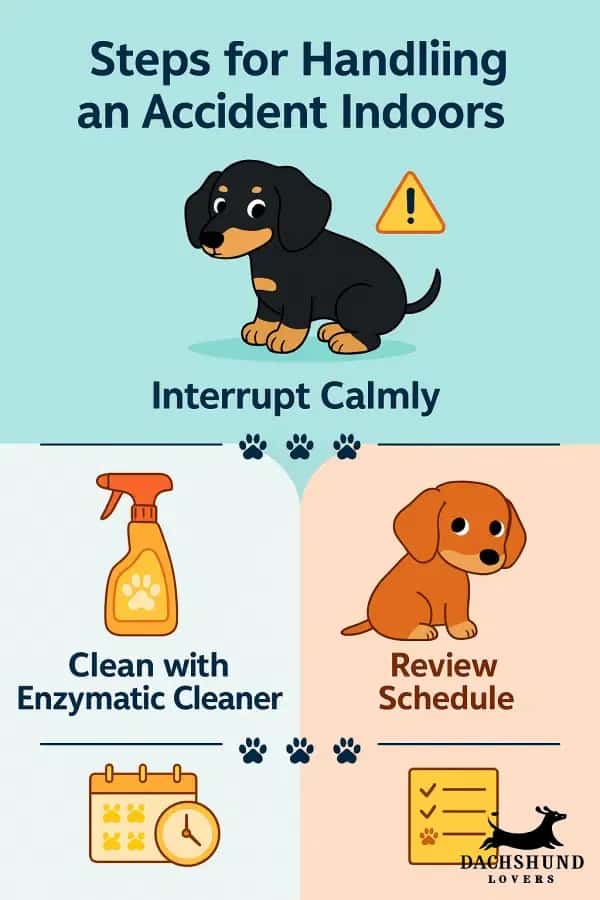
Steps for Handling an Accident Indoors
- Interrupt if you catch them in the act
If you see your dachshund starting to squat, calmly say “outside” in a neutral tone, then guide them to their designated spot. Reward them immediately if they finish there.
- Clean thoroughly with an enzymatic cleaner
Dachshunds have strong scent memories. If they smell traces of urine in a spot, they’re likely to use it again. Use an enzymatic cleaner rather than standard disinfectants to fully break down odours.
- Review your schedule
An accident often means the time between toilet breaks was too long, or a big drink of water went unaccounted for. Puppies may need breaks every hour or two, while adults might manage three to four hours.
- Note the patterns
Keep a simple log for a week — when they eat, drink, play, and relieve themselves. Patterns emerge quickly, and you can use them to pre-empt accidents.
When Accidents Suggest a Bigger Issue
If your dachshund suddenly starts having accidents after being reliably trained, it’s worth talking to your vet. Urinary tract infections, bladder stones, or other health problems can cause a well-trained dog to lose control.
University of Sydney Veterinary Teaching Hospital advises ruling out medical causes before assuming the issue is purely behavioural.
Linking to Related Training Guides
If your dachshund is struggling with consistency even after you’ve nailed the basics, it might be worth exploring our guide on Reactive Dachshund Training, as overexcitement and anxiety can sometimes lead to “accident setbacks.”
Preventing Accidents Before They Happen
The easiest accident to clean is the one that never happened — and when it comes to dachshund house training, prevention is all about timing, supervision, and routine.
When Harvey was a puppy, I learned quickly that “hoping for the best” was not a plan. If I gave him free run of the house without supervision, it was like leaving a toddler in a room full of crayons and white walls — sooner or later, I was going to regret it.
Build a Predictable Schedule
Dogs thrive on routine, and dachshunds are no exception. If they know when to expect meals, play, and toilet breaks, their bodies start to sync with the rhythm. Puppies in particular have very small bladders — often needing to go:
- First thing in the morning
- After every meal
- After play sessions
- Before bed
A consistent schedule also helps you spot irregularities that might signal a health issue.
Control the Space
Using a crate, playpen, or a puppy-safe room prevents your dachshund from sneaking off to relieve themselves unnoticed. The crate should be large enough for them to stand, turn around, and lie down comfortably — but not so large that they can use one corner as a toilet.
Crate training not only prevents accidents but also creates a safe retreat. You can explore more about crate setup and comfort in our full guide, Dachshund Training.
Supervise Closely
When your dachshund is out of their crate or playpen, keep them within sight. If you can’t actively watch them, use a lead indoors to keep them nearby. This way, you’ll notice the early signs they need to go — sniffing, circling, or heading towards the same spot.
Use the Same Outdoor Spot
Dogs often choose a toilet location based on scent, so taking your dachshund to the same patch of grass each time can speed up the training process. The familiar smell signals “this is where I go,” making it easier for them to understand the expectation.
Leverage Positive Reinforcement
When your dachshund gets it right, make sure they know it. Praise, treats, or a short play session immediately after they finish reinforces the behaviour. Timing is critical — the reward needs to come within seconds of the action, not after you’ve walked back inside.
Handle Transitions with Extra Care
Big changes — like moving house, welcoming a new pet, or even changing your daily routine — can throw a trained dachshund off track. In these moments, go back to basics. Increase supervision, refresh crate training, and offer more frequent toilet breaks.
Watch for Seasonal Setbacks
Wet weather, cold mornings, or scorching afternoons can make even a well-trained dachshund hesitant to go outside. In these cases, patience is key. Try sheltered outdoor spots, artificial grass pads, or quickly drying them off after rain to make the process more appealing.
The more proactive you are in preventing accidents, the faster your dachshund will develop reliable habits. And once those habits are in place, you can relax the supervision — though with dachshunds, I’ve learned it’s always wise to keep an eye out for that “sniff and wander” behaviour.
FAQs — House Training a Dachshund
More from This Series — Dachshund Obedience & Training
Explore more training insights in our dedicated series:
- Dachshund Training — A complete guide to understanding your dachshund’s unique mindset and building effective training routines.
- Reactive Dachshund Training — Practical methods for managing barking, lunging, and overexcitement on walks.
- How to Train a Dachshund to Lay Down — Step-by-step techniques for teaching calm, controlled behaviours.
Authored by
James
James is the founder of Dachshund Lovers and the proud human of Harvey, a mini dapple with a big personality. He writes to empower and connect the dachshund community, blending founder insights with honest, experience-based stories about life with this incredible and special breed. James brings candid, experience-backed opinions to the community and always focused on fewer, better products and ideas that genuinely improve life for dachshunds and their people.
Read moreJames is the founder of Dachshund Lovers and the proud human of Harvey, a mini dapple with a big personality. He writes to empower and connect the dachshund community, blending founder insights with honest, experience-based stories about life with this incredible and special breed. James brings candid, experience-backed opinions to the community and always focused on fewer, better products and ideas that genuinely improve life for dachshunds and their people.
Read moreDisclaimer
This content is for informational purposes only and should not be considered veterinary advice. Always consult with a licensed veterinarian regarding your dog’s health and wellbeing.
There are no comments yet
Leave a comment