Dachshund Teeth
Dachshund Teeth
Teething toys, gum health, plaque control, it’s all here. Learn how to support your dachshund’s dental health from day one.
James
Posted on November 3, 2025.
Updated on July 18, 2026.
Table of Contents
- 1.Key Takeaways on Dachshund Teeth
- 2.Dental Anatomy & Why Dachshunds Are Prone to Problems
- •Common Dental Issues in Dachshunds
- •Why Owners Miss Early Signs
- 3.Treatment & Prevention Strategies for Dachshund Dental Health
- •Brushing Routines
- •Dental Chews & Toys
- •Professional Dental Cleaning
- •Diet & Nutrition
- •At-Home Inspections
- •At-Home Inspections
- •Consistency Is Key
- •Summary Table: Dachshund Dental Care
- 4.Dachshund Dental Health Across Life Stages
- -More from This Series
Share

Harvey was never a chewer of furniture, but give him a crunchy treat and you’d hear that satisfying snap echo through the house. It was only when I leaned in one day and caught a whiff of his breath that I realised how much work dachshund teeth really need. Like many owners, we’d been brushing less than we should have and it showed.
Dental health is often overlooked in dachshunds, but it’s critical. According to VCA Animal Hospitals, more than 80% of dogs develop dental disease by age three, and small breeds like dachshunds are at even higher risk. Plaque, tartar, gum disease, and even tooth loss aren’t just mouth problems, they can lead to pain, infections, and systemic health issues.
With their compact jaws and tendency to develop tartar quickly, dachshunds need a proactive approach to oral care. It’s not just about fresh breath, it’s about adding years of comfort and health to their lives.
Key Takeaways on Dachshund Teeth
Question | Quick Answer | Why It Matters for Dachshunds |
|---|---|---|
How many teeth do dachshunds have? | Puppies: 28; Adults: 42 | Dental crowding in small jaws makes plaque buildup more likely |
What dental problems are most common? | Plaque, tartar, gingivitis, periodontal disease, tooth loss | Pain, infection, and eating difficulties are common risks |
How can I tell if my dachshund has dental issues? | Bad breath, red gums, loose teeth, difficulty chewing | Early signs prevent advanced disease |
How often should I brush my dachshund’s teeth? | Ideally daily, minimum 3 times per week | Consistent brushing reduces tartar and gum disease |
What other care helps dental health? | Dental chews, vet cleanings, water additives | Prevents long-term complications and costly surgeries |
Are dachshunds more prone to dental problems than other breeds? | Yes — their small mouths and crowded teeth increase risk | Breed-specific care reduces lifelong dental disease |
Dental Anatomy & Why Dachshunds Are Prone to Problems
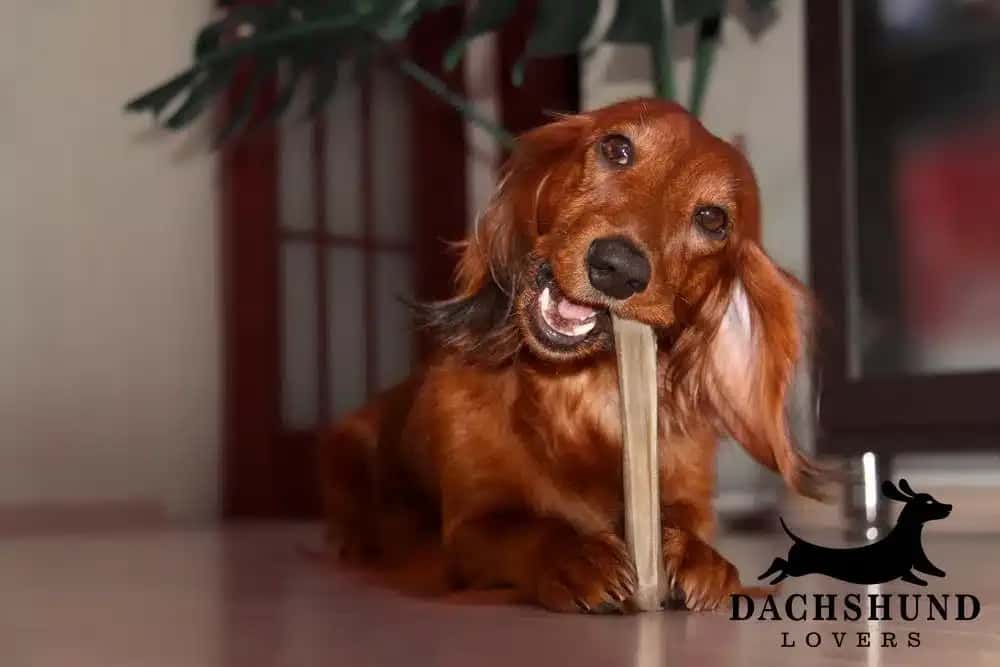
Like all dogs, dachshunds start life with 28 puppy teeth, which are eventually replaced by 42 adult teeth around 4–6 months of age. In theory, this is the same as a Labrador or a German Shepherd — but the difference is jaw size. Dachshunds have narrow, elongated jaws that often leave their teeth crowded together, with very little room between them.
This unique anatomy creates a perfect storm for dental disease:
- Crowding – Tight spaces trap food particles that are difficult to clean naturally through chewing.
- Malocclusion (misaligned teeth) – Uneven wear can crack or loosen teeth over time.
- Plaque buildup – Bacteria multiply faster in crowded areas, leading to tartar.
- Retained puppy teeth – Some dachshunds fail to shed all of their baby teeth, compounding the overcrowding problem.
According to PetMD, small breeds like dachshunds are two to three times more likely to develop periodontal disease compared to larger breeds. This isn’t because owners neglect them, it’s because their mouths are predisposed to problems.
When Harvey’s adult teeth came in, our vet gave us a blunt truth: “He’ll need lifelong dental care, not just occasional brushing.” It wasn’t about bad habits, it was about breed anatomy.
Common Dental Issues in Dachshunds
Dachshunds can experience all the usual canine dental problems, but a few stand out as especially common for the breed.
- Plaque & Tartar
- Plaque is a soft, sticky film of bacteria that forms within hours after eating.
- If not brushed away, it hardens into tartar within a couple of days.
- Once tartar sets in, only a professional dental cleaning can remove it.
- Plaque is a soft, sticky film of bacteria that forms within hours after eating.
- Gingivitis
- The first stage of gum disease.
- Signs include red, swollen gums that may bleed when touched.
- At this stage, brushing can still reverse damage if done consistently.
- The first stage of gum disease.
- Periodontal Disease
- Advanced gum disease where infection spreads below the gumline.
- Causes tooth loosening, bone loss, and significant pain.
- Untreated periodontal disease can spread bacteria into the bloodstream, affecting the heart, liver, and kidneys.
- Advanced gum disease where infection spreads below the gumline.
- Retained Puppy Teeth
- Some dachshunds don’t lose all their baby teeth.
- Crowding worsens as adult teeth erupt alongside puppy teeth.
- Often requires vet removal to prevent infection and malocclusion.
- Some dachshunds don’t lose all their baby teeth.
- Broken or Worn Teeth
- Caused by chewing on very hard objects (bones, antlers, rocks).
- Painful fractures expose tooth pulp, sometimes requiring extraction.
- Caused by chewing on very hard objects (bones, antlers, rocks).
- Bad Breath (Halitosis)
- More than just unpleasant — it’s usually a sign of infection, plaque, or underlying disease.
- Chronic bad breath should always prompt a dental check.
- More than just unpleasant — it’s usually a sign of infection, plaque, or underlying disease.
Why Owners Miss Early Signs
One of the biggest challenges with dachshund dental disease is that dogs rarely show obvious pain until the condition is advanced. They may still eat, chew, and play while hiding discomfort. Early signs are subtle:
- Slight odor
- Yellowing at the gumline
- Occasional pawing at the mouth
- Preference for softer foods
By the time teeth are loose or falling out, disease has usually been present for months, if not years.
When Harvey was three, his breath gave away what brushing alone hadn’t controlled: tartar had set in. We thought because he happily crunched kibble, everything was fine — but the smell told a different story. After a professional cleaning, his appetite improved, his mood lifted, and that sluggishness we’d chalked up to “getting older” disappeared. It was a reminder that dental health doesn’t just affect the mouth — it affects the whole body.
Treatment & Prevention Strategies for Dachshund Dental Health
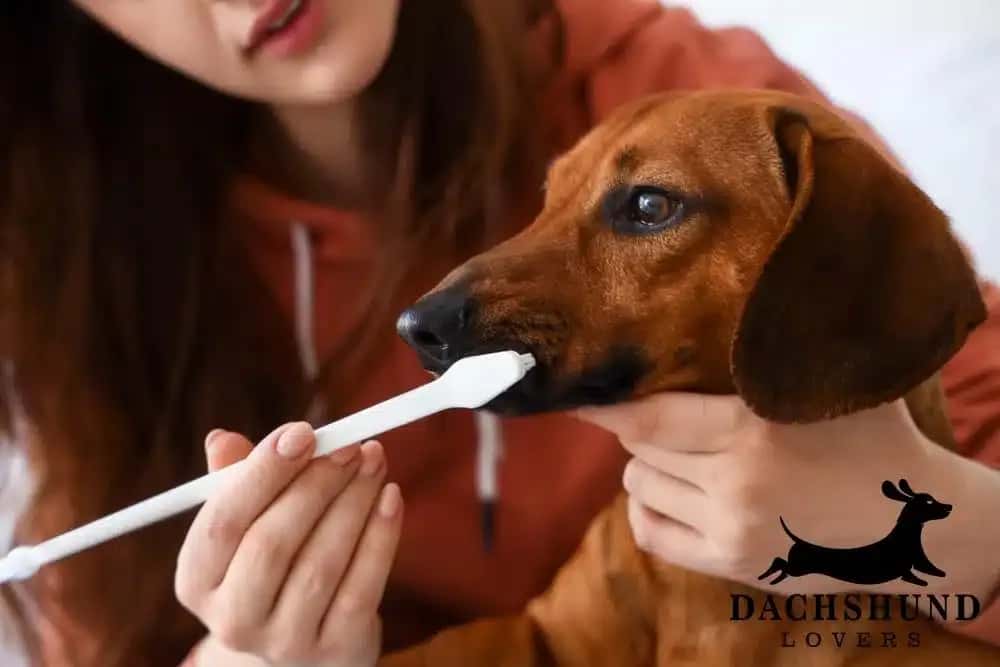
Dental problems in dachshunds aren’t inevitable — but prevention requires consistency. The good news is that daily habits, combined with occasional professional care, can dramatically reduce the risk of disease. When Harvey had his first dental cleaning at age three, our vet told us something that stuck: “If you brushed his teeth as often as you brush your own, he’d likely never need another deep cleaning.” While daily brushing is ambitious, it reminded us that frequency matters more than intensity.
Brushing Routines
Brushing is the single most effective way to keep plaque from hardening into tartar.
- Start young – Introduce brushing in puppyhood to normalise it.
- Dog-safe toothpaste only – Human toothpaste is toxic to dogs (often contains xylitol).
- Soft-bristled toothbrush or finger brush – Small heads fit better in dachshund mouths.
- Frequency – Aim for daily, but at least 3x per week to make a real difference.
- Technique – Focus on the outer surfaces of teeth where plaque accumulates most.
When Harvey was resistant at first, we introduced brushing slowly — letting him lick toothpaste off the brush, then gradually working up to short sessions.
Dental Chews & Toys
Chews help reduce plaque between brushings, but not all are created equal.
- VOHC-approved chews – Look for the Veterinary Oral Health Council seal for proven benefit.
- Avoid very hard chews – Antlers, hooves, and hard bones risk tooth fractures.
- Rubber chew toys – KONGs and dental toys can massage gums while providing play.
- Use treats wisely – Low-calorie dental sticks are best; high-fat versions add to obesity risk.
Professional Dental Cleaning
Even with perfect home care, most dachshunds will eventually need a professional cleaning.
- Scaling under anesthesia – The only way to remove hardened tartar below the gumline.
- X-rays – Detect hidden tooth root or bone damage.
- Extractions – Severely infected or broken teeth may need removal.
Most vets recommend cleanings every 1–2 years depending on individual risk. Small breeds like dachshunds often need them more frequently.
Diet & Nutrition
Diet plays a subtle but important role in dental health.
- Kibble vs wet food – While not a substitute for brushing, dry kibble reduces plaque buildup compared to soft wet food.
- Dental diets – Some prescription foods are designed to scrape teeth while chewing.
- Additives – Water additives or dental powders can help slow plaque formation.
- Avoid sugary human foods – These accelerate dental decay and weight gain.
The American Kennel Club (AKC) notes that feeding diets designed for dental care can reduce tartar accumulation by up to 40%.
At-Home Inspections
Weekly checks can catch early issues before they become painful.
- Lift your dachshund’s lip gently.
- Look for redness along the gumline or yellow-brown buildup.
- Check for missing or broken teeth.
- Smell the breath — a foul odor is an early warning sign.
Brushing Harvey’s teeth has become part of our weekly rhythm — not every day, but enough to make a difference. We use a soft finger brush and a chicken-flavored dog toothpaste he actually enjoys. Once brushing became routine, we noticed his gums looked healthier, his breath improved, and his last vet check was tartar-free. The trick wasn’t perfection, but consistency.
At-Home Inspections
Weekly checks help catch problems early.
- Lift the lip and check for redness or swelling.
- Look for yellow or brown tartar near the gumline.
- Note any missing or broken teeth.
- Smell the breath — foul odor often signals infection.
When Harvey dropped food from his mouth during dinner, we discovered a cracked molar. Without that observation, we may not have noticed until infection set in.
Consistency Is Key
Dental prevention isn’t about choosing one method — it’s about combining them. A little brushing, some VOHC-approved chews, an annual check-up, and mindful diet together keep dachshund mouths far healthier than relying on any one approach.
Summary Table: Dachshund Dental Care
Method | How It Helps | How Often | Dachshund-Specific Notes |
|---|---|---|---|
Brushing | Removes plaque before it hardens into tartar | Daily ideal; min 3–4x weekly | Small jaws need soft brushes & dog-safe paste |
Dental Chews/Toys | Scrape plaque, massage gums, reduce boredom | A few times weekly | Avoid hard bones/antlers; opt for VOHC-approved chews |
Professional Cleanings | Remove tartar above/below gums, treat infection | Every 1–2 years | Small breeds often need more frequent cleanings |
Diet & Nutrition | Supports overall dental health, reduces plaque | Daily feeding choice | Kibble > wet food; add veggies & dental diets if needed |
At-Home Checks | Catch early signs of disease | Weekly | Look for tartar, redness, loose teeth, or odor |
Our journey with Harvey’s teeth taught us that prevention isn’t about one “big fix”, it’s about lots of small habits. Brushing three times a week, checking his gums weekly, and booking professional cleanings every couple of years have been far easier than dealing with tooth extractions or chronic bad breath. Most importantly, it means he eats, plays, and chews happily which, for a dachshund, is the heart of their joy.
Dachshund Dental Health Across Life Stages
Life Stage | What to Expect | Key Risks | Care Priorities |
|---|---|---|---|
Puppyhood (0–12 months) | 28 puppy teeth erupt, then fall out as 42 adult teeth come in | Retained puppy teeth, overcrowding, teething discomfort | Vet check to confirm puppy teeth fall out; introduce brushing early; provide safe teething toys |
Adulthood (1–7 years) | Full adult dentition (42 teeth); tartar begins to build quickly due to jaw crowding | Plaque, tartar, gingivitis, broken teeth from chewing | Brushing 3–7x per week; VOHC chews; annual dental vet checks; monitor for bad breath |
Senior Years (8+ years) | Teeth may loosen or fall out; gum recession and bone loss more common | Periodontal disease, tooth loss, oral infections spreading to organs | More frequent vet dental cleanings; softer foods if teeth are missing; weekly at-home inspections |
When Harvey was a puppy, our vet warned us to watch for retained baby teeth — and sure enough, one molar didn’t fall out properly. In adulthood, tartar became the main challenge, and by senior years, we know we’ll need to adapt his food if chewing becomes difficult. Each stage brings different risks, but the principle stays the same: prevention early, consistency always.
FAQs on Dachshund Teeth
More from This Series
- Dachshund Eye Problems
- CDA in Dachshunds
- Dachshund Brain Size
- Dachshund Back Surgery
- Dachshund Dragging Back Legs
- Dachshund Neck Size
- Dachshund Back Brace
- Dachshund Back Problems
- Dachshund Skin Issues
- Dachshund Health Issues
- Dachshund Feet
- Dachshund Ribs
- Overweight Dachshund
- Dachshund Teeth
- Dachshund Allergies
- Dachshund Ears
- Dachshund Hip Dysplasia
- Dachshund Constipation
- Dachshund Bad Breath
Authored by
James
James is the founder of Dachshund Lovers and the proud human of Harvey, a mini dapple with a big personality. He writes to empower and connect the dachshund community, blending founder insights with honest, experience-based stories about life with this incredible and special breed. James brings candid, experience-backed opinions to the community and always focused on fewer, better products and ideas that genuinely improve life for dachshunds and their people.
Read moreJames is the founder of Dachshund Lovers and the proud human of Harvey, a mini dapple with a big personality. He writes to empower and connect the dachshund community, blending founder insights with honest, experience-based stories about life with this incredible and special breed. James brings candid, experience-backed opinions to the community and always focused on fewer, better products and ideas that genuinely improve life for dachshunds and their people.
Read more
Disclaimer
This content is for informational purposes only and should not be considered veterinary advice. Always consult with a licensed veterinarian regarding your dog’s health and wellbeing.
There are no comments yet
Leave a comment