Early Signs of Pregnancy & Phantom Pregnancy in Dachshunds
Early Signs of Pregnancy & Phantom Pregnancy in Dachshunds
Your dachshund may act pregnant even if she isn’t. This guide walks you through symptoms, timelines, and gentle at-home care. Learn more.
James
Posted on August 30, 2025.
Updated on July 21, 2026.
Table of Contents
- 1.Key Takeaways on Dachshund Early Signs Phantom Pregnancy
- 2.Emotional & Behavioral Shifts
- •1. Clinginess That Comes Out of Nowhere
- •2. Nesting Behavior
- •3. Mood Swings
- •4. Increased Protectiveness
- 3.What Is Phantom Pregnancy in Dachshunds?
- •Is It Dangerous?
- 4.When to See the Vet
- 5.Supporting Your Dachshund Emotionally (Phantom or Real Pregnancy)
- •1. Keep Her Routine Tight
- •2. Let Her Nest — To a Point
- •3. Don’t Overplay the Moment
- •4. Read the Mood Shifts
- •5. Plan Long-Term If It Keeps Happening
- -More from This Series
- -Disclaimer
Share

The early signs of dachshund pregnancy are vague on purpose. Nature doesn’t offer a flashing light or a calendar alert — just a few small cues and a lot of room for doubt.
We’ve had emails from people convinced their girl was pregnant after she skipped two meals and dragged a blanket into the laundry. We’ve also had people who were sure it was nothing… until a vet scan at week five confirmed otherwise. That’s how it goes.
I remember standing near the duck pond at Centennial Parklands one Saturday when a couple walked by with their mini dachshund curled under a picnic blanket. She was quiet. Clingy. Barely rounded out around the belly. “She’s been nesting and carrying toys,” they said. “We thought she might be pregnant — but the vet thinks it’s phantom.”
It’s more common than most people realise. Phantom pregnancies in dachshunds can look real — right down to the body language, appetite shifts, and protective behavior. And if it’s your first time seeing it, it’s easy to mistake the signs for something more serious. Especially when they’re acting like they’re expecting.
This guide isn’t about giving you all the answers. It’s about giving you clarity — so you know what to look for, what to track, and when it’s worth booking the vet. Whether it’s a real pregnancy or a false alarm, the steps you take early on are what set the tone for how you support her.
We’ll cover physical symptoms, emotional changes, what a phantom pregnancy actually is, and when it’s time to stop guessing and start confirming.
For more on the science behind it, VCA’s overview on false pregnancies is a solid place to go deeper.
Key Takeaways on Dachshund Early Signs Phantom Pregnancy
Topic | Summary |
|---|---|
First Physical Signs | Subtle changes like slower eating, mild fatigue, and slight nipple swelling can show up by week 3–4. Easy to miss unless you’re paying close attention. |
Emotional Changes | Nesting, clinginess, toy-carrying — common in both real and phantom pregnancies. Your dog doesn’t know the difference. Instinct kicks in either way. |
Phantom Pregnancy | A hormonal response that mimics pregnancy — same symptoms, no puppies. It’s common in dachshunds, especially 6–8 weeks after a heat cycle. |
When To Visit Vet | Blood test at day 21. Ultrasound around day 28 for visual confirmation. Before that, it’s mostly educated guesswork. |
Support Needed | Whether it’s real or not, she needs structure. Predictable routines, quiet spaces, and reassurance go a long way. |

Physical Signs: What to Watch for in Early Pregnancy
Early pregnancy in dachshunds doesn’t start with a belly bump. It starts with small changes — the kind most people miss or chalk up to mood.
If you’re paying attention, here’s what might show up between weeks 2 and 4:
- Appetite shifts
Some dogs go off their food for a day or two. Others eat more. Neither confirms anything — but a consistent change is worth noting.
- Swollen nipples
One of the first visual signs. Look for slight enlargement or a pinker color than usual. Subtle, but often the first real cue.
- Mild lethargy
She might nap more or seem less keen on her usual walk. It’s not dramatic — just a quieter version of herself.
- Slight bloating
Not a baby bump. Just a hormonal response. Don’t overanalyze a full belly after breakfast.
These signs can come and go — or not show up at all. And just as often, they can signal something else entirely: phantom pregnancy, an upcoming heat cycle, or even just a change in weather or routine.
The takeaway? Monitor, don’t panic. If you’re seeing a mix of these signs and her behavior seems different, keep notes. You’re building a pattern that’ll help your vet (and yourself) make a clearer call in the weeks ahead.
Emotional & Behavioral Shifts
You’ll usually notice behavior changes before anything physical. Dachshunds are tuned in — to their routine, their environment, and especially to you. When hormones shift, their instincts follow.
Here’s what we’ve seen firsthand and heard from owners time and again:
1. Clinginess That Comes Out of Nowhere
She’s suddenly glued to your side. Follows you from room to room. Won’t settle unless she can see you. It’s not just sweet — it’s driven by a biological need for safety and contact. You’re the constant in the middle of whatever her body’s trying to figure out.
2. Nesting Behavior
Blankets disappear. Socks turn up in crates. You catch her digging under furniture or building a quiet spot behind the couch.
Nesting isn’t just about comfort — it’s preparation. Whether she’s actually pregnant or not, the instinct is real.
What to look for:
- Rearranging bedding or hiding soft items
- Circling and digging in corners
- Carrying toys like pups
- Guarding certain spaces without warning
Let it happen — within reason. If she’s calm, let her nest. If she’s frantic, help her reset.
3. Mood Swings
Some dogs soften — affectionate, needy, slow. Others get snappy, withdrawn, or overly alert. Hormones are messy, and her behavior might swing both ways in the same day.
If she’s sulky, give her structure. If she’s edgy, keep the environment quiet and predictable. Don’t over-engage — just stay steady.
4. Increased Protectiveness
You might notice she’s suddenly on edge about toys, spaces, or people. Not aggressive — just more alert and territorial. Keep other dogs and small kids out of her bubble for now. She’s responding to a shift she doesn’t fully understand.
These changes don’t tell you if she’s actually pregnant. But they do tell you something real is happening inside her system. Whether it’s a true pregnancy or a phantom, this is the window where stability matters most.
What Is Phantom Pregnancy in Dachshunds?
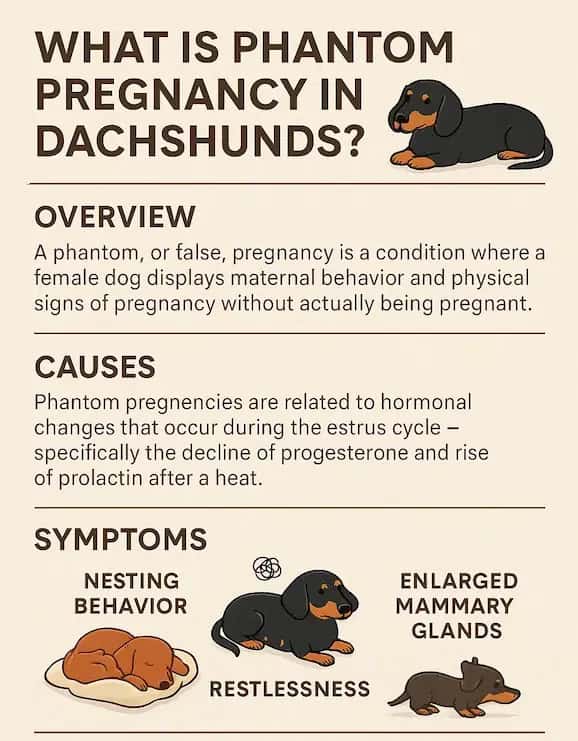
Even if your dachshund hasn’t been near a male, she can still act pregnant. That’s not a myth — it’s a hormonal response known as a phantom pregnancy.
Also called pseudopregnancy or false pregnancy, it usually shows up about six to eight weeks after a heat cycle. Her progesterone drops, prolactin rises, and her body follows the same pattern it would if she were actually pregnant — just without the fertilisation.
These signs often mirror the early signs of real pregnancy covered in our Dachshund Pregnancy Week-by-Week Guide, which makes it tricky to tell the difference without a vet’s input.
You’ll likely see:
- Mild mammary swelling
- Nesting behavior
- Mood changes
- Appetite dips or spikes
- Toy hoarding or carrying
- In some cases, light milk production
It looks real — sometimes alarmingly so. We’ve seen dachshunds go into full nesting mode, complete with toy protection and burrowed bedding, convinced something’s coming. Nothing ever does.
Is It Dangerous?
Not usually. But it can be emotionally tough on her — especially if the behavior drags out or repeats often. Some dogs get restless, clingy, or flat-out depressed. And for owners, it’s confusing. You start prepping for pups… then nothing happens.
If she’s showing intense symptoms or you’ve seen this pattern before, it’s worth a vet conversation. They might suggest a dietary tweak, a calming protocol, or — in recurring cases — spaying. That’s the only reliable way to stop phantom cycles altogether.
Want the clinical breakdown? VCA’s overview on false pregnancy is a solid reference.
When to See the Vet
There’s a point where observation needs to turn into action. If your dachshund is nesting, skipping meals, or suddenly protecting toys like they’re pups, it’s time to stop guessing and get answers.
Here’s when to book the appointment:
- Day 21 post-mating (or suspected timing): A blood test can detect relaxin — a hormone produced during pregnancy. Not perfect, but it’s the earliest option.
- Around Day 28: This is the ultrasound window. You’ll get a clearer picture — literally — of whether pups are on the way.
- If signs ramp up fast: Sudden bloating, extreme clinginess, refusal to eat, or overprotective behavior all warrant a check-in.
- Recurring phantom pregnancies: If this is the second or third time, talk to your vet about longer-term options — especially if she won’t be bred.
Founder tip: take notes. Even a basic log in your phone — appetite, sleep, behavior changes — can help your vet connect the dots quicker.
Still unsure? Our Pregnancy Care Guide maps out the full care timeline, from first signs to post-labor. Worth bookmarking if you’re early in the process.
For more on vet diagnostics and why timing matters, the AKC’s guide on dog pregnancy confirmation covers the clinical side in more detail.
Supporting Your Dachshund Emotionally (Phantom or Real Pregnancy)
Whether she’s pregnant or stuck in a phantom loop, your dachshund doesn’t know the difference. Her body’s telling her to prepare — and she’s doing her best with what she’s got.
Here’s what actually helps.
1. Keep Her Routine Tight
Don’t change everything just because her behavior’s changed. Stick to the usual walk times. Keep feeding windows consistent. Routine is grounding — it keeps her balanced when her hormones aren’t.
Give her a quiet space where she can rest without being disturbed. A soft crate, corner bed, or calm room with her blanket works well. Somewhere she can retreat without losing sight of you.
2. Let Her Nest — To a Point
If she’s collecting socks or hoarding toys, let it play out within limits. This isn’t about correcting the behavior — it’s about managing it safely.
Offer soft, washable toys or old towels she can settle with. If she gets obsessive or territorial, gently redirect — no scolding.
3. Don’t Overplay the Moment
It’s tempting to lean into it. Baby talk, belly rubs, “mum-to-be” cuddles. But especially during a phantom pregnancy, too much emotional reinforcement can deepen the pattern.
Keep things steady. Calm affection, quiet support, no drama.
4. Read the Mood Shifts
Some dogs get clingier. Others pull back. Some swing between the two. None of it’s personal — it’s hormonal.
If she seems down or anxious, low-key engagement helps: short walks, sniff breaks, a puzzle feeder. Avoid overstimulation. Just help her move through it.
5. Plan Long-Term If It Keeps Happening
If you’ve seen this before and she’s not being bred, talk to your vet. Recurrent phantom pregnancies aren’t dangerous — but they’re hard on her emotionally. Spaying usually ends the cycle for good.
Need help building a full care setup? Our Pregnancy Care Guide covers the physical side — feeding, movement, safe spaces — so you can support both sides of the experience.
FAQs About Early & Phantom Pregnancy in Dachshunds
More from This Series
Curious to go deeper into the dachshund pregnancy journey? Explore other articles in our dedicated series, each written in Ellie’s warm, firsthand style:
- Pregnancy in Dachshunds: Essential Tips for New Owners
Your go-to guide for understanding dachshund pregnancy — signs, care, timelines, and what to expect. - Dachshund Pregnancy Week by Week
A detailed week-by-week breakdown of pregnancy milestones, belly changes, and key vet moments. - Caring for a Pregnant Dachshund
From safe nutrition to nesting space tips, this article helps you support your expecting girl through every stage. - Preparing for Dachshund Puppies
Everything you need to get ready for the big arrival — supplies, whelping setup, and your first days with pups.
Looking for a full overview? Visit our Dachshund Pregnancy Hub for all things related to pregnancy, phantom symptoms, and puppy prep.
Authored by
James
James is the founder of Dachshund Lovers and the proud human of Harvey, a mini dapple with a big personality. He writes to empower and connect the dachshund community, blending founder insights with honest, experience-based stories about life with this incredible and special breed. James brings candid, experience-backed opinions to the community and always focused on fewer, better products and ideas that genuinely improve life for dachshunds and their people.
Read moreJames is the founder of Dachshund Lovers and the proud human of Harvey, a mini dapple with a big personality. He writes to empower and connect the dachshund community, blending founder insights with honest, experience-based stories about life with this incredible and special breed. James brings candid, experience-backed opinions to the community and always focused on fewer, better products and ideas that genuinely improve life for dachshunds and their people.
Read moreDisclaimer
This content is for informational purposes only and should not be considered veterinary advice. Always consult with a licensed veterinarian regarding your dog’s health and wellbeing.
There are no comments yet
Leave a comment