Dachshund Bad Breath: Causes, Prevention & Care
Dachshund Bad Breath: Causes, Prevention & Care
Tried everything for your dachshund’s stinky breath? Here’s what worked for us with Harvey, from diet changes to dental chews and vet checks.

James
Posted on November 3, 2025.
Updated on July 21, 2026.
Table of Contents
- 1.Key Takeaways on Dachshund Bad Breath
- 2.Causes of Bad Breath in Dachshunds
- •1. Dental Disease
- •2. Retained Puppy Teeth
- •3. Poor Diet and Chewing Habits
- •4. Oral Infections or Abscesses
- •5. Gastrointestinal Issues
- •6. Systemic Illness
- •7. Behavioral & Environmental Factors
- 3.Symptoms of Bad Breath in Dachshunds
- •Early-Stage Symptoms
- •Mid-Stage Symptoms
- •Severe Symptoms
- •Severity Comparison Table
- 4.Diagnosis of Bad Breath in Dachshunds
- •Step 1: Clinical History
- •Step 2: Physical Examination
- •Step 3: Diagnostic Imaging
- •Step 4: Laboratory Tests
- •Step 5: Differential Diagnosis
- 5.Treatment & Prevention of Bad Breath in Dachshunds
- •1. At-Home Care
- •2. Veterinary Treatment
- •3. Long-Term Prevention Strategies
- •4. Lifestyle Adjustments
- 6.Dachshund Bad Breath Across Life Stages
- •More from This Series
- -Disclaimer
Share

The first time Harvey jumped up on the couch for a cuddle and I caught a whiff of his breath, I laughed it off — “doggy breath” seemed normal. But over time, it grew stronger, almost sour, and sometimes metallic as Caitlin my wife would also vouch for this. Our vet explained that bad breath in dachshunds isn’t just a cosmetic issue; it’s often a sign of underlying dental disease or health problems.
According to the American Veterinary Medical Association (AVMA), more than 80% of dogs show signs of dental disease by age three. For dachshunds, who are genetically predisposed to crowded teeth and tartar buildup, this statistic is even more worrying. Left untreated, bad breath (halitosis) can lead to gum infections, tooth loss, and even systemic illnesses as bacteria enter the bloodstream.
Understanding what causes bad breath and how to prevent it, is essential for every dachshund owner.
Key Takeaways on Dachshund Bad Breath
Question | Quick Answer | Why It Matters for Dachshunds |
|---|---|---|
Why do dachshunds get bad breath? | Dental disease, tartar buildup, gum infections, diet, or systemic illness | Dachshunds are predisposed to dental issues due to crowded mouths |
What are common causes? | Periodontal disease, retained puppy teeth, poor diet, underlying illness | Can progress from mild odor to serious infections |
How is it treated? | Professional cleanings, at-home brushing, dental chews, diet adjustments | Regular care prevents painful and costly complications |
Can dachshund bad breath be prevented? | Yes — daily brushing, routine vet checks, balanced diet | Prevention reduces risk of tooth loss and chronic illness |
When should I see a vet? | If bad breath is persistent, worsening, or paired with symptoms like drooling or appetite loss | Early treatment saves teeth and protects long-term health |
Causes of Bad Breath in Dachshunds
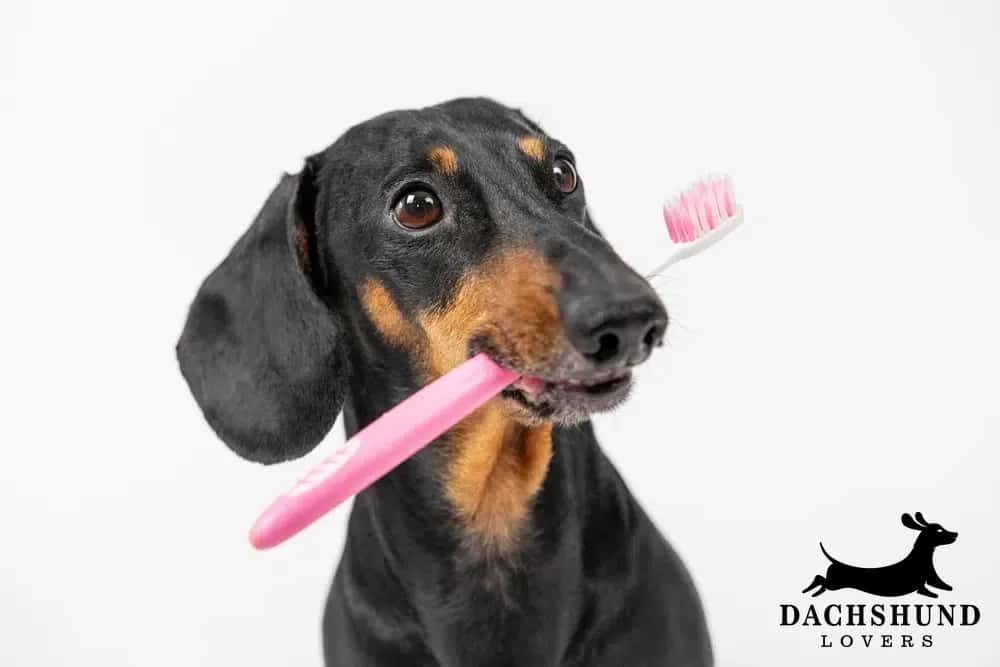
Bad breath in dachshunds, also called halitosis, isn’t just unpleasant,it’s often a signal that something deeper is going on. While a little morning odor is normal, persistent sour or foul-smelling breath usually points to dental or health issues that need attention. For dachshunds in particular, their genetic predisposition to dental disease makes them especially vulnerable.
When Harvey was a year old, I noticed his breath wasn’t just “doggy breath” it had a metallic edge. A dental check confirmed that tartar had already started to build around his back molars, something our vet said was common in dachshunds because of their crowded teeth and tendency toward plaque accumulation. That experience taught me that bad breath is rarely just about smell, it’s about whole-body health.
1. Dental Disease
The number one cause of bad breath in dachshunds is dental disease. Dachshunds are particularly prone to periodontal disease because their mouths are small, their teeth are crowded, and plaque builds up quickly.
- Plaque and tartar: Plaque is a soft film of bacteria that, if not brushed away, hardens into tartar. Tartar irritates gums and harbors bacteria, creating foul odors.
- Gingivitis: Early gum inflammation, often seen as redness along the gumline, produces sour breath.
- Periodontal disease: As gums recede, bacteria invade deeper, causing rotten-smelling breath. This stage often leads to tooth loss.
This is closely tied to dachshund teeth, where retained puppy teeth and overcrowding make thorough cleaning even harder.
2. Retained Puppy Teeth
Many dachshunds retain their baby teeth well into adulthood, especially their canines. Retained teeth trap food, bacteria, and plaque between themselves and the adult teeth. This leads to localized tartar buildup and a particularly bad smell.
When Harvey was teething, our vet recommended monitoring closely and eventually removing one retained tooth before it caused gum disease. It was a reminder that early dental care prevents bigger problems later.
3. Poor Diet and Chewing Habits
Diet plays a role in oral health. Dogs fed mainly on soft or low-quality foods may develop plaque faster than those eating kibble designed to reduce buildup. Treats and chews also matter: rawhide can splinter and trap debris, while some bones can cause both constipation and broken teeth.
- Table scraps rich in fat can coat the mouth and worsen odor.
- Lack of chewing reduces natural cleaning. Dogs that don’t chew dental toys or hard treats allow plaque to accumulate faster.
- Unbalanced diets may even alter gut flora, leading to odor that travels up the digestive tract.
4. Oral Infections or Abscesses
If bacteria invade below the gumline or into a damaged tooth, infections can cause pus and a putrid odor. Tooth root abscesses are common in dachshunds with untreated periodontal disease. They can cause swelling, drooling, and intense pain, but bad breath is often the first sign.
5. Gastrointestinal Issues
Sometimes bad breath isn’t from the mouth at all but from the stomach or digestive tract.
- Acid reflux can create a sour smell.
- Poor digestion or dietary intolerances may result in odors traveling back up.
- Constipation can worsen whole-body odor, including bad breath (see Dachshund Constipation).
If a dachshund’s breath worsens alongside bloating, gas, or irregular stools, the digestive system may be contributing.
6. Systemic Illness
Persistent bad breath can also be a red flag for illnesses beyond the mouth:
- Kidney disease – Causes a metallic or ammonia-like odor.
- Diabetes – May create a sweet or fruity breath smell.
- Liver disease – Produces a particularly foul, musty odor.
This is why chronic halitosis should never be ignored; it’s sometimes the first visible symptom of deeper disease.
7. Behavioral & Environmental Factors
Dachshunds are curious eaters. Sometimes bad breath comes from less serious (but equally unpleasant) habits:
- Coprophagia (eating feces, their own or other animals’).
- Chewing trash or spoiled food.
- Outdoor scavenging — eating dirt, grass, or dead animals.
While these aren’t medical causes, they can still lead to bacteria buildup and worsen existing dental issues.
For Harvey, the turning point was when brushing his teeth didn’t solve the smell. That’s when we discovered tartar had already hardened below the gumline. His breath wasn’t just a nuisance; it was an early warning sign. Once his dental cleaning was done, the smell disappeared almost overnight, proof that bad breath is nearly always a symptom, not the problem itself.
Symptoms of Bad Breath in Dachshunds
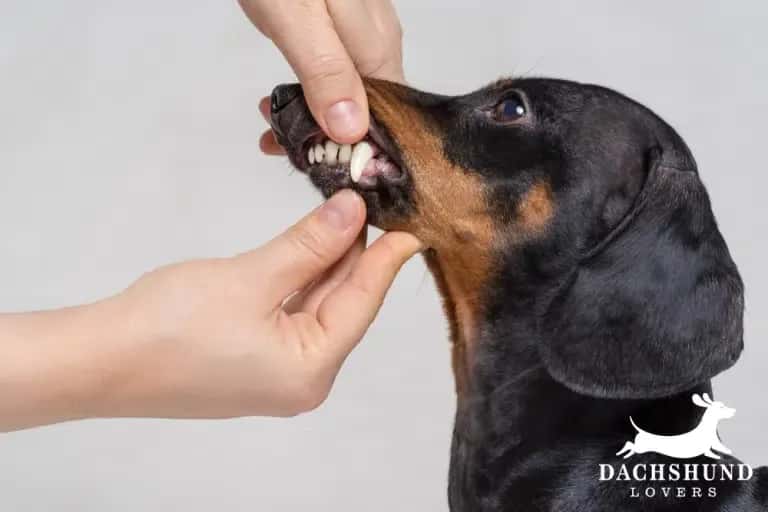
Bad breath is easy to dismiss as “normal dog smell,” but in dachshunds, it’s often one of the first clues that something bigger is brewing beneath the surface. The smell itself varies — sometimes sour, sometimes metallic, sometimes sweet — and each variation can point to a different cause. Paying attention to the type, persistence, and severity of bad breath is the key to recognising whether it’s a minor issue or a sign of disease.
When Harvey was a puppy, his breath had that classic “puppy smell”, not unpleasant at all. But as he grew, the odor changed. A sourness crept in, and eventually, it became strong enough to notice across the room. At that stage, it wasn’t just about brushing more often; it was a sign that tartar and early gum disease were already taking hold.
Early-Stage Symptoms
In mild cases, bad breath often presents as:
- Occasional odor after meals – Food particles stuck between teeth may create a temporary smell.
- Mild sour smell – Early plaque buildup irritates the gums.
- Morning odor – Breath may be worse after a night without chewing or drinking water.
At this point, bad breath is often manageable with improved dental hygiene, like brushing or dental chews. However, for dachshunds predisposed to dental crowding, this stage can progress quickly.
Mid-Stage Symptoms
As dental disease progresses, or if gastrointestinal or systemic issues contribute, the symptoms grow more obvious:
- Persistent odor – The smell doesn’t go away, even after brushing.
- Rotten or putrid breath – Suggests advanced gum disease, tartar buildup, or oral infection.
- Bleeding gums – Visible after chewing toys or brushing, often paired with sour breath.
- Excessive drooling – Saliva may carry bacteria, amplifying odor.
- Difficulty chewing – Dogs may drop kibble or avoid harder food due to gum pain.
This stage often overlaps with dachshund constipation or digestive upset if diet is poor.
Severe Symptoms
In advanced cases, bad breath is often just the most obvious warning sign of deeper illness:
- Foul, decayed odor – Severe periodontal disease, abscessed teeth, or rotting tissue.
- Metallic smell – Often linked to blood in the mouth (gum disease or oral injuries).
- Sweet, fruity breath – Possible sign of diabetes.
- Ammonia-like odor – May indicate kidney disease.
- Accompanied by systemic symptoms – Weight loss, vomiting, lethargy, or appetite changes.
Severity Comparison Table
Severity | Symptoms | Likely Causes | What Owners Should Do |
|---|---|---|---|
Mild | Sour smell after meals, morning odor | Early plaque buildup, stuck food | |
Moderate | Persistent odor, bleeding gums, drooling, difficulty chewing | Gingivitis, tartar buildup, early periodontal disease | Vet dental exam; increase home careVet dental exam; increase home care |
Severe | Rotten smell, metallic or ammonia odor, fruity breath, systemic illness signs | Periodontal disease, abscess, diabetes, kidney disease |
With Harvey, the most telling change wasn’t just the smell, it was when he hesitated before eating hard kibble. That small behavioral shift, paired with worsening odor, was enough for our vet to diagnose early periodontal disease. It reminded me that dachshund bad breath is never “just bad breath.” It’s a clue, sometimes the only one, that something deeper is wrong.
Diagnosis of Bad Breath in Dachshunds
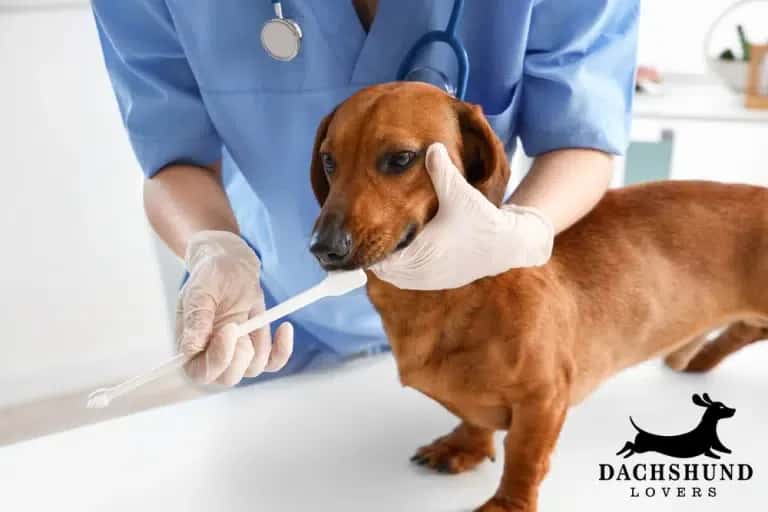
Bad breath in dachshunds can stem from a simple buildup of tartar or signal something more serious like kidney disease. Because the odor itself doesn’t tell the full story, proper diagnosis is essential. Dachshunds are particularly at risk due to their predisposition to dental crowding and retained puppy teeth, which makes distinguishing between routine dental issues and systemic illness even more important.
When Harvey’s breath first shifted from mildly sour to distinctly metallic, our vet explained that the smell alone wasn’t enough to pinpoint the cause. We needed a full evaluation, from oral exam to bloodwork to determine whether it was dental disease or something systemic. That process reassured us that while his gums were inflamed, his organs were otherwise healthy.
Step 1: Clinical History
Your vet will begin by asking questions such as:
- How long has the bad breath been present?
- Has it worsened recently?
- What does your dachshund eat (including treats and table scraps)?
- Any changes in appetite, chewing habits, or water intake?
- Any other symptoms like vomiting, weight loss, or lethargy?
Owners often underestimate the importance of these details, but even small notes, like “he avoids kibble but still eats wet food” can provide vital diagnostic clues.
Step 2: Physical Examination
A hands-on exam provides the first major insights:
- Oral inspection – Checking teeth for tartar, retained puppy teeth, broken teeth, or gum inflammation.
- Gum health – Redness, swelling, bleeding, or pus can indicate periodontal disease.
- Saliva quality – Excessive drooling or thick saliva may indicate infection.
- Abdominal palpation – Checking for bloating or pain that could suggest GI issues (see Constipation).
Step 3: Diagnostic Imaging
If oral disease is advanced or an abscess is suspected, imaging may be recommended:
- Dental X-rays – Reveal tooth root abscesses, retained teeth, or bone loss not visible on surface exam.
- Skull radiographs – Occasionally used if jawbone disease is suspected.
For dachshunds, dental X-rays are particularly important due to their crowded mouths. Issues often hide below the gumline, making imaging the only way to catch them early.
Step 4: Laboratory Tests
If bad breath appears to be more than a dental problem, vets may recommend lab work:
- Blood tests – Check kidney and liver function, glucose levels (diabetes), and infection markers.
- Urinalysis – Can detect kidney issues contributing to ammonia-like odors.
- Fecal exam – In cases where GI issues may be the source of odor.
These tests are vital because dachshunds with systemic illness may only show bad breath as their first warning sign.
Step 5: Differential Diagnosis
Vets will compare findings to rule out overlapping causes:
- Dental disease vs systemic illness – Gum redness vs kidney or liver values.
- GI disorders vs poor oral hygiene – Vomiting, diarrhea, or bloating may indicate deeper digestive issues.
Back pain or hip dysplasia – Dachshunds in pain may chew differently, worsening dental disease indirectly (see Hip Dysplasia).
Treatment & Prevention of Bad Breath in Dachshunds
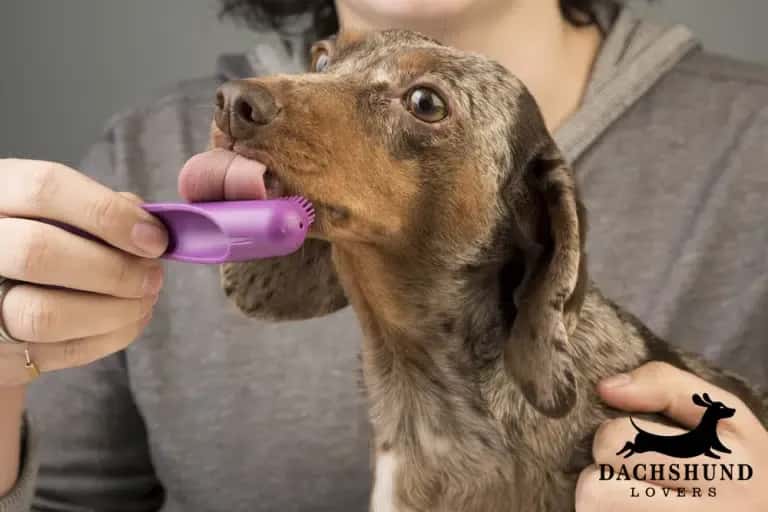
Bad breath in dachshunds is not just about freshening up their kisses, it’s about addressing the root cause. Whether the odor comes from plaque, gum disease, or deeper health issues, treatment needs to combine immediate relief and long-term prevention. Dachshunds, with their predisposition to dental crowding and retained puppy teeth, need extra consistency when it comes to oral hygiene.
When Harvey’s breath worsened, our vet made it clear that quick fixes wouldn’t work. Chews and water additives could help, but without proper brushing and professional cleanings, tartar would always win. The turning point was committing to a routine, daily brushing, six-month vet checks, and the occasional dental chew.
1. At-Home Care
Daily Brushing
- Use a soft-bristled toothbrush or finger brush with dog-safe toothpaste (never human toothpaste).
- Aim for once a day, but even a few times a week makes a big difference.
- Focus on back molars, where tartar builds most in dachshunds.
Dental Chews & Toys
- Vet-approved chews can help reduce plaque mechanically.
- Avoid rawhide, which can splinter and cause constipation.
- Rubber chew toys provide safer chewing options for natural cleaning.
Water Additives & Rinses
- Some vet-approved water additives reduce oral bacteria.
- These are helpful but not substitutes for brushing.
Diet
- Feed a balanced, high-quality diet.
- Avoid sticky foods or excessive table scraps, which coat teeth and worsen odor.
- Consider kibble designed for dental health if recommended by your vet.
2. Veterinary Treatment
Professional Dental Cleaning
- Performed under anesthesia, cleanings remove tartar above and below the gumline.
- Often the only way to resolve moderate-to-severe dental disease.
Extractions
- Severely infected or loose teeth may need removal to prevent ongoing pain and odor.
Treatment for Infections or Abscesses
- Antibiotics may be prescribed for bacterial infections.
- Pain relief if inflammation is advanced.
Addressing Underlying Illnesses
- Bad breath from kidney disease, diabetes, or liver disease requires systemic treatment, not just dental work.
- Blood tests are essential for ongoing halitosis that doesn’t resolve with dental cleaning.
3. Long-Term Prevention Strategies
- Routine Brushing – The single most effective way to prevent odor.
- Vet Dental Checks – At least once a year; every six months for dachshunds with a history of dental disease.
- Chewing Routine – Provide safe chews or toys daily to reduce plaque naturally.
- Hydration – Encourage drinking, which helps wash away bacteria and food debris.
- Monitor Retained Teeth – Dachshunds often keep puppy teeth; removing them early reduces odor risk.
- Overall Health Care – Managing allergies, constipation, and weight keeps the body strong and resistant to secondary infections.
4. Lifestyle Adjustments
- Create a brushing ritual – Pair brushing with treats or cuddles so it feels positive.
- Use ramps – For dachshunds with back problems, ramps prevent painful jumps that may discourage chewing habits due to discomfort.
Regular grooming routine – Ears, teeth, paws, and weight all connect; keeping each area healthy prevents compounding problems.
For Harvey, brushing became part of his daily wind-down routine. At first, he resisted, but with patience (and plenty of chicken-flavored toothpaste), he accepted it. Over time, his bad breath disappeared, and we avoided expensive extractions. The biggest lesson? Prevention is cheaper, kinder, and easier than treatment.
Dachshund Bad Breath Across Life Stages
Life Stage | What To Expect | Common Risks | Care Priorities |
|---|---|---|---|
Puppyhood (0–12 months) | Breath often has a neutral or “puppy smell” | Retained puppy teeth can cause odor and gum disease | Monitor tooth transition; schedule vet check if baby teeth remain after 6 months (see Dachshund Teeth) |
Adulthood (1–7 years) | Bad breath often develops as plaque and tartar accumulate | Periodontal disease, poor diet, lack of brushing | Daily brushing, dental chews, annual vet dental exams |
Senior Years (8+ years) | Severe halitosis may appear alongside systemic illness | Advanced periodontal disease, diabetes, kidney or liver issues | Six-month dental checks, bloodwork if odor worsens, softer diets to protect remaining teeth |
With Harvey, puppy breath wasn’t an issue — but once adulthood hit, his dental predisposition caught up with him quickly. Knowing senior years bring greater risks, we’ve already built regular brushing and vet dental care into his routine to make the transition smoother.
FAQs on Dachshund Bad Breath
More from This Series
Explore more guides in our Dachshund Health Series:
- Dachshund Eye Problems
- CDA in Dachshunds
- Dachshund Brain Size
- Dachshund Back Surgery
- Dachshund Dragging Back Legs
- Dachshund Neck Size
- Dachshund Back Brace
- Dachshund Back Problems
- Dachshund Skin Issues
- Dachshund Health Issues
- Dachshund Feet
- Dachshund Ribs
- Overweight Dachshund
- Dachshund Teeth
- Dachshund Allergies
- Dachshund Ears
- Dachshund Hip Dysplasia
- Dachshund Constipation
- Dachshund Bad Breath
Authored by
James
James is the founder of Dachshund Lovers and the proud human of Harvey, a mini dapple with a big personality. He writes to empower and connect the dachshund community, blending founder insights with honest, experience-based stories about life with this incredible and special breed. James brings candid, experience-backed opinions to the community and always focused on fewer, better products and ideas that genuinely improve life for dachshunds and their people.
Read moreJames is the founder of Dachshund Lovers and the proud human of Harvey, a mini dapple with a big personality. He writes to empower and connect the dachshund community, blending founder insights with honest, experience-based stories about life with this incredible and special breed. James brings candid, experience-backed opinions to the community and always focused on fewer, better products and ideas that genuinely improve life for dachshunds and their people.
Read moreDisclaimer
This content is for informational purposes only and should not be considered veterinary advice. Always consult with a licensed veterinarian regarding your dog’s health and wellbeing.
There are no comments yet
Leave a comment