Piebald Dachshund: The Spotty, Spirited Original
Piebald Dachshund: The Spotty, Spirited Original
Discover everything you need to know about piebald dachshunds, from their unique coats to grooming, health, and more.

Ellie
Posted on August 11, 2025.
Updated on July 17, 2026.
Table of Contents
- 1.Key Takeaways on About Piebald Dachshund
- 2.What Is a Piebald Dachshund?
- 3.Origins and History of the Piebald Dachshund
- 4.Genetics Behind the Pattern
- 5.Piebald vs. Dapple: How to Tell the Difference
- 6.Coat Types & Color Combinations
- -Coat Types
- -Common Color Combinations
- 7.Size and Appearance
- 8.Long-Haired Piebald Dachshunds
- -Personality Traits
- 9.Dapple-Piebald Combinations
- -Things to Know
- 10.Personality & Behavior
- -Loyal and Devoted
- -Bold and Curious
- -Alert and Vocal
- -Social Butterflies (Sometimes by Accident)
- -A Touch of Drama
- 11.Personality & Behavior
- -Smooth-Coated Piebalds
- -Long-Haired Piebalds
- -Wire-Haired Piebalds
- 12.Health Considerations
- •Deafness & the Role of White Pigment
- 13.Dachshund-Specific Health Concerns
- -Intervertebral Disc Disease (IVDD)
- -Obesity & Joint Strain
- -Dental Health
- -Skin Sensitivity & Sun Protection
- 14.Where to Find One Responsibly
- •What to Avoid
- •What to Look For
- •Consider Breed-Specific Rescues
- -More From This Series:
- -Disclaimer
Share

A few months ago, on a crisp Sunday morning at the Carriageworks Farmers Market in Sydney, I spotted a dachshund that stopped me in my tracks. He had a snow-white body, inky black spots, and a single freckle over his right eye. His name was Monty, and his human laughed as people kept asking, “Is he part dalmatian?” Not quite.
Meet Monty—a dachshund you won’t soon forget.
He was a piebald dachshund, and like all piebalds, he looked like an abstract painting come to life—equal parts playful and puzzling. Imagine seeing his photo—those bold spots and that single freckle would make anyone do a double-take.
Monty isn’t the only unforgettable piebald out there. Gracie, another piebald dachshund, charms everyone she meets with her gentle eyes, soft white coat splashed with caramel patches, and her playful, loyal personality. She’s the heart of her family, always ready for a cuddle or a game of fetch, and her story gives a voice to the unique experiences and joys that piebald dachshund owners share.
As someone who lives with a long-haired doxie named Maple (who prefers café napkins to actual food at brunch), I’m always curious about how coat patterns impact perception, care, and character.
So, let’s unravel the mystery of the piebald dachshund—from genetics and grooming to why you might fall head over heels for this dotted little dachshund.
Key Takeaways on About Piebald Dachshund
Topic | Summary |
|---|---|
Piebald Explained | A dachshund with a white base coat and clearly defined patches of color (red, chocolate, black, etc.). Caused by a recessive gene known as the “sp” gene. |
Difference from Dapple | Piebald is distinct from dapple. Piebalds have large, solid patches on a white base, while dapples have marbled or mottled patterns. |
Common Colors | Red sable, cream sable, sable long-haired. |
Coat Types | Piebalds come in smooth, long-haired, and wire-haired varieties, each showing the pattern differently. |
Temperament | Piebalds share the same loyal, intelligent, and stubborn traits as other dachshunds. They’re not different in personality due to their coat. |
Health Risks | Excessive white (especially on the head and around the ears) may increase the risk of deafness. Ethical breeding is essential. |
Miniature & Long-Haired Piebalds | Yes, you can find piebalds in mini and long-haired forms. They’re often softer in appearance and temperament. |
What Is a Piebald Dachshund?
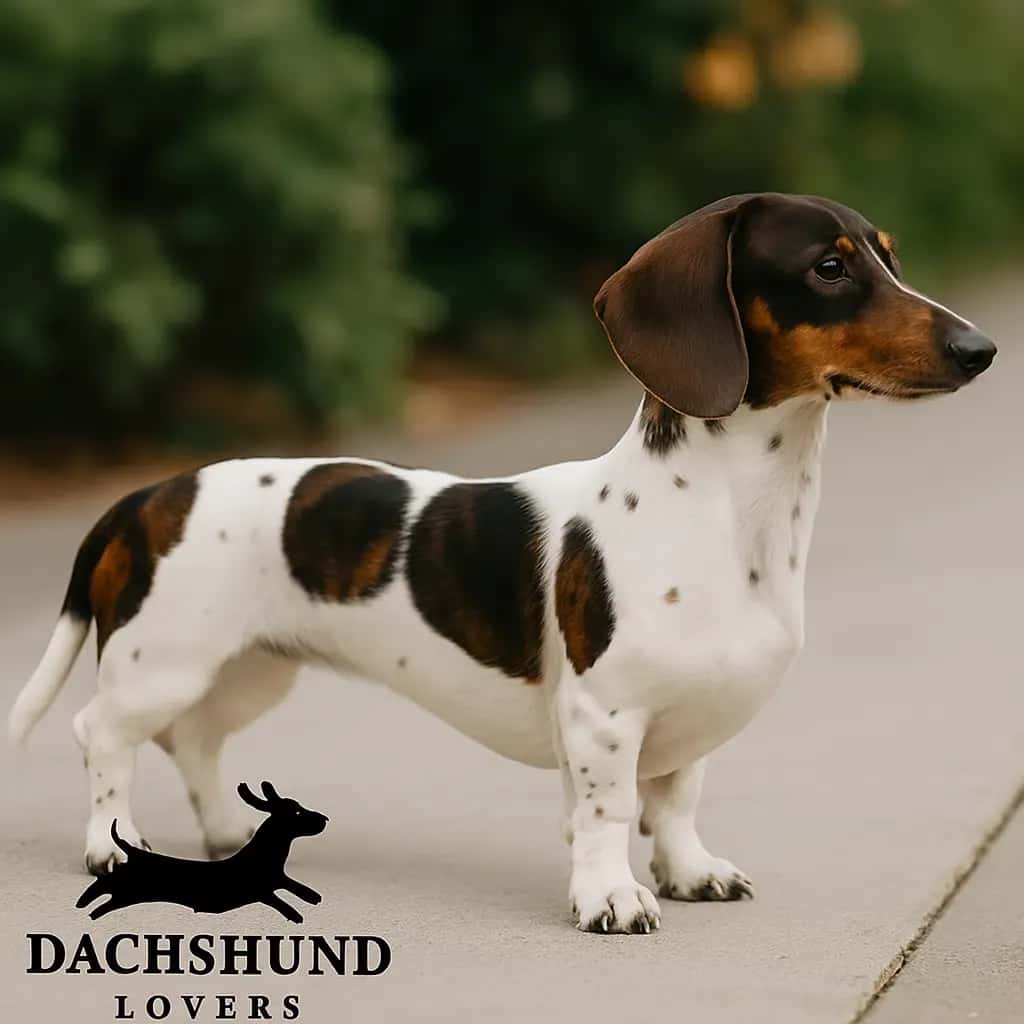
A piebald dachshund is a dachshund with a predominantly white coat marked by clearly defined patches of color—typically red, black, or chocolate. These patches often appear across the back, ears, and face, while areas like the chest, belly, and legs may stay mostly white. The look is clean, high-contrast, and often mistaken for other patterns like dapple or parti.
Unlike merle-patterned dachshunds, whose markings are more mottled or marbled, the piebald pattern is created by a recessive gene. This means both parent dogs must carry the gene in order for a puppy to be piebald.
It’s not just about the visuals. Piebald dachshunds are often the center of attention at the park—not because they act differently, but because their striking coats tend to draw people in. As a result, these pups may get more early socialization, which can make them slightly more outgoing or people-friendly.
Origins and History of the Piebald Dachshund
The story of the piebald dachshund begins in Germany, where the breed was first developed as a fearless hunter of badgers and other burrowing animals. While the classic wiener dog silhouette is instantly recognizable, it’s the piebald pattern—those charming, irregular patches of color on a crisp white background—that sets these pups apart in the dog world. This unique look is the direct result of the recessive piebald gene, a genetic trait that must be carried by both parents to produce piebald puppies.
Unlike the more common dapple dachshunds, whose marbled coats are created by a dominant gene, the piebald pattern is a recessive trait, making it a rarer find among dachshund varieties. To produce piebald puppies, breeders must carefully pair two dogs that each carry the piebald gene, ensuring the adorable result of white bodies splashed with bold patches of black, red, or chocolate. Importantly, while double dapple dachshunds—created by breeding two dapples—can suffer from serious health problems like deafness and blindness, piebald dachshunds do not share these same risks when bred responsibly. The demand for Piebald Dachshunds is driven by their distinctive aesthetic appeal and the allure of owning a unique dog.
The American Kennel Club recognizes the piebald pattern as an official color variation for the dachshund, further cementing its place in breed history. Over the years, the piebald gene has contributed to the dachshund’s reputation as a truly unique and lovable furry friend, with each piebald pup sporting a one-of-a-kind pattern that’s as individual as their personality. Whether you’re drawn to their history, their genetics, or simply their adorable patches, the piebald dachshund is a testament to the breed’s enduring charm and diversity.
Genetics Behind the Pattern
The piebald coat is caused by the recessive piebald gene (sp), which suppresses pigment in certain areas of the fur. Piebald dachshunds are born with their unique coat pattern, as these traits are inherited through genetics. This creates patches of white where color would normally be. For a dachshund to express this pattern, it must inherit the piebald gene from both parents—making the pairing more deliberate and less common than dominant traits like dapple.
If you had to guess how this gene is passed down, think of it like a recipe: each dog gets one copy of the piebald gene from each parent. Only when a dachshund inherits two copies—one from the mother and one from the father—will it show the piebald pattern. If a dog has just one copy, it will be a carrier but won’t display the white patches.
The amount of white varies from dog to dog. Some have just a few scattered splashes, while others are mostly white with just small areas of color. When a dachshund’s coat is more than 80% white, it’s often called an “extreme piebald”. These dogs may have little to no pigment on their ears or around their eyes, which can increase the risk of congenital deafness.
Ethical breeders manage this carefully. They’ll typically:
- DNA test both parent dogs for piebald status
- Avoid breeding two piebalds together to reduce the risk of excessive white
- Pair a piebald carrier with a non-piebald to maintain healthier expression
This careful approach ensures the pattern remains a beautiful quirk—not a health concern.
Piebald vs. Dapple: How to Tell the Difference
Even seasoned dachshund lovers occasionally mix these two up — and it’s easy to see why. Both can feature unusual color placements and striking contrast. But genetically and visually, piebalds and dapples are quite different. Another distinct coat pattern is brindle, which is characterized by tiger-like stripes where dark stripes overlay a lighter background color. Unlike piebald, which has large white patches with solid spots, or dapple, which features marbled blends, brindle dachshunds display a striped appearance without large white areas.
Feature | Piebald | Dapple |
|---|---|---|
Pattern | Clearly defined patches of color on a white base (think: red or chocolate spots over snow) | A marbled blend of light and dark areas — like watercolor splotches across a darker coat |
Gene Type | Recessive (both parents must carry the piebald gene) | Dominant (only one parent needs to carry the merle/dapple gene) |
Visual Clues | Solid patches, often with pink nose or white-tipped tail | Swirls, specks, or faded zones on base color — often includes eyes or ears |
Risk Factors | Deafness risk when there’s excessive white (especially on ears/face) | High risk of eye/deafness issues when two dapple dachshunds are bred together (double dapple) |
Common Confusion | Piebalds with small patches may be mistaken for low-contrast dapples | Dapples with light coat areas may be mistaken for piebalds |
A simple rule of thumb: if there’s a lot of white and clear patches — it’s likely piebald. If the color is swirled and blended — it’s probably dapple. If you see tiger-like stripes over a lighter background, that’s brindle.
Curious about the intersection? Read our full Dapple Piebald Dachshund Guide — it’s where these two patterns beautifully collide.
Coat Types & Color Combinations
Piebald dachshunds aren’t limited to one look — the gene can appear across all three coat types, with each bringing its own texture and visual style to the pattern.
Coat Types
- Smooth coat:
Sleek and low-maintenance, this coat shows the piebald pattern with the clearest definition. Think sharp-edged patches and crisp contrast — almost like a pop art painting. - Long-haired:
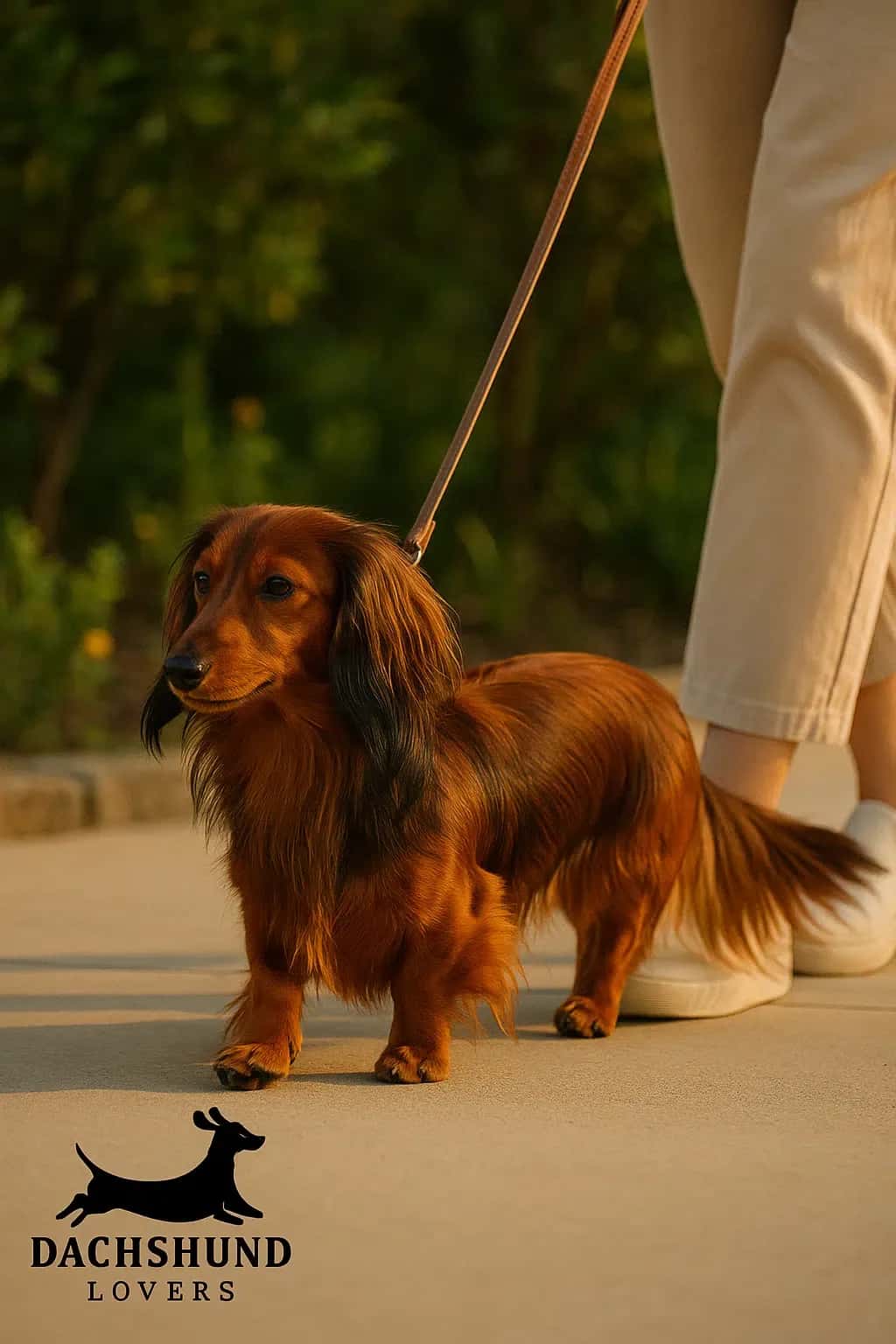
Soft and feathered, these coats blend the patches more gently. The piebald areas can look almost airbrushed, especially around the ears, chest, and tail. These dachshunds have a romantic, storybook quality. - Wire-haired:
Scruffy and textured, this version gives piebalds a rugged charm. The wiry fur adds dimension to the patches, often muting the white just slightly with a salt-and-pepper finish.
Common Color Combinations
While white is always the base, the patch color varies. Here are the most popular:
- Red piebald: Warm and sunny, with rust or copper patches on a white background.
- Black & white piebald: High contrast and timeless — like a tuxedo with attitude.
- Chocolate piebald: Deep, earthy tones for a richer and slightly softer look.
- Cream or tan piebald: More subtle and rare, often paired with softer contrasts.
Every piebald dachshund is visually one-of-a-kind — no two patch placements are the same. Some pups have full “cow print” bellies, others just a spotted ear or a splotch on the back.
Size and Appearance
Piebald dachshunds may be known for their eye-catching patterns, but their size and overall appearance are just as distinctive. These adorable wiener dogs come in two main sizes: standard and miniature. Standard piebald dachshunds typically weigh between 16 and 32 pounds, while their miniature counterparts tip the scales at a petite 11 to 16 pounds. Regardless of size, all piebalds share the breed’s signature long bodies, short legs, and expressive faces.
The piebald pattern itself is a showstopper—white coats adorned with bold patches of black, red, or chocolate, often accented by cute freckles (known as ticking) scattered across the face, legs, and body. Some piebald pups even sport striking blue eyes, adding an extra dash of uniqueness to their look. Their coats can be smooth, longhaired, or wirehaired, each type showcasing the piebald pattern in its own way: smooth coats highlight crisp, defined patches, while longhaired and wirehaired varieties offer a softer, more blended effect.
What truly sets the piebald dachshund apart is their playful, inquisitive nature. With their adorable faces, curious eyes, and fun-loving personalities, these pups are as delightful in spirit as they are in appearance. Whether you’re captivated by their unique markings or their happy-go-lucky attitude, a piebald dachshund is sure to bring a burst of joy, style, and companionship into any home.
Long-Haired Piebald Dachshunds
There’s something especially magical about the long-haired piebald dachshund. Their flowing coats soften the high-contrast piebald pattern, creating a look that’s more painterly than graphic. The result? A dog that looks like they’ve stepped out of a watercolor illustration.
The white areas take on a soft sheen, while the colored patches—whether red, black, or chocolate—blend gently into the feathered fur. Ears and tails are particularly striking, with silky strands catching the light and showing off the contrast in motion.
But it’s not just about looks. Long-haired piebalds often bring a different energy to the table.
Personality Traits
While all dachshunds share core traits—loyalty, cleverness, and a hint of sass—the long-haired variety tends to be:
- A little calmer than their smooth-coated cousins
(They’re still spirited, just not quite as turbo-charged.) - Gentler with strangers, making them a good pick for families, couples, or slower-paced households
- Highly affectionate, often happiest when curled up beside their person, coat gently draped like a blanket
They may also tolerate grooming a bit more patiently than some of the shorter-haired doxies, which helps considering their coat requires a touch more maintenance.
Want grooming tips for this coat? Explore our long-haired piebald dachshund guide
Dapple-Piebald Combinations
When a dachshund carries both the dapple and piebald genes, the result is one of the most visually arresting coat patterns in the breed. These dogs can look like abstract artwork—blending marbled dapples with crisp white patches in an almost surreal way. No two are ever alike.
Here’s how the two genes interact:
- The dapple (merle) gene creates a swirling, speckled effect—lighter and darker tones of the same color layered across the base coat.
- The piebald (sp) gene adds areas of pure white, most often on the chest, legs, neck, and belly.
Together, they create contrast and movement—white spaces breaking up dappled areas, or dapples appearing inside larger colored patches. The pattern placement is unpredictable, and that’s part of the appeal.
Things to Know
This combo coat may be beautiful, but it’s not without risk. The dapple gene is dominant, while the piebald gene is recessive—but when both are inherited, care must be taken.
Health warnings:
- Dogs that inherit two copies of the dapple gene (double dapples) are at high risk of hearing and vision issues—especially when paired with piebald markings that increase white around the face and ears.
- Ethical breeders will not breed two dapples or a dapple to a piebald unless one parent is genetically clear and all pups are tested.
Learn more about this rare pattern: Dapple Piebald Dachshund Guide
Personality & Behavior
Piebald dachshunds, whether smooth, long-haired, or dapple-piebald, carry the same spirited personality that makes dachshunds so beloved. Not only are they striking in appearance, but they also make excellent house dogs, forming strong bonds with their families and fitting in well with children and adults alike. The coat pattern might catch your attention first—but it’s their temperament that earns lifelong loyalty.
Piebald dachshunds are affectionate and extremely friendly to their family members, often being especially gentle toward kids. However, they can also be stubborn, so spending time on firm, consistent training with positive reinforcement is important from an early age. Their friendly nature and loyalty make them eager to please when training is approached with patience and encouragement. Early socialization is crucial to help manage their territorial instincts and high prey drive, as they may exhibit hunting instincts that can lead to chasing smaller animals if not properly managed. Positive reinforcement training is highly recommended, as harsh punishment can result in negative behaviors. Training a piebald dachshund requires consistency and patience, with daily routines and activities throughout the day playing a key role in their well-being.
Regular, moderate activity is essential for piebald dachshunds, and two daily walks are recommended to meet their exercise needs. Daily exercise helps prevent boredom and destructive behavior, keeping them both physically and mentally healthy. Additionally, a balanced diet is crucial for maintaining the health and energy levels of Piebald Dachshunds.
Here’s what you can typically expect:
Loyal and Devoted
Piebald dachshunds form intense bonds with their humans—especially one favorite person. They’ll often follow you from room to room, nestle under blankets beside you, and keep a quiet eye on you from their chosen perch.
Bold and Curious
Despite their small stature, piebald dachshunds have a big-dog attitude. They’re naturally inquisitive and love to explore, chase, and investigate—true to their scent-hound roots.
Alert and Vocal
You’ll know when someone’s at the door. Like most dachshunds, piebalds are natural watchdogs. They may bark to alert, out of boredom, or simply to announce themselves—training and mental stimulation help curb excess noise.
Thanks to their unique coat, piebald dachshunds often get more attention in public. This early exposure to strangers and new environments can lead to better socialization—though each dog’s comfort level still varies.
A Touch of Drama
Whether it’s refusing to walk in the rain or dramatically flopping on the floor when they’re denied a treat, piebalds can be theatrical (and hilarious). They’re expressive, emotionally intelligent, and excellent at getting their way.
Personality & Behavior
Caring for a piebald dachshund’s coat is less about extra effort and more about thoughtful, regular upkeep—especially because white fur can show dirt, tear staining, and grass stains more easily.
Here’s what grooming looks like, depending on coat type:
Smooth-Coated Piebalds
- Brushing: Once a week with a grooming mitt or soft brush to remove loose hair.
- Bathing: Every 4–6 weeks, or when visibly dirty.
- Notes: Wipe down paws and bellies after walks—especially if your pup has a mostly white underbelly.
Long-Haired Piebalds
- Brushing: Daily, particularly behind the ears, under the arms, and along the chest where mats form.
- Bathing: Every 3–4 weeks with a gentle detangling shampoo.
- Notes: Use a leave-in conditioner or detangling spray to keep feathering soft and smooth.
Wire-Haired Piebalds
- Brushing: Weekly, plus trimming with scissors around the face and feet.
- Stripping: Hand-strip every few months to maintain coat texture.
Health Considerations
Owning a piebald dachshund means welcoming a truly unique furry friend into your home—but it also comes with a few important health considerations to keep in mind. The same recessive piebald gene that gives these adorable wiener dogs their signature white patches and bold patterns can sometimes be linked to specific health problems, especially when it comes to hearing and vision.
One of the most notable risks for piebald dachshunds is congenital deafness. This is most likely to occur in pups with a high percentage of white on their coat, particularly when the white extends over the ears or face. The gene responsible for those striking patches can also impact the development of the inner ear, leading to partial or complete hearing loss in some dogs. While not every piebald will experience deafness, it’s something every owner should be aware of—especially if your pup has blue eyes, as this trait can sometimes be associated with vision or hearing issues.
It’s also important to understand the difference between piebald and dapple dachshunds when it comes to breeding. While both patterns are eye-catching, the genetics behind them are quite different. Dapple dachshunds carry a dominant gene, while the piebald pattern is the result of a recessive gene. If both parent dogs carry the piebald gene, they can produce piebald puppies. However, breeding two dapple dachshunds together can result in double dapple pups—a combination that significantly increases the risk of both deafness and blindness, as well as other serious health problems. For this reason, responsible breeders avoid pairing two dapples or breeding for excessive white in piebalds.
The American Kennel Club recognizes the piebald pattern as a valid and beautiful variation in the dachshund world, but always encourages ethical breeding practices to protect the health of these adorable dogs. If you’re considering adding a piebald dachshund to your family, look for breeders who prioritize health testing and transparency about their dogs’ genetic backgrounds.
Beyond genetics, regular veterinary check-ups, a balanced diet, and plenty of exercise are key to keeping your piebald pup happy and healthy for years to come. With a little extra care and attention, your unique, spotty companion can enjoy a long, joyful life by your side—bringing endless charm, curiosity, and love into your home. In the end, understanding the genetics and health considerations behind those cute patches means you’ll be even better equipped to give your piebald dachshund the best possible care.
Deafness & the Role of White Pigment
One of the most well-documented risks in piebald dachshunds is congenital deafness. This condition is more likely to appear in dogs with excessive white, particularly if the white areas cover both ears or extend across the head. The connection lies in melanocytes, the cells responsible for pigment. These cells also play a role in the development of the inner ear. When pigment is lacking, hearing structures may not form properly—resulting in partial or full deafness.
Signs of potential hearing issues include:
- Not responding to everyday sounds (like food bowls, squeaky toys, or doorbells)
- Startling easily when touched or approached from behind
- Deep, prolonged sleeping even in noisy environments
Important: This condition is not the same as age-related hearing loss. Congenital deafness is present from birth and usually diagnosed within the first few months of life.
To reduce this risk, ethical breeders avoid pairing two piebald dachshunds together, as this can produce what’s known as “extreme piebalds” with more than 80% white.
Dachshund-Specific Health Concerns
Beyond coat-specific risks, all dachshunds—piebalds included—have certain health considerations tied to their unique body shape and genetics.
Intervertebral Disc Disease (IVDD)
This is the most well-known dachshund health issue. Their long spine and short rib cage make them more vulnerable to disc injuries, especially from jumping off furniture, rough play, or weight gain.
Tips to help prevent IVDD:
- Use dog ramps or steps for beds, couches, and cars
- Keep them at a healthy weight—excess weight adds pressure to the spine
- Avoid letting them climb stairs or jump down from high places regularly
Obesity & Joint Strain
Dachshunds are small but love food—and it’s surprisingly easy for them to gain weight. Unfortunately, even a few extra pounds can have a big impact on their spine, joints, and overall energy levels.
- Stick to measured meals (don’t free-feed)
- Use low-calorie treats or break larger ones into smaller pieces
- Incorporate gentle daily walks or enrichment games to keep them active
Dental Health
Piebald dachshunds, especially the miniature and long-haired types, can be prone to dental issues such as tartar buildup, bad breath, or gum disease.
- Brush their teeth regularly (2–3 times a week is ideal)
- Offer dental chews or vet-recommended toys to help clean teeth naturally
- Schedule annual vet dental checks—especially after age 5
Skin Sensitivity & Sun Protection
White fur often means less pigment on the skin underneath, making piebalds more vulnerable to sunburn, dryness, or irritation.
- Limit sun exposure during peak UV hours
- Apply dog-safe sunscreen to pink noses, ears, or belly if outside for long periods
- Use gentle, fragrance-free shampoos for bathing, especially around sensitive areas
Piebald dachshunds are resilient and spirited, but like any breed, they benefit from preventative care, regular vet visits, and a home that’s mindful of their unique needs. With the right support, they’ll thrive as the confident, quirky companions we all love.
Where to Find One Responsibly
If you’ve fallen in love with the piebald dachshund’s striking pattern and endearing personality (and honestly, who wouldn’t?), the next step is finding one through a responsible, ethical source. These dogs may look unique, but they shouldn’t come from breeders chasing “rare” at the expense of health or temperament.
What to Avoid
Some breeders use phrases like “rare piebald dachshund” to charge inflated prices, even when the dog hasn’t been health tested or socialized properly. That kind of marketing often skips over the important stuff—like lineage, genetic testing, and early puppy care.
Red flags to steer clear of:
- No health testing or unwillingness to share results
- Breeding for appearance only (e.g. color, coat) without regard for genetics
- Multiple litters at once or multiple breeds sold at the same time
- Refusal to let you visit or ask questions
- No screening for buyers
What to Look For
A good breeder will be transparent, thoughtful, and just as curious about you as you are about them. They’re not just selling puppies—they’re placing future family members.
Look for breeders who:
- Test for piebald gene status and avoid double-piebald pairings
- Have a calm, clean home or facility where puppies are raised with care
- Provide vet records, microchips, and desexing information (or contracts if not yet desexed)
- Encourage visits, updates, and ongoing contact after adoption
- Can provide references or are members of official dachshund clubs
Consider Breed-Specific Rescues
Rescue might not mean a puppy—but it does mean giving a deserving dachshund a second chance. Many rescues work with dachshunds of all coat types, including piebalds, and you’ll often find older pups with their personalities already fully formed.
If your heart is open, consider:
- Dachshund Rescue Australia – www.dachshundrescue.com.au
- UK Dachshund Rescue – www.dachshundrescue.org.uk
- Dachshund Rescue of North America (USA) – www.drna.org
- PetRescue Australia – www.petrescue.com.au
- The Red Foundation (UK) – www.theredfoundation.net
You can also browse reputable platforms like Good Dog (US), RightPaw (Australia), or Champdogs (UK)—just make sure you filter by ethical standards and ask the right questions.
FAQs
More From This Series:
Authored by
Ellie
Ellie is a lifelong dachshund lover and the proud human of Maple, a long-haired brown doxie with a regal side-eye. While not a vet, Ellie brings honest, researched, and experience-based insights into every article she writes for the Dachshund Lovers community.
Read moreEllie is a lifelong dachshund lover and the proud human of Maple, a long-haired brown doxie with a regal side-eye. While not a vet, Ellie brings honest, researched, and experience-based insights into every article she writes for the Dachshund Lovers community.
Read moreDisclaimer
This article is for informational purposes only and should not be considered veterinary advice. Always consult with a licensed veterinarian or ethical breeder before making decisions regarding your dachshund’s health, coat genetics, or care.
There are no comments yet
Leave a comment