Piebald Dachshund: The Elegant, Unique Showstopper
Piebald Dachshund: The Elegant, Unique Showstopper
Learn everything about the long-haired piebald dachshund—from coat care and temperament to ethical breeding tips.

Ellie
Posted on August 10, 2025.
Updated on July 21, 2026.
Table of Contents
- 1.Key Takeaways on Long Haired Piebald Dachshund
- 2.What Is a Long-Haired Piebald Dachshund?
- 3.Coat Type + Pattern: Why It’s So Unique
- 4.Genetics Behind the Piebald Pattern
- 5.Piebald vs. Dapple Piebald Dachshunds
- •What is a Piebald Dachshund?
- •What is a Dapple Dachshund?
- •What Happens When They Combine?
- 6.Coat Colors & Variants
- •1. Red Piebald
- •2. Chocolate Piebald
- •3. Black and White Piebald
- •4. Cream Piebald
- 7.Personality & Behavior
- •Calm with a Dash of Sass
- •Deeply Bonded
- •Great with Families (With Boundaries)
- •A Touch of Drama
- 8.Grooming & Coat Care
- •Brushing Routine
- •Bathing Schedule
- •Trimming Needs
- •Other Essentials
- 9.Health Risks & Genetic Considerations
- •Hearing & Vision Concerns
- •IVDD (Intervertebral Disc Disease)
- •Dental Health
- 10.Miniature Long-Haired Piebalds
- •What Makes Them So Endearing?
- •Best-Suited Homes
- 11.Where to Find One
- •Start Here:
- •Consider Rescue, Too
- -More From This Series:
- -Disclaimer
Share

I first met Willa—an impossibly elegant long-haired piebald dachshund—on a slow Sunday afternoon at Camperdown Memorial Rest Park in Sydney. I was there with Maple (my own long-haired doxie, equal parts velvet and opinion), and Willa’s feathered tail and freckled snout caught both of our attention. She was draped across a picnic rug like a celebrity avoiding the press, her human sipping cold brew like it was a meditation practice.
Over the past five years, I’ve spotted long-haired piebalds from the sidewalks of Surry Hills to a leafy corner of South Yarra/ They’re unforgettable. Part artwork, part mischief-maker, these dogs wear their markings like brushstrokes and move through the world with softness and style.
Here’s what I’ve learned—through curious conversations, tangled grooming brushes, and the occasional soggy café cushion—about what it means to live with (and absolutely adore) a long-haired piebald dachshund
Key Takeaways on Long Haired Piebald Dachshund
Topic | Summary |
|---|---|
What Is a Long-Haired Piebald Dachshund? | A dachshund with a long, feathered coat and a piebald pattern—white base with distinct patches of color (red, black, chocolate, etc.). |
Temperament | Slightly gentler and more relaxed than smooth or wire-haired varieties. Still loyal, intelligent, and stubborn. |
Coat Care | High-maintenance. Requires frequent brushing, especially around ears, tail, and legs to prevent mats. |
Piebald Gene | Recessive gene (sp) causes white spotting. Must be inherited from both parents. Excessive white can increase risk of deafness. |
Color Variants | Most common pairings are red piebald, black piebald, and chocolate piebald. Markings are random and unique to each dog. |
Miniature Options | Available in both standard and miniature sizes. Miniature long-haired piebalds are especially popular in urban settings. |
Ethical Breeding | Responsible breeders avoid pairing two piebalds to reduce health risks associated with excessive white. |
What Is a Long-Haired Piebald Dachshund?
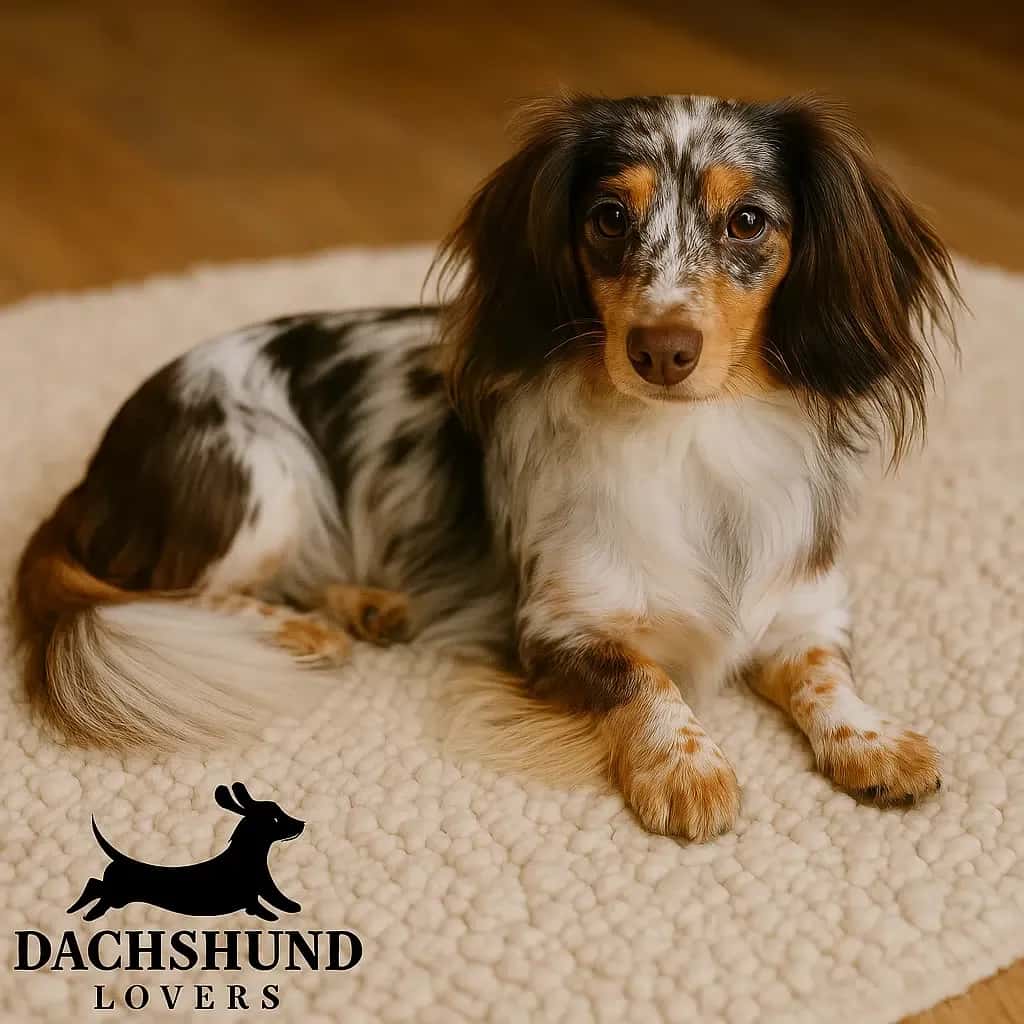
A long-haired piebald dachshund combines two distinctive features: a soft, flowing long coat and the piebald pattern—white base with contrasting patches of color. These dachshunds are as much about texture as they are about tone. Where other coats shout for attention, the long-haired piebald whispers it—elegantly. The result is a dachshund that looks like a watercolor painting in motion, gentle in expression yet visually unforgettable.
You’ll often see white framing their paws or chest, with sweeping patches of chocolate, red, or black fanning across their back. The long hair gives it a feathered look that moves as they trot—a reminder that beauty doesn’t have to be loud to be captivating.
Coat Type + Pattern: Why It’s So Unique
Long-haired piebald dachshunds have a look that’s hard to forget—gentle, flowing, and just the right amount of dramatic. What makes their coat so special is the way the piebald pattern interacts with the longer hair. Rather than bold, defined patches, the color transitions are more diffused, with feathering at the edges that gives the entire coat a softened, almost watercolor-like quality.
This effect is especially visible in areas where the hair grows longer: behind the ears, around the chest and belly, and along the tail. These zones tend to showcase the blending of base white with overlying colors like chocolate, red, or black, resulting in a coat that seems to shimmer in motion.
Expect to see:
- Wispy transitions between cream or white and deeper colors
- Feathered patches that don’t follow strict outlines
- A visible layering of tones, with undercoat peeking through the topcoat
It’s a coat that brings movement to life. As your dachshund trots across a rug or curls up in the sun, you’ll notice how the colors shift with the light—more art piece than pet. But beauty does come with responsibility: the same softness that gives their coat elegance also means tangles and matting can form quickly without regular grooming
Genetics Behind the Piebald Pattern
The piebald pattern isn’t just a beautiful accident—it’s the result of specific genetics at play. In dachshunds, the pattern is caused by a recessive gene known as “sp” (spotting). For a puppy to be piebald, both parents must carry and pass on this gene. That means even if two parents don’t show the piebald pattern themselves, they can still produce piebald offspring if they’re carriers.
What makes it even more interesting is the range of expression within the piebald gene. You might see:
- Minimal piebalds – with just a splash of white on the chest or paws
- Classic piebalds – with 30–70% white and large, clear color patches
- Extreme piebalds – with more than 80% white, often including white faces and ears
Important health note: Extreme piebald dachshunds—especially those with unpigmented ears—have a higher risk of congenital deafness. This is because pigment cells are also involved in hearing development. That’s why responsible breeders test hearing, especially in high-white pups.
There’s often confusion between piebald and other coat types like dapple or double dapple, but the genes involved are entirely different. A dapple gene causes a marbled or mottled look, whereas piebald always presents as crisp white base + solid color patches.
If you’re planning to bring home a piebald pup, it’s worth asking the breeder about the genetic makeup of the parents:
- Are they carriers or visual piebalds?
- Is the pairing designed to avoid health risks like double dapple?
- Have any puppies had a BAER hearing test (the gold standard for detecting early deafness)?
Explore the broader piebald category, visit our full piebald dachshund guide.
Piebald vs. Dapple Piebald Dachshunds
While both coat types are eye-catching, piebald and dapple dachshunds are genetically and visually distinct. Occasionally, a dachshund may inherit both traits, creating what’s known as a dapple piebald—but let’s first understand the difference between each one.
What is a Piebald Dachshund?
A piebald dachshund has a white base coat with solid patches of a second color—like chocolate, black, red, or cream. The edges of these patches are clean and bold, not swirled or blended. It’s a bit like spotting paint splashes on a blank canvas.
Key signs:
- Clear white background
- Bold patches of one color (not blended)
- No marbling or speckling inside the patches
What is a Dapple Dachshund?
Dapple dachshunds carry the merle gene, which creates a swirling or marbled pattern within the colored areas of their coat. This gene affects pigmentation irregularly, meaning dapples can have lighter and darker shades of the same color, often with some splotches or specks.
Key signs:
- Swirled or marbled coat pattern
- Often a mix of light and dark in the same zone
- May have blue or partially blue eyes
What Happens When They Combine?
A dapple piebald dachshund inherits both the dapple gene and the piebald gene. Visually, this means they have a white base like a typical piebald, but instead of solid color patches, some of the patches may also include dappled (marbled) areas.
These coats are more unpredictable and can vary widely—even within a single litter.
Important health warning:
If both parents carry the dapple gene and are bred together, there’s a risk of producing a double dapple puppy. Double dapples often have extensive white markings, including white eyes, and are at significantly higher risk of vision and hearing impairments.
Ethical breeders:
- Will never breed two dapples together
- Will fully disclose coat genetics to potential puppy buyers
- Should provide hearing test results for any high-white pup
Read our full guide on dapple piebald dachshunds to explore the pros, cautions, and care needs of this unique coat type.
Here’s the next section, expanded with richer detail while keeping it calm, design-aligned, and helpful:
Coat Colors & Variants
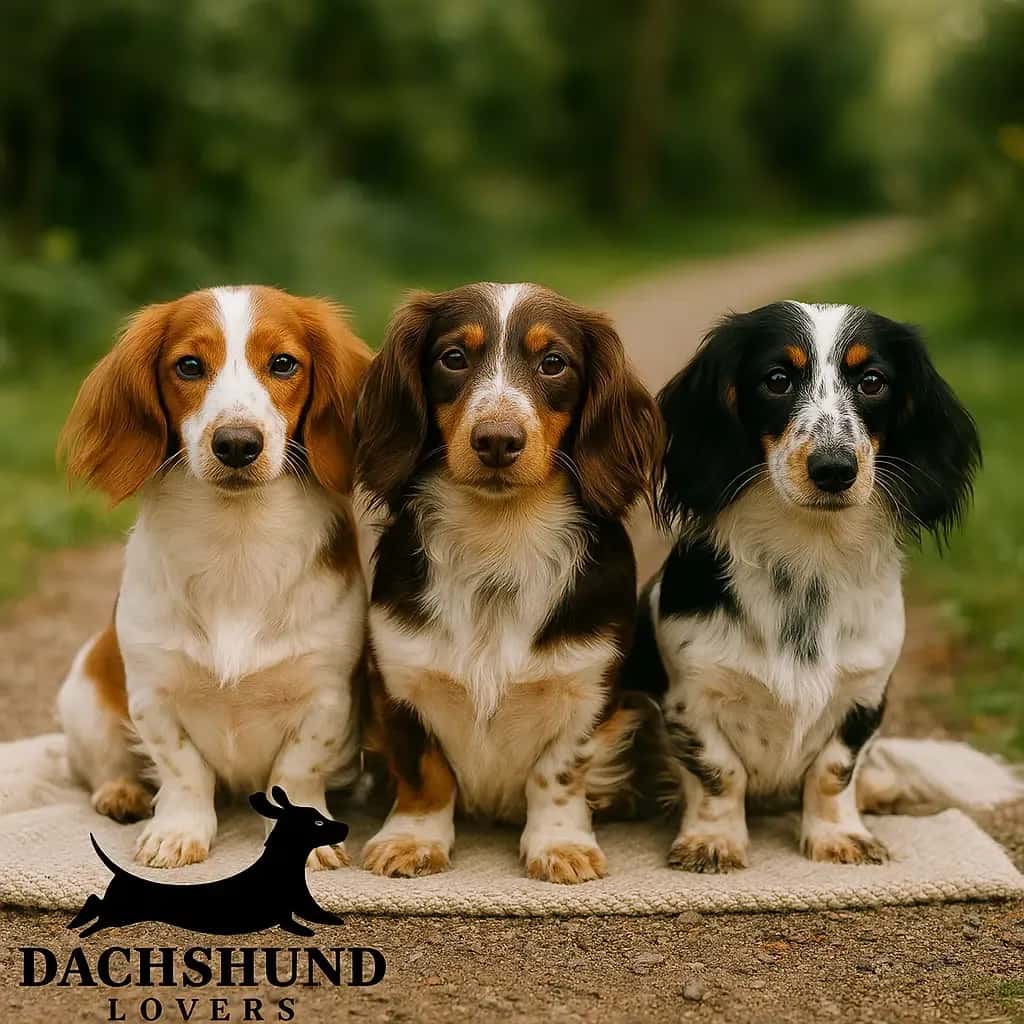
The long-haired piebald dachshund’s beauty lies in its contrast. The white base coat makes every other color appear more vivid—and in a long-haired variety, those colors move and shimmer as they walk.
Here are the most common long-haired piebald color combinations:
1. Red Piebald
A classic and crowd-favorite. The red tones often look slightly diluted against the white, creating a warm, almost sun-kissed effect. Long-haired reds can range from deep rust to pale strawberry.
Note: Red piebalds tend to show tear stains or dirt more obviously around the face—gentle daily wipes help.
2. Chocolate Piebald
Rich and earthy, chocolate patches over a white coat create a beautiful cocoa-and-cream aesthetic. These dogs are often mistaken for liver piebalds due to their warm undertones.
They tend to have hazel or green eyes, which can enhance the soft expression that long-haired doxies are known for.
3. Black and White Piebald
This is the highest-contrast version: bright white coat with jet-black patches. In long-haired coats, the black can almost have a sheen, especially in sunlight.
These dogs photograph beautifully—especially against soft-toned backdrops or natural light.
4. Cream Piebald
One of the most sought-after (and rarest) combinations. The cream color is subtle and elegant, and in a long-haired piebald, it almost melts into the white. It’s a soft, understated look that appeals to minimalists.
Keep in mind: cream piebalds may appear more white in low lighting, so photos don’t always do them justice.
Personality & Behavior
Long-haired piebald dachshunds aren’t just lovely to look at—they’re emotionally rich little companions. Their personalities are shaped by both their coat type and their dachshund DNA, creating a mix of elegance and tenacity.
Here’s what you can typically expect:
Calm with a Dash of Sass
Long-haired dachshunds are generally a bit calmer than their smooth or wire-haired relatives. There’s a gentleness to them—often preferring snuggles on the sofa to racing laps in the yard. But don’t mistake calm for passive—they still have opinions and won’t hesitate to voice them.
Deeply Bonded
These dogs don’t just like their people—they attach. Long-haired piebalds form strong emotional bonds and thrive on closeness. They’ll follow you from room to room, and if you’re lucky, they’ll drape themselves like a warm scarf across your lap.
They’re also:
- Highly affectionate (sometimes bordering on clingy)
- Emotionally intuitive—many owners swear their doxies sense moods
- Loyal and protective, despite their small size
Great with Families (With Boundaries)
Piebalds tend to attract attention, which can help with socialization. They’re often more outgoing simply because they’re used to being approached and admired.
That said, they still need:
- Respectful kids who know how to handle small dogs gently
- Quiet retreat spaces when overstimulated
- Early social training to avoid stranger suspicion or barking outbursts
A Touch of Drama
Like all dachshunds, the piebald variety knows how to express themselves. Whether it’s a theatrical yawn, a dramatic flop onto their bed, or a long-suffering sigh when it’s not dinner time yet, they’re entertainers at heart.
And yes—they will bark at the wind. Or at leaves. Or at nothing at all.
Grooming & Coat Care
The long-haired piebald dachshund is a beauty, but beauty comes with upkeep. Their flowing coats and white patches demand a bit more daily attention than other varieties — and while it’s not high-maintenance in a diva sense, it is consistent care.
Brushing Routine
Daily brushing is non-negotiable — especially around the ears, chest, underarms, and tail. These are the first places to mat and tangle, particularly after walks, naps, or even a windy day outdoors. Use a slicker brush for general maintenance and a metal comb to gently work through feathering.
Expect to find:
- Leaves and grass caught in their tail
- Knots behind the ears if left for more than a day
- Dirt and dust more visible on white areas
Bathing Schedule
A bath every 3–4 weeks keeps their coat soft and the white fur bright. Choose a gentle, nourishing dog shampoo — preferably one made for white or light-colored coats, as these help prevent yellowing over time.
Post-bath, towel-dry thoroughly and use a blow dryer on a low, warm setting if your dog tolerates it. This helps avoid that damp-dog smell lingering in their undercoat.
Trimming Needs
Most long-haired piebalds won’t need full grooming trims, but light hygiene trimming is helpful:
- Around the paw pads
- Under the tail
- Along the belly if the coat grows long enough to pick up debris
A tidy dog is a happier one — especially if they enjoy curling up on your lap or sleeping in bed.
Other Essentials
- Nail trims every 2–3 weeks
- Ear checks and cleaning (especially if they have long ear feathering)
- Weekly teeth brushing — long-haired dachshunds tend to hide plaque well, but it’s there
- Daily paw and belly wipes after walks (white fur shows everything)
It’s not overwhelming — just a few minutes a day, and the reward is a dog who looks and feels as cared for as they truly are.
Health Risks & Genetic Considerations
Long-haired piebald dachshunds are generally robust little companions — but their unique genetics come with a few things worth knowing. Being prepared doesn’t mean expecting the worst. It means giving your dachshund the best.
Hearing & Vision Concerns
The piebald gene, especially in extreme expressions where white covers most of the face and ears, can sometimes be linked to congenital deafness. This is more common when breeders pair piebalds with dapples or don’t understand coat genetics.
Ask for:
- BAER hearing test results (ideally done at 6–8 weeks)
- Photos of both parents to assess coat distribution
- Proof that only one dapple parent was involved (never two)
Vision issues are less common in piebalds than in double dapples, but it’s still important to be cautious when multiple coat genes are at play.
IVDD (Intervertebral Disc Disease)
As with all dachshunds, long-bodied structure brings a risk of spinal issues. IVDD can happen suddenly — jumping off a couch or staircase might seem harmless, until it’s not.
Minimize the risk:
- Use ramps and stairs around furniture
- Support their rear when lifting
- Maintain a healthy weight (extra kilos add stress to the spine)
Skin & Coat Sensitivity
White areas on a piebald’s coat can be more prone to:
- Sunburn (yes, even through fur)
- Irritation from grass or cleaning products
- Staining around the paws and belly
Try switching to a fragrance-free shampoo and avoid walking on salted or heavily treated paths. You’ll also want to wipe their feet and undercarriage after rainy walks or muddy outings — especially if your doxie insists on walking through every puddle.
Dental Health
Long-haired dachshunds can hide tartar and early gum issues under their plush faces. While they may not drool or pant heavily like other breeds, regular dental care still matters.
A soft dog toothbrush and daily brush or dental chew routine can make a big difference — and reduce costly vet cleanings later on.
Miniature Long-Haired Piebalds
Yes — they exist. And yes — they’re just as charming as you’d imagine.
Miniature long-haired piebald dachshunds pack all the elegance of their standard-sized cousins into a compact, highly portable package. At under 11 pounds fully grown, these little ones feel like silk with legs — and tend to follow their favorite person from room to room like a fluffy shadow.
What Makes Them So Endearing?
Aside from their size, minis often bring a slightly livelier energy to the table. They’re still gentle and affectionate, but more likely to initiate play or demand attention with a determined little nose nudge.
Expect:
- Slightly more energy (especially in the evenings)
- Big opinions in a small body — barking at leaves, strangers, and the fridge
- Incredible loyalty — they’ll wait outside the bathroom like it’s a reunion scene
- High grooming sensitivity — their smaller legs and finer coat can tangle quickly
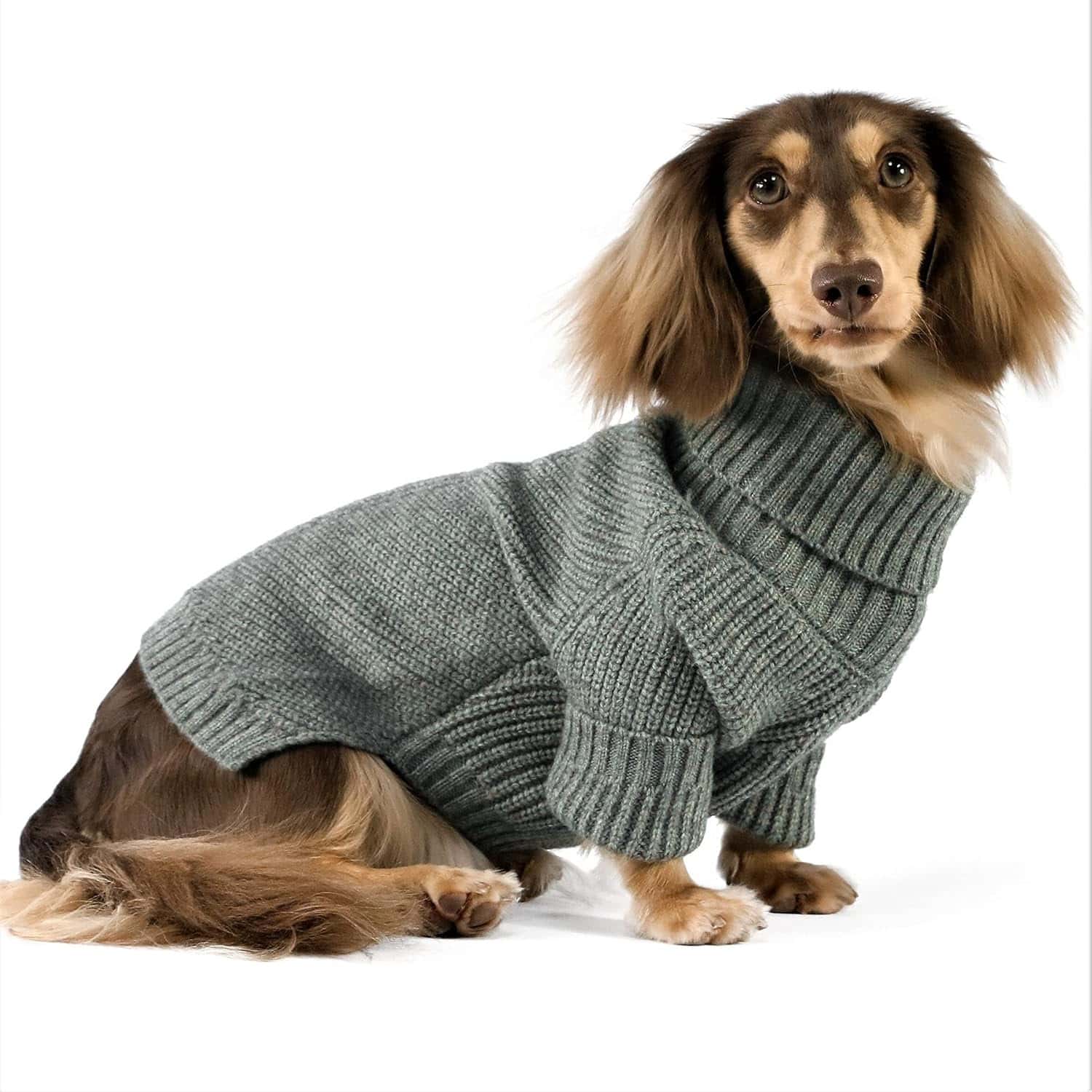
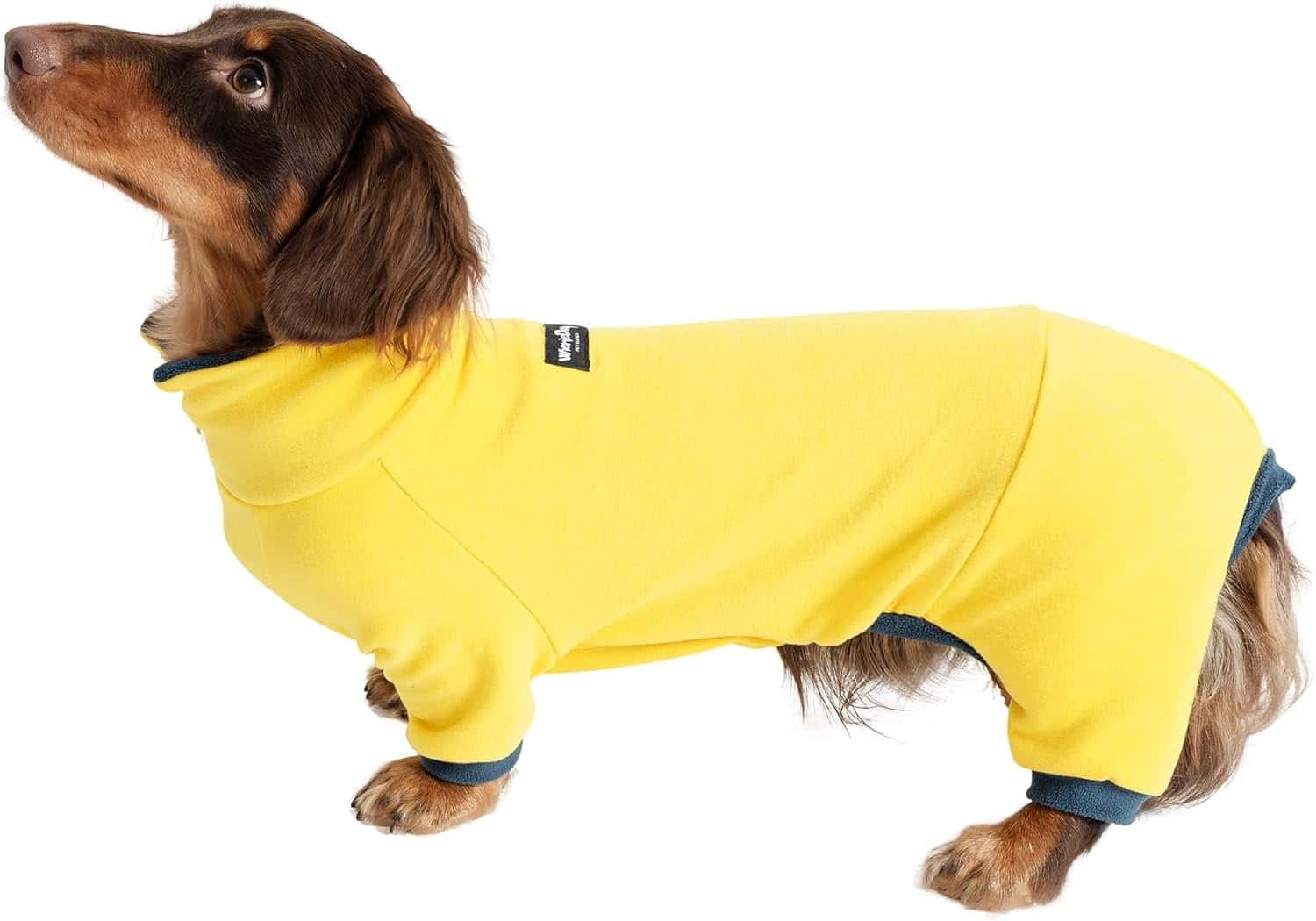
Miniature piebalds can also be more prone to cold sensitivity, particularly when white areas dominate their coat. A soft, lined jacket or knit is more than a fashion choice — it’s comfort and care. You’ll often find them burrowed under blankets or curled tightly on warm laps.
Best-Suited Homes
Mini long-haired piebalds thrive in:
- Apartments or small homes
- Households with calm routines and gentle handling
- Families with older children who understand dog boundaries
- Homes where someone is around most of the day — they do not like being alone
Their temperament tends to skew toward affectionate and clingy — in the most endearing way. If you’re looking for a dachshund who acts like a live-in soulmate, a miniature piebald might be your match.+
Where to Find One
Long-haired piebald dachshunds — especially miniatures — are not as common as their smooth-coated relatives. That’s partly due to the genetics involved, but also because ethical breeders prioritize health and temperament over trending coat colors. Finding one takes patience, but it’s worth it.
Start Here:
United States
- AKC Marketplace – Dachshund breeders
- Dachshund Rescue of North America
- Facebook groups like Dachshund Lovers USA Rehome & Rescue
United Kingdom
- The Kennel Club UK – Dachshund Breeders
- Dachshund Rescue UK
- Breed clubs like UK Dachshund Club
Australia
- Dogs Australia – Dachshund breeders
- Dachshund Rescue Australia
- State-based groups such as NSW Dachshund Club or Dachshunds of Melbourne
What to Look For in a Breeder
- DNA testing — Both parents should be screened for coat traits and common health concerns
- Hearing tests — Especially for white-heavy or dapple piebald litters
- Transparent lineage — Ask about the piebald history and avoid “double dapple” breeding
- Environment — Puppies should be raised in a home environment, not a kennel
Avoid breeders who advertise:
- “Rare piebalds” without test results
- Litters with excessive white, especially covering both ears
- Vague answers about parent dogs, socialization, or health guarantees
Consider Rescue, Too
Rescues occasionally receive long-haired or piebald dachshunds, particularly through surrenders. These dogs may be older — but often come house-trained, temperament-tested, and overflowing with love.
If you’re open to adopting a slightly older dog, your perfect match may already be waiting.
FAQs
More From This Series:
Authored by
Ellie
Ellie is a lifelong dachshund lover and the proud human of Maple, a long-haired brown doxie with a regal side-eye. While not a vet, Ellie brings honest, researched, and experience-based insights into every article she writes for the Dachshund Lovers community.
Read moreEllie is a lifelong dachshund lover and the proud human of Maple, a long-haired brown doxie with a regal side-eye. While not a vet, Ellie brings honest, researched, and experience-based insights into every article she writes for the Dachshund Lovers community.
Read moreDisclaimer
This article is for informational purposes only and does not constitute veterinary advice. Always consult a qualified breeder or veterinarian when making decisions about your dachshund’s care, coat, or health.
There are no comments yet
Leave a comment