Red Sable Dachshund – Complete Guide to This Fiery Beauty
Red Sable Dachshund – Complete Guide to This Fiery Beauty
Explore the red sable dachshund — from its feathered black-tipped coat to how sable patterns work in dachshund color genetics. Grooming tips included.

Ellie
Posted on October 21, 2025.
Updated on July 21, 2026.
Table of Contents
- 1.Introduction
- 2.Key Takeaways
- 3.Red Sable Dachshunds: Sizes, Availability, and Personality
- 4.The Coat That Stopped Me Mid-Conversation
- 5.What Is a Red Sable Dachshund?
- 6.The Sable Dachshund Coat Pattern
- 7.How It Compares to Other Red Dachshunds
- 8.Dachshund Color Genetics Behind Sable
- 9.Grooming and Coat Care
- •Brushing Routine
- •Bathing and Shampoo
- •Sun Protection
- •Trimming and Maintenance
- •Nail Care
- 10.Is the Red Sable Coat Rare?
- -More From This Series:
- -Disclaimer
Share

Introduction
Are you captivated by the unique beauty of the red sable dachshund? This guide covers everything about the red sable dachshund, including its striking coat, fascinating genetics, care requirements, and rarity. Whether you’re a potential owner, a dachshund enthusiast, or simply curious about rare dog coat patterns, this comprehensive resource is designed for you.
We’ll explore what makes the red sable dachshund so special, from its feathered black-tipped coat to the genetics behind the sable pattern. You’ll also find practical grooming tips, health and nutrition advice, and insights into their temperament and living needs. Red sable dachshunds are available in both miniature and standard sizes, and their loyal, playful, and affectionate nature makes them wonderful companions for a variety of households.
The sable pattern is seldom seen in smooth and longhaired dachshunds but is predominant in wirehaired dachshunds, where it is known as wild boar. Grooming needs also vary depending on whether your dachshund is smooth, long-haired, or wire-haired. If you’re considering adding a red sable dachshund to your family or simply want to learn more about this rare and beautiful pattern, you’re in the right place.
Key Takeaways
Trait | Description |
|---|---|
Breed Type | Long-haired dachshund with a red base and black-tipped, banded hair. Also available in miniature or standard sizes with classic long-bodied, short-legged structure. |
Visual Effect | Deep auburn coat with smoky feathering and a dark overlay; a true sable may appear black and tan or cream from a distance due to the overlay of black hairs. |
Coat Pattern | Sable — defined by banded hairs (red near the base, black near the tips), creating a uniform dark overlay on red dogs. Sable is considered a pattern, not a color. |
Genetics | Requires the sable gene, expressed primarily in long-haired dachshunds. Both parents must carry the gene for a pup to be sable. |
Rarity | Less common than standard red or tan; more visible in the long coat. Sable is seldom seen in smooth and longhaired dachshunds but predominant in wirehaired (wild boar). |
Grooming | Grooming routine varies by coat type (smooth, long-haired, wire-haired). Regular brushing preserves black tips and coat clarity. |
Red Sable Dachshunds: Sizes, Availability, and Personality
Red sable dachshunds are available in both miniature and standard sizes, each with the classic long-bodied, short-legged structure the breed is known for. These dogs can be purchased from reputable breeders, and red sable dachshund puppies are occasionally available for sale. Whether you choose a mini or standard, you’ll find that red sable dachshunds make excellent pets. They are loyal, playful, and affectionate companions, well-suited for small living spaces, families, singles, and seniors alike.
Now that you have an overview, let’s dive into what makes the red sable dachshund so captivating.
The Coat That Stopped Me Mid-Conversation
It happened in Berry at the famous Berry Donut Van. Maple and I were sitting at an outdoor table, halfway through a donut, when I saw a dachshund with the most captivating coat I’d ever seen. It looked red at first — rich, warm, and classic. But then she turned, and her back shimmered with black tips like charcoal brushing flame.
Her name was Brandy, and she was a red sable dachshund — not just red, not just long-haired, but layered, textured, and undeniably elegant. Her coat moved like it had mood.
I get asked a lot about rare coats, but this one holds a special place. Many people are confused by the red sable coat, often mistaking it for other patterns, so it's important to describe its unique features clearly to avoid misidentification. Here’s what makes red sable dachshunds so unique — and how their sable dachshund coat pattern tells a quiet, beautiful story.
Now that you’ve heard the story that sparked my fascination, let’s define exactly what a red sable dachshund is.
What Is a Red Sable Dachshund?
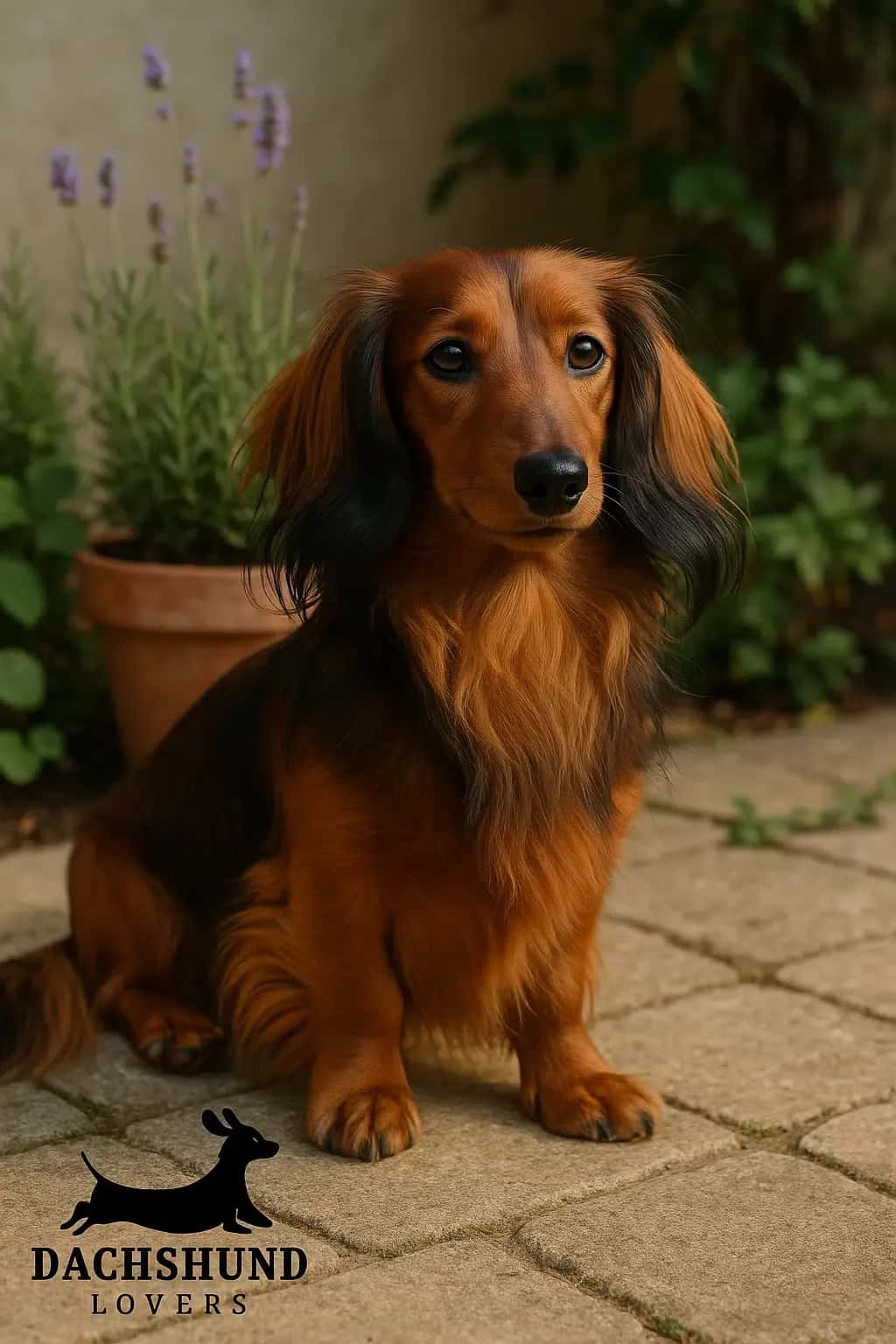
A red sable dachshund is a long-haired dachshund with a rich red base coat and delicate black-tipped hairs that create a smoky, layered appearance. The body hairs of a red sable are banded with two colors, red near the base and black near the tips. The sable pattern consists of a uniform dark overlay on red dogs. Sable is considered a pattern and not a color in dachshunds.
This banded effect distinguishes sable from other red or shaded patterns. Unlike the more graphic dapple or striped brindle patterns, sable isn’t defined by contrast — it’s about dimension. The effect is soft and nuanced, almost like watercolor blending, especially on longer areas like the ears, chest, and tail.
To describe a true sable pattern, look for these banded hairs with black tips. The face and feet of a red sable dachshund are usually just the dog's self color, without the black overlay. A true red sable is so dark it almost looks like a black and tan from a distance.
When you see a red sable in motion, the black overlay almost shimmers — it’s one of those coats that looks different depending on the light, the wind, or the way they turn their head. It’s not flashy, but it is quietly captivating.
Red sable dachshunds are often mistaken for shaded reds at first glance. But if you look closely — especially under natural light — you’ll see that each individual strand has its own gradient. It’s this subtlety that makes the red sable so special. It’s not just a color. It’s an atmosphere.
Red sable dachshunds are available in both miniature and standard sizes and have the classic long-bodied, short-legged structure the breed is known for. This coat type is nearly exclusive to long-haired dachshunds, where the longer strands help the black tipping come to life. In wirehaired dachshunds, a similar pattern is called 'wild boar', but the red sable is primarily seen in longhaired dachshunds. If you’re curious about how different pairings might express sable, dilute, or other shades, our dachshund coat color calculator can help visualize potential outcomes. If you’ve ever seen one lounging in the sun, you’ll know what I mean — they almost glow.
Now that you know what makes the red sable unique, let's explore the details of the sable coat pattern.

The Sable Dachshund Coat Pattern
The sable coat pattern is one of the most understatedly beautiful in the dachshund world. Unlike markings such as dapple (which creates light spots) or brindle (which creates tiger-like stripes), sable works on an individual hair level. To describe the sable pattern accurately, each strand is banded, meaning it has a lighter base — typically red or cream — with black hairs concentrated at the tip. The body hairs of a red sable are banded with two colors, red near the base and black near the tips. The sable pattern consists of a uniform dark overlay on red dogs. Sable is considered a pattern and not a color in dachshunds.
On red sable dachshunds, this looks like a soft shadow gently swept across the coat. There are no hard lines or contrast. Instead, the overlay is feathered, with the darkest areas appearing along the ears, tail, and back — particularly where the coat is longest. This is part of why long-haired dachshunds carry the pattern so elegantly. The face and feet are usually just the self color, without the black hairs.
The sable pattern is considered a difficult pattern to determine, as it can easily be confused with shaded red. To determine if a dachshund is a true sable, look for the presence of banded hairs with black tips rather than just scattered black hairs. In wirehaired dachshunds, a similar pattern is called 'wild boar', which is recognized for its distinctive color and texture. For an even broader look at the pattern across coat types and colors, you can dive into our sable dachshund breed overview.
The sable effect is most visible in natural light. Indoors, it might seem subtle — even mistaken for a solid red. But step outside, and the depth becomes more apparent. It’s like watching a watercolor come into focus.
If you’ve never seen a sable dachshund in person, it’s easy to underestimate the effect. But once you have, it tends to stick in your mind. There’s a softness to the look, a sense of movement, that’s hard to replicate in any other pattern, and our in-depth guide to the sable dachshund coat pattern and colors breaks down why it appears so uniquely fluid.
Curious about the broader look and feel of sable dachshunds? You can explore our Sable Dachshund article for a full overview of the colors, genetics, and care involved.
With a clear understanding of the sable pattern, let’s see how red sable dachshunds compare to other red varieties.
How It Compares to Other Red Dachshunds
At first glance, it’s easy to get confused by the subtle differences between a red sable dachshund and a standard red. Many people confuse these two, but it's important to describe the unique features of the sable pattern to avoid mislabeling. Red sable coats don’t just show color — they reveal it in layers, with a soft veil of black-tipped strands creating motion, depth, and texture.
Trait | Red Dachshund | Red Sable Dachshund |
|---|---|---|
Base Color | Solid red, light red, or mahogany | Red with black-tipped, banded hairs |
Black Tipping | None | Black tips on long hairs |
Coat Movement | Uniform in tone | Light-diffusing, shaded appearance |
Coat Type | Primarily long-haired | Primarily long-haired |
Visual Drama | Bold and simple | Rich, complex, and moody |
A true sable dachshund can even look black and tan or cream from a distance, which adds to the confusion. What’s unique about the red sable isn’t just the color — it’s how the coat behaves with light and movement. As your dachshund walks through the garden, or naps by the window, the sable effect plays along the curves of their body like shadow on silk. It’s almost cinematic.
The full expression of this pattern only truly appears in long-haired dachshunds, where each strand becomes a canvas. In wirehaired dachshunds, a similar but distinct pattern is called 'wild boar,' which is recognized for its rarity and unique appearance. If you’re intrigued by the allure of these coats, our guide on the takes a closer look at this particular variety — and why it turns heads at every dog park.
Now that you can spot the difference, let’s dive into the genetics behind the red sable coat.
Dachshund Color Genetics Behind Sable
Understanding how the red sable coat comes to be means diving into dachshund color genetics — but don’t worry, we’ll keep it clear.
The sable pattern isn’t the result of a pattern gene like dapple or brindle. Instead, it’s a modifier gene that influences how pigment is distributed on each hair. Specifically, it allows eumelanin (black pigment) to “tip” hairs that would otherwise be a solid color like red or cream.
Dachshunds come in a wide range of coat colors and patterns, many of which are called by specific names in breed standards. Some colors are dilute versions of the base colors: for example, blue is a dilute of black, and isabella (also referred to as fawn) is a dilute of chocolate. If the soft lilac-grey tone of isabella intrigues you, our guide to the Isabella dachshund’s rare dilute coat walks through how it looks and what to expect. These are often called blue & tan or fawn & tan (isabella) in official descriptions. Other recognized color variations include chocolate, fawn, and tan chocolate, and the expression of these colors can vary depending on genetics.
To get a red sable dachshund, two copies of the sable gene (one from each parent) must be present — making it recessive. This is why even experienced breeders can miss it unless they do genetic testing or know their lines deeply. Breeding for specific patterns or colors, such as sable or dilute shades, requires selecting parents of the same breed with the desired genetic traits and then supporting those dogs with smart, breed-specific dachshund nutrition so their coats and overall health can truly shine.
Here’s what makes sable genetics a little different:
- It’s not visible unless the dachshund has a long coat. Smooth or wire-haired doxies can carry the gene but rarely show it.
- It requires planning. Breeders need to understand parent pairings to produce a true sable pup.
- It’s subtle and often mistaken. Many red sables are labeled as shaded reds because the overlay effect can look similar to the untrained eye.
If you’re working with a breeder and specifically want a red sable dachshund, it’s worth asking about genetic testing — or better yet, viewing photos of past litters. That soft, smokey tipping isn’t always obvious in puppyhood but becomes much more defined as the coat matures.
With the genetics explained, let’s move on to how to care for this beautiful coat.
Grooming and Coat Care
Caring for a red sable dachshund’s coat isn’t about fuss — it’s about intention. Because sable isn’t a surface pattern but a strand-level detail, your grooming routine plays a quiet but important role in preserving its depth. When you describe the ideal sable appearance, you’re looking for rich, red undercoats with distinct black-tipped hairs that create a unique, dimensional look.
The grooming routine for a red sable dachshund varies depending on whether they are smooth, long-haired, or wire-haired. Here’s how to keep those black-tipped strands intact and the coat healthy, starting with the right grooming tools for dachshunds:
Brushing Routine
- Brush with purpose, not force: Use a soft-bristle slicker or pin brush 2–3 times a week. The goal is to gently detangle without pulling out those long, delicate strands. Regular brushing also helps distribute natural oils, enhancing the sable’s light-catching quality and keeping everyday dachshund shedding manageable. Grooming needs can vary depending on your dachshund’s coat length and thickness, so adjust your routine as needed.
Bathing and Shampoo
- Use a color-safe, sulfate-free shampoo: Sable coats are all about tone. A harsh shampoo can dull the base or strip the black tips. Choose a gentle, moisturizing formula made for long-haired breeds or color-treated coats. Avoid anything overly fragrant or clarifying.
Sun Protection
- Protect from sun fade: Sunlight can bleach the coat over time, especially the black tips. If your dachshund loves to sunbathe (and let’s be honest, they all do), consider limiting midday exposure or using a canine-safe UV spray. Sable coats look best when their contrast is preserved.
Trimming and Maintenance
- No clippers, no shortcuts: Avoid shaving or excessive trimming. The sable effect lives on the outer ends of each hair, so once cut, those tips don’t regrow black. Even grooming the ears or feathering should be done conservatively to retain the texture and flow.
- Post-bath routine: After baths, towel dry gently and allow the coat to air-dry or use a blow dryer on low heat and low speed. Fluff with fingers or a wide-tooth comb to restore volume without frizz.
Nail Care
- Don’t forget the nails: Regular nail trims are essential for your dachshund’s comfort and health. Keeping nails short helps maintain proper posture and prevents discomfort, which is especially important for long-bodied breeds.
Think of a sable coat like silk — soft, dimensional, and sensitive to rough handling. With the right care, it becomes even more beautiful over time.
With grooming covered, let’s discuss how rare the red sable coat really is.
Is the Red Sable Coat Rare?
Yes, the red sable dachshund is considered rare — not because red coats are unusual, but because the sable patterning is both genetically specific and visually subtle. People are often confused by the subtlety of the sable pattern, so it's important to describe its unique features—such as the black-tipped hairs on a red base—to determine if a dog is a true sable.
It’s often mistaken for shaded red, especially in puppies or poorly lit photos, which makes it less commonly identified and even less commonly bred for. Red sable Dachshund puppies are available for sale from various breeders.
Here’s why it’s special:
- Long-haired exclusive: Sable requires longer strands to show its signature black-tipping — which means you won’t see it on smooth or wire-haired dachshunds in any clear form.
- Recessive genetics: Both parents must carry and pass on the sable gene, and not all breeders are focused on preserving that trait.
- Visual misidentification: Many sable dachshunds are incorrectly labeled as shaded reds, which contributes to the illusion of rarity. To avoid being confused, it's helpful to describe the coat in detail and determine the presence of black-tipped hairs. But when you see a true red sable in the right light? There’s no mistaking it.
- Low numbers in litters: Even with sable parents, only a portion of the litter may carry the pattern — making sable pups a limited find.
Miniature and standard red sable dachshunds can make great pets as they are loyal, playful, and affectionate companions. Their adaptable size and temperament make them well-suited for small living spaces, families, singles, and seniors alike.
For those who do spot one — or are lucky enough to bring one home — the red sable dachshund is a quiet standout. Not flashy or overly patterned, but rich, moody, and full of depth. It’s a coat that asks you to look twice. And then again.
FAQs
More From This Series:
Authored by
Ellie
Ellie is a lifelong dachshund lover and the proud human of Maple, a long-haired brown doxie with a regal side-eye. While not a vet, Ellie brings honest, researched, and experience-based insights into every article she writes for the Dachshund Lovers community.
Read moreEllie is a lifelong dachshund lover and the proud human of Maple, a long-haired brown doxie with a regal side-eye. While not a vet, Ellie brings honest, researched, and experience-based insights into every article she writes for the Dachshund Lovers community.
Read moreDisclaimer
This article was written by Ellie, a dachshund owner and enthusiast — not a veterinarian. Please consult your vet for personalized guidance.
There are no comments yet
Leave a comment