Dachshund Age Calculator
Dachshund Age Calculator
Curious how old your dachshund really is in human years? Our dachshund-specific age calculator converts your dog’s age into an accurate human-age equivalent — adjusted for their size, breed, and lifespan.
Discover Your Dachshund’s Age in Human Years
How Our Dachshund Age Calculator Works
Not all dog age calculators are created equal. Dachshunds age differently than larger breeds and even mini and standard dachshunds have unique growth curves. To calculate dog years accurately, you need to consider your dog's breed, size, and life expectancy; this article provides a helpful general guideline. Simply enter your dachshund’s age, and we’ll convert it to the equivalent human age using a breed-specific formula. The calculator is designed to help you convert dog years to human years for your dachshund, making this article a helpful resource for understanding your dog's age.
- Adjusted for dachshund life expectancy
- Works for puppies, adults, and senior dachshunds
- Includes separate logic for mini vs. standard dachshunds
Generic “dog years” tools often over-simplify—the old 1:7 ratio doesn’t apply across all breeds. The traditional calculation of one dog year being equivalent to seven human years is inaccurate and does not account for differences in breed and size.
Dogs age more quickly in their early years compared to later in life, and the number of human years piles onto a dog's life more quickly during rapid growth to maturity. Smaller dog breeds generally live longer than larger breeds, and dogs live longer when they are smaller.
Veterinarians often classify dogs as seniors when they reach 75% of their life expectancy, which varies by breed and size.
A new method for calculating dog age uses DNA methylation to determine biological age, and scientists are looking into using methylation marks on dog DNA. Physical indicators of a dachshund's age include dental wear, cloudy eyes, greying muzzle hair, and changes in muscle tone.
Dachshunds mature quickly in the first 2 years of their lives and are generally considered seniors when they reach 7 years of age, while larger breeds are often considered seniors at 5 to 6 years of age. As dogs age, they may experience changes in activity levels, become less hyperactive, lose muscle mass, and develop dental problems such as plaque, tartar, and periodontal disease.
Older dogs often develop age-related hearing loss, which typically occurs gradually. Regular veterinary check-ups are important for older dogs to detect health issues early. Veterinarians generally consider dogs to be seniors when they've achieved 75% of their life expectancy.
The process of converting dog years to human years (dog years to human) is not an exact science, and any calculation is a rough estimate or an educated guess. Understanding your dog's age and health is helpful for providing the best care throughout your dog's life.
Compared to humans, dogs mature much faster in their early years, and one human year is not equivalent to one dog year. A dog's size is a major factor in how quickly they age, with large dogs aging faster and being considered senior at a younger age. This tool is built to reflect that reality, giving you a more accurate understanding of your dachshund’s life stage from mischievous puppy to wise senior.

Dachshund Aging: What to Know at Every Stage
- Puppyhood (0–12 months): Rapid development, mental learning, and early bonding. Your puppy’s first birthday is a major milestone—at 1 year, a dachshund is roughly equivalent to a human teenager, not a 7-year-old child as the old rule suggests.
- Young Adult (1–4 years): Physically mature but still energetic and playful. At 1 year, your dachshund has reached a significant milestone and is now considered physically mature.
- Middle Age (5–9 years): Calmer, more settled, often peak physical condition
- Senior Years (10+): Slower pace, more naps, and extra TLC needed. In old age, older dogs may experience changes like decreased activity and gradual hearing loss. Regular veterinary check-ups are important to help them live longer, healthier lives.
Our calculator uses these key life stages to inform its human-age output offering more insight than a one-size-fits-all tool.
Small dogs (smaller breeds) are generally considered senior at seven years, while large dogs are often considered senior at 5 to 6 years old. Don’t wait to seek veterinary care for older dogs—if you notice changes in hearing, activity, or health, prompt attention can make a big difference.
Knowing your dachshund’s equivalent human age helps you:
- Choose the right nutrition and supplements
- Understand shifts in energy or behavior
- Time vet checkups and screenings
- Plan for their golden years with love and intention
Your dachshund is more than a pet—they’re a friend and companion. Understanding how many years old they are in human terms helps you care for them in old age and strengthens your bond throughout their life.
🔥 New Dachshund Lovers Product
Harvey Explores Sydney - Dachshund Coloring Book
A coloring book that feels like boarding a plane. Harvey is the tiny tour guide your family never knew they needed. Iconic Sydney locations. Real fun facts. No AI. Over 20 pages of hand drawn joy. The perfect and most affordable gift for dachshund lovers everywhere. Stamp your first Sydney passport page with a splash of color and learn more about the iconic city of Sydney. May trigger spontaneous love for Sydney and a trip down under.

🔥 Dachshund Product of the Week
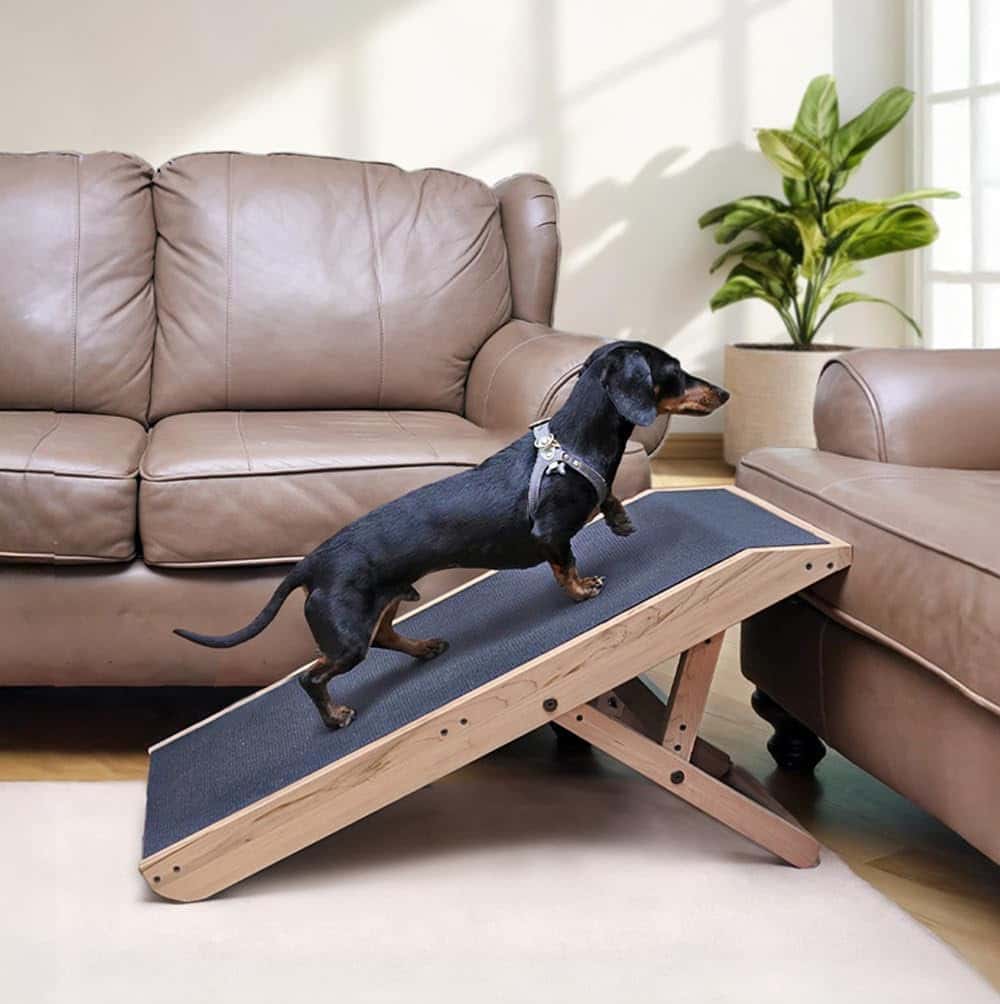
DoggoRamps Couch Ramp
Long body. Short legs. Big responsibility. This DoggoRamps couch ramp is designed specifically to help dachshunds avoid IVDD, the kind that can cost $10,000+ to fix - trust me I know. Give your sausage dog safe, confident access to the couch and protect the cuddles that matter most. Small upgrade. Huge long-term win and easy to store away.
Dachshund Calculators


.png&w=3840&q=60)



Dachshund Essentials