Dachshund Allergies
Dachshund Allergies
From itchy skin to mystery sneezes,here’s what I discovered about dachshund allergies with Harvey, what causes them, and how to bring relief fast.

James
Posted on November 3, 2025.
Updated on July 21, 2026.
Table of Contents
- 1.Key Takeaways on Dachshund Allergies
- 2.Causes of Allergies in Dachshunds
- •1. Environmental Allergies
- •2. Food Allergies
- •3. Flea Allergy Dermatitis (FAD)
- •4. Contact Allergies
- •5. Secondary Triggers
- 3.Symptoms of Allergies in Dachshunds
- •Skin-Related Symptoms
- •Ear Symptoms
- •Gastrointestinal Symptoms
- •Respiratory Symptoms
- •Behavioural Changes
- •Secondary Complications
- 4.Diagnosis of Allergies in Dachshunds
- •Step 1: Clinical History
- •Step 2: Physical Examination
- •Step 3: Rule Out Other Conditions
- •Step 4: Diagnostic Testing
- •Step 5: Interpreting Results
- 5.Diagnosis Methods Table
- 6.Dachshund Allergies Across Life Stages
- •Owner Insight
- -More from This Series
- -Disclaimer
Share

Harvey has always loved rolling in the grass at our local park in Heathcote, but one spring afternoon he came back scratching non-stop. At first, Caitlin and I thought it was just a bit of dirt caught in his fur. But by evening, his belly was red and irritated, classic signs of an allergic flare-up. Like many dachshunds, Harvey is prone to seasonal allergies that can turn a happy walk into days of itching and discomfort.
Dachshund allergies are common, with triggers ranging from pollen and dust mites to certain foods. According to PetMD, up to 20% of dogs suffer from some form of allergy, and small breeds like dachshunds often show symptoms through their skin. For owners, the challenge is figuring out what’s causing the reaction and how to manage it, because allergies are rarely “cured,” but they can be controlled.
Key Takeaways on Dachshund Allergies
Question | Quick Answer | Why It Matters for Dachshunds |
|---|---|---|
Are dachshunds prone to allergies? | Yes, environmental and food allergies are common | Breed-specific sensitivity often shows as itchy skin or ear infections |
What types of allergies affect dachshunds? | Environmental (pollen, dust), food (chicken, beef, grains), flea saliva, contact allergens | Triggers can cause skin problems, ear issues, or GI upset |
What are common allergy symptoms? | Itchy skin, red patches, paw licking, ear infections, vomiting/diarrhea (food-related) | Recognising early signs helps prevent long-term discomfort |
How are allergies diagnosed? | Vet exam, elimination diets, allergy testing | Pinpointing the cause allows tailored treatment |
Can dachshund allergies be cured? | No — but they can be managed with diet, medication, and lifestyle changes | Management improves quality of life and prevents chronic skin disease |
What treatments help most? | Antihistamines, medicated shampoos, special diets, flea prevention | Tailored treatment keeps symptoms under control |
Causes of Allergies in Dachshunds

Allergies in dachshunds are frustrating because the triggers aren’t always obvious. One day your dog seems fine, the next they’re scratching, licking, or developing red patches out of nowhere. Understanding the different types of allergies dachshunds can suffer from is the first step toward managing them.
When Harvey had his first major flare-up, it turned out to be a mix of seasonal pollen and flea saliva — a double whammy that left him itchy for days. Since then, we’ve learned to track his triggers and adapt our care routine before allergy season kicks in.
1. Environmental Allergies
Environmental allergies (also called atopy) are some of the most common issues in dachshunds. These occur when their immune system overreacts to everyday substances in their environment.
Typical environmental triggers include:
- Pollen (grass, weeds, trees) — most common in spring and summer.
- Dust mites — thrive in bedding, carpets, and upholstery.
- Mould spores — common in damp areas, bathrooms, or poorly ventilated homes.
Symptoms in dachshunds often look like:
- Itchy, red skin on belly, armpits, or paws.
- Constant licking or chewing feet (see Dachshund Feet).
- Recurrent ear infections (see Dachshund Ears).
- Watery eyes, sneezing, or nasal discharge.
These symptoms usually flare up seasonally (spring/summer), but indoor allergens like dust mites or mould can cause year-round problems.
2. Food Allergies
Food allergies in dachshunds are less common than environmental ones but still a significant cause of discomfort. They occur when the immune system reacts to certain proteins in food.
Common food allergens for dachshunds include:
- Beef
- Chicken
- Dairy
- Eggs
- Soy or wheat
Symptoms may show as:
- Chronic itchy skin or ear infections.
- Gastrointestinal issues like vomiting or diarrhea.
- Poor coat quality or hair loss (see Dachshund Skin Issues).
Food allergies are usually diagnosed through an elimination diet — feeding a novel protein (like venison or duck) or a hydrolyzed protein diet for 8–12 weeks, then slowly reintroducing foods to identify the culprit.
3. Flea Allergy Dermatitis (FAD)
One of the most intense allergic reactions in dachshunds comes from flea saliva. A single flea bite can trigger days of relentless scratching and inflammation in sensitive dogs.
Key signs include:
- Severe itching, especially at the base of the tail.
- Red, inflamed skin with scabs or hot spots.
- Secondary infections from excessive scratching.
This is one of the easiest allergies to manage because consistent flea prevention (oral or topical treatments recommended by your vet) can prevent outbreaks.
When Harvey had his first FAD flare, it was humbling — we only found one flea, yet it caused weeks of discomfort. Since switching to monthly flea prevention year-round, flare-ups have disappeared.
4. Contact Allergies
Contact allergies are triggered when dachshunds physically touch something their skin reacts to. While rarer, they’re worth considering if your dog suddenly develops irritation in specific areas.
Possible culprits include:
- Cleaning products, detergents, or floor sprays.
- Lawn chemicals or fertilisers.
- Certain fabrics or plastics.
- Shampoos not designed for sensitive dogs.
Symptoms typically appear on:
- Paws (from walking across irritants).
- Belly and chest (from lying on treated grass or carpets).
- Chin or muzzle (from food bowls or toys).
If irritation clears after removing or avoiding a suspected product, contact allergies are the likely cause.
5. Secondary Triggers
Sometimes dachshund allergies are complicated by secondary problems:
- Obesity – Being overweight (see Overweight Dachshund) can worsen inflammation and reduce resilience.
- Skin infections – Yeast or bacteria thrive on irritated skin, making itching worse.
- Genetics – Dachshunds as a breed are predisposed to atopy compared to many others.
Harvey’s allergies have taught us that causes aren’t always clear-cut. His paw licking in summer turned out to be grass pollen, while his winter itching was linked to dust mites. And that one flea bite? It gave him sores for weeks. We’ve learned that managing dachshund allergies isn’t about finding a single cause — it’s about recognising patterns, ruling things out, and working with the vet to stay ahead of flare-ups.
Symptoms of Allergies in Dachshunds
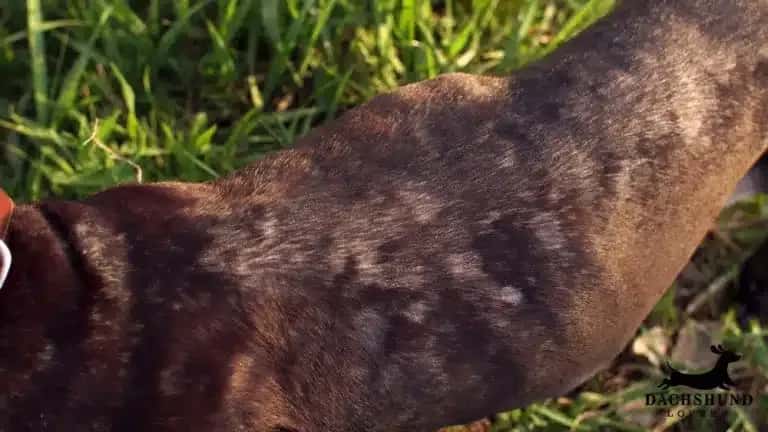
Allergies in dachshunds can be tricky to spot because the symptoms often look like everyday dog behaviour. Scratching, licking, or rubbing against furniture can all seem normal at first. The difference lies in frequency and intensity. When those behaviours become excessive, paws chewed raw, ears constantly shaking, belly red with irritation — allergies are usually the culprit.
When Harvey had his first seasonal flare-up, the signs crept up slowly. He started licking his paws after walks, then scratching his ears through the night, and eventually developed small rashes on his belly. Each sign on its own seemed minor. But together, they told the bigger story of a dachshund struggling with allergies.
Most dachshund allergies show up through the skin, a condition often called canine atopic dermatitis.
- Itchy skin (pruritus) – Constant scratching is the most common sign.
- Red or inflamed patches – Especially on the belly, armpits, and groin.
- Excessive paw licking or chewing – Often mistaken for boredom but typically allergy-driven (see Dachshund Feet).
- Rashes or hot spots – Localised areas of raw, moist, infected skin.
- Dry, flaky skin – Can resemble dandruff, linked to food or seasonal triggers.
Unchecked, scratching leads to secondary infections, compounding the problem.
Ear Symptoms
Dachshunds are prone to ear issues, and allergies are one of the biggest drivers.
- Frequent head shaking
- Scratching around ears
- Red, waxy, or smelly ear canals
- Recurrent ear infections
In Harvey’s case, ear problems often flared during spring when pollen counts spiked. Our vet explained that inflamed skin in the ear canal creates the perfect environment for yeast infections (see Dachshund Ears).
Gastrointestinal Symptoms
While less common, food allergies often affect the digestive system.
- Vomiting or diarrhea
- Gas and bloating
- Reduced appetite or selective eating
- Poor coat quality despite adequate nutrition
Chronic GI upset combined with itchy skin usually points to food as the trigger (see Overweight Dachshund for diet and nutrition context).
Respiratory Symptoms
Some dachshunds with environmental allergies show human-like hay fever signs.
- Watery eyes
- Sneezing
- Nasal discharge
- Coughing in severe cases
These symptoms are less common but can occur alongside itchy skin.
Behavioural Changes
Allergies don’t just affect the body — they affect mood and behaviour.
- Restlessness from constant itching
- Irritability or grumpiness when touched
- Reduced interest in play due to discomfort
- Sleep disruption from night-time scratching
Harvey’s allergies once kept him awake half the night, pacing and licking his paws. The next day, he was lethargic and less playful — a reminder that allergy symptoms can chip away at a dachshund’s quality of life.
Secondary Complications
If left untreated, allergy symptoms often escalate into bigger health issues:
- Skin infections – Yeast and bacteria thrive in irritated areas (see Dachshund Skin Issues).
- Chronic ear infections – Repeated swelling damages ear canals long-term.
- Weight gain – Reduced exercise due to discomfort increases risk (see Overweight Dachshund).
- Dental strain – Constant paw chewing can cause wear on teeth (see Dachshund Teeth).
With Harvey, the symptoms rarely showed up all at once. One season it was paw licking, another year it was ear infections. Over time, we learned to look at patterns, not just isolated symptoms. Paw licking after every walk? Grass pollen. Night-time scratching in winter? Dust mites in bedding. Understanding the variety of symptoms helped us connect the dots — and made managing his allergies far less overwhelming.
Diagnosis of Allergies in Dachshunds
Pinpointing the cause of a dachshund’s allergies isn’t always straightforward. Unlike a rash in humans that clears up once the trigger is avoided, dogs can react to multiple allergens at once. A dachshund who licks his paws might be dealing with grass pollen in spring, dust mites year-round, and a mild food intolerance layered on top.
When Harvey had his first allergy work-up, our vet explained that the goal wasn’t always to “cure” the allergy but to identify the triggers and manage them long-term. Diagnosis can take patience, but it’s essential for improving a dachshund’s comfort and preventing secondary issues like skin infections or ear problems.
Step 1: Clinical History
Your vet will begin by taking a detailed history:
- When symptoms started (seasonal vs year-round).
- Which areas are most affected (paws, belly, ears).
- Changes in diet, bedding, or environment.
- Flea prevention routine (critical for ruling out flea allergy dermatitis).
Keeping a diary of symptoms can be extremely helpful. With Harvey, tracking his paw licking frequency revealed that spring pollen was the main seasonal culprit.
Step 2: Physical Examination
The vet will check for:
- Redness, rashes, or hot spots on skin.
- Signs of paw chewing or foot irritation.
- Ear inflammation or discharge.
- Overall body condition (since overweight dachshunds often have worsened inflammation).
A physical exam won’t identify the exact allergen, but it helps rule out infections or other causes.
Step 3: Rule Out Other Conditions
Some issues mimic allergies but aren’t the same thing:
- Parasites (fleas, mites).
- Skin infections (yeast or bacterial).
- Nutritional deficiencies.
Ruling these out first ensures you’re not treating “allergies” when the problem lies elsewhere.
Step 4: Diagnostic Testing
Depending on the suspected trigger, your vet may recommend one or more of the following:
- Elimination Diets – The gold standard for diagnosing food allergies.
- Feed a novel or hydrolyzed protein diet for 8–12 weeks.
- Slowly reintroduce foods to identify the trigger.
- Feed a novel or hydrolyzed protein diet for 8–12 weeks.
- Intradermal Skin Testing – Small amounts of common allergens injected under the skin.
- Helps identify environmental triggers (pollen, mould, dust mites).
- Typically done by veterinary dermatologists.
- Helps identify environmental triggers (pollen, mould, dust mites).
- Blood Tests (Serology) – Measures antibody response to allergens.
- Easier to perform but less accurate than skin testing.
- Easier to perform but less accurate than skin testing.
- Flea Comb & Microscopy – To confirm or rule out flea allergy dermatitis.
Step 5: Interpreting Results
Allergy diagnosis is often about pattern recognition:
- Seasonal itching → Likely pollen or grass allergies.
- Year-round symptoms → Dust mites, mould, or food triggers.
- GI upset alongside itching → Food allergy more likely.
- Localized flare-ups (belly, paws) → Contact allergies or grass sensitivity.
Diagnosis Methods Table
Diagnostic Method | What It Tests | Pros | Cons | Dachshund-Specific Notes |
|---|---|---|---|---|
Clinical History | Seasonal vs year-round patterns | Non-invasive, low cost | Relies on owner observation | Track paw licking, ear issues, rashes |
Physical Exam | Visible skin, ear, paw signs | Immediate, accessible | Doesn’t identify trigger | Essential first step to rule out infection |
Elimination Diet | Food intolerances/allergies | Most accurate for food triggers | Requires 8–12 weeks of strict feeding | Dachshunds may resist new diets; persistence needed |
Intradermal Skin Test | Environmental allergens | Highly specific | Requires sedation, specialist access | Useful if seasonal atopy suspected |
Blood Tests | Antibody response to allergens | Quick, less invasive | Less accurate than skin testing | Sometimes used when skin testing isn’t an option |
Flea Comb/Microscopy | Flea saliva reaction | Simple, affordable | Only rules in/out flea allergies | Critical, as flea dermatitis is common in dachshunds |
Dachshund Allergies Across Life Stages
Life Stage | What to Expect | Common Allergy Risks | Care Priorities |
|---|---|---|---|
Puppyhood (0–12 months) | Allergies may first appear, often mistaken for “puppy rash” or teething issues | Flea allergy dermatitis (FAD), early food intolerances, mild environmental trigger | Introduce hypoallergenic puppy diets if needed; keep strict flea prevention; monitor for retained puppy teeth irritation (see Dachshund Teeth) |
Adulthood (1–7 years) | Allergies are most noticeable and often worsen seasonally | Environmental allergies (pollen, dust mites), food sensitivities, recurrent ear infections (see Dachshund Ears) | Consistent flea prevention, elimination diets, medicated shampoos, and antihistamines during peak seasons |
Senior Years (8+ years) | Allergies may overlap with age-related conditions; immune system less resilient | Chronic skin infections, long-term atopy, secondary infections from reduced mobility (see Overweight Dachshund) | Frequent vet check-ups, gentler grooming routines, softer hypoallergenic diets, and supportive supplements (omega-3, probiotics) |
Owner Insight
Harvey’s allergies really took off in adulthood, especially grass pollen in spring. In his senior years, I know we’ll need to watch more carefully for secondary infections since older dachshunds are slower to heal. Every stage has its own allergy challenges, but the principle is the same: prevention early, consistency always.
FAQs on Dachshund Allergies
More from This Series
Explore the full Dachshund Health Content Cluster for in-depth guides on every major health concern:
- Dachshund Eye Problems
- CDA in Dachshunds
- Dachshund Brain Size
- Dachshund Back Surgery
- Dachshund Dragging Back Legs
- Dachshund Neck Size
- Dachshund Back Brace
- Dachshund Back Problems
- Dachshund Skin Issues
- Dachshund Health Issues
- Dachshund Feet
- Dachshund Ribs
- Overweight Dachshund
- Dachshund Teeth
- Dachshund Allergies
- Dachshund Ears
- Dachshund Hip Dysplasia
- Dachshund Constipation
- Dachshund Bad Breath
Authored by
James
James is the founder of Dachshund Lovers and the proud human of Harvey, a mini dapple with a big personality. He writes to empower and connect the dachshund community, blending founder insights with honest, experience-based stories about life with this incredible and special breed. James brings candid, experience-backed opinions to the community and always focused on fewer, better products and ideas that genuinely improve life for dachshunds and their people.
Read moreJames is the founder of Dachshund Lovers and the proud human of Harvey, a mini dapple with a big personality. He writes to empower and connect the dachshund community, blending founder insights with honest, experience-based stories about life with this incredible and special breed. James brings candid, experience-backed opinions to the community and always focused on fewer, better products and ideas that genuinely improve life for dachshunds and their people.
Read moreDisclaimer
This content is for informational purposes only and should not be considered veterinary advice. Always consult with a licensed veterinarian regarding your dog’s health and wellbeing.
There are no comments yet
Leave a comment