English Cream Dachshund – Complete Guide to This Rare Charmer
English Cream Dachshund – Complete Guide to This Rare Charmer
Considering an English cream mini dachshund? Read Ellie’s guide before you buy.
Posted on July 22, 2025.
Updated on July 21, 2026.
Table of Contents
- 1.Key Takeaways on About English Cream Dachshund
- 2.What Is an English Cream Dachshund?
- 3.History and Origin of Cream Dachshunds
- 4.Clear Cream vs Shaded Cream
- 5.English Cream Dachshund Temperament
- 6.Do English Cream Dachshunds Shed?
- 7.Are English Cream Dachshunds Rare?
- 8.Common Health Risks and How to Distinguish True English Creams
- •Health Risks
- •How to Distinguish True English Creams
- 9.Grooming and Coat Care
- •Brushing Routine
- •Bathing and Ear Care
- •outine Health Maintenance
- •Recommended Grooming Tools
- 10.How Big Do English Cream Dachshunds Get?
- 11.Training and Exercise Needs
- 12.How Much Is an English Cream Dachshund?
- 13.Miniature and Long-Haired Creams
- 14.Care and Nutrition for Your Cream Dachshund
- •Diet and Feeding
- •Exercise Needs
- •Routine Health Maintenance
- 15.Are They Good for Apartments?
- 16.Conclusion and Final Thoughts
- -More From This Series:
- -Disclaimer
Share

The English cream dachshund is a rare charmer that captured my attention one lazy Sydney morning at Brick Pit Espresso in Kirrawee. This guide is for anyone curious about English Cream Dachshunds—whether you're considering adding one to your family or simply want to learn more about this rare variety. We'll cover their history, genetics, temperament, grooming needs, rarity, and tips for finding a reputable breeder. Understanding these unique dogs matters because they are not only visually stunning but also come with specific care needs, health considerations, and a temperament that sets them apart from other dachshund types.
Key Takeaways on About English Cream Dachshund
Topic | Summary |
|---|---|
Coat Type | Long, silky, and feathered — typically from English bloodlines. |
Color Tone | Cream with or without shading (clear creams are born white). |
Temperament | Gentle, calm, and affectionate — more laid-back than other dachshunds |
Size | Miniature and standard varieties exist — minis typically under 11 lbs |
Price | Expect to pay $3,500–$6,000 AUD depending on breeder and lineage. |
A couple of weeks ago, I was meeting some friends for a coffee at Brick Pit Espresso in Kirrawee. It was one of those lazy Sydney mornings when the sun hits the pavement just right and everyone's in a good mood. I was halfway through my flat white when I spotted her: a long-haired English cream dachshund, lying elegantly under a chair with paws crossed like a duchess.
She had the softest, palest coat I'd ever seen — like vanilla silk. Her human called her Poppy. Poppy barely lifted her head, just fluttered her lashes and kept sunbaking. In a sea of Cavoodles and Terriers, she was something else.
That moment reminded me why the English cream dachshund has captured the hearts of so many — and why so many people have questions about them. From clear cream genetics to shedding, price, and rarity, here's everything you need to know if you've ever found yourself quietly obsessed with these soft-coated show-stoppers.
What Is an English Cream Dachshund?
An English Cream Dachshund is a long-haired variety distinguished by their pale, blonde, or golden coats and a more relaxed temperament compared to other dachshund types. The dogs referred to as 'English' cream have a genetic modification that turns the red coat cream. The Chinchilla gene series is responsible for the change of appearance from red to cream. True English Cream Dachshunds will remain cream throughout their life, while dilute red pups may look identical to creams in their early months but will redden with age.
The term 'English Cream' refers to dogs that are considered 'true' creams originating from a breed developed in England, as opposed to dilute red. Most English creams have black noses, dark expressive eyes, and a dignified, almost aristocratic appearance. Proper dark feature pigment and other nicely pigmented features, such as great eyeliner and deep eye color, are important for breed standards and health. There’s something timeless about them — like they were meant to be curled up on an antique velvet sofa (but just as happy on yours, next to a warm cuppa).
They’re sometimes called the “golden retrievers of the dachshund world” due to their mellow temperament. And honestly, it fits. They’re calm, friendly, and seem to carry themselves with quiet confidence.
If you’re drawn to elegance, softness, and a more relaxed dachshund personality, this coat type might tug at your heartstrings. True creams maintain their cream coat throughout life, and basic genetics and pedigree are used to honestly differentiate them from other color variants, especially when you understand how tools like a dachshund coat color calculator use parent genetics to predict cream shades.

Dive deeper into English Cream Long Haired Dachshunds.
Now that you know what sets English Cream Dachshunds apart, let's explore their fascinating history and origins.
History and Origin of Cream Dachshunds
The story of the cream dachshund begins in the forests and fields of Germany, where the breed was first developed to hunt badgers and other burrowing creatures. While the classic dachshund is often pictured with a deep red or black-and-tan coat, the cream coloration is a fascinating twist in the breed’s genetic tapestry. This unique hue comes from a genetic modification that transforms the traditional red coat cream, resulting in dogs that lighten as they mature but remain cream throughout their lives.
As dachshunds made their way to England, breeders there began to refine and celebrate this pale, elegant coloring. The traditional English cream dachshund—especially the long-haired miniature—became a hallmark of British breeding programs. Unlike dilute red dachshunds, which may fade or shift in color, true English creams are bred to maintain their creamy appearance from puppyhood through adulthood.
Over time, breeders have cultivated a delightful range of cream shades. Shaded cream dachshunds display a gentle overlay of darker hairs, giving their coats a rich, dimensional look. Clear creams, on the other hand, are born with a pale, almost ethereal coat that stays light as they grow. And for those who love a hint of warmth, strawberry cream dachshunds offer a subtle blush of color that’s both rare and captivating.
Today, you’ll find cream dachshunds in both long-haired and, increasingly, cream miniature smooth varieties. Each type carries its own charm, but all share that unmistakable English cream elegance—a testament to generations of careful breeding and a little bit of genetic magic.
Ready to learn more about the different cream coat types? Let’s break down the difference between clear cream and shaded cream next.
Clear Cream vs Shaded Cream
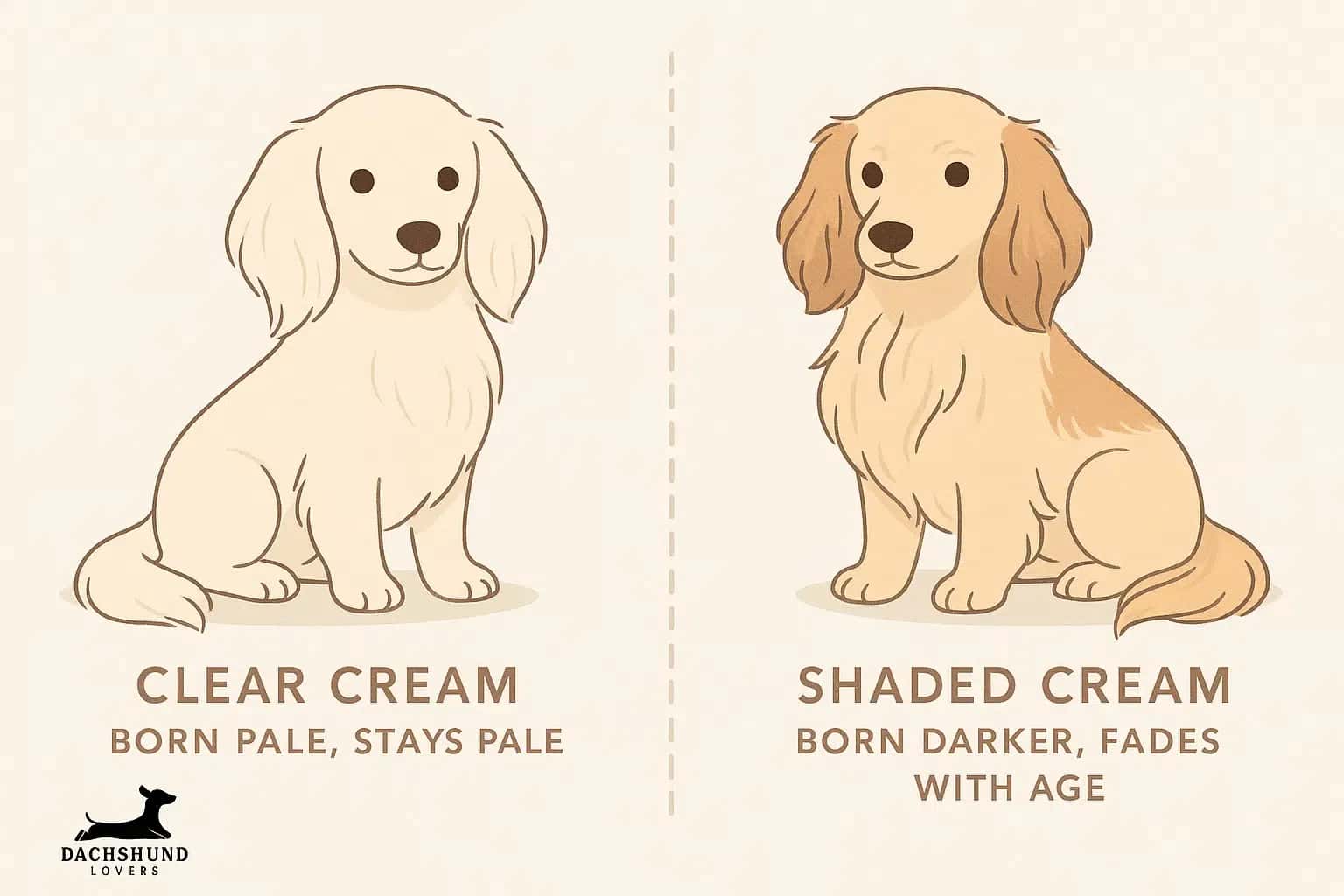
You’ll often hear breeders and longtime owners talk about “clear creams” and “shaded creams.” While both fall under the English cream umbrella, the difference comes down to how the cream color appears — and stays — over time. The appearance difference between clear and shaded creams is most noticeable in the early appearance of cream pups, and pups change as they mature, making it important to understand these distinctions from the start.
Shaded Cream: These cream pups are born with darker tones, usually a mix of sable or black-tipped hairs overlaying their cream base. This shading is caused by a black overlay or black hair mixed with the cream, especially around the dog's ears and tail. As they grow, much of that darkness fades, but some shading is retained into adulthood — particularly at the tips of the ears, tail, and along the back. The shading gives them a richer, more textured look, like a perfectly steeped cup of tea.
Clear Cream: Born pale and ethereal, these cream pups are very light at birth and their adult appearance remains pale, with no black hair present. There’s no visible dark overlay — just a soft, uniform cream coat that almost glows in the sunlight. These dachshunds are considered rarer, partly because the genetics behind the “clearing” process are less predictable in breeding.
Ellie’s Tip: Want to spot the difference at a glance? Look just behind the ears — that’s usually where any leftover shading will hide. If it’s cream all the way through, you’re probably looking at a clear.
Some people have a strong preference for one over the other, but honestly? Both are beautiful in their own way. Clear creams feel more minimal and refined; shaded creams have depth and character — like the difference between silk and velvet.
Understanding these appearance differences and how pups change over time helps owners predict the adult appearance of their dachshund.
Next, let’s look at what makes the English Cream Dachshund’s temperament so unique.
English Cream Dachshund Temperament
If you’ve ever met an English cream dachshund, you’ll understand why people describe them as the gentle souls of the breed. Compared to their more fiery red or black-and-tan cousins, English creams are often likened to golden retrievers in a dachshund’s body — thoughtful, affectionate, and surprisingly zen.
Common traits of English cream dachshunds:
- Mellow and slow to rile up
- Exceptionally sweet-natured
- Patient and kind with children
- Loyal to the point of being a shadow
- Less barky and less prone to sudden outbursts
English cream dachshunds are known to be especially affectionate pets, making them ideal companions for families and individuals seeking a loving dog.
That’s not to say they don’t have that classic dachshund stubborn streak — they absolutely do. But it’s tempered. Where a red dachshund might leap into a barking frenzy at a falling leaf, an English cream might pause, consider it… and then decide it’s not worth the energy.
Many owners (myself included) describe them as emotionally intuitive. They seem to sense when you’ve had a long day or need a bit of calm. It’s no surprise they’re often chosen as companion animals for quieter homes or families with small children.
Ellie’s Note: I once met an English cream named Theo during a walk in Cammeray’s Anzac Park — while a group of dachshunds yapped and chased each other in circles, Theo just sat politely beside his person, tail gently wagging, looking like he’d just returned from a silent retreat.
That said, don’t mistake their calm demeanor for laziness. They still enjoy play, scent games, and a good backyard patrol. They bond deeply with their people — often attaching to one primary person — and can be prone to separation anxiety if left alone too long. This isn’t the dog to leave home alone for 10 hours a day.
English creams are emotional companions. They don’t just want to be near you — they want to understand you. And in return, they ask for your time, your patience, and ideally, a warm spot on your lap.
Curious about their grooming needs? Let’s talk about shedding and coat care next.
Do English Cream Dachshunds Shed?
The short answer? Yes — but not in the way you might expect.
Despite their soft, elegant coats, English cream dachshunds are surprisingly low to moderate shedders. Their long hair is more feathered than fluffy, which means it doesn’t fly around the house the same way a labrador’s or husky’s might. That said, they do still shed — especially during seasonal changes — and regular grooming makes all the difference. The dachshund coat comes in various types and textures, and the English cream's long, silky coat is distinct among dachshund coat varieties.
Here’s what to expect:
- Shed Level: Low to moderate
- Coat Type: Fine, silky, and prone to tangling if neglected
- Grooming Frequency: Brushing 3–4 times a week keeps things smooth
- Top Tools: A good-quality pin brush and a slicker brush are musts
What’s lovely about their coat is that it rarely feels heavy or coarse. It’s the kind of fur you absentmindedly stroke while watching a film, only to realize they’ve dozed off under your hand.
Ellie’s Tip: I keep a brush tucked in the glovebox and another by the laundry door. After one too many leafy park adventures — Maple once rolled straight into a cluster of burrs — I’ve learned it’s better to be over-prepared. Bonus: brushing becomes a calming little ritual we both enjoy.
Compared to other long-haired breeds, cream dachshunds are on the easier end of the maintenance scale. Still, they benefit from occasional baths (every 4–6 weeks is ideal), especially if your pup enjoys muddy puddles or salty beach air.
Want to see how English cream coats compare to more patterned types? Explore our Cream Dapple Dachshund guide for a closer look at coat texture and grooming needs.
Let me know when you’re ready to move on to “Are English Cream Dachshunds Rare?”—and if shedding is a concern, our guide on making dachshund shedding manageable can help you keep both your pup’s coat and your home under control.
Are English Cream Dachshunds Rare?
Yes — and not just because they’re strikingly beautiful. True English cream dachshunds are considered rare due to their specific genetic lineage, particularly those descending from established British bloodlines carrying the chinchilla dilution gene. This gene is what gives them their signature soft, pale coat — a muted ivory or buttercream, rather than the bright white seen in piebalds or the silvery hues in dapples. Identifying a true English Cream can involve DNA testing, checking pedigree, or observing the dog's color progression from birth.
But here’s the catch: not every cream-colored dachshund is a true English cream. Many dogs marketed under the “cream” label are actually American creams or shaded reds with lighter features — and while still lovely, they don’t carry the same genetic markers or temperament profile. True English Cream Dachshunds will remain cream throughout their life, while dilute red pups may look identical to creams in their early months but will redden with age.
What Makes Them “English”?
- Ancestry: Tied to longstanding UK bloodlines
- Genetics: The presence of the chinchilla gene (not the dapple or piebald genes)
- Coat and Eyes: Cream coat, black nose, and dark expressive eyes
- Temperament: Distinctly mellow, often described as “gentle souls”
Reputable breeders who offer true cream pups and cream dachshunds sold as English creams should provide good breeder photos of adult cream dachshunds and be breeder familiar with their lines. Viewing adult dachshunds and well structured dogs helps buyers confirm the quality and authenticity of true cream pups.
Because of the select lines and ethical breeding practices required, English creams are less common in places like Australia and the U.S., and breeders typically have long waitlists. They’re also a favorite in the show ring when bred to standard, especially with a clear cream coat and strong conformation.
Ellie’s Note: I’ve only met a handful of true English creams in Sydney over the years — and every time, I’ve done a double take. There’s a quiet elegance about them. They carry themselves like little royals, but with none of the arrogance.
A Word on “Rare” Marketing
It’s important to approach the word rare with care. Some breeders may lean heavily on that label to justify higher prices — but rarity should never come at the expense of health, temperament, or responsible practices. A truly ethical breeder will be more interested in where the puppy is going than how much you’re willing to pay.
Before committing:
- Ask about the lineage and whether it traces back to UK cream lines
- Request genetic health testing records
- Be wary of breeders who don’t ask you just as many questions in return
If you’re after a dog that’s both eye-catching and emotionally intuitive, a well-bred English cream is a companion worth waiting for.
Next, let’s discuss health risks and how to keep your English Cream Dachshund healthy.
Common Health Risks and How to Distinguish True English Creams
Health Risks
English Cream Dachshunds, like all dachshunds, are prone to certain health issues. The most notable is Intervertebral Disc Disease (IVDD), a condition affecting their long spines. IVDD can lead to pain, mobility issues, or even paralysis if not managed properly. Regular exercise, maintaining a healthy weight, and using ramps or stairs to prevent jumping can help reduce the risk.
Other health considerations include:
- Obesity (due to their small size and love of treats)
- Dental issues (common in small breeds)
- Eye conditions (such as PRA—Progressive Retinal Atrophy)
Routine vet checkups and a proactive approach to health can help your English Cream live a long, happy life.
How to Distinguish True English Creams
- Coat Color: True English Creams are a long-haired variety distinguished by their pale, blonde, or golden coats and a more relaxed temperament compared to other dachshund types.
- Genetics: The Chinchilla gene series is responsible for the change of appearance from red to cream. True English Cream Dachshunds will remain cream throughout their life, while dilute red pups may look identical to creams in their early months but will redden with age.
- Size and Type: English Cream Dachshunds are traditionally long-haired and miniature, although there has been some cultivation of cream miniature smooths in recent years.
- Origin: The term 'English Cream' refers to dogs that are considered 'true' creams originating from a breed developed in England.
- Price and Rarity: They often come with a higher price tag and long waiting lists from reputable breeders due to their rarity.
Now that you know how to identify a true English Cream and what health risks to watch for, let’s move on to grooming and coat care.
Grooming and Coat Care
English cream dachshunds may look like they need a full-time stylist, but the reality is… they’re pretty manageable — as long as you stick to a gentle routine.
Their long, feathered coat doesn’t mat as easily as some other long-haired breeds, but it still benefits from regular brushing to prevent tangles, reduce shedding, and keep that creamy shine. If your English cream happens to be a clear coat (no dark overlay), the paleness means dirt and debris can show more easily — so a quick brush-down after a walk does wonders.
Brushing Routine
- Brush 3–4 times a week using a slicker brush and pin brush combo
- Trim the feathers on legs, belly, and under the tail if they start to collect leaves (or mystery fluff from under the couch)
Bathing and Ear Care
- Bathe every 4–6 weeks — not more, unless they’ve rolled in something unspeakable
- Clean ears weekly to prevent buildup — their floppy ears trap moisture
outine Health Maintenance
- Check paws and nails monthly — long-haired types can grow little “slippers” over their pads
- Check points color during grooming, including the color above the eyes and along the nose, to ensure breed standards are met and pigmentation remains healthy
Recommended Grooming Tools
- Slicker Brush: For surface-level smoothing and removing loose hairs
- Pin Brush: Gentle enough for feathering without pulling
- Comb with wide and narrow teeth: Ideal for behind ears and armpits
Maintaining nicely pigmented features, such as great eyeliner and dark pigment features around the eyes and nose, is important for both your dachshund’s appearance and overall health. Well-defined pigment not only enhances their look but also indicates good genetic health.
Ellie’s Tip: Maple may not be a cream, but she has dramatic long hair around her tail and ears. We keep a slicker brush in the glovebox and one by the back door — she knows the post-walk ritual well. It’s more bonding than chore at this point.
Cream coats, especially clear creams, look especially polished when clean and brushed, so even a little effort goes a long way. They don’t need bows or bandanas — just a healthy coat, a wagging tail, and maybe a clean patch of sun to lie in.
Now that you know how to keep their coat looking its best, let’s talk about their size and what to expect as they grow.
How Big Do English Cream Dachshunds Get?
English Cream Dachshunds are often described as the elegant of the breed, while other colors may include golden, strawberry, and blonde variations. Like other dachshunds, English creams come in both standard and miniature sizes — and both are just as charming, depending on your lifestyle.
The miniature English cream is especially popular among city dwellers or anyone looking for a smaller companion with a soft temperament. These little ones can easily be scooped up under one arm but still have the heart of a much larger dog (especially when they spot a pigeon).
Type | Weight | Height |
|---|---|---|
Miniature | Under 11 lbs (5 kg) | 5–6 inches tall |
Standard | 16–32 lbs | 8–9 inches tall |
Even though these size categories are standard across dachshund types, English creams — particularly the minis — tend to feel daintier, due to their finer bone structure and flowing coat.
But don’t let the elegance fool you. I’ve met a miniature English cream named Archie who could outrun a kelpie at the park in Mosman. He may have looked like he belonged on a velvet cushion, but his nose was always in the grass, tracking something. These dogs carry the same bold, tenacious spirit as their darker-colored cousins — just with a lighter coat and a slightly calmer air.
Ellie’s Tip: If you’re unsure what size your dachshund will grow to, ask the breeder about the parents’ weight. Some pups fall in the “tweenie” range — a bit bigger than mini, but not quite standard.
Whether you live in a high-rise apartment or a freestanding home, the size of your English cream will play a role in everything from how much they eat to how easily you can carry them after they fall asleep in your lap (which they will… often), especially if you’re considering the smaller English cream mini dachshund variety.
More on English Cream Mini Dachshunds.
Next, let’s look at training and exercise needs for your English Cream Dachshund.
Training and Exercise Needs
Cream dachshunds are as clever as they are charming, but don’t let those soulful eyes fool you—they can be just as stubborn as any other dachshund! Training your cream dachshund requires patience, consistency, and a good sense of humor. Early socialization is key, and a good breeder will have already started introducing your puppy to new sights, sounds, and experiences before they come home.
Potty training can be a particular challenge with cream dachshunds, especially in the first year. Their independent streak means you’ll need to stick to a routine and celebrate small victories along the way. Positive reinforcement, gentle guidance, and lots of praise go a long way in helping your pup learn the ropes.
When it comes to exercise, cream dachshunds have moderate needs. Daily walks, a bit of playtime, and some mental stimulation (think puzzle toys or scent games) are usually enough to keep them happy and healthy. Their compact size and adaptable nature make them a great fit for city living or homes with limited space—just be sure to provide enough activity to prevent boredom.
Remember, a well-trained cream dachshund is a joy to live with. Invest the time early on, and you’ll be rewarded with a loyal, well-mannered companion who’s as delightful on a walk as they are curled up on your lap.
Now, let’s talk about what you can expect to pay for an English Cream Dachshund and what factors influence their price.
How Much Is an English Cream Dachshund?
English creams are among the most expensive dachshund types — and not just because they’re beautiful. Their higher price reflects a combination of pedigree, rarity, ethical breeding practices, and often, demand that far outpaces supply.
Here’s a look at typical price ranges:
Region | Average Price (AUD) |
|---|---|
Australia | $3,500–$6,000 AUD |
USA | $3,000–$5,500 USD |
UK | £2,500–£4,000 |
These figures are based on well-bred, long-haired English creams from registered breeders — not puppy mills or backyard setups. It’s important to remember that the cream color itself isn’t what drives the price. It’s the lineage, health testing, and careful selection of traits (temperament, coat quality, conformation) that set these pups apart. When searching for your ideal pup or ideal cream pup, reviewing breeder photos and consulting with the breeder can help ensure the puppy matches your desired appearance and temperament.
Factors That Influence Price:
- Pedigree and show potential: Dogs bred from championship lines or imported British bloodlines usually sit at the higher end.
- Clear Cream vs Shaded Cream: Clear creams are often rarer, which can drive the price up — though both types are equally lovable.
- Health testing and breeder reputation: BAER (hearing) tests, PRA (eye disease) clearances, and DNA screening add peace of mind — and value.
Ellie’s Tip: A high price tag doesn’t always equal high standards. Ask for test results, parent lineage, and breeder references. A responsible breeder will never rush your decision or refuse questions.
It’s also worth factoring in hidden costs — like travel to meet the breeder, waitlist deposits, or even pet transport services if you’re importing. For example, I once helped a friend bring home a cream pup from Victoria to Sydney, and the airfare alone added $450 AUD to the final total.
Beware of “Rare” Marketing Gimmicks
Unfortunately, as English creams grow in popularity, some sellers use the word rare to justify inflated pricing — without the breeding ethics to match. If a listing shouts “RARE CREAM DACHSIE ” in all caps with no health info in sight, walk away. Your future dog deserves better.
Instead, focus on breeders who:
- Are transparent about health and history
- Offer a return policy or buyer support
- Prioritize fit over flash
A well-bred English cream dachshund is an investment — in companionship, in calm cuddles, and yes, in a little luxury. But that investment should always be grounded in health and care, not hype.
Next, let’s look at the miniature and long-haired cream varieties and what makes them so special.

Miniature and Long-Haired Creams
Most English cream dachshunds start as a long haired puppy, and their coat may not reach its very long hair length until around two years old. As these pups change and color up, you may notice their coat developing a more gold hue, reflecting the natural variation within the cream spectrum.
Most English cream dachshunds are long-haired, and many come in the miniature size — a combination that’s both heart-melting and surprisingly practical. That flowing, feathered coat paired with a compact frame gives them an almost storybook presence. But don’t let the dainty appearance fool you — these little ones are still full of spirit.
Miniature long-haired English creams are especially loved for their:
- Cuddly, affectionate nature: They tend to be more people-oriented than the short-haired variety. If Maple had her way, she’d spend every evening curled under a soft throw next to me, preferably with a chew or a gentle ear scratch.
- Manageable size for urban life: Easy to lift, carry, and snuggle. Great for older kids, apartment dwellers, or anyone who wants a dog that fits neatly in your lap (or shoulder bag — we’ve all been tempted).
- Elegant looks with substance: While they look delicate, they’re still dachshunds — bold, curious, and occasionally too clever for their own good. Ours once unzipped a suitcase to get to treats I forgot were packed. She’s 4.8kg.
- Gentle with children: Their calm nature (especially when well-socialized early) makes them a lovely fit for households with respectful little ones.
They’re not lapdogs in the traditional sense, though. A cream doxie will still dig in your mulch, chase a bird across the yard, and let the entire street know when someone’s at the door. That personality — sweet but spunky — is what makes them so well loved.
Ellie’s Tip: Long-haired coats do require brushing, but you’ll find the texture is silkier than woollier breeds, which makes upkeep easier. Just keep a small slicker brush near the sofa — trust me.
Whether you’re drawn to the mini size, the feathered coat, or simply the soft, pale color, a miniature long-haired English cream dachshund offers something a little magical. For an even closer look at what sets them apart, you can explore why English cream long haired dachshunds are so rare and loved. But like all dachshunds, they thrive when they’re treated as true companions — not accessories.
Let’s move on to how to find a reputable breeder for your English Cream Dachshund.
Care and Nutrition for Your Cream Dachshund
Caring for a cream dachshund means paying attention to both their diet and their daily grooming needs, including getting dachshund nutrition right for their size, age, and activity level. These dogs thrive on a balanced, high-quality diet that’s rich in protein and low in unnecessary fillers. Because dachshunds are prone to weight gain, it’s important to monitor portion sizes and avoid overindulging with treats—no matter how persuasive those puppy eyes may be!
Diet and Feeding
- Feed a balanced, high-quality diet appropriate for their age and size
- Monitor portion sizes to prevent obesity
- Limit treats and avoid table scraps
Exercise Needs
- Daily walks and play sessions help keep your cream dachshund fit and mentally stimulated
- Provide puzzle toys or scent games for mental enrichment
- Avoid excessive jumping to protect their long backs
Routine Health Maintenance
- Regular vet checkups for early detection of health issues
- Routine nail trims, ear cleaning, and dental care
- Maintain a healthy weight to reduce the risk of IVDD
Grooming is another essential part of cream dachshund care, especially for long-haired varieties. Their beautiful coats need regular brushing to prevent tangles and matting, and a gentle bath every few weeks will keep them looking their best. Don’t forget routine nail trims, ear cleaning, and dental care—these small steps go a long way in preventing health issues down the road.
A good breeder will provide you with guidance on care and nutrition tailored to your puppy’s needs. By committing to regular grooming, a healthy diet, and routine vet visits, you’ll help your cream dachshund live a long, happy, and healthy life.
Let’s see how well English Cream Dachshunds adapt to apartment living.
Are They Good for Apartments?
Absolutely. In fact, miniature English cream dachshunds often thrive in apartment settings — especially when their emotional and physical needs are met with care.
Despite their royal looks, they don’t require sprawling lawns or big backyards. What they do need is daily mental stimulation, short bursts of activity, and your presence. If you can give them that, they’ll be more than content in a smaller home.
Here’s why they’re so well suited to apartment life:
- They don’t need a backyard
A few short walks a day, access to puzzle toys, and a cozy place to nap are usually enough. Maple’s daily routine includes a stroll around the block, a sunbath on the balcony, and a determined sniff of every hallway plant on our floor. - They love sunny spots near windows
Find them a window seat or a warm patch of floor, and they’ll self-regulate their energy in the most charming way — sunbathing for hours like a little Victorian duchess. - They may bark at hallway noises
It’s the one area to be mindful of. Shared buildings come with sounds, and dachshunds are famously vocal. With early training and consistency, though, you can teach them when to speak up — and when not to. - They need ramps to protect their backs
This is non-negotiable in smaller homes with furniture. A well-placed ramp or set of pet stairs can protect their spine and joints for years to come. We keep one by the couch and another near the bed. Maple now insists on them.
Ellie’s Tip: If you’re worried about noise, a white noise machine near the front door or hallway-facing walls can help mask sounds that might trigger barking. It made a world of difference in our building.
With a little planning — and plenty of affection — English cream dachshunds make excellent apartment companions. They don't need much space, just your attention and a few cozy corners to call their own, plus a realistic understanding of what living with dachshunds day-to-day actually looks like.
Conclusion and Final Thoughts
Cream dachshunds are truly one-of-a-kind companions, blending a rich history with a palette of stunning colors—from shaded cream to clear cream and even the rare strawberry cream. Their gentle temperament, elegant appearance, and affectionate nature make them a beloved choice for dachshund enthusiasts around the world.
Whether you’re drawn to the soft glow of a clear cream, the depth of a shaded cream, or the unique charm of a strawberry cream, there’s a cream dachshund out there to match your heart and home. By choosing a reputable breeder, committing to proper care and nutrition, and embracing the joys (and quirks) of dachshund ownership, you’ll be rewarded with years of loyal companionship, especially when you stay informed about dachshund health and nutrition foundations throughout their life.
Remember, the journey with a cream dachshund is as much about the bond you build as it is about their beautiful coat, and resources dedicated to meeting the English cream dachshund can deepen your appreciation for this rare variety. Prioritize their well-being, stay curious, and don’t hesitate to reach out to breeders or rescue organizations if you have questions. With a little research and a lot of love, your cream dachshund will bring warmth, laughter, and a touch of elegance to your life for years to come.
FAQs
More From This Series:

Authored by
Ellie
Ellie is a lifelong dachshund lover and the proud human of Maple, a long-haired brown doxie with a regal side-eye. While not a vet, Ellie brings honest, researched, and experience-based insights into every article she writes for the Dachshund Lovers community.
Read moreEllie is a lifelong dachshund lover and the proud human of Maple, a long-haired brown doxie with a regal side-eye. While not a vet, Ellie brings honest, researched, and experience-based insights into every article she writes for the Dachshund Lovers community.
Read moreDisclaimer
This article is for informational purposes only. Always consult a registered vet or ethical breeder before making any health or purchasing decisions about your dachshund.
There are no comments yet
Leave a comment