How Much to Feed a Dachshund Puppy
How Much to Feed a Dachshund Puppy
Wondering how much food your dachshund puppy actually needs? Here’s a simple feeding guide based on age, weight, and real experience. And what worked for us.
James
Posted on October 29, 2025.
Updated on July 21, 2026.
Table of Contents
- 1.Key Takeaways on Feeding a Dachshund Puppy
- 2.Feeding by Age Stage
- •Dachshund Puppy Feeding Chart by Age
- •Tips for Adjusting Feeding
- 3.Mini vs Standard Dachshund Puppy Feeding Differences
- •Comparison Table: Mini vs Standard Dachshund Puppies
- •Key Notes for Owners
- 4.Best Foods for Dachshund Puppies
- •Types of Foods for Dachshund Puppies
- •Harvey’s Experience
- •Key Notes for Owners
- 5.Feeding Frequency & Schedule
- -Suggested Feeding Schedule by Age
- -Key Notes for Owners
- 6.Portion Sizes and Growth Monitoring
- -Portion Guidelines by Age
- -Monitoring Growth
- -Practical Tips for Owners
- 7.Common Feeding Mistakes to Avoid
- -Overfeeding
- -Feeding Table Scraps
- -Rushing Food Transitions
- -Using “All-Breed” or Adult Formulas Too Soon
- -Inconsistent Feeding Routines
- 8.Hydration and Treats for Puppies
- 9.Supplements for Dachshund Puppies
- 10.Transitioning Dachshund Puppies to Adult Food
- -More from This Series
- -Disclaimer
Share

When Harvey, our silver dapple dachshund, first came home at 12 weeks, Caitlin and I spent far too long debating over his food bowl. Was he eating enough to grow strong, or were we setting him up for weight problems down the track? Dachshunds are small, but their nutritional needs are deceptively complex — especially as puppies.
According to the RSPCA NSW, puppies require carefully balanced diets tailored to their growth stage, with precise portions and frequent meals to support healthy development. The American Kennel Club adds that portion size should always be adjusted based on breed, size, and activity level. For dachshunds — a breed prone to back issues and obesity — this makes feeding decisions even more critical.
This guide breaks down how much to feed a dachshund puppy by age, size, and variety (mini vs standard), with clear charts, trusted advice, and a few lessons I learned firsthand with Harvey.
Key Takeaways on Feeding a Dachshund Puppy
Topic | Summary | Key Notes |
|---|---|---|
Feeding Frequency | Puppies eat little and often. | 8–12 weeks: 4 meals/day. 3–6 months: 3 meals/day. 6–12 months: 2 meals/day. |
Portion Size | Adjusted by age, weight, and activity. | Mini dachshunds need ¼–½ cup daily; standards ½–1 cup (split across meals) |
Balanced Diet | Growth requires protein, fat, and calcium. | Choose food labelled for “puppies” with 22–32% protein. Avoid adult-only diets. |
Mini vs Standard | Portion size differs significantly. | Minis burn less energy but gain weight faster; standards need more fuel. |
Treats | Keep rewards small and occasional. | Treats should make up less than 10% of daily calories. |
Risks of Overfeeding | Dachshunds are prone to obesity and joint strain. | Extra weight worsens back problems and stunts healthy growth. |
Water & Hydration | Fresh water must be available at all times. | Puppies dehydrate quickly; bowls should be low and stable. |
Safe Foods | Stick to formulated puppy diets. | Avoid table scraps; chocolate, onions, and grapes are toxic. |
Feeding by Age Stage
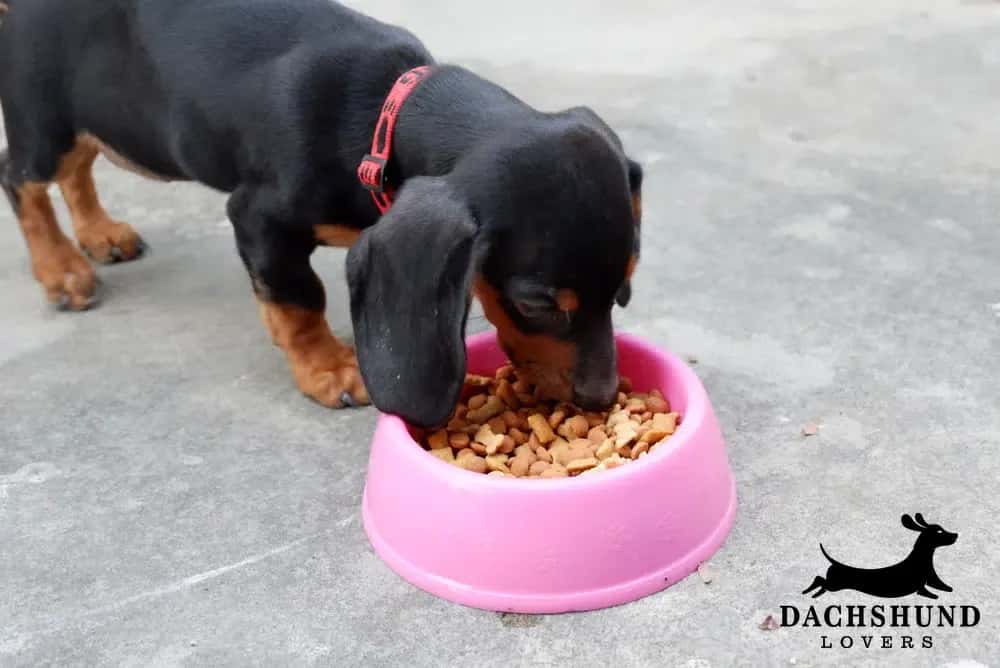
Dachshund puppies grow quickly in their first year, but their needs shift dramatically between early puppyhood and adolescence. Feeding isn’t a “set and forget” routine — it’s about adjusting portions, frequency, and food type as they grow.
When Harvey was three months old, he would inhale his breakfast and then curl up in the sun for a long nap, only to bounce back with bursts of energy in the afternoon. At that stage, frequent smaller meals kept his energy even and supported his rapid growth.
According to VCA Animal Hospitals, puppies need more calories, protein, and fat than adults to sustain development, but overfeeding can lead to unhealthy weight gain — a particular concern in dachshunds given their long backs. PetMD echoes this, advising owners to adjust meal frequency and portion sizes as puppies mature.
Dachshund Puppy Feeding Chart by Age
Age Stage | Feeding Frequency | Portion Size (Mini Dachshund) | Portion Size (Standard Dachshund) | Notes |
|---|---|---|---|---|
3-8 weeks | 4-5 meals/day | ¼ cup total daily (split) | ½ cup total daily (split) | Usually still nursing; solid food introduced gradually. See 3 Week Old Dachshund Puppies. |
8–12 weeks | 4 meals/day | ¼–⅓ cup total daily | ½–¾ cup total daily | Transition fully to solid puppy food. See 8 Week Old Dachshund. |
3–6 months | 3 meals/day | ⅓–½ cup daily | ¾–1 cup daily | Growth slows slightly; monitor weight closely. |
6–12 months | 2–3 meals/day | ½–¾ cup daily | 1–1¼ cups daily | Prepare to transition gradually to adult food around 12 months. |
Tips for Adjusting Feeding
- Monitor body condition: You should feel your dachshund’s ribs easily without seeing them protrude.
- Stick to puppy-specific food until at least 12 months for balanced calcium and protein.
- Don’t free-feed: Leaving food out all day can lead to over-eating in dachshunds.
Adjust for activity: A puppy that spends time outdoors exploring or going on short walks may need slightly more than a sleepy house pup.
Mini vs Standard Dachshund Puppy Feeding Differences
Miniature and standard dachshund puppies share the same nutritional needs, but their size and metabolism mean feeding portions must be tailored. Overfeeding a mini dachshund, even slightly, can lead to a lifetime of back strain and joint stress.
When Harvey was a puppy, even though he’s a silver dapple miniature dachshund, I remember how tempting it was to offer him “just a little extra” after he looked up with those eyes. But sticking to portion guidelines meant he grew lean, not round — protecting his long back.
Comparison Table: Mini vs Standard Dachshund Puppies
Factor | Mini Dachshund Puppy | Standard Dachshund Puppy |
|---|---|---|
Average Adult Weight | Up to 11 lbs (5 kg) | 16–32 lbs (7–14 kg) |
Portion Size (8–12 wks) | ¼–⅓ cup daily | ½–¾ cup daily |
Portion Size (6–12 mos) | ½–¾ cup daily | 1–1¼ cups daily |
Feeding Frequency | 4x daily → taper to 2x by 12 mos | 4x daily → taper to 2x by 12 mos |
Risk Factors | More prone to overfeeding; weight gain shows faster | Slower metabolism; risk of joint stress if overweight |
Key Notes for Owners
- Portion control is critical: Especially with minis, a “few extra kibbles” adds up quickly.
- Track weight monthly: Weigh your pup regularly to catch weight creep early.
- Use measuring cups: Free-pouring food often leads to overfeeding without realising it.
- Activity balance: Minis may burn fewer calories indoors; standards often need more structured play or exercise.
Best Foods for Dachshund Puppies

When Harvey was just a tiny silver dapple pup, we learned very quickly that not all foods marketed as “puppy-friendly” were truly suitable for dachshunds. This breed’s long body and delicate spine mean weight control and balanced nutrition are far more important than with most other small dogs. A few too many calories, or a poorly formulated diet, can easily tip them into unhealthy territory.
According to the American Kennel Club, puppies should always be fed diets designed specifically for growth. This ensures they’re getting the right mix of protein, fats, and essential minerals like calcium and phosphorus for strong bones and joints. For dachshund puppies, the right food can also help prevent the muscle weakness that often contributes to back issues later in life.
In Australia, brands commonly found at Petbarn — such as Royal Canin, Hill’s Science Diet, and Advance Puppy — are trusted, balanced options. These foods are AAFCO-approved, meaning they meet international standards for complete puppy nutrition.
Types of Foods for Dachshund Puppies
- Dry kibble (puppy formula): Convenient, portion-controlled, and usually enriched with DHA for brain and eye development.
- Wet food: Palatable and hydrating, but can be calorie-dense — so portion carefully.
- Fresh or raw diets: Some owners choose fresh-prepared or BARF-style diets. These can be excellent when professionally formulated, but risky if improvised. Always consult your vet first.
- Mixed feeding: Combining wet and dry can give your pup variety while maintaining balance.
For a deeper dive into dachshund nutrition beyond the puppy stage, I’ve covered it in detail in this guide: Dachshund Nutrition.
Harvey’s Experience
When Harvey was about 10 weeks old, we transitioned him from his breeder’s chosen kibble to a vet-recommended formula. We did this slowly over seven days, mixing the old with the new to prevent tummy upset. It was a reminder of how sensitive dachshund puppies can be to sudden diet changes. Even now, Harvey thrives best when his meals are consistent and carefully measured.
Key Notes for Owners
- Look for “puppy” or “growth” formulas only — adult food doesn’t meet their needs.
- Always check labels for AAFCO or FEDIAF compliance.
- Transition foods gradually to avoid diarrhea or vomiting.
- Avoid fillers (corn, soy, artificial flavors) where possible.
- Pair food choice with portion control (see How Much to Feed a Dachshund Puppy) to prevent overfeeding.
Feeding Frequency & Schedule
Just as important as what you feed a dachshund puppy is how often. Their small stomachs, rapid growth, and tendency toward hypoglycemia in early weeks mean they thrive on structured, consistent meal schedules.
According to VCA Hospitals, puppies under six months should be fed three to four meals per day, tapering to twice daily as they mature. This gradual reduction prevents hunger spikes while still supporting steady growth.
When Harvey was little, Caitlin and I quickly learned he was a stickler for routine. At eight weeks, he would plant himself by the kitchen door like clockwork, reminding us it was time for his midday meal. Sticking to set times not only kept his digestion healthy but also helped with toilet training — since regular feeding often leads to predictable bathroom breaks.
Here’s a simple guideline dachshund owners can follow:
Suggested Feeding Schedule by Age
- 3–6 weeks: Puppies are still with their dam, but early weaning onto soft puppy mush (a mix of warm water and kibble) may begin. Feed 4–5 small meals a day. See more in 3 Week Old Dachshund Puppies.
- 8 weeks: By the time most pups go home, they should be on 3–4 balanced meals daily. Consistency is critical at this stage — check out our guide on 8 Week Old Dachshund.
- 3–6 months: Move toward 3 meals per day. Puppies are still growing rapidly, but their digestive systems are maturing.
- 6–12 months: Transition to 2 meals per day. By this stage, their nutritional needs are closer to those of adults, though portion control is key to avoid excess weight.
To make this easier to visualize, here’s a quick reference:
Puppy Age | Meals per Day | Notes |
|---|---|---|
3–6 weeks | 4-5 | Weaning stage; food should be softened and easily digestible |
8 weeks | 3–4 | Most puppies ready for structured routine; essential for toilet training |
3–6 months | 3 | Energy demands remain high, but stomach capacity has increased |
6–12 months | 2 | Shift toward adult schedule; watch portion size closely |
Key Notes for Owners
- Keep meals evenly spaced throughout the day — dachshunds thrive on rhythm.
- Use feeding times as opportunities for bonding and training (sit, stay before bowl).
- Avoid leaving food out for grazing; it makes weight control difficult.
- Hydration matters too — always pair meals with fresh water.
By building their day around a dependable feeding schedule, you’ll not only support growth but also lay the foundation for lifelong healthy habits.
Portion Sizes and Growth Monitoring
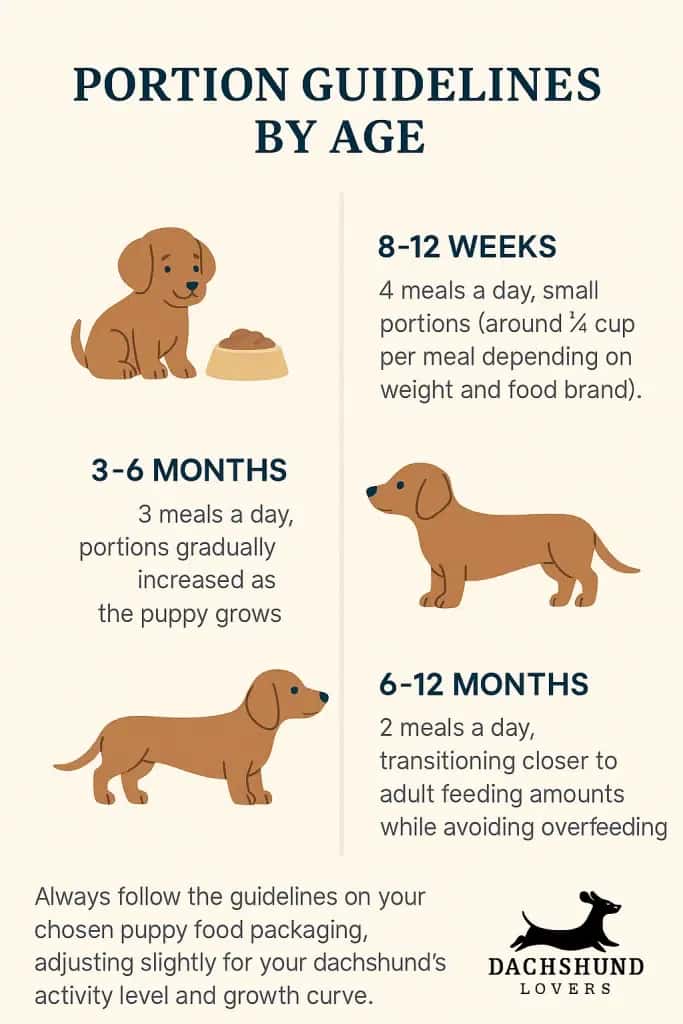
Dachshund puppies grow quickly, but their growth needs to be carefully balanced. Too little food and they risk nutrient deficiencies; too much and you set the stage for obesity and back problems later in life. When Harvey was a pup, we found that weighing his meals on a small digital kitchen scale was the easiest way to stay consistent — and it made a real difference in keeping him lean but thriving.
Portion Guidelines by Age
According to VCA Hospitals, puppies should be fed based on both age and weight, as calorie requirements change rapidly during the first year.
- 8–12 weeks: 4 meals a day, small portions (around ¼ cup per meal depending on weight and food brand).
- 3–6 months: 3 meals a day, portions gradually increased as the puppy grows.
- 6–12 months: 2 meals a day, transitioning closer to adult feeding amounts while avoiding overfeeding.
(Always follow the guidelines on your chosen puppy food packaging, adjusting slightly for your dachshund’s activity level and growth curve.)
Monitoring Growth
Tracking weight is crucial for dachshunds. The breed standard suggests:
- Miniature dachshunds: usually 4–5 kg (8–11 lbs) fully grown.
- Standard dachshunds: usually 7–14 kg (16–32 lbs) fully grown.
Your puppy should follow a steady curve — neither too sharp nor too flat. Rapid weight gain, especially in the first 6–8 months, can put unnecessary strain on their developing spine.
Harvey, being a silver dapple miniature, tended to put on weight quickly after growth spurts. Our vet encouraged us to keep a weekly record: weigh him, note it down, and adjust food slightly if he was gaining too fast. It became a small ritual, and we could see in real time how portion tweaks helped keep him healthy.
Practical Tips for Owners
- Use a scale, not guesswork: Eyeballing kibble leads to overfeeding.
- Check body condition: You should feel ribs without pressing hard, but they shouldn’t protrude.
- Adjust with exercise: On more active days (extra walks, puppy playdates), a slight increase may be okay.
- Vet check-ins: Regular puppy weigh-ins at your vet can confirm you’re on track.
For more feeding specifics, see our guide on How Much to Feed a Dachshund Puppy.
Common Feeding Mistakes to Avoid
When Harvey was still a pup, Caitlin and I quickly learned that dachshunds don’t forgive sloppy feeding habits. Their small frames and delicate backs mean that every calorie counts, and unfortunately, many of the most common feeding mistakes can create long-term health problems.
Overfeeding
Probably the biggest trap for dachshund owners is giving “just a little more” when those pleading eyes stare up at you. Dachshunds are highly food-motivated, and it’s easy to forget how small they are compared to larger breeds. Overfeeding not only leads to obesity but also puts excess strain on the spine — one of the main triggers for IVDD (intervertebral disc disease). The RSPCA NSW warns that obesity is one of the most preventable health issues in companion animals, yet it remains one of the most common.
Feeding Table Scraps
Another easy mistake is slipping food from your plate to theirs. Human food — especially high-fat or seasoned foods — can upset a puppy’s stomach and, in the long run, set up dangerous habits. According to PetMD, fatty foods in particular may cause pancreatitis, which can be life-threatening for small breeds like dachshunds. Harvey once got hold of a piece of buttered toast at a family barbecue, and even that small indulgence was enough to cause an upset stomach for two days.
Rushing Food Transitions
Switching brands or formulas too quickly can cause diarrhea or vomiting. Puppies have delicate digestive systems, and sudden changes can throw everything off balance. The rule of thumb is to mix the old food with the new gradually over 7–10 days, increasing the ratio of the new food slowly until the transition is complete. When we moved Harvey onto a new formula at 10 weeks, doing it gradually saved us from a messy outcome.
Using “All-Breed” or Adult Formulas Too Soon
While some foods are marketed as “for all breeds, all life stages,” they often lack the precise balance needed for dachshund puppies. Growth-specific formulas have carefully tuned protein, fat, and mineral ratios that support bone and joint development. Jumping to adult food too early can leave your dachshund without the nutrients they need for healthy growth.
Inconsistent Feeding Routines
Puppies thrive on routine. Feeding at irregular times or constantly changing portion sizes can create anxiety, overfeeding, or underfeeding. Harvey did best when meals were given at set times, and we noticed his energy levels stayed more stable when his body could “expect” food at the same hours each day.
Hydration and Treats for Puppies
One of the simplest but most overlooked parts of raising a dachshund puppy is hydration. Puppies are bundles of energy in short bursts — they’ll play furiously, then flop into a nap just as quickly. Because dachshunds have a fast little metabolism, they lose fluids faster than larger breeds and can be more prone to dehydration. Keeping a shallow, spill-proof water bowl available at all times is non-negotiable. When we first brought Harvey home, we had to place bowls in both the kitchen and the back patio. Otherwise, he’d sprint himself silly in the yard and then collapse inside, panting and thirsty.
According to the RSPCA NSW, puppies should always have constant access to clean, fresh water, and bowls should be washed daily to prevent bacteria buildup. It sounds obvious, but it’s easy to forget when you’re managing toilet training, socialisation, and all the chaos that comes with a dachshund puppy in the house.
Then there are treats. Treats are brilliant training aids, but for dachshunds, they’re a slippery slope. A single extra biscuit here and there can add up quickly for a breed prone to weight gain. When we were toilet training Harvey, he became a little too fixated on his chicken-based treats — to the point that he’d fake a “toilet trip” just to get one. We learned quickly that tiny, pea-sized rewards were enough.
Safe puppy treats generally include:
- Small, soft, single-ingredient bites (like freeze-dried chicken or salmon).
- Specially formulated puppy training treats that are low in calories.
- Pieces of boiled chicken breast or carrot as a fresh alternative.
What to avoid:
- Human snacks like chocolate, grapes, or anything salty or spicy.
- Hard chews not designed for puppies, which can damage tiny teeth.
- Too many treats in one sitting — they should never make up more than 10% of daily calories.
Used wisely, treats make training fun and positive without sabotaging a dachshund’s delicate waistline. Paired with constant access to water, they’re the foundation for keeping your puppy happy, healthy, and thriving.
Supplements for Dachshund Puppies
When Harvey was around four months old, our vet suggested we add a small omega-3 supplement to his meals. At first, Caitlin and I were skeptical — was it really necessary when he was already on a balanced, AAFCO-approved puppy food? But after learning more, we realised that in certain cases, the right supplements can give dachshund puppies a helpful boost, especially for joint and spine health.
According to the American Kennel Club and VCA Animal Hospitals, puppies fed high-quality commercial puppy diets don’t usually need extra supplements. However, dachshunds are a special case. Their long backs and risk of intervertebral disc disease (IVDD) make nutrients that support joints, bones, and muscles particularly valuable.
Safe Supplements for Dachshund Puppies (with vet guidance):
- Omega-3 fatty acids (fish oil): Helps reduce inflammation, supports healthy skin and coat, and may aid joint development.
- Glucosamine & chondroitin: Sometimes recommended to support growing joints and cartilage, especially in breeds prone to spinal strain.
- Probiotics: Useful if your puppy has digestive sensitivities, loose stools, or is transitioning between foods.
- Vitamin D & calcium: Only when prescribed — excess calcium can actually harm puppies’ bone growth.
Supplements to Avoid:
- Human multivitamins (often contain unsafe levels of iron, vitamin D, or xylitol).
- Calcium given without veterinary advice (too much can lead to skeletal issues).
- “All-in-one” supplements from pet stores without third-party testing.
Harvey’s Experience:
We only ever added supplements on our vet’s advice. A small daily omega-3 capsule (squeezed into his kibble) kept his coat glossy and, according to our vet, may help protect his joints long-term. But we learned quickly that “more” isn’t better — unnecessary supplements can do more harm than good.
Key Notes for Owners:
- Always consult your vet before adding supplements.
- Puppies on balanced commercial diets usually don’t need extras.
- If you’re feeding raw or home-prepared diets, professional formulation is critical to avoid deficiencies.
For a deeper dive into nutrition beyond puppyhood, see our full guide on Dachshund Nutrition.
Transitioning Dachshund Puppies to Adult Food
The first birthday feels like a milestone for any puppy — but for dachshunds, it also marks the time to carefully adjust their diet. Switching from puppy food to adult food isn’t just about saving a few dollars on kibble; it’s about making sure their calorie intake and nutrients line up with their slower growth and long-term health.
According to American Kennel Club, most small-breed puppies can transition to adult food around 12 months of age. However, dachshunds (especially minis) may benefit from staying on puppy formulas until 14 months if they’re still filling out. The key is to look at your dog’s growth curve and body condition, not just the calendar.
Signs Your Dachshund Is Ready for Adult Food:
- They’ve reached close to their adult weight (up to 5 kg for minis, 7–14 kg for standards).
- Their growth rate has slowed, and body condition is stable.
- They’re becoming less hyperactive compared to their earlier puppy months.
How to Transition Smoothly:
- Week 1: 75% puppy food + 25% adult food.
- Week 2: 50% puppy food + 50% adult food.
- Week 3: 25% puppy food + 75% adult food.
- Week 4: 100% adult food.
This gradual change reduces the risk of digestive upset — something dachshunds are notoriously prone to. When we switched Harvey at 13 months, Caitlin and I stuck to this schedule, and it made the process seamless.
Choosing the Right Adult Formula:
- Look for small-breed formulas designed for weight control.
- Prioritise protein (22–26%) with moderate fat levels.
- Avoid generic “all stages” foods — they rarely suit dachshunds’ spine and joint needs.
- For ongoing support, see Dachshund Nutrition.
Key Notes for Owners:
- Don’t rush the switch — premature transitions can deprive puppies of essential nutrients.
- Watch portion sizes carefully; adult food is often more calorie-dense.
- Pair the transition with regular weigh-ins to avoid creeping obesity
Frequently Asked Questions About Feeding Dachshund Puppies
More from This Series
- About Dachshund Puppies
- Mini Dachshund Puppies
- Long-Haired Dachshund Puppies
- Dapple Dachshund Puppies
- Dachshund Puppies Temperament
- How Much to Feed a Dachshund Puppy
- 8 Week Old Dachshund
- Dachshund Puppy Diet
- 3 Week Old Dachshund Puppies
Authored by
James
James is the founder of Dachshund Lovers and the proud human of Harvey, a mini dapple with a big personality. He writes to empower and connect the dachshund community, blending founder insights with honest, experience-based stories about life with this incredible and special breed. James brings candid, experience-backed opinions to the community and always focused on fewer, better products and ideas that genuinely improve life for dachshunds and their people.
Read moreJames is the founder of Dachshund Lovers and the proud human of Harvey, a mini dapple with a big personality. He writes to empower and connect the dachshund community, blending founder insights with honest, experience-based stories about life with this incredible and special breed. James brings candid, experience-backed opinions to the community and always focused on fewer, better products and ideas that genuinely improve life for dachshunds and their people.
Read moreDisclaimer
This content is for informational purposes only and should not be considered veterinary advice. Always consult with a licensed veterinarian regarding your dog’s health and wellbeing.
There are no comments yet
Leave a comment