How Much Exercise Do Dachshunds Need
How Much Exercise Do Dachshunds Need
Learn how much exercise do dachshunds need without risking IVDD or joint issues. Ideal routines for puppies, adults, and seniors.
James
Posted on October 30, 2025.
Updated on July 21, 2026.
Table of Contents
- 1.Key Takeaways on Dachshund Exercise Needs
- 2.Why Exercise Is So Important for Dachshunds
- 3.How Much Exercise Do Senior Dachshunds Need?
- •General Guidelines
- •Adjustments for Ageing Dachshunds
- •Indoor Alternatives for Seniors
- •A Personal Note on Seniors
- 4.How Much Exercise Do Dachshund Puppies Need?
- •The 5-Minute Rule
- •Why Over-Exercising is Dangerous
- •Safe Activities for Dachshund Puppies
- •Socialisation as Exercise
- •Indoor vs Outdoor Balance
- •Tailoring Exercise to Your Puppy’s Personality
- 5.How Much Exercise Do Adult Dachshunds Need?
- •The Role of Genetics and Energy Levels
- •Breaking Down Daily Exercise
- •Weight Management and Exercise
- •Mental Exercise: The Overlooked Secret
- •Social Exercise
- •Tailoring Exercise by Age
- •The Apartment vs Suburban Lifestyle
- •The Danger of “Weekend Warrior Syndrome”
- 6.Miniature vs Standard Dachshunds: Does Size Change Exercise Needs?
- -Real-Life Perspective
- -How to Tailor Routines
- 7.Indoor Alternatives for Dachshunds
- -Balancing Indoor & Outdoor Routines
- 8.Warning Signs Your Dachshund Needs More (or Less) Exercise
- -Signs Your Dachshund Isn’t Getting Enough Exercise
- -Signs Your Dachshund May Be Over-Exercised
- -The Importance of Adjusting Exercise Plans
- -More from This Series
- -Disclaimer
Share

I’ll never forget those early months after we brought Harvey home, just before the lockdowns began. Caitlin and I quickly learned that a dachshund’s short legs don’t mean short energy. On days when we skipped our walk along the Esplanade in Cronulla or missed a round of backyard fetch, Harvey found his own entertainment barking at neighbours, pacing the hallway, or digging like mad into the sofa cushions.
It wasn’t just quirky behaviour. As the American Kennel Club explains, “Dachshunds are energetic dogs that require regular moderate exercise to stay fit, healthy, and mentally stimulated” (AKC). That expert reminder reassured us that Harvey’s restless antics weren’t stubbornness — he simply wasn’t getting what his little body and big mind needed.
Finding the balance is the real trick. Too little exercise, and a dachshund can become anxious, vocal, or destructive. Too much, and you risk putting stress on their long backs and fragile joints, a problem the RSPCA warns about in small breeds prone to spinal issues.
So, how much exercise do dachshunds really need? In this guide, I’ll walk through daily activity requirements for puppies, adults, and seniors, explore the differences between mini and standard dachshunds, and share practical ways to keep them active without overdoing it.
Key Takeaways on Dachshund Exercise Needs
Age/Stage | Recommended Exercise | Key Notes |
|---|---|---|
Puppies (under 12 months) | 5 minutes per month of age, twice daily | Focus on gentle play and short walks; avoid stairs and jumping to protect joints. |
Adults (1–7 years) | 45–60 minutes per day | 45–60 minutes per day Mix of walks, free play, and mental stimulation; split into 2–3 sessions. |
Seniors (8+ years) | 20–40 minutes per day | Lower-impact activity like gentle walks and sniff games; watch for fatigue. |
Miniature Dachshunds | Slightly less than standards | Energy levels remain high, but legs tire more quickly — shorter, more frequent outings. |
Standard Dachshunds | Up to 1 hour daily | Better endurance than minis but still prone to back strain; avoid overexertion. |
Indoor Alternatives | Puzzle toys, hide-and-seek, scent work | Useful on rainy days or when outdoor exercise isn’t possible. |
Warning Signs | Excessive barking, destructive behaviour, weight gain | Often indicate your dachshund isn’t getting enough exercise. |
Why Exercise Is So Important for Dachshunds
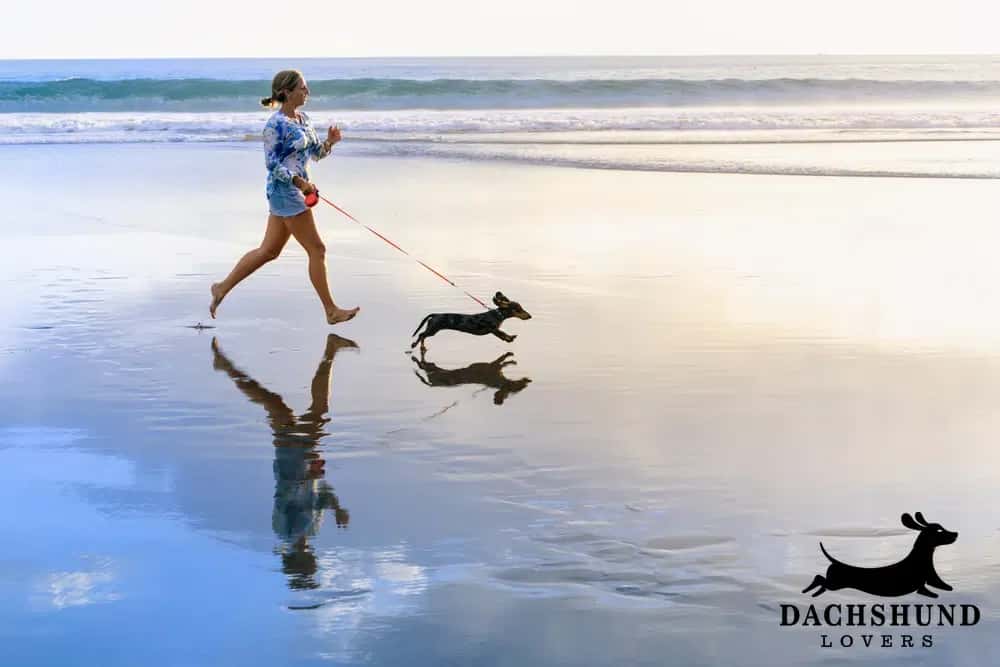
Dachshunds are often mistaken for being low-maintenance because of their small size, but the truth is they’re brimming with energy. Bred originally in Germany to hunt badgers, they have a surprising stamina and a powerful prey drive tucked inside those little frames. Exercise isn’t just about burning off energy it’s central to keeping them physically healthy, mentally sharp, and emotionally balanced.
Without enough activity, dachshunds can easily slip into problematic behaviours. Excessive barking, chewing at the furniture, and even digging inside the house are often less about “naughtiness” and more about pent-up energy with no outlet. According to the RSPCA RSPCA Australia, lack of exercise is one of the biggest welfare issues seen in companion dogs, leading not only to behavioural challenges but also to long-term health concerns such as obesity, joint problems, and cardiovascular disease.
From my own experience, I’ve seen just how much a walk or play session can transform a dachshund’s mood. A restless pup settles into a calm, happy companion once their energy has been channelled into healthy movement. And while every dachshund is different some thrive with a morning sprint in the park, while others prefer sniffing every blade of grass along the footpath the principle remains the same: daily exercise is non-negotiable for their wellbeing.
How Much Exercise Do Senior Dachshunds Need?
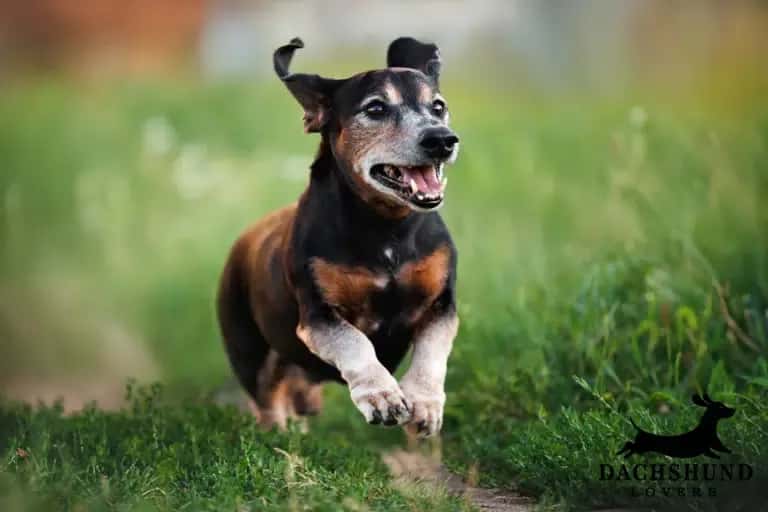
As dachshunds move into their senior years (usually around 8 years old and beyond), their bodies and energy levels naturally change. They may still love their walks and playtime, but their endurance drops and health concerns like arthritis or IVDD flare-ups can affect how much they should do.
General Guidelines
Most senior dachshunds do well with 20–40 minutes of exercise daily, ideally broken into 2–3 gentle sessions. The focus should shift from high-energy play to low-impact movement that maintains mobility, supports healthy weight, and prevents boredom.
Adjustments for Ageing Dachshunds
- Gentle walks: Stick to flat, even surfaces like paved pathways or grass fields.
- Shorter outings: Several 10–15 minute walks are better than one long session.
- Sniffing breaks: Allow more time for scent exploration — it’s stimulating without being physically taxing.
- Monitor closely: If your dachshund starts lagging, panting heavily, or refusing to walk, it’s a clear sign they’ve had enough.
According to the American Kennel Club, senior dogs benefit from regular but gentle activity to help delay the onset of joint stiffness and maintain heart health.
Indoor Alternatives for Seniors
On days when outdoor exercise isn’t practical — like rainy afternoons in the Sutherland Shire — seniors can still benefit from:
- Puzzle feeders to keep their minds engaged.
- Hide-and-seek games with treats in safe areas of the home.
- Gentle stretching routines or physiotherapy, if recommended by a vet.
A Personal Note on Seniors
When Harvey occasionally spends time with older dachshunds in our network of friends, I’ve noticed how their pace changes everything. Play becomes slower, more about companionship than chasing balls. It’s a good reminder that exercise at this stage is about quality, not quantity. Sometimes, a short walk down to Coal Cliff beach followed by a cuddle on the bench does more for their wellbeing than any long adventure.
How Much Exercise Do Dachshund Puppies Need?

When people bring a dachshund puppy home, the first instinct is often to marvel at their endless zoomies and assume they can run themselves into the ground without consequence. But the truth is that puppies are still developing both physically and mentally, and too much activity — especially for a long-backed breed like the dachshund — can lead to problems down the track.
The Royal Veterinary College highlights that dachshunds are one of the most at-risk breeds for spinal issues like intervertebral disc disease (IVDD). That doesn’t mean puppies should live a sedentary life; rather, it means owners need to strike a balance between gentle exercise, structured play, and adequate rest (Royal Veterinary College, 2023).
The 5-Minute Rule
A common guideline shared by many vets and trainers is the “5-minute rule” — allow roughly five minutes of structured exercise per month of age, up to twice daily.
For example:
Puppy Age | Recommended Exercise (per session) | Example Activities |
|---|---|---|
8 weeks | 10 minutes, twice a day | Gentle play indoors, short garden exploration |
3 months | 15 minutes, twice a day | Leash walk on grass, puzzle feeder games |
6 months | 30 minutes, twice a day | Short walk on soft surfaces, puppy training sessions |
This rule helps owners avoid over-exercising, which can put unnecessary pressure on developing joints, growth plates, and the spine.
Why Over-Exercising is Dangerous
Unlike adult dachshunds, puppies’ growth plates haven’t yet closed. Excessive jumping, running on hard surfaces, or long-distance walks can cause:
- Joint strain leading to early arthritis.
- Back problems that increase IVDD risk.
- Behavioural fatigue (overtired puppies often act out more).
The American Kennel Club stresses that mental stimulation is just as important as physical activity in puppies, especially for intelligent breeds like dachshunds.
Safe Activities for Dachshund Puppies
Dachshund puppies benefit most from low-impact, playful, and engaging activities. Some examples include:
- Indoor play — tug toys, hide-and-seek with treats, chasing a ball gently across carpet.
- Short leash walks — ideally on grass or sand, avoiding stairs and steep hills.
- Training games — sit, stay, come, and other basic obedience commands. Mental work can tire out a puppy just as much as running laps.
- Gentle socialisation — meeting calm, vaccinated dogs in controlled settings.
“A tired puppy is a good puppy — but tired should mean happily content, not physically strained.” – Emily, trainer at The Whole Hound, who has worked with Harvey and many other Sydney families on safe puppy routines.
Socialisation isn’t just about teaching manners; it’s also a form of exercise. Playing with other puppies burns energy in short bursts while giving them vital communication practice. For dachshunds, who are prone to being stubborn or wary of strangers, early exposure to different dogs, people, and environments is critical.
Harvey, for instance, isn’t a long-haired but when he was a puppy, Caitlin and I signed him up for classes here in Sydney before the lockdowns. We noticed that after 20 minutes of structured play with other puppies, he’d come home exhausted. It was a powerful reminder that puppy exercise doesn’t always mean “walks” — it can also mean building social and emotional muscles.
Indoor vs Outdoor Balance
One mistake many owners make is assuming puppies need constant outdoor adventures. In reality, puppies need:
- Short outdoor exploration — for exposure to sights, smells, and sounds.
- Plenty of indoor downtime — play that’s safe for their joints and doesn’t overstimulate them.
If you’re in an apartment in Sydney, your puppy can thrive with a mixture of short building walks and indoor enrichment games. If you’re in the Sutherland Shire or in texas with access to backyards or local parks, you’ll still want to stick to the 5-minute rule until your puppy is older.
For more structured guidance once your pup is ready, you can explore our walking guide: Dachshund Walking.
Tailoring Exercise to Your Puppy’s Personality
Not all dachshunds are created equal. Some are bundles of energy; others are more laid-back. The key is to observe signals:
- If your puppy sits down mid-walk, they’re tired.
- If they become nippy or overly excitable, they may be overtired.
- If they seem restless indoors, they may need more mental play rather than physical exercise.
Owners should see exercise as part of daily development, not just a way to “tire them out.”
Please visit our dachshund puppies page for all tips, care & advice for new owners.
How Much Exercise Do Adult Dachshunds Need?
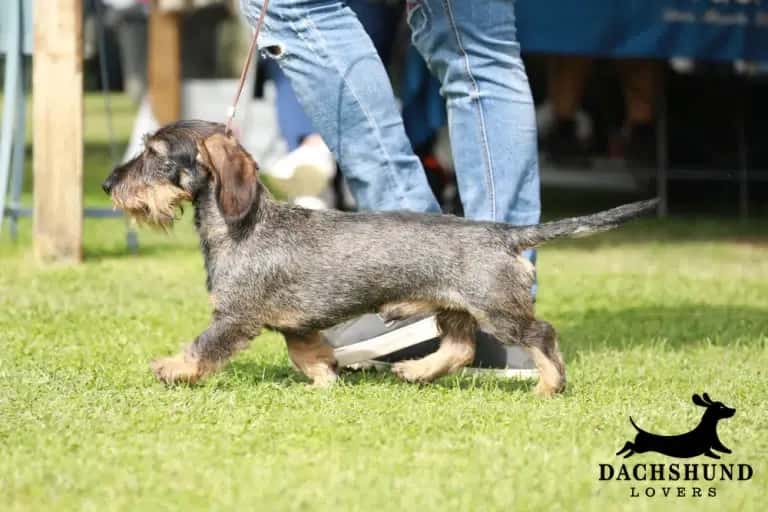
When your dachshund puppy finally transitions into adulthood, the game changes. They’re no longer fragile with developing joints, but their unique long-backed build still requires thoughtful care. Unlike high-energy breeds that thrive on endless running, dachshunds need consistent but moderate exercise to keep their bodies strong and their stubborn minds engaged.
According to the PDSA, adult dachshunds generally benefit from about 60 minutes of exercise per day, split across two sessions. But this figure is not a “one size fits all.” Each dachshund’s age, temperament, and health history must shape the plan.
The Role of Genetics and Energy Levels
Adult dachshunds were bred as hunters, designed to track and flush out badgers. This means even today, they carry a natural drive to explore, sniff, and dig. Some owners are surprised that their sausage dog seems restless even after a walk — but for dachshunds, sniffing for 30 minutes is just as satisfying as running.
Harvey, for example, thrives on what we call “sniffaris” in the Sutherland Shire. We’ll walk him near Gunnamatta Park and let him spend time with his nose buried in the grass, tracing invisible scent trails. While we may only cover a kilometre, the mental fatigue is obvious by the time we return. It shows that exercise for adult dachshunds isn’t always about distance — it’s about enrichment.
Breaking Down Daily Exercise
Activity | Ideal Duration | Examples | Benefits |
|---|---|---|---|
Walks | 20–30 mins, twice daily | On-leash around parks, footpaths, or beach paths | Maintains weight, prevents restlessness |
Mental Stimulation | 10–20 mins daily | Puzzle feeders, hide-and-seek, training drills | Reduces boredom barking, channels stubbornness |
Playtime | 15–30 mins daily | Tug, fetch, or play with other dogs | Builds bond, burns energy safely |
Weight Management and Exercise
The American Kennel Club stresses that obesity is one of the greatest risks for dachshunds, as excess weight increases spinal strain and the likelihood of IVDD. Regular exercise is crucial not just for energy release, but for keeping weight under control.
If you live in an apartment in Sydney, Los Angeles or London, your dachshund may not get incidental exercise like backyard exploration. In this case, structured walks and indoor play become non-negotiable. On the other hand, if you’re in suburban areas like the Sutherland Shire or parts of Texas where larger yards are common, your dachshund may still need encouragement to do more than just sniff around the fence line. More tips living with Dachsunds here.
For inspiration, many owners turn to activities like Hiking with Dachshunds to add variety without overexertion.
Mental Exercise: The Overlooked Secret
A bored dachshund is a noisy dachshund. Owners often complain about stubbornness, excessive barking, or destructive digging when the root cause is lack of mental stimulation. As intelligent hounds, dachshunds need:
- Scent games — hiding treats around the house or yard.
- Training refreshers — practicing recall, sit-stay, or even tricks.
- Interactive feeders — that require problem-solving.
The RSPCA notes that brain games are essential for dog welfare, especially for breeds with hunting heritage. Dachshunds are a prime example.
Unlike puppies, adult dachshunds are less forgiving of rude play from other dogs. Socialisation must be ongoing, not a “puppy-only” phase. Regular visits to local dog parks — such as Centennial Parklands in Sydney or Clissold Park in London — can be beneficial, provided you know your dachshund’s signals and avoid rough play with large dogs.
For Harvey, the sweet spot has been consistency. He bonds deeply with the dogs he sees often, but he’s less tolerant of unfamiliar dogs charging at him. We’ve learned that quality interactions matter more than quantity. This aligns with dachshunds’ personalities: loyal, affectionate, but sometimes selective in their friendships.
Tailoring Exercise by Age
Adult dachshunds aren’t a monolith — needs change over time.
- Young adults (1–3 years): Higher energy, often needing closer to 90 minutes daily.
- Mature adults (4–7 years): Balanced energy, thrive on a consistent routine.
- Older adults (8+ years): Exercise remains vital but should shift to gentler walks and more mental stimulation.
Regular vet check-ups are key to adjusting exercise plans. If a dachshund shows reluctance to jump or climb stairs, it may signal pain and should never be dismissed as laziness.
The Apartment vs Suburban Lifestyle
Living environment shapes daily routines dramatically:
- Apartment Living (Sydney CBD, New York, London): Rely on structured walks, indoor games, and training drills. Mental enrichment becomes as important as physical outings.
- Suburban/Coastal Living (Sutherland Shire, Brighton UK, Southern California): Owners may assume their dachshund gets enough exercise in a backyard, but this is often untrue. Dachshunds need variety — a backyard sniff session should complement, not replace, daily walks.
The Danger of “Weekend Warrior Syndrome”
One of the biggest mistakes owners make is being inactive during the week and then cramming long, intense activities into weekends. We are so guilty of these given how hectic our lives are with full-time work and two litter other human beings to take care. For dachshunds, this can be dangerous. Long hikes or beach runs after a sedentary week increase the risk of muscle strain or spinal injury. Consistency, not intensity, is the golden rule.
Miniature vs Standard Dachshunds: Does Size Change Exercise Needs?
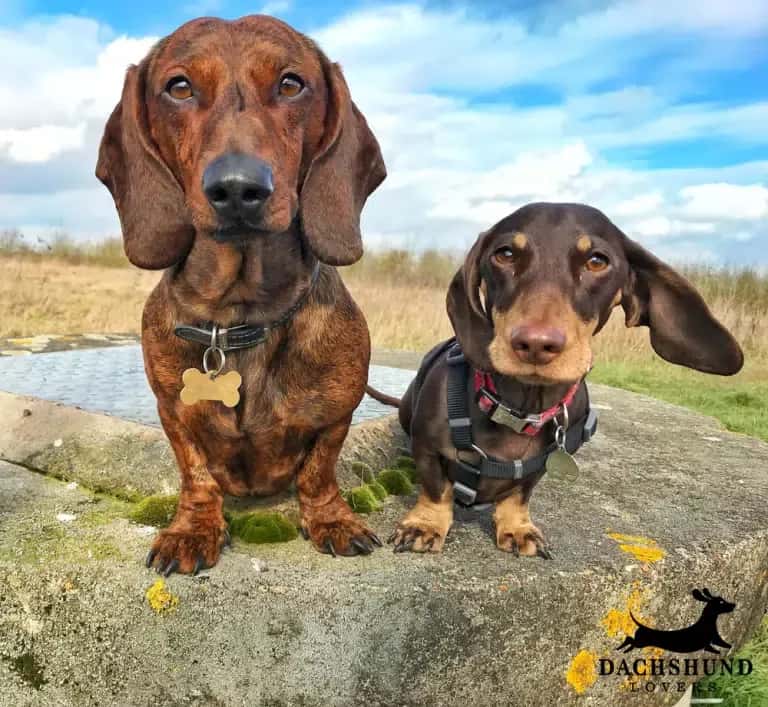
One of the most common questions new owners ask is whether miniature dachshunds need less exercise than their standard-sized cousins. At first glance, it seems obvious — minis have shorter legs, weigh less, and often look more delicate. But the truth is a little more nuanced.
Both types are energetic hounds with the same hunting heritage, meaning they carry the same need for daily stimulation. The difference is less about desire and more about stamina.
According to the PDSA, miniature dachshunds may tire faster due to their smaller frames, but they still need structured exercise to prevent weight gain and behavioural problems. Standard dachshunds, on the other hand, tend to have slightly more endurance but are equally vulnerable to back strain if overworked (PDSA, 2023).
Here’s how this typically breaks down:
Dachshund Type | Daily Exercise Guideline | Notes |
|---|---|---|
Miniature Dachshund | 30–45 minutes (split into 2–3 sessions) | High energy in short bursts, but legs tire quickly. Stick to shorter, more frequent walks. |
Standard Dachshund | 45–60 minutes (split into 2 sessions) | Can handle longer outings, but overexertion increases spinal stress. |
Real-Life Perspective
When Harvey meets up with friends’ mini dachshunds at the park, we notice a distinct rhythm. The minis sprint furiously in short bursts, chasing a ball or sniffing furiously along the grass, but they tire and slow down far earlier than Harvey. Standards, like Harvey himself, can go a little longer, but even they do best with breaks rather than one marathon outing.
How to Tailor Routines
- For minis: Aim for multiple short walks and lots of mental games indoors. Check out our guide on dachshund walking for practical tips.
- For standards: Build in one longer session paired with mental play. Activities like hiking with dachshunds are possible, but only if you pace carefully and give breaks.
For both: Swimming is sometimes recommended for low-impact exercise, but always check out our deep dive on dachshund swimming before heading to the water.
Indoor Alternatives for Dachshunds
Not every day is suited to long walks or outdoor adventures. Rainy weather, scorching heat, or simply a busy family schedule can make it tough to keep up with exercise needs. Luckily, dachshunds are clever little hounds, and with the right activities, you can meet their exercise requirements indoors.
The RSPCA highlights that mental stimulation is just as important as physical exercise, especially for intelligent, working-breed dogs (RSPCA Australia, 2022). Dachshunds in particular thrive when their noses and brains are kept busy.
Here are some excellent indoor options:
- Puzzle Toys & Food Enrichment
Interactive feeders and puzzle toys force dachshunds to problem-solve, keeping them occupied for long stretches. Something as simple as hiding kibble in a snuffle mat mimics the foraging their hunting instincts crave. - Hide-and-Seek Games
This can be done with people, toys, or treats. It’s a fantastic way to strengthen recall while providing mental and physical stimulation. Harvey loves when Caitlin hides behind doors and calls him — you can see the excitement in his trot when he “finds” her. - Scent Work Indoors
Try hiding treats in safe corners of your home or even under plastic cups. This not only gives your dachshund exercise but also taps into their natural hunting drive. - Short Training Sessions
Practicing sit, stay, come, or even new tricks helps tire them out mentally. For dachshunds with a stubborn streak, these sessions double as a way to reinforce obedience in a fun, low-pressure way. - Indoor Fetch or Tug
If you have a hallway or safe open space, a few rounds of gentle fetch or tug-of-war can help burn energy. Just be sure to keep jumps minimal to protect their backs.
Balancing Indoor & Outdoor Routines
Indoor exercise shouldn’t completely replace outdoor walks — sniffing the world outside is still crucial. But on days when the beach, park, or dachshund walking routine isn’t possible, these alternatives keep boredom (and barking) at bay.
Warning Signs Your Dachshund Needs More (or Less) Exercise
Even with the best intentions, it can be tricky to know whether you’re giving your dachshund the right balance of activity. Too little exercise, and you risk restlessness, weight gain, or behavioral issues. Too much, and you can put unnecessary strain on their long backs and joints. The key is learning to read your dog’s signals.
Signs Your Dachshund Isn’t Getting Enough Exercise
- Excessive Barking: Dachshunds are naturally vocal, but if barking becomes constant, it may be an outlet for pent-up energy.
- Destructive Behavior: Chewing furniture, digging at carpets, or tearing toys apart often signals boredom.
- Weight Gain: According to the American Kennel Club, obesity is one of the greatest risks for dachshunds, directly increasing the chance of intervertebral disc disease (IVDD). If your dachshund is gaining weight despite a normal diet, exercise may be lacking.
- Restlessness at Night: If your pup paces the hallway or refuses to settle, they likely need more physical and mental stimulation during the day.
Signs Your Dachshund May Be Over-Exercised
- Limping or Stiffness: Especially after long walks or play sessions.
- Reluctance to Move: If your dachshund hesitates on stairs or refuses a walk they normally enjoy, it’s a red flag.
- Heavy Panting or Fatigue: Some panting is normal, but persistent heavy breathing signals they’ve overdone it.
- Changes in Mood: A normally happy dachshund who becomes withdrawn or irritable may be sore or overtired.
The Importance of Adjusting Exercise Plans
Just like humans, dachshunds’ needs shift with age, environment, and health conditions. A young adult might thrive on long walks and high-energy play, while an older dachshund may be happier with gentle strolls,The PDSA reminds owners that tailoring exercise to your dog’s life stage is essential to prevent both under- and over-exertion.
From my own experience with Harvey, I’ve learned that balance is everything. There were days when we assumed “more is better” and came home with a stiff, sore pup. On the flip side, skipping walks during lockdowns led to restless barking and chewed-up shoes. The sweet spot has always been consistency: shorter, engaging sessions that keep him both physically satisfied and mentally calm.
Frequently Asked Questions About Dachshund Exercise
More from This Series
- How Much Exercise Do Dachshunds Need?
- Dachshund Swimming: Safety Tips & Training
- Dachshund Walking: Daily Routines & Enrichment
- Hiking with Dachshunds: A Complete Guide
- Are Dachshunds High Energy Dogs?
- Dachshunds at the Beach: Fun & Safety Tips
Authored by
James
James is the founder of Dachshund Lovers and the proud human of Harvey, a mini dapple with a big personality. He writes to empower and connect the dachshund community, blending founder insights with honest, experience-based stories about life with this incredible and special breed. James brings candid, experience-backed opinions to the community and always focused on fewer, better products and ideas that genuinely improve life for dachshunds and their people.
Read moreJames is the founder of Dachshund Lovers and the proud human of Harvey, a mini dapple with a big personality. He writes to empower and connect the dachshund community, blending founder insights with honest, experience-based stories about life with this incredible and special breed. James brings candid, experience-backed opinions to the community and always focused on fewer, better products and ideas that genuinely improve life for dachshunds and their people.
Read moreDisclaimer
This content is for informational purposes only and should not be considered veterinary advice. Always consult with a licensed veterinarian regarding your dog’s health and wellbeing.
There are no comments yet
Leave a comment