Hiking With Dachshund
Hiking With Dachshund
Ready to hit the trail? This hiking with dachshund guide includes safety tips, gear must-haves, and how to avoid those sudden sit-down strikes.
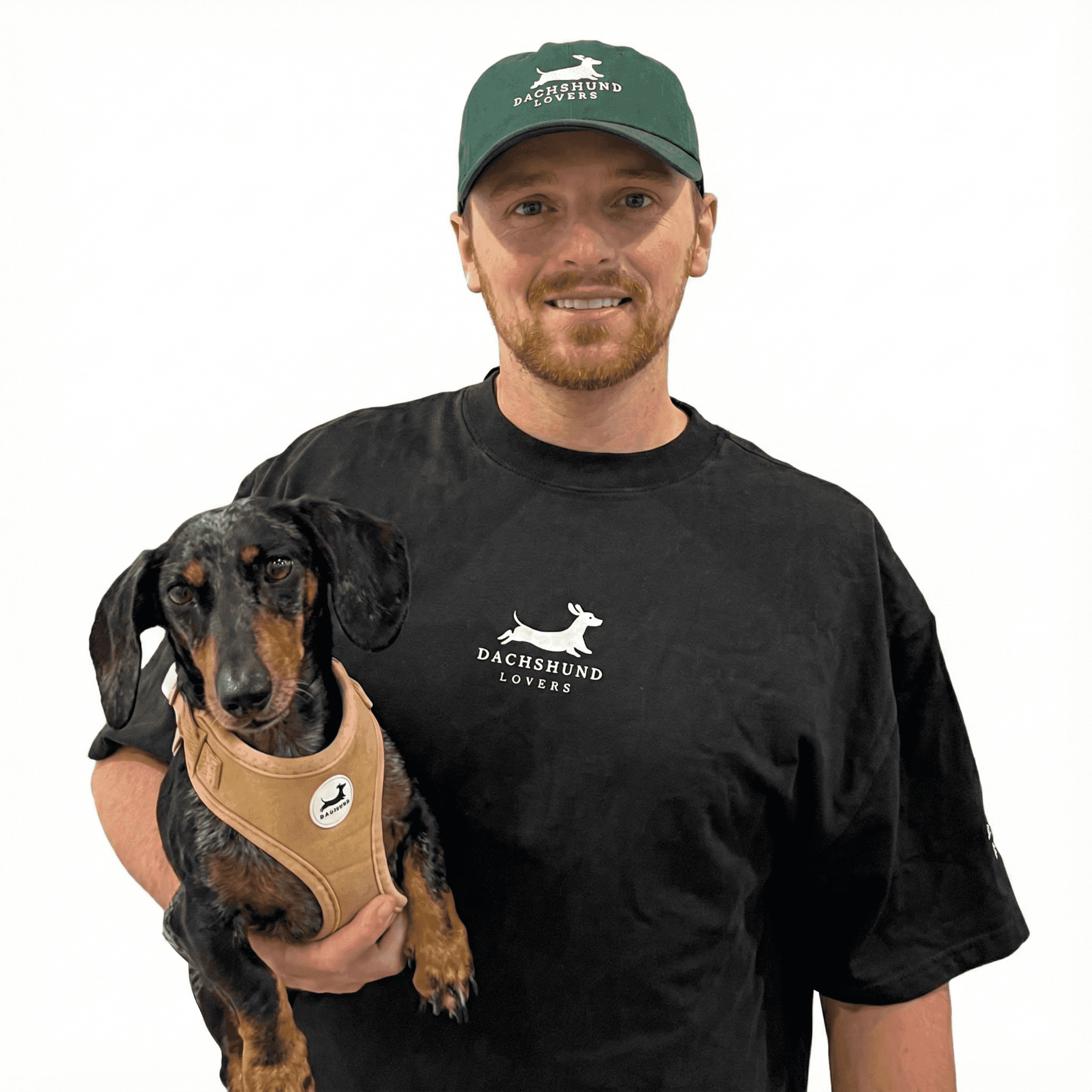
James
Posted on October 30, 2025.
Updated on July 21, 2026.
Table of Contents
Share

The first time I considered taking Harvey on a proper hike, I’ll admit I was hesitant. Dachshunds, with their famously long backs and short legs, don’t exactly scream “trail companion.” But one autumn afternoon, we found ourselves exploring some of the bush tracks around Royal National Park in NSW that we a re allowed to walk dogs, and Harvey was unstoppable nose to the ground, tail wagging, keeping pace as if he’d been doing it all his life. We
So, can dachshunds hike? The answer is yes with the right preparation, trails, and care, dachshunds can make wonderful hiking partners. According to the American Kennel Club (AKC), dachshunds were originally bred as hunting dogs with surprising stamina and determination (AKC Dachshund Breed Standard). That means their instinctive love for exploring can actually work in your favour on long walks and even hikes.
Of course, their build comes with unique challenges. A dachshund won’t manage the same steep terrain as a border collie, and you’ll need to make adjustments for their safety but with the right balance, hiking can be a brilliant way to keep them active and engaged.
Key Takeaways on Hiking With Dachshund
Topic | Summary | Key Notes |
|---|---|---|
Natural Ability | Dachshunds can hike, but they’re not natural endurance dogs. | Short legs + long backs = limited stamina; better at bursts than distance. |
Safety First | Trail choice matters more than trail length. | Avoid steep inclines, heat, and rocky scrambles that strain the spine. |
Gear Essentials | Hiking gear reduces risk and increases comfort. | A well-fitted harness, portable water, and a dachshund carrier backpack are non-negotiable. |
Fitness Prep | Build stamina before longer hikes. | Build stamina before longer hikes. Start with daily walks (see Dachshund Walking Guide) and gradually extend. |
Paw & Terrain Care | Rough ground takes a toll on small paws. | Use balms or boots; avoid overly sharp, hot, or loose terrain. |
Hydration | Small dogs overheat quickly. | Offer water breaks every 20–30 minutes; watch for signs of fatigue. |
Owner Role | You’ll carry more than snacks. | A dachshund carrier backpack is the safety net when your dog’s had enough. |
Not Every Dachshund Will Love It | Some will thrive on trails, others won’t.v | Respect your dog’s temperament; Harvey loves shaded bush tracks but refuses early mornings. |
Fitness Preparation & Conditioning
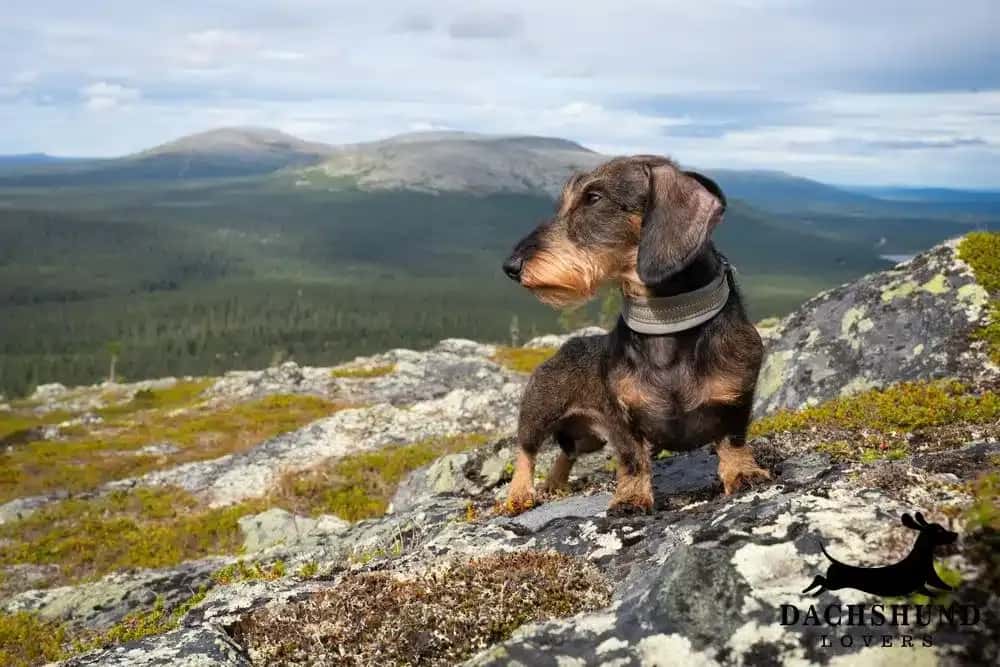
Getting your dachshund ready for hiking isn’t about seeing how far they can go — it’s about setting them up so their back, joints, and stamina can handle the effort without injury. These dogs have a very different build compared to other breeds, and the preparation you do before stepping onto a trail makes all the difference.
Start with consistency.
Daily walks are your training ground. According to the American Kennel Club (AKC), dachshunds need around 30–60 minutes of daily exercise, but that should be broken into smaller chunks rather than one long session. A hike compresses a lot of that activity into a single outing, which is why conditioning is so important. I usually start with 15–20 minute loops around our local streets and gradually extend until Harvey can handle a steady 40–45 minutes without slowing down. (See also: How Much Exercise Do Dachshunds Need).
Work with their natural rhythm.
One thing I’ve learned the hard way: Harvey isn’t a morning hiker. He’ll happily roll back into his bed after breakfast and ignore the leash. But in the late afternoon, he’s a different dog — alert, driven, and ready to burn energy. RSPCA Australia notes that timing activity to avoid peak heat is essential for small dogs, which aligns perfectly with Harvey’s rhythm. It’s about observation, not forcing a routine that doesn’t suit your dog.
Build strength the right way.
Trails, even easy ones, introduce inclines, uneven surfaces, and unexpected loads on the back. That means you want a dachshund with strong muscles around the spine and core. Low-impact conditioning is key. Swimming is excellent for this — VCA Hospitals highlight swimming as a safe, joint-friendly exercise for dogs prone to spinal issues. Harvey isn’t always keen on water, but when he does swim, I notice a difference in his stamina on land. Controlled hill walks also help build leg and back strength without overstraining.
Avoid overtraining.
Pushing too hard, too fast is a recipe for setbacks. Dachshunds are prone to intervertebral disc disease (IVDD), and repetitive strain is one of the triggers. PetMD stresses that rest days are just as important as active days for small, long-bodied breeds. I follow that rule closely — if Harvey has tackled a tougher trail on Saturday, Sunday is his reset: a short sniff-walk and lots of downtime.
Look for signs of readiness.
How do you know when your dachshund is fit enough for a trail? Watch for indicators: do they finish daily walks still eager, or are they dragging? Do they recover quickly (within a few hours) after longer outings? If yes, they’re likely conditioned enough for safe, moderate hikes.
Check with your vet.
Before you take on anything strenuous, a health check is worth it. Vets can flag underlying issues like early arthritis, heart conditions, or weight concerns that make hiking unsafe. As VCA Hospitals note, preventative screenings for small breeds help avoid injuries before they happen.
For me, the preparation phase has been about trial, error, and respect for Harvey’s limits. It’s not about making him a mountain dog. It’s about keeping him healthy so we can enjoy the trails together for years to come.
Gear Essentials
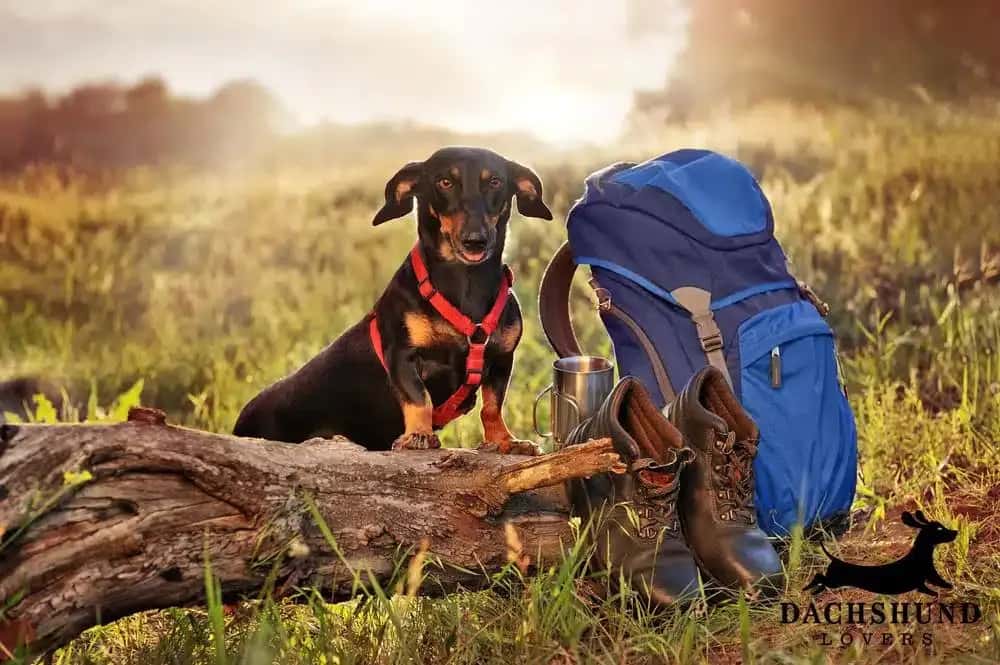
The gear you bring on a hike can make or break the experience. With a dachshund, it’s not about piling on extras — it’s about carrying the right essentials that keep their back, paws, and energy safe. Here’s what I’ve learned matters most.
Harness, not collar.
A collar might be fine for a quick walk around the block, but on a trail, it’s a risk. If your dachshund pulls suddenly, all that force goes straight to the neck and spine. That’s why I always use a padded, body-supportive harness. The American Kennel Club specifically recommends harnesses for breeds prone to spinal issues like dachshunds. For Harvey, the harness is his hiking uniform — it spreads the load across his chest and keeps pressure off his back.
Leash length matters.
Retractable leashes are one of those products that look convenient but cause more problems than they solve. Too much slack, too much chance of tangles, and no real control if a wallaby or off-lead dog suddenly appears. I stick to a standard 1.5–2 metre leash. RSPCA Australia makes it clear: controlled leads are safer for both the dog and the environment, especially in bushland.
Water on demand.
Dachshunds are small, but their water needs on a hike are bigger than most people expect. I carry a collapsible water bowl and at least 500ml of fresh water. Try to offer water every 20–30 minutes during activity. Harvey doesn’t always drink at every stop, but I still offer — the point is to prevent dehydration before it starts.
Paw care kit.
Hiking trails are rarely gentle on small paws. Sharp rocks, hot surfaces, or coarse sand can all cause cuts or burns. A paw balm before and after hikes helps protect against cracks, and I keep vet wrap in my pack in case of a split pad. Some owners swear by boots, but Harvey won’t tolerate them for long. If the terrain is risky, I shorten the hike instead. This links back to what we covered in the Dachshund Beach Guide, where paw care is just as critical.
The dachshund carrier backpack.
This isn’t optional. At some point on the trail, your dachshund may hit their limit — and when they do, carrying them in your arms for kilometres is unrealistic. A dachshund carrier backpack keeps them secure, keeps your hands free, and lets you finish the hike safely. Small-dog hiking groups and the AKC both list carriers as essential, not a luxury. Harvey resisted it at first, but now it’s just part of the routine: when he’s done, he hops in, and we carry on.
Optional extras.
A small first aid kit with bandages for paw injuries, a lightweight towel for mud or water crossings, and a cooling mat for hot breaks. They don’t always get used, but when you need them, nothing else will do.
The truth is, a lot of small-dog gear on the market is poorly designed. Bad stitching, cheap clips, awkward fits. We’ve rejected more than we’ve kept. For me, the standard is simple: would I trust this on a trail, an hour from the car, with Harvey depending on it? If not, it doesn’t make the cut.
Terrain & Paw Care
Most people underestimate how much the ground itself matters when you’re hiking with a dachshund. Their low frame and small paws mean every step is amplified. What feels like a casual stroll for us can be punishing for them if the terrain isn’t chosen carefully.
Rough and rocky ground.
Loose stones and uneven rock surfaces put extra strain on a dachshund’s back and paws. According to VCA Hospitals, sharp or jagged surfaces can quickly cause cuts or abrasions, especially in small breeds with less paw padding. When I know a track is rocky, I either shorten the distance or bring paw balm and vet wrap in case Harvey splits a pad.
Hot surfaces.
A dachshund’s paws are closer to the ground than almost any other breed, so they’re exposed to radiant heat for longer. RSPCA Australia warns that bitumen, sand, and even concrete can reach dangerous temperatures in summer. The “seven-second test” is a simple rule: if you can’t hold your hand on the ground for seven seconds, it’s too hot for your dog. This applies just as much to trails as it does to city streets.
Sand and beach terrain.
Sand is a workout in itself. It shifts under every step and can rub between paw pads. When I take Harvey to the coast (see our Dachshund Beach Guide), I shorten the walk and rinse his paws afterwards to avoid salt irritation. Sand also heats up faster than you expect — shaded paths or early mornings are safer.
Mud and wet tracks.
Muddy trails might look fun, but they hide risks sticks, stones, and bacteria that can cause paw infections. PetMD highlights how trapped moisture between paw pads often leads to irritation. If Harvey ends up in mud, I clean and dry his paws thoroughly before we get back in the car.
Paw protection.
Boots can be a solution, but many dachshunds hate wearing them. Harvey lasts about ten minutes before he plants himself and refuses to move. Paw balm, on the other hand, is non-negotiable I apply it before and after hikes. It adds a layer of protection and keeps his pads from cracking.
Realistic limits.
At the end of the day, no piece of gear will make unsuitable terrain safe for a dachshund. Steep rock scrambles, endless stairs, or sharp scree slopes aren’t worth the risk. Choosing the right ground under their paws is the real act of care.
For me, terrain and paw care have become the quiet filter I use when planning hikes. If the surface isn’t dachshund-friendly, we don’t go. Harvey might be small, but his comfort and safety dictate where we walk — not the trailhead map.
Hydration & Breaks
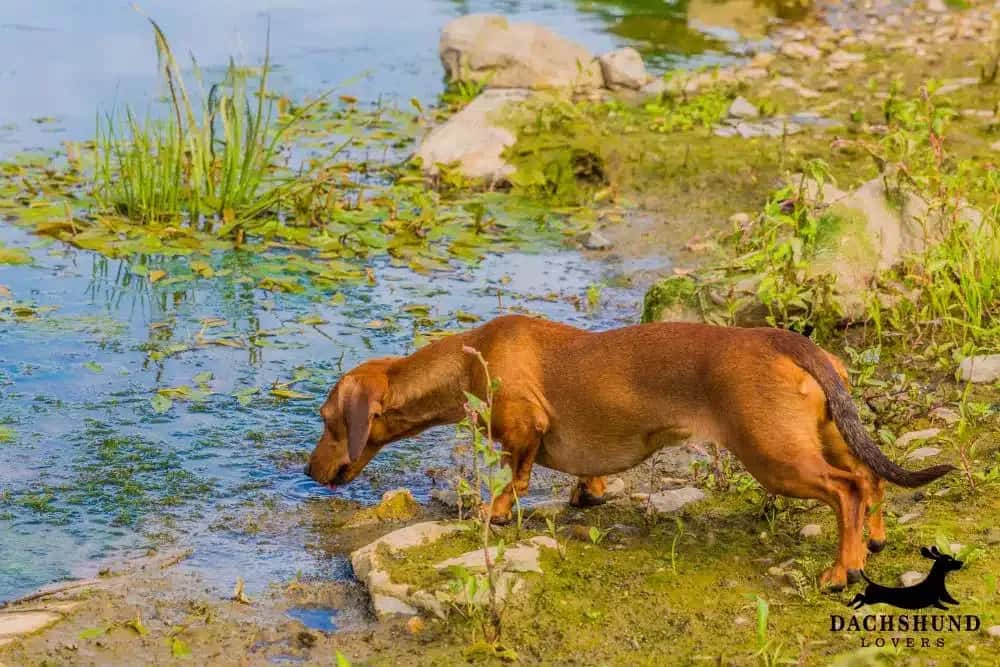
Hydration is where most owners — myself included, early on — underestimate what a dachshund actually needs on a hike. They’re low to the ground, moving constantly, and they overheat far quicker than we do. By the time they show obvious signs of thirst, it’s already late.
How much water do they need?
The general guideline from VCA Hospitals is that dogs should drink about 50–60 ml of water per kilogram of body weight per day. On hikes, that requirement spikes, especially in warm conditions. For a 7 kg dachshund like Harvey, I plan for at least 400–500 ml on the trail. I don’t expect him to drink it all, but I carry it anyway.
Breaks every 20–30 minutes.
Dogs should be offered water every 20–30 minutes during exercise. Harvey doesn’t always accept, but offering is what matters — it prevents overheating before it builds. I’ll stop in the shade, set down his collapsible bowl, and let him decide.
Signs of fatigue and overheating.
Excessive panting, slowing down, or refusing to walk are red flags. RSPCA Australia warns that small breeds are highly vulnerable to heatstroke. If Harvey starts to lag, that’s my cue to either rest longer or put him in the carrier backpack.
Hydration tricks.
Harvey is fussy with water on trails. Sometimes he won’t touch plain water but will drink if I add a splash from a low-sodium chicken stock cube (made at home, nothing commercial). A towel soaked in cool water also works as a cooling pad if he’s stubborn.
Don’t rely on natural water sources.
Streams, creeks, or puddles might look inviting, but they carry bacteria and parasites. AKC specifically warns about giardia from untreated water. I never let Harvey drink from rivers or ponds, even if they look clear.
The rest factor.
Water is only half the equation — rest is the other. Dachshunds will often push harder than they should, especially if they’re in “scent drive.” I’ve learned to enforce breaks. Shade, water, and ten minutes of nothing. Harvey might give me the “why are we stopping?” look, but he comes back stronger after.
Hydration and breaks aren’t about pampering — they’re about protecting a dachshund’s back and stamina for the long run. For me, it’s become routine: water every half hour, shade every kilometre, backpack ready when needed. That’s how we keep the hikes safe and enjoyable.
FAQs
More from This Series
- How Much Exercise Do Dachshunds Need
- Dachshund Swimming
- Dachshund Walking Guide
- Hiking with a Dachshund
- Are Dachshunds High Energy?
- Dachshund Beach Guide
Authored by
James
James is the founder of Dachshund Lovers and the proud human of Harvey, a mini dapple with a big personality. He writes to empower and connect the dachshund community, blending founder insights with honest, experience-based stories about life with this incredible and special breed. James brings candid, experience-backed opinions to the community and always focused on fewer, better products and ideas that genuinely improve life for dachshunds and their people.
Read moreJames is the founder of Dachshund Lovers and the proud human of Harvey, a mini dapple with a big personality. He writes to empower and connect the dachshund community, blending founder insights with honest, experience-based stories about life with this incredible and special breed. James brings candid, experience-backed opinions to the community and always focused on fewer, better products and ideas that genuinely improve life for dachshunds and their people.
Read moreDisclaimer
This content is for informational purposes only and should not be considered veterinary advice. Always consult with a licensed veterinarian regarding your dog’s health and wellbeing.
There are no comments yet
Leave a comment