Dorkie Puppies
Dorkie Puppies
Before you fall for those big eyes and tiny paws, here’s everything I learned researching the Dorkie breed — including the red flags to look for in breeders.
James
Posted on November 9, 2025.
Updated on July 21, 2026.
Table of Contents
- 1.Key Takeaways on Dorkie Puppies
- 2.How to Choose a Healthy Dorkie Puppy
- •1. Start with a Responsible Breeder or Rescue
- •2. Observe the Litter — and the Mother
- •3. Do a Quick Physical Health Check
- •4. Ask the Right Questions
- 3.What to Expect in the First 8 Weeks
- •Week-by-Week Overview
- •Why the 8-Week Mark Matters
- •Early Socialization Cues
- 4.Training Tips for Dorkie Puppies
- •Early Foundations
- •Behavioral Challenges
- •Socialization Priorities
- •Recommended Tools
- 5.Grooming Needs & Coat Care
- •Understanding Their Coat Type
- •Bathing Schedule
- •Nail, Ear & Dental Care
- •Professional Grooming
- 6.Feeding & Nutrition for Dorkie Puppies
- •What Should Dorkie Puppies Eat?
- •Sample Feeding Schedule
- •Foods to Avoid
- •Water & Hydration
- 7.How Much Do Dorkie Puppies Sleep?
- •Average Sleep Needs by Age
- •Signs Your Dorkie Isn’t Getting Enough Rest
- •Creating a Healthy Sleep Environment
- 8.Dorkie Puppy Training Tips
- •Are Dorkie Puppies Easy to Train?
- •Potty Training Essentials
- •Common Mistakes to Avoid
- •Crate Training as a Positive Tool
- 9.Grooming Needs for Dorkie Puppies
- •Coat Types: What to Expect
- •Brushing & Bathing
- •Nail, Ear & Eye Care
- •Introducing Grooming Routines Early
- 10.Vet Visits, Vaccinations & Preventive Health
- •Initial Vet Visit & Health Check
- •Puppy Vaccination Schedule
- •Flea, Tick & Worming Prevention
- •Desensitizing to Vet Care
- 11.Preparing for the First Night at Home
- •Create a Safe, Quiet Space
- •Expect a Few Tears (Literally)
- •Late-Night Potty Breaks
- •Sample First Night Routine
- 12.Common Mistakes New Dorkie Owners Make
- •1. Overlooking Their Small-Dog Confidence
- •2. Free-Feeding or Over-Treating
- •3. Waiting Too Long to Start Socialization
- •4. Assuming Their Energy Will Fade
- •5. Skipping Crate Training
- 13.Puppy-Proofing Your Home
- •Key Areas to Address
- •Keep Their World Small at First
- •Mental Stimulation Matters Too
- 14.How Dorkie Puppies Change in Their First Year
- •Timeline of Dorkie Development
- •Coat Changes
- •Behavior & Social Maturity
- •Vet Milestones to Track
- -More From This Series:
- -Disclaimer
Share

Some breeds sneak up on you — quietly charming, full of unexpected personality — and the Dorkie is one of them. A hybrid between the clever Dachshund and the tenacious Yorkshire Terrier, the Dorkie isn’t just another lapdog. They’re full of quirks, fiercely loyal, and often smarter than they let on.
Over the past decade, dogs like the Dorkie have become a common sight in urban spaces — especially in pet-forward cities like Sydney where we are based with our dachshund Harvey. You’ll often see them weaving confidently between legs at The Grounds of Alexandria, or keeping pace along the coastal path from the famous walk of Coogee to Bondi. But what makes the Dorkie stand out is their blend of two strong-willed personalities — and how beautifully they can settle into a home that’s both relaxed and rhythm-driven.
As with any crossbreed, understanding their traits means understanding their lineage. Dachshunds, with their stubborn streak and love of burrowing, pair curiously well with Yorkies, known for their confidence and low-shedding coats. The result? A companion that’s affectionate, alert, and likely to outwit you if given the chance.
According to Vetstreet, Dachshunds were originally bred in Germany to hunt badgers — their tenacity runs deep. Meanwhile, Yorkies, as noted by the American Kennel Club, were once rat hunters in Victorian England’s textile mills. Both breeds are small but mighty — and so is their hybrid.
So, what should you expect if you’re thinking about welcoming a Dorkie into your life? Let’s begin with a snapshot of their most notable traits.
Key Takeaways on Dorkie Puppies
Trait | Description |
|---|---|
Breed Type | Cross between a dachshund and Yorkshire terrier |
Size at Maturity | 5–12 lbs, usually 5–10 inches in height |
Ideal For | Small homes, apartments, families with older children |
Temperament | Lively, affectionate, curious — can be vocal or stubborn |
Puppy Cost (US) | $500–$1,500 depending on breeder, lineage, and location |
Feeding Needs | High-quality small breed puppy kibble; avoid overfeeding |
Socialization Timing | Crucial between 8–16 weeks — early exposure to people, sounds, and settings |
Training Focus | Housebreaking, leash manners, and impulse control |
Grooming Needs | Weekly brushing; more frequent if long-haired |
Lifespan | 12–15 years with proper care |
How to Choose a Healthy Dorkie Puppy

Whether you’re adopting from a shelter or buying from a breeder, the early decisions you make can shape your Dorkie’s quality of life — and yours. Health, temperament, and early socialization all start long before you bring them home. So, how can you ensure you’re choosing a healthy, well-adjusted Dorkie puppy?
1. Start with a Responsible Breeder or Rescue
A reputable breeder will be transparent about the puppy’s parents, environment, and health history. Look for:
- Health clearances for both dachshund and Yorkshire terrier parent breeds (e.g., for patellar luxation, eye issues, and IVDD risk)
- Clean, spacious environments where puppies have exposure to people and basic social interaction
- Willingness to answer questions and provide ongoing support
Adoption is also a meaningful route. Rescues occasionally receive Dorkie puppies or young adults, especially in regions where backyard breeding is common. Sites like Petfinder and Adopt-a-Pet allow you to filter by breed and region.
2. Observe the Litter — and the Mother
Watch how the puppies interact with each other. Healthy Dorkie puppies should be alert, curious, and willing to engage, though some shyness is expected. Avoid puppies that seem excessively withdrawn or overly dominant. The mother’s temperament is also telling — her behavior often reflects what the puppies may inherit.
3. Do a Quick Physical Health Check
Here’s a simple at-a-glance list you can reference during your first meeting:
Trait | What to Look For |
|---|---|
Eyes | Clear, no discharge |
Nose | Moist, free of crusting or discharge |
Ears | Clean, no strong odor or redness |
Gait | Steady, balanced movement |
Belly | No signs of bloating or distension |
If you notice persistent scratching, coughing, or sluggish behavior, these could be signs of underlying issues — even in an otherwise clean setting.
4. Ask the Right Questions
Prepare a few focused questions to ask the breeder or shelter staff. For example:
- “Can I meet both of the puppy’s parents?”
- “What vaccinations and deworming have been done so far?”
- “Have the puppies been exposed to common household sounds or other pets?”
- “Are there any known health issues in the lineage?”
A good breeder or foster coordinator won’t just tolerate these questions — they’ll welcome them.
What to Expect in the First 8 Weeks
The first eight weeks of a Dorkie puppy’s life are a whirlwind of growth, development, and learning. While most of this early journey happens with their breeder or foster, understanding what takes place during this time can help you better assess a puppy’s readiness — and set you up to continue their care with confidence.
Week-by-Week Overview
Week | Milestones |
|---|---|
1-2 | Eyes and ears begin to open; limited movement |
3-4 | Puppies begin walking, barking, and playing |
5-6 | Socialization kicks in; puppies explore and interact |
7-8 | Vaccinations begin; ready for basic training & bonding |
Belly | No signs of bloating or distension |
By the time a Dorkie puppy is 8 weeks old, they should be weaned from their mother, able to eat solid food, and have started early play with littermates. This social interaction teaches them bite inhibition, communication cues, and basic confidence.
Why the 8-Week Mark Matters
Some breeders may try to rehome puppies at 6 weeks — but this is too early. Research, including guidance from the American Veterinary Medical Association, shows that puppies separated from their littermates too soon may develop behavioral issues, like aggression or fear-based reactivity. The extra two weeks make a difference in social maturity and stress resilience.
Ask if the puppy has had exposure to:
- Household noises (vacuum, TV, doorbell)
- Different textures (carpet, tiles, grass)
- Gentle human handling (being picked up, touched on paws and ears)
These tiny experiences in the first few weeks can shape how adaptable your Dorkie will be in later life.
Training Tips for Dorkie Puppies
Training a Dorkie puppy is as much about patience and consistency as it is about understanding their quirky blend of independence and loyalty. With roots in two intelligent but strong-willed breeds, Dorkies respond best to firm guidance delivered with warmth.
Early Foundations
Start with these essentials from the moment your Dorkie puppy arrives home:
- Name recognition: Use their name consistently and reward them when they respond.
- Crate training: Helps with toilet training and provides a secure “den.”
- Toilet training: Take them outside every 2 hours, after meals, and upon waking.
- Basic commands: Begin with sit, stay, come, and leave it — all positively reinforced.
The American Kennel Club recommends starting training as early as 8 weeks for small breeds like Dorkies.
Behavioral Challenges
Dorkies can show signs of separation anxiety if left alone for long stretches. To help:
- Use positive crate associations (treats, toys).
- Practice short departures that increase over time.
- Avoid dramatic exits or entrances.
Barking can also become habitual — especially if not addressed early. Use calm redirection and reward silence, not noise.
While Dorkies are often confident with family, they need structured exposure to:
- Other dogs (especially larger breeds)
- Children and unexpected sounds
- Car rides, grooming tools, and leashes
A well-socialized Dorkie tends to be less reactive and easier to manage during vet visits or outings.
Recommended Tools
Tool | Purpose |
|---|---|
Harness with front clip | Prevent pulling during walks |
Puzzle feeder | Mental stimulation + slow eating |
Treat pouch | Easy reinforcement during training |
Clicker (optional) | Clear training marker for advanced cues |
Grooming Needs & Coat Care
Dorkies can inherit a variety of coat types depending on which parent breed dominates — some have the silky straight coat of a Yorkshire Terrier, others the dense, short coat of a Dachshund. Either way, regular grooming is essential not just for appearance, but for health and comfort.
Understanding Their Coat Type
Most Dorkies fall into one of three coat categories:
Coat Type | Description | Typical Care |
|---|---|---|
Short & Smooth | Close to the body, minimal shedding | Weekly brushing |
Medium Silky | Fine, longer fur prone to matting | Brush 3–4x per week |
Long, feathered | Flowing with some wave or curl | Daily brushing recommended |
Intelligence | High – quick to learn, but sometimes too clever for their own good | |
Barking Tendencies | High – inherited from both parent breeds | |
Suitability for Families | Best with respectful children and adults who understand small-dog dynamics |
Your Dorkie’s grooming needs will depend heavily on this coat texture. If you’re unsure, a professional groomer can assess and recommend a routine.
Bathing Schedule
A monthly bath is usually sufficient, but that can change based on:
- Outdoor activity (e.g. mud or beach walks)
- Skin sensitivities or allergies
- General odor
Always use a gentle, dog-specific shampoo — human products can disrupt their pH balance and lead to itching or dryness.
Nail, Ear & Dental Care
- Nails: Trim every 3–4 weeks to avoid discomfort or splaying. If you hear clicking on the floor, they’re too long.
- Ears: Clean weekly using a vet-approved solution — especially important for floppy-eared dogs like Dorkies.
- Teeth: Brush 2–3x per week using canine toothpaste to reduce tartar and prevent dental disease (common in small breeds).
Professional Grooming
If your Dorkie has inherited the Yorkie-style coat, you may want to book a professional grooming appointment every 6–8 weeks. A full groom usually includes:
- Wash and blow-dry
- Sanitary trim
- Nail clipping
- Ear cleaning
- Coat shaping (especially around the face)
A good groomer will also check for skin issues, ticks, or signs of irritation.
Feeding & Nutrition for Dorkie Puppies
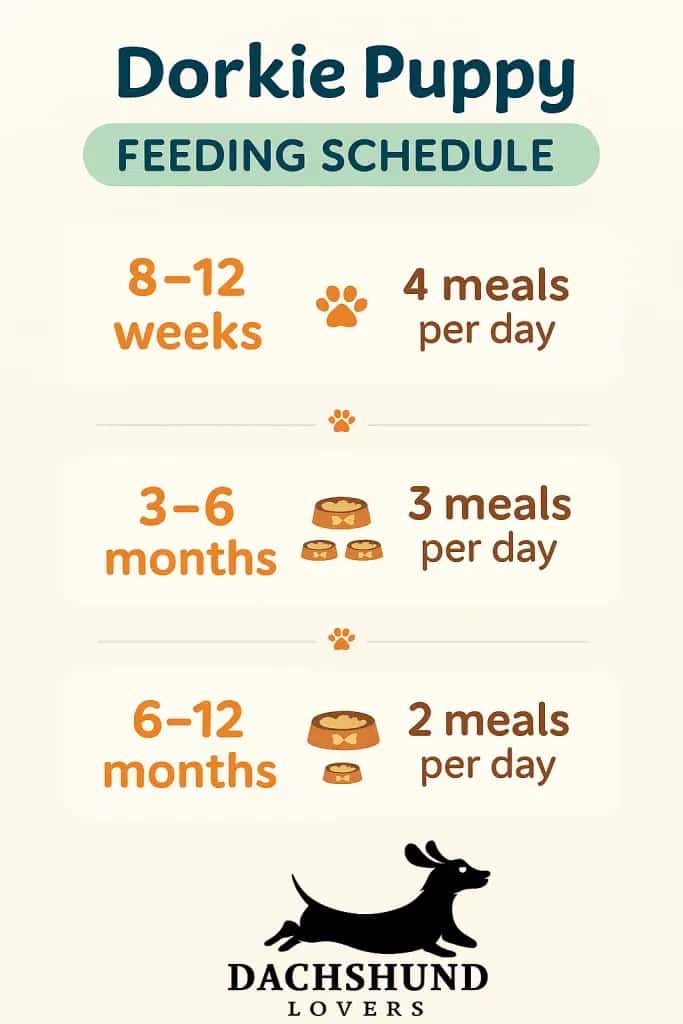
Getting nutrition right in the early months of your Dorkie’s life helps lay the foundation for long-term health, energy, and immune resilience. Because Dorkies are a small-breed mix, they have specific dietary needs that differ from larger breeds or working dogs.
What Should Dorkie Puppies Eat?
Dorkie puppies require a high-quality, small-breed puppy food that supports:
- Rapid early growth
- Brain and eye development (thanks to DHA)
- A strong immune system
- Healthy bones and joints (watch calcium-to-phosphorus ratio)
Look for brands with real meat as the first ingredient and no artificial fillers or by-products. Trusted sources like the American Kennel Club recommend avoiding grain-free unless your vet advises it due to medical reasons.
Sample Feeding Schedule
Age | Meals Per Day | Portion Size |
|---|---|---|
8–12 weeks | 4 meals | ¼ cup per meal (adjustable) |
3–6 months | 3 meals | ⅓ to ½ cup per meal |
6–12 months | 2 meals | ½ cup per meal |
Always refer to the brand’s feeding guide and adjust based on your Dorkie’s weight, metabolism, and vet guidance.
Foods to Avoid
Puppies love to scavenge — and unfortunately, not everything that smells good is safe:
- No onions, garlic, chocolate, or grapes (even in small amounts)
- No bones from cooked meat — they can splinter and cause internal injuries
- Minimal table scraps — too much fat or sodium can upset sensitive stomachs
Water & Hydration
Make sure your Dorkie has constant access to clean, fresh water, especially if you’re feeding dry kibble. Dehydration can sneak up quickly in small dogs and impact digestion and energy levels.
How Much Do Dorkie Puppies Sleep?
Sleep isn’t just a luxury for puppies — it’s essential for healthy brain development, physical growth, and emotional regulation. And Dorkies, with their mix of playful dachshund and loyal Yorkie energy, need plenty of it.
Average Sleep Needs by Age
Age Range | Hours of Sleep per Day |
|---|---|
8–12 weeks | 18–20 hours |
3–6 months | 16–18 hours |
6–12 months | 14–16 hours |
1 year and older | 12–14 hours (adult) |
Young Dorkie puppies will spend most of the day in short bursts of play, potty, and sleep — it’s completely normal and necessary.
Signs Your Dorkie Isn’t Getting Enough Rest
- Irritability or biting when handled
- Trouble focusing during training
- Zoomies that turn into meltdowns
- Falling asleep mid-play or during meals
Sleep-deprived puppies often mimic behaviors we might mistake for bad manners, but it’s usually a signal they’re overtired. Having a consistent nap routine and quiet crate space helps.
Creating a Healthy Sleep Environment
Dorkies sleep best when they feel safe. A few simple strategies:
- Use a crate or enclosed pen with soft bedding
- Keep noise and foot traffic low during nap times
- Stick to regular routines for bedtime and morning wake-ups
Consistency is calming. Like toddlers, puppies thrive when they know what to expect.
Dorkie Puppy Training Tips
Training a Dorkie puppy is equal parts reward and patience. With their dachshund determination and Yorkie alertness, these little ones respond best to consistency, calm leadership, and positive reinforcement. Let’s walk through what works — and what often doesn’t.
Are Dorkie Puppies Easy to Train?
Yes — but with nuance. Dorkies are smart and emotionally attuned, but their independence can lead to selective listening. Compared to more docile breeds, they may take a few extra repetitions (and treats) to get the message.
Here’s what helps:
- Keep sessions short (5–10 minutes)
Overload leads to tuning out. Frequent, playful micro-sessions work best.
- Use high-value treats
Dorkies often respond better to real chicken or freeze-dried liver than kibble.
- Praise consistently
They love verbal affirmation — especially when it’s warm and calm.
Potty Training Essentials
Potty training requires predictability above all. A few key strategies:
When to Take Them Out | Why It Works |
|---|---|
Immediately after waking | Most reliable trigger for peeing |
15–20 mins after eating | Puppies digest quickly |
After play or excitement | Movement stimulates bowel activity |
Before bedtime | Prevents overnight accidents |
Tip: Use a designated spot outdoors. This helps them associate scent with the correct location.
Common Mistakes to Avoid
- Punishing accidents:
It delays learning. Interrupt gently if caught in the act, and move them outside. - Inconsistent routine:
Dorkies rely heavily on structure. Skipping cues (like crate to outside transitions) causes confusion. - Overstimulating during training:
These pups can become hyper quickly — calm focus works better than animated commands.
Crate Training as a Positive Tool
Crate training isn’t about confinement — it’s about creating security. When introduced gradually, the crate becomes your Dorkie’s safe place. This is especially helpful for:
- Teaching boundaries
- Managing separation anxiety
- Encouraging independent sleep
Make sure it’s placed in a quiet part of the house, not used for punishment, and always stocked with soft bedding and a familiar scent.
Grooming Needs for Dorkie Puppies
Grooming your Dorkie puppy is about more than appearance — it sets the foundation for health, bonding, and long-term care habits. Whether your pup inherits a silky Yorkie coat or a short-haired dachshund texture, early grooming matters.
Coat Types: What to Expect
Dorkies typically fall into one of three coat categories:
Coat Type | Texture | Maintenance |
|---|---|---|
Short & Smooth | Sleek, easy-care | Low — weekly brushing |
Long & Silky | Fine, feathered | Moderate — 2–3x/week |
Wiry or Mixed | Coarse patches | Varies — as needed |
Most Dorkie puppies develop their true adult coat between 6 and 12 months, so you may notice a change in texture or length during that time. Gentle brushing early on helps them adjust.
Brushing & Bathing
- Brushing
Start with a soft-bristle brush or grooming mitt. Aim for a short session 2–3 times per week, especially for long-haired Dorkies to prevent mats around the ears and behind the legs.
- Bathing
Dorkie puppies don’t need frequent baths — once every 3–4 weeks is ideal unless they’ve rolled in something outdoors. Use a gentle, puppy-formulated shampoo and avoid over-washing, which can dry out their skin.
Nail, Ear & Eye Care
- Nail trims: Every 2–3 weeks. Puppies benefit from early exposure, even if only a tip is clipped.
- Ears: Check weekly for debris or signs of infection, especially if your Dorkie has floppy ears.
- Eyes: A damp cloth can gently clean away any crust or discharge, common in small breeds.
Introducing Grooming Routines Early
Your puppy’s first grooming experiences shape their lifelong response. Make it calm, positive, and predictable:
- Use treats as part of the grooming session
- Pair grooming with quiet time — not play or excitement
- Touch their paws, ears, and face regularly to reduce sensitivity
Vet Visits, Vaccinations & Preventive Health

Taking your Dorkie puppy to the vet shouldn’t be reactive — it’s a rhythm you build from the moment they come home. Early and consistent veterinary care is one of the most impactful things you can do to support their health and longevity.
Initial Vet Visit & Health Check
Book your puppy’s first appointment within 3–5 days of bringing them home. Even if they’ve had an initial check from a breeder or shelter, your vet will:
- Conduct a full physical exam
- Check for congenital issues like hernias, luxating patella, or heart murmurs
- Establish a baseline weight and record vital signs
- Begin your puppy’s personalized vaccination schedule
This visit is also your chance to ask about diet, worming, behavior, and any quirks you’ve noticed so far. Bring a list — no question is too small when it comes to your dog’s early health.
Puppy Vaccination Schedule
The standard schedule looks like this, though your vet may adapt it based on lifestyle and location:
Age | Vaccine |
|---|---|
6–8 weeks | Distemper, Parvovirus (DAPP) |
10–12 weeks | DAPP booster, Bordetella (kennel cough) |
14–16 weeks | DAPP final booster, Rabies (depending on laws) |
6 months+ | Optional: Leptospirosis, Canine Influenza |
Each round builds your Dorkie’s immunity over time — skipping one can leave them vulnerable. You may also want to discuss parasite prevention at this stage.
Flea, Tick & Worming Prevention
Small breeds like Dorkies are especially sensitive to infestations, and even indoor dogs aren’t immune.
- Worming: Every 2 weeks until 12 weeks of age, then monthly until 6 months
- Fleas & ticks: Monthly treatments from 8–10 weeks of age
- Heartworm: Preventative starts as early as 12 weeks and continues for life
Ask your vet to recommend products safe for puppies. Some breeds, especially those with a dachshund lineage, can react poorly to ivermectin-based treatments — so breed-specific knowledge matters.
Desensitizing to Vet Care
Getting your Dorkie comfortable with exams, injections, and handling starts at home. Gently touch and hold their paws, ears, and mouth regularly. Bring treats to vet visits, and schedule occasional “happy visits” — trips where nothing happens except praise and cuddles. Over time, this builds a positive association with care, not fear.
Preparing for the First Night at Home
The first night is rarely perfect — and that’s okay. Your Dorkie puppy is leaving behind familiar scents, sounds, and their littermates. Naturally, they’ll need reassurance and routine as they settle into their new life.
Create a Safe, Quiet Space
Set up a designated sleep area before your puppy arrives. A crate with a soft bed and a lightweight blanket often works best. It mimics the den-like comfort they’re instinctively drawn to. Keep it:
- Away from loud noises or foot traffic
- Close to your bedroom (at least for the first few nights)
- Consistent — don’t keep moving their bed around
If they’ve come with a toy or towel from the breeder or shelter, include it. That familiar scent can be deeply calming.
Expect a Few Tears (Literally)
It’s common for puppies to cry at night during the first week or two. This isn’t misbehavior — it’s a sign of emotional transition.
Tips to ease the adjustment:
- Sit nearby during the first few nights if needed
- Use a ticking clock or white noise machine
- Try a puppy-safe heating pad under the bedding for warmth
- Resist the urge to bring them into your bed (unless that’s your long-term plan)
Consistency is key. Respond gently, but avoid creating habits you won’t want to keep.
Late-Night Potty Breaks
A young Dorkie won’t make it through the night without a toilet break — expect one or two wake-ups for the first few weeks. Use the same quiet tone and area each time. No playing, no snacks — just straight out and straight back to bed.
Sample First Night Routine
Time | Activity |
|---|---|
7:00 PM | Play + dinner |
8:00 PM | Potty break |
8:15 PM | Calm time (cuddles, gentle grooming) |
9:00 PM | Final potty break |
9:30–10:00 PM | Bedtime (crate or bed setup) |
1:00 AM | Quiet potty trip |
5:30–6:00 AM | Morning potty + start the day |
Over time, your Dorkie will settle into a longer stretch of sleep — most are sleeping through the night by 12–14 weeks.
Common Mistakes New Dorkie Owners Make

Raising a Dorkie puppy is incredibly rewarding — but like all small breeds, they come with quirks that can catch first-time owners off guard. Here’s what to avoid, especially during those critical early months:
1. Overlooking Their Small-Dog Confidence
Dorkies may be tiny, but they carry themselves with the confidence of a much larger dog. This can lead to issues like barking at strangers, lunging on leash, or resource guarding — especially if not gently managed early on.
According to the American Kennel Club (AKC), many small breeds develop what’s commonly called small dog syndrome — a set of behavioral issues tied more to inconsistent training than size.
The fix? Treat them like a big dog in a small body. That means boundaries, positive reinforcement, and regular training — not just cuddles.
2. Free-Feeding or Over-Treating
Because they’re so small, it’s easy to go overboard with food and treats — especially when they stare up at you with those big eyes. But obesity is a serious concern for Dorkies, particularly because of their dachshund lineage.
Dorkies are prone to spinal strain and joint issues if overweight — which is why maintaining a lean body condition is essential throughout puppyhood.
The ideal window for socialization is between 8 and 16 weeks. Waiting until your Dorkie has had “all their shots” may mean missing this critical stage.
Instead, follow vet-recommended protocols: start with safe, low-risk environments (family homes, quiet parks) while working on exposure to sounds, surfaces, people, and calm dogs.
4. Assuming Their Energy Will Fade
Because of their Yorkie side, Dorkie puppies can remain quite high-energy even as they mature. Don’t expect them to “grow out of it” without providing outlets like walks, enrichment toys, and structured play.
Daily stimulation reduces destructive behaviors and separation issues later on.
5. Skipping Crate Training
Many new owners skip crate training because they think it’s unnecessary or “mean.” In reality, crate training — when done positively — gives your Dorkie a sense of safety and helps immensely with housebreaking, alone-time training, and sleep routines.
Puppy-Proofing Your Home
Bringing home a Dorkie puppy is a bit like preparing for a toddler on four legs — curious, energetic, and oddly talented at finding the one thing they shouldn’t chew. Proper puppy-proofing isn’t just about preventing mess; it’s about protecting your pup from genuine harm and setting the tone for a calm, structured environment.
Key Areas to Address
Area | What to Watch For | Suggested Action |
|---|---|---|
Cables & Electronics | Dorkie puppies love to chew — especially cords | Use cord covers or cable management boxes |
Small Objects | Coins, rubber bands, socks — all choking hazards | Keep off floors and low tables |
Stairs & Balconies | Risk of falling during early months | Use baby gates or barriers |
Furniture & Gaps | Dorkies are small — they can wedge into tight spots | Block off access to behind or under items |
Cleaning Products | Toxic if ingested | Store in high or locked cabinets |
Backyard (if applicable) | Small gaps in fences, garden tools, or toxic plants | Check perimeter and remove hazards |
Keep Their World Small at First
Many new owners make the mistake of giving their Dorkie free rein of the house. At this stage, less is more. Confining your puppy to a playpen or a single room with safe flooring and supervision gives them space to learn routines without becoming overstimulated or overwhelmed.
This approach also supports positive crate training and reduces accidents — something we covered earlier in the Early Socialization & Training section.
Mental Stimulation Matters Too
While most of puppy-proofing is about safety, don’t forget enrichment. Dorkies are a smart crossbreed, and boredom can quickly lead to unwanted behaviors. Rotate chew toys, puzzle feeders, and interactive toys regularly. You might consider a snuffle mat or frozen KONGs for mental stimulation — backed by veterinarians for reducing anxiety and destructive chewing.
How Dorkie Puppies Change in Their First Year
The first 12 months with a Dorkie are a masterclass in transformation. From teacup-sized bundles of fluff to confident, quirky little dogs with big personalities, your Dorkie will go through several noticeable stages — physically, emotionally, and behaviorally.
Timeline of Dorkie Development
Age Range | Key Milestones |
|---|---|
8–12 weeks | Adjustment period; first vet checks, vaccinations, crate intro |
3–6 months | Teething, early training, strong bonding, increased curiosity |
6–9 months | Adolescent behavior kicks in — testing boundaries and confidence |
9–12 months | Energy begins to stabilize; coat may start to resemble adult form |
Coat Changes
If your Dorkie is a long-haired or dapple variant, expect their coat to shift around the 6–10 month mark. Many owners notice changes in texture and color vibrancy — especially in dapple markings, which can appear softer or more defined over time. This transition often marks the end of the “puppy fluff” stage and the start of their adult coat.
For example, we had a reader from Sylvania Waters mention that her long-haired dapple Dorkie started with a light silver tone and gradually developed richer chocolate patches by month nine — a reminder that this mix often matures in unpredictable and beautiful ways.
During adolescence (around 6–9 months), some Dorkies may display classic “teenage” defiance: ignoring recall, increased barking, or sudden suspicion of people they previously adored. This is normal. Stay consistent with training, and lean into positive reinforcement. The reward? By 12 months, you’ll likely have a Dorkie who’s confident, affectionate, and well-integrated into your daily rhythm.
Vet Milestones to Track
- 16 weeks: Final puppy vaccines
- 6 months: Spay/neuter discussion
- 9–12 months: Transition to adult food, annual check-up, behavior review
Frequently Asked Questions (FAQs)
More From This Series:
Looking to learn more about Dorkies? Here are other helpful reads from our breed-specific series:
- Dorkie: The Complete Breed Guide
A detailed look at the Dorkie’s appearance, history, care needs, and what makes this crossbreed unique. - Full Grown Dorkie: Size, Weight & Temperament
Understand how big Dorkies get, how their personalities evolve, and what to expect as they mature. - Dorkie for Sale & Adoption: What You Need to Know
An honest guide to finding a Dorkie puppy — including adoption tips, breeder red flags, and pricing insights. - Dorkie Temperament & Personality Traits
From playful quirks to loyalty levels, this article explores what it’s really like living with a Dorkie. - Dorkie Health & Lifespan Guide
Stay proactive with breed-specific health tips and lifespan insights tailored to Dorkies.
Authored by
James
James is the founder of Dachshund Lovers and the proud human of Harvey, a mini dapple with a big personality. He writes to empower and connect the dachshund community, blending founder insights with honest, experience-based stories about life with this incredible and special breed. James brings candid, experience-backed opinions to the community and always focused on fewer, better products and ideas that genuinely improve life for dachshunds and their people.
Read moreJames is the founder of Dachshund Lovers and the proud human of Harvey, a mini dapple with a big personality. He writes to empower and connect the dachshund community, blending founder insights with honest, experience-based stories about life with this incredible and special breed. James brings candid, experience-backed opinions to the community and always focused on fewer, better products and ideas that genuinely improve life for dachshunds and their people.
Read moreDisclaimer
This content is for informational purposes only and should not be considered veterinary advice. Always consult with a licensed veterinarian regarding your dog’s health and wellbeing.
There are no comments yet
Leave a comment