Dorgi Puppies: Buying, Raising & Care Tips
Dorgi Puppies: Buying, Raising & Care Tips
Not all puppy guides are created equal. Get the honest truth about raising a Dorgi puppy, including house-training, nipping, and energy levels.
James
Posted on November 10, 2025.
Updated on July 19, 2026.
Table of Contents
- •Introduction to Dorgi Puppies
- 1.Key Takeaways on Dorgi Puppies
- 2.How to Choose a Healthy Dorgi Puppy
- •1. Recognizing a Healthy Puppy
- •2. Questions to Ask the Breeder or Rescue
- •3. The Importance of Meeting the Parents
- •4. Health Guarantees and Contracts
- •5. Warning Signs to Avoid
- •Key Takeaways for Choosing a Healthy Puppy
- 3.Dorgi Puppies for Sale vs Adoption
- •1. Price of Dorgi Puppies
- •2. Why Choose a Breeder?
- -How to Spot a Good Breeder:
- •3. Warning Signs of Unethical Breeders
- •4. Why Consider Adoption?
- -Benefits of Adoption:
- •5. Where to Find Dorgis for Sale or Adoption
- •6. Breeder vs Adoption: Which is Right for You?
- •7. Cost Considerations Beyond Purchase Price
- •Key Takeaways for Sale vs Adoption
- 4.How to Care for a Dorgi Puppy
- •1. Preparing Your Home
- •2. Crate Training Basics
- •3. Early Socialization
- •4. Exercise for Young Dorgis
- •5. Training Your Dorgi Puppy
- •6. Daily Care Routine
- •7. Health Checks in the First Year
- •Key Takeaways for Puppy Care
- 5.What Should I Feed a Dorgi Puppy?
- •1. Choosing the Right Puppy Food
- •2. Feeding Chart for Dorgi Puppies
- •3. Recommended Puppy Food Brands
- •4. Treats and Snacks
- •5. Hydration
- •6. Avoid Overfeeding
- •7. Supplements for Dorgi Puppies
- •8. Feeding Tips for New Owners
- •Key Takeaways for Feeding a Dorgi Puppy
- 6.Are Dorgi Puppies Easy to Train?
- 7.Exercise and Play for Young Dorgis
- •1. Understanding the Dorgi Mindset
- •2. Positive Reinforcement is Non-Negotiable
- •3. Crate Training as a Foundation
- •4. Early Socialization (8–16 Weeks)
- •5. Leash Training and Early Walks
- •6. Obedience Basics to Teach Early
- •7. Common Challenges (and How to Solve Them)
- •8. Mental Stimulation: The Secret Weapon
- •1. Age-Specific Exercise Guidelines
- •2. Safe Games for Dorgi Puppies
- •3. Mental Stimulation is Just as Important
- •4. Social Play and Puppy Classes
- •5. Avoiding Over-Exercising
- •6. Tools and Accessories for Safe Exercise
- •7. Building a Daily Routine
- •8. When to Begin More Active Exercise
- •9. Combining Exercise with Training
- •10. Tracking Progress
- 8.Grooming and First-Year Care
- •1. Brushing Routine
- •2. Bathing
- •3. Nail Care
- •4. Ear Cleaning
- •5. Dental Care
- •6. Coat Shedding and Seasonal Care
- •7. First-Year Vet Visits and Vaccinations
- •8. Grooming Tools You’ll Need
- •9. Grooming as Bonding Time
- •10. First-Year Care Checklist
- 9.Health and Vaccination Checklist
- •1. Core Vaccination Schedule
- •2. Preventive Parasite Control
- •3. Common Dorgi Health Concerns
- •4. Growth and Weight Tracking
- •5. Early Vet Visits
- •6. Spay/Neuter Timeline
- •7. Signs of Health Problems
- •8. Puppy Insurance or Health Plans
- •9. Social and Behavioral Health
- •10. First-Year Health Checklist
- -More From This Series:
- -Disclaimer
Share

Introduction to Dorgi Puppies
There’s something undeniably captivating about a Dorgi puppy. With their bright eyes, playful energy, and royal history, these small hybrids have a way of leaving a lasting impression. A cross between the fearless dachshund and the affectionate Pembroke Welsh corgi, the Dorgi combines two beloved breeds into a puppy that’s both lively and deeply loyal. Whether it’s their wiggly, low-slung bodies or their tendency to shadow you from room to room, Dorgi puppies bring a special kind of warmth to any household.
Their popularity isn’t just because of their charm — it’s tied to their story. Queen Elizabeth II’s household famously raised several Dorgis, making them one of the few hybrids with a royal stamp of approval. For years, Vulcan and Candy — two of the Queen’s Dorgis — were often photographed beside her corgis, giving the world a glimpse of a breed that perfectly balances playfulness with sophistication.
Dorgi puppies are often described as “happy little companions” because they thrive on human interaction. They’re naturally curious, quick to learn, and full of personality, making them ideal for families, singles, or even older adults who want a companion that’s equal parts entertaining and affectionate. However, their intelligence and energy mean they need more than just a cozy spot to nap — they require structured training, regular play, and early socialization to grow into well-behaved adults.
If you’re considering bringing a Dorgi puppy home, it’s important to start with a solid plan. Choosing a healthy puppy from a reputable breeder or rescue, understanding their unique care needs, and setting up a proper feeding and training schedule will ensure you raise a happy, well-adjusted dog. This guide covers everything from finding Dorgi puppies for sale or adoption to feeding, training, exercise, and grooming.
For an introduction to the breed’s overall personality and history, we recommend starting with our About Dorgi article. Then, come back here to dive into the essentials of raising a Dorgi puppy the right way.
Key Takeaways on Dorgi Puppies
Dorgi puppies aren’t just adorable — they’re bright, loving, and surprisingly adaptable. Below is a snapshot of what you need to know before welcoming one into your home:
- Breed Overview: A cross between a dachshund and Pembroke Welsh corgi, Dorgi puppies inherit the best of both worlds — the dachshund’s courage and curiosity paired with the corgi’s intelligence and cheerful temperament.
- Ideal Owners: Best suited for families with older children, singles, or retirees who can dedicate time to training, walks, and interactive play.
- Temperament: Expect a mix of playfulness and loyalty. They love being part of the action and may follow you around the house like a little shadow.
- Training Needs: Intelligent but slightly stubborn — Dorgi puppies respond well to positive reinforcement, short training sessions, and early socialization.
- Exercise Requirements: While they don’t need hours of running, they benefit from 15–20 minutes of gentle activity, two to three times a day while they’re growing. Over-exercising should be avoided to protect their developing joints and long back.
- Feeding Schedule: High-quality puppy food split into three to four small meals per day is best for stable energy and healthy growth. Portion control is crucial to avoid obesity — a common issue in dachshund mixes.
- Price Range:
- US: $800–$1,500 USD.
- UK: £600–£1,200 GBP.
- AUS: $1,200–$2,000 AUD.
Adoption is often cheaper and may include vaccinations and microchipping.
- US: $800–$1,500 USD.
- Health Awareness: Dorgi puppies can inherit back issues (IVDD), joint problems, and sensitive skin. Early vet visits and preventive care are essential.
- Grooming: Weekly brushing, nail trimming, and occasional baths are usually sufficient — though long-haired Dorgis need extra coat care.
Next Steps: Check out Dorgi for Sale & Adoption for tips on finding ethical breeders and rescues.
How to Choose a Healthy Dorgi Puppy

Bringing home a Dorgi puppy is exciting, but it’s also a long-term commitment. Choosing the right puppy starts with knowing what to look for — from health indicators to reputable breeding practices — so you can avoid future heartache and costly vet bills.
1. Recognizing a Healthy Puppy
A healthy Dorgi puppy should appear bright, confident, and curious. They should have a balanced energy level — not too lethargic and not hyper to the point of stress. Here’s what to check when visiting a breeder or adoption center:
- Eyes: Clear, bright, and free from discharge or redness.
- Ears: Clean, odorless, and free from wax buildup or irritation.
- Coat: Shiny and smooth with no bald spots, excessive dandruff, or signs of parasites.
- Nose: Moist but not runny.
- Weight & Body Condition: Neither too thin (ribs clearly visible) nor too round (risk of early obesity).
- Behavior: A well-adjusted puppy will show interest in people, play with littermates, and react positively to gentle handling.
Tip: Ask to see the entire litter if possible. A puppy that’s overly shy, avoids interaction, or acts aggressively may need more training or have underlying health issues.
2. Questions to Ask the Breeder or Rescue
When selecting a Dorgi puppy, a good breeder or rescue center should be transparent and welcome questions. Key questions include:
- Can I see the parents’ health certificates?
Look for screening against common conditions like IVDD (intervertebral disc disease), hip dysplasia, and eye issues. - Has the puppy had early vet checks?
Confirm vaccinations, deworming, and general health assessments. - What socialization has been done?
Early exposure to everyday sounds, people, and mild handling helps shape a confident puppy. - What is the puppy’s diet and feeding routine?
Consistency in feeding helps avoid stomach upsets during the transition to a new home.
3. The Importance of Meeting the Parents
Observing at least one parent — ideally both — gives you valuable insight into your future puppy’s temperament and size.
- Temperament: A calm, confident mother often passes on stable behavior.
- Size & Appearance: If the corgi parent is larger, your Dorgi may have a sturdier build, whereas a dachshund-dominant parent may produce a longer, leaner frame.
- Coat Type: Meeting the parents helps you predict whether your puppy may have a short, medium, or long coat.
4. Health Guarantees and Contracts
Reputable breeders typically provide a health guarantee and a written contract outlining responsibilities on both sides. This might include:
- A 48- to 72-hour vet-check window once you take the puppy home.
- Agreements around spaying/neutering.
- Guidance on feeding, training, and care to ensure the puppy’s well-being.
5. Warning Signs to Avoid
Be cautious of breeders or sellers who:
- Refuse home visits or video calls.
- Don’t provide health records for the parents or puppies.
- Have multiple litters on-site, which may indicate a puppy mill.
- Pressure you into making a quick decision or deposit.
Tip: Ethical breeders care about where their puppies go and will ask you questions about your home, schedule, and experience as a dog owner.
Key Takeaways for Choosing a Healthy Puppy
- Look for clear eyes, clean ears, a shiny coat, and playful curiosity.
- Always request health certificates and vaccination records.
- Meet the parents to assess temperament and appearance traits.
- Avoid breeders who hide information or discourage visits.
- Start building a relationship with your puppy’s vet early to ensure a smooth transition.
Dorgi Puppies for Sale vs Adoption
Welcoming a Dorgi puppy into your home is a decision that blends both excitement and responsibility. These delightful hybrids — a cross between the playful Pembroke Welsh corgi and the curious dachshund — are not only adorable but also intelligent and affectionate. Before bringing one home, you’ll need to consider whether buying from a breeder or adopting from a rescue is the right path for you. Both options have benefits and challenges, and understanding them in detail ensures you start your Dorgi journey on the right foot.
1. Price of Dorgi Puppies
The price of Dorgi puppies varies widely due to factors like breeder reputation, pedigree of the parents, coat type, and location. Puppies bred from AKC-recognized corgi or dachshund lines often command higher prices because of the effort involved in health screening and responsible breeding.
Regional Price Breakdown:
- United States: Typically $800 – $1,500 USD. Puppies with superior lineage or unique coat colors (e.g., long-haired Dorgis) may exceed $2,000.
- United Kingdom: Generally £600 – £1,200 GBP. Some reputable breeders in London or larger cities may charge closer to £1,500.
- Australia: Costs range from $1,200 – $2,000 AUD, partly due to the smaller pool of breeders and higher demand.
These prices often include the basics: initial vaccinations, microchipping, and health checks. However, it’s important to budget for additional expenses like puppy-proofing your home, food, toys, and training classes. Expect to spend an extra $500–$1,000 USD (or equivalent) within the first few months.
2. Why Choose a Breeder?
A reputable breeder offers predictability and peace of mind.
- You can see the puppy’s parents and get a clear sense of what your Dorgi will look and act like as an adult.
- Breeders usually screen for genetic conditions like IVDD (common in dachshunds) or hip dysplasia (seen in corgis).
- Puppies from ethical breeders are well-socialized early, often exposed to household environments, people, and other pets.
How to Spot a Good Breeder:
- They’ll invite you to visit the litter or arrange live video calls.
- They are happy to answer questions about temperament, feeding, and health.
- They provide health certificates for both parent dogs and are transparent about any potential risks.
- They limit the number of litters each year to ensure the mother’s well-being.
3. Warning Signs of Unethical Breeders
Not every breeder has the dog’s best interests at heart. Puppy mills and low-quality breeders may prioritize profit over animal welfare. Be cautious if you encounter breeders who:
- Have multiple litters and breeds for sale simultaneously.
- Refuse to allow visits or video calls to see the puppy’s environment.
- Sell puppies younger than 8 weeks (a clear red flag).
- Lack documentation or make vague promises about health.
Tip: A good breeder will ask you questions about your home and lifestyle — they want to ensure their puppies are going to responsible owners.
4. Why Consider Adoption?
While breeders provide predictability, adoption can be both rewarding and ethical. Many corgi and dachshund rescues occasionally have Dorgi mixes available, and adopting means giving a dog a second chance at life.
Benefits of Adoption:
- Lower Cost: Usually $200–$500 USD (or equivalent), often including vaccinations, microchipping, and spay/neuter procedures.
- Temperament Insight: Older puppies or young adults already show their personality, making it easier to find a good match.
- Ethical Impact: Adoption helps reduce demand for puppy mills and supports animal welfare organizations.
Adopting also means you’re likely saving a dog from a shelter or rescue, which can be a deeply fulfilling experience.
5. Where to Find Dorgis for Sale or Adoption
Finding a reputable source is essential. Here are reliable avenues to explore:
Breeders:
- Check corgi and dachshund breed clubs or forums for breeder recommendations.
- Look for breeders with positive reviews and transparency in practices.
Rescues and Shelters:
- Search dachshund and corgi rescue organizations — they often have mixed breeds like Dorgis.
- Visit general shelters or adoption websites like Petfinder (US) or Dog’s Trust (UK).
Verified Online Listings:
If you’re buying online, always research the breeder’s history and request health documentation. Avoid breeders who rely solely on generic stock photos or have no verifiable background.
For a detailed list of ethical buying and adoption resources, see our Dorgi for Sale & Adoption Guide.
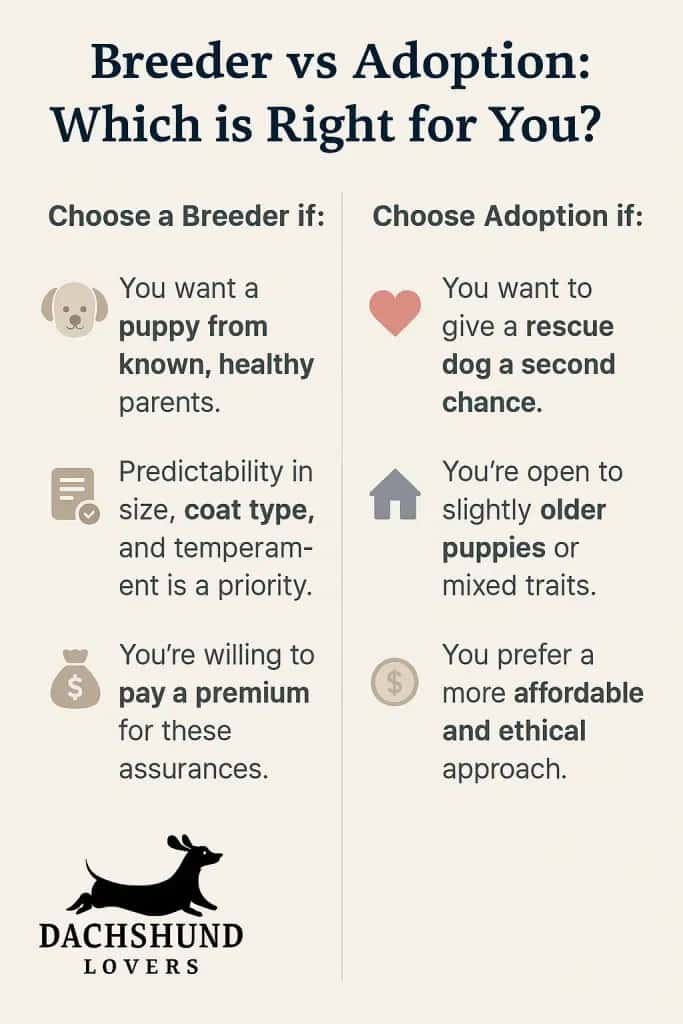
6. Breeder vs Adoption: Which is Right for You?
- Choose a Breeder if:
- You want a puppy from known, healthy parents.
- Predictability in size, coat type, and temperament is a priority.
- You’re willing to pay a premium for these assurances.
- You want a puppy from known, healthy parents.
- Choose Adoption if:
- You want to give a rescue dog a second chance.
- You’re open to slightly older puppies or mixed traits.
- You prefer a more affordable and ethical approach.
- You want to give a rescue dog a second chance.
7. Cost Considerations Beyond Purchase Price
The purchase price is just the beginning. Owning a Dorgi comes with recurring costs:
- Food: $30–$50 USD/month (or equivalent).
- Routine Vet Care: $200–$400 USD/year for checkups and vaccinations.
- Pet Insurance: $25–$50 USD/month.
- Training Classes: $100–$300 USD for a basic obedience course.
Key Takeaways for Sale vs Adoption
- Price Range: US ($800–$1,500), UK (£600–£1,200), AUS ($1,200–$2,000).
- Adoption Option: $200–$500 with initial vetting included.
- Breeder Checklist: Health certificates, socialization, and transparency are non-negotiable.
- Avoid Scams: Refuse breeders who hide records or push for quick deposits.
- Ethical Priority: Choose breeders or rescues that prioritize the well-being of the dogs over profit.
Next Step: Read Dorgi for Sale & Adoption for an in-depth resource on finding your puppy.
How to Care for a Dorgi Puppy
Bringing home a Dorgi puppy is an exciting milestone, but it also comes with responsibilities. These small, intelligent hybrids need a mix of structure, attention, and gentle guidance to help them grow into well-adjusted adults. The first few weeks are crucial — everything from your feeding schedule to early socialization will shape their personality and behavior for years to come.
1. Preparing Your Home
Before your Dorgi puppy arrives, ensure your home is safe and puppy-proofed. Dorgis, like dachshunds, are curious and may squeeze into small spaces, chew on cords, or grab anything within reach.
Home Setup Essentials:
- Designated Puppy Zone: Choose a calm area of your home where they can rest, eat, and feel secure.
- Baby Gates: Block off staircases or unsafe areas to prevent falls and accidents.
- Chew-Proofing: Hide electrical cords, secure shoes, and remove small objects that can be swallowed.
- Soft Bedding: A cozy crate or dog bed where they can retreat and sleep.
- Puppy-Safe Toys: Offer chew toys and puzzle games to keep them occupied and protect your furniture.
Tip: Because of their long backs, avoid letting your Dorgi jump from furniture, even as a puppy. Consider using small ramps or steps for safe access to couches or beds.
2. Crate Training Basics
Crate training is one of the most effective tools for housebreaking and building good habits. When introduced properly, a crate becomes a safe, den-like space for your puppy rather than a form of punishment.
Steps for Crate Training:
- Choose the Right Size Crate: It should be large enough for your Dorgi to stand, turn around, and lie down comfortably but not so big that they can soil one corner and sleep in another.
- Positive Association: Introduce the crate with treats, soft bedding, and toys to create a positive experience.
- Short Sessions: Start with 5–10 minutes and gradually increase the time.
- Consistent Schedule: Use the crate during nap times and overnight, and always give them a bathroom break before and after.
Tip: Puppies should not be left in the crate for more than 3–4 hours during the day while they’re still very young.
Dorgis are naturally curious and social, but early exposure to different environments, people, and pets helps prevent fear or aggression later on. The critical window for socialization is 8–16 weeks of age.
Socialization Activities:
- Introduce them to gentle, friendly dogs in controlled settings.
- Expose them to new sounds (doorbells, vacuums, traffic) to build confidence.
- Allow supervised interactions with children and visitors.
- Take short car rides to help them adjust to traveling.
For temperament insights, refer to Dorgi Temperament & Personality Traits.
4. Exercise for Young Dorgis
While Dorgi puppies are full of energy, too much exercise can damage developing joints and strain their spine. Balance is key.
Exercise Guidelines by Age:
- 8–12 weeks: Short, gentle play sessions (5–10 minutes), 2–3 times per day.
- 3–6 months: Up to 15 minutes of play or short walks, twice daily.
- 6–12 months: Gradually increase to 20–30 minutes of low-impact exercise, twice daily.
Safe Play Ideas:
- Indoor fetch with soft toys.
- Scent-based games (hiding treats for them to find).
- Gentle tug-of-war with a soft rope toy.
5. Training Your Dorgi Puppy
Training should start the day your puppy comes home. Dorgis are intelligent but can be stubborn, so patience and consistency are key.
Training Tips:
- Positive Reinforcement: Use treats, praise, and play to reward good behavior.
- Short Sessions: Puppies have short attention spans — keep sessions under 10 minutes.
- Basic Commands: Start with “sit,” “stay,” “come,” and “leave it.”
- Housebreaking: Take your puppy outside every 2–3 hours, especially after eating, drinking, or waking from naps.
- Quiet Command: Dorgis can be vocal, so teach a “quiet” cue early.
6. Daily Care Routine
Establishing a routine will help your puppy feel secure and confident.
Sample Daily Routine:
- Morning: Bathroom break, short play session, breakfast.
- Mid-Morning: Rest or crate time while you work, with a chew toy or puzzle.
- Afternoon: Bathroom break, short training session, gentle walk.
- Evening: Dinner, play, and social time with family.
- Night: Final bathroom break and bedtime in their crate.
7. Health Checks in the First Year
Dorgi puppies should see a vet regularly during their first year. Key appointments include:
- 8–12 weeks: Initial vaccinations, deworming, microchipping.
- 16 weeks: Booster shots and a full health exam.
- 6–12 months: Spay/neuter (as advised by your vet), final puppy boosters.
Key Takeaways for Puppy Care
- Puppy-Proofing: Create a safe space with soft bedding and puppy-safe toys.
- Crate Training: Essential for housebreaking and building routines.
- Exercise: Keep playtime gentle and short to avoid back strain.
- Training: Start with basic commands, using positive reinforcement.
- Routine Vet Visits: Early check-ups and vaccinations are vital for long-term health.
- Mental Stimulation: Puzzle toys and scent games keep their intelligent minds busy.
What Should I Feed a Dorgi Puppy?

A healthy diet is the foundation for a happy, energetic Dorgi puppy. The right food not only supports growth and development but also helps prevent weight gain and joint strain — two common concerns for dachshund mixes. Because Dorgis inherit their dachshund parent’s elongated back and corgi parent’s sturdy frame, proper nutrition is especially critical to support their bone, muscle, and spinal health.
According to PetMD, puppies require high-quality protein and fat sources for proper development, along with essential vitamins, minerals, and omega-3 fatty acids for a strong immune system and brain growth (PetMD Puppy Nutrition).
1. Choosing the Right Puppy Food
Look for foods that are:
- Formulated for puppies: These blends provide the right balance of nutrients for growth.
- Rich in high-quality animal proteins: Ingredients like chicken, turkey, lamb, or salmon should be the first listed.
- Free from fillers: Avoid excessive corn, soy, or by-products, which offer little nutritional value.
- Fortified with DHA and EPA: These fatty acids support brain and eye development.
- Joint-supporting ingredients: Foods containing glucosamine and chondroitin can help protect developing joints and the spine.
Tip: Smaller kibbles designed for small-breed puppies are ideal for Dorgis, as they are easier to chew and digest.
2. Feeding Chart for Dorgi Puppies
Below is a general feeding guide based on age and weight. Always check the recommendations on your chosen food’s packaging and adjust as needed.
Age | Meals Per Day | Portion (per meal) | Notes |
|---|---|---|---|
8–12 weeks | 4 | ¼ cup | Use high-protein puppy food. |
3–6 months | 3 | ¼ – ⅓ cup | Monitor weight closely. |
6–12 months | 2-3 | ⅓ – ½ cup | Transition to fewer meals as they mature. |
12+ months | 2 | ½ cup | Consider moving to adult formula. |
Important: Dorgis have a tendency to overeat, which can lead to obesity and back strain. Measure portions carefully and avoid free-feeding.
3. Recommended Puppy Food Brands
While the best food will depend on your puppy’s specific needs, the following brands are well-regarded by veterinarians:
- Royal Canin Small Puppy: Specially formulated for small breeds with added joint support.
- Hill’s Science Diet Puppy Small Bites: Nutritionally balanced with high-quality proteins.
- Wellness CORE Small Breed Puppy: Grain-free, with added omega fatty acids for coat health.
- Blue Buffalo Life Protection Puppy: Includes DHA for brain development and antioxidants.
Always transition to new foods gradually (over 7–10 days) to avoid stomach upset.
4. Treats and Snacks
Treats are useful for training but should make up no more than 10% of daily calories.
- Healthy options: freeze-dried meats, carrot sticks, or apple slices (remove seeds).
- Avoid: Fatty or salty table scraps, chocolate, grapes, and onions (toxic for dogs).
Tip: Use small, low-calorie treats during training sessions to avoid unnecessary weight gain.
5. Hydration
Dorgi puppies need constant access to fresh water. Keep a shallow, stable bowl filled and cleaned daily. Proper hydration supports digestion and keeps energy levels balanced.
6. Avoid Overfeeding
Overfeeding is a common mistake with Dorgi puppies. Both dachshunds and corgis have hearty appetites, and their long spines are particularly vulnerable to the stress caused by excess weight. According to the American Kennel Club (AKC), maintaining a healthy body condition is essential to avoid spinal injuries like IVDD (AKC Dachshund Care).
How to Tell if Your Puppy is Overweight:
- You should feel their ribs under a thin layer of fat but not see them protruding.
- A defined waist should be visible from above.
- Your vet can help determine your puppy’s Body Condition Score (BCS).
7. Supplements for Dorgi Puppies
Most puppies receive sufficient nutrients from a balanced diet, but some supplements can offer additional support:
- Omega-3 fatty acids: For coat health and anti-inflammatory benefits.
- Probiotics: To support gut health during diet transitions.
- Joint supplements: Glucosamine and chondroitin for developing bones and joints.
Always consult a veterinarian before adding supplements to avoid unnecessary or harmful dosages.
8. Feeding Tips for New Owners
- Set a Routine: Feed at the same times each day to build consistency.
- Supervised Meals: Pick up uneaten food after 15–20 minutes to discourage grazing.
- Transition to Adult Food: Usually around 12 months, unless otherwise advised by your vet.
- Slow Feeding: For fast eaters, use a slow feeder bowl to prevent choking or bloating.
Key Takeaways for Feeding a Dorgi Puppy
- Quality First: Choose high-protein, small-breed puppy formulas with added joint support.
- Portion Control: Measure food to prevent obesity and spinal strain.
- Treats in Moderation: Keep treats under 10% of daily calories.
- Hydration Matters: Always provide clean, fresh water.
- Regular Vet Check-ins: Adjust diet as your puppy grows, with guidance from your vet.
- External Resource: For feeding guidelines, refer to PetMD Puppy Feeding Tips.
Are Dorgi Puppies Easy to Train?

Exercise and Play for Young Dorgis
Dorgi puppies are clever and energetic, blending the spirited independence of a dachshund with the eager-to-please attitude of a Pembroke Welsh corgi. Their intelligence can make training surprisingly effective when done right — but without structure, that same sharpness can turn into stubborn behavior.
Both the About Dorgi and Dorgi Temperament & Personality Traits guides emphasize that Dorgis are highly social and thrive on positive human interaction. Training is less about strict commands and more about consistent, gentle guidance.
According to the American Kennel Club (AKC) and canine behavior specialists, dogs with herding backgrounds (like the corgi side of a Dorgi) respond exceptionally well to reward-based training, while hound breeds (like dachshunds) benefit from short, engaging sessions to avoid boredom. This combination means Dorgis need early, well-structured routines to channel their energy productively.
1. Understanding the Dorgi Mindset
Dorgi puppies are natural problem solvers. They will often attempt to figure out tasks on their own, which is both a blessing and a challenge for training.
From our observations shared in Full Grown Dorgi: Size, Weight & Temperament, these dogs mature into highly alert companions who retain their puppy-like curiosity — so what you teach early on will carry through adulthood.
Key Traits That Affect Training:
- Eagerness to Please: Inherited from the corgi side, this makes them responsive to praise and treats.
- Independence: The dachshund side may lead to selective hearing. Patience is key.
- Playfulness: They learn best when training is combined with interactive games.
2. Positive Reinforcement is Non-Negotiable
Aversive techniques rarely work with Dorgis and can harm their trust. Instead, follow the “reward for the right behavior” principle:
- Treat-based rewards: Use tiny, low-calorie treats during sessions to avoid excess weight gain (which is critical for their long backs and preventing intervertebral disc disease — a topic we cover in the Dorgi Health & Lifespan Guide).
- Verbal praise: A cheerful tone and short affirmations like “Yes!” or “Good job!” can be just as motivating.
- Play rewards: For puppies less food-motivated, a quick game of tug or fetch works well.
Reference: The AKC highlights that positive reinforcement not only speeds up learning but also strengthens the bond between dog and owner.
3. Crate Training as a Foundation
Crate training is an essential tool for Dorgi puppies, providing a safe, den-like environment and supporting housetraining.
Steps for Success:
- Choose a supportive crate size: Big enough for the puppy to stand and stretch, but not too large that they can soil one corner.
- Create positive associations: Add a soft blanket, toys, and a few treats.
- Short sessions first: Begin with 5–10 minutes, gradually increasing to 30–60 minutes.
- Never use the crate as punishment: It should feel like a comfort zone, not a timeout.
See our Dorgi Puppies: Buying, Raising & Care Tips main page for a full starter checklist, including crate recommendations.
Socialization is crucial during the first months of a Dorgi puppy’s life. Dogs that miss this critical window can grow into adults who are shy, anxious, or overly reactive.
The American Veterinary Society of Animal Behavior (AVSAB) recommends starting controlled social experiences after the first set of vaccinations — rather than waiting until a puppy is fully immunized — to ensure proper behavioral development.
Socialization Checklist:
- Meet a variety of people (kids, seniors, different attire).
- Experience different textures: grass, sand, tile, carpet.
- Visit dog-friendly cafes or parks during quiet hours.
- Exposure to everyday sounds like doorbells, vacuum cleaners, and traffic.
For more on how socialization impacts adult temperament, read our Dorgi Temperament & Personality Traits guide.
5. Leash Training and Early Walks
A Dorgi’s strong prey drive (from the dachshund side) and herding instincts (from the corgi) can make them natural pullers. To avoid leash frustration:
- Start indoors: Let them wear a lightweight leash around the house.
- Teach loose-leash walking: Reward them when they stay by your side.
- Stop-and-start rule: If they pull, stand still until they return to a relaxed position.
- Use a back-support harness: Protects their spine and reduces strain on their neck.
6. Obedience Basics to Teach Early
Begin with simple commands:
Sit, Stay, Come, Down, and Leave It.
These are not just party tricks — they’re tools for safety and everyday management. Start each session with a high-value treat and keep training playful. Puppies learn best when commands are consistent and repeated in short bursts.
7. Common Challenges (and How to Solve Them)
Housetraining:
- Take them out every 2–3 hours and reward outdoor success immediately.
Barking:
- Teach a “quiet” command early to manage over-excitement.
Chewing and Biting:
- Offer chew toys and redirect their attention. Avoid punishment — it increases anxiety.
8. Mental Stimulation: The Secret Weapon
Dorgis are highly intelligent and need more than physical activity. Puzzle toys, short scent games, or 10-minute training sessions can wear them out mentally, often faster than a long walk.
Dorgi puppies are bundles of curiosity and energy, but their growing bodies — particularly their long spines — require carefully balanced exercise. Over-exercising a puppy can strain developing joints, while too little activity can lead to restlessness, weight gain, and early behavioral problems.
As we highlight in Full Grown Dorgi: Size, Weight & Temperament, adult Dorgis enjoy moderate daily walks and playful interaction. However, puppies need shorter, structured play sessions to avoid damaging their growth plates, which can remain vulnerable until around 12–14 months of age.
The American Kennel Club (AKC) and Veterinary Centers of America (VCA) recommend a “5-minute rule” — 5 minutes of gentle, controlled exercise for each month of age, up to twice a day.
1. Age-Specific Exercise Guidelines
8–12 Weeks
- Duration: 5–10 minutes, 2–3 times a day.
- Activities: Gentle indoor play, basic training exercises (sit, come), and slow lead walks in the garden.
- Focus: Building confidence and coordination. Avoid stairs or jumping off furniture — both pose risks to the spine and knees.
3–6 Months
- Duration: 10–15 minutes, 2–3 times a day.
- Activities: Short leash walks on soft surfaces, interactive toys, and playdates with vaccinated puppies.
- Focus: Socialization and light endurance-building.
6–12 Months
- Duration: 20–30 minutes of controlled exercise, 1–2 times daily.
- Activities: Add more structured walks, low-impact fetch, and basic agility tasks like walking through tunnels.
- Focus: Strengthening muscles while maintaining spinal safety.
2. Safe Games for Dorgi Puppies
Dorgis are natural problem solvers, so games that engage their minds work wonders.
Here are safe, low-impact activities:
- Hide-and-Seek: Hide treats or toys around the house and let your puppy track them with their nose.
- Tug-of-War: Use soft ropes and avoid vigorous pulling — this is about bonding, not strength testing.
- Name Recognition: Teach your puppy to fetch specific toys by name, boosting both memory and obedience.
- Slow Fetch: Roll a ball instead of throwing it. This prevents sudden twists or jumps that could strain their back.
3. Mental Stimulation is Just as Important
Dorgi puppies need mental workouts as much as physical ones. According to The Association of Professional Dog Trainers (APDT), mentally stimulating activities can tire a dog out faster than exercise alone.
Best Mental Games for Dorgis:
- Puzzle Feeders: Great for mealtimes and preventing gulping.
- Snuffle Mats: Encourage natural foraging behaviors.
- Mini Training Sessions: 5–10 minutes of practicing commands like sit, down, or leave it.
For additional guidance, our Dorgi Temperament & Personality Traits article explores how their intelligence affects training and playtime.
Well-run puppy classes help Dorgis learn impulse control, bite inhibition, and recall. Look for classes that use positive reinforcement and keep group sizes small.
Why Social Play Matters:
- Builds confidence around other dogs and people.
- Prevents behavioral issues like excessive barking or fear-based aggression.
- Teaches your puppy to read canine body language, which is crucial for safe interactions later in life.
5. Avoiding Over-Exercising
Dorgis are prone to back issues, similar to purebred dachshunds. Jumping, roughhousing with larger dogs, or running up and down stairs can cause strain on their spine and hips. The Dachshund Breed Council emphasizes keeping puppies at a healthy weight and avoiding high-impact activities during the first year.
Exercise Red Flags:
- Excessive panting or lagging during walks.
- Limping or stiffness afterward.
- Reluctance to climb or move.
If you notice these signs, give your puppy at least a day of rest and consult your vet if symptoms persist.
6. Tools and Accessories for Safe Exercise
- Harnesses: Opt for a padded, back-support harness instead of a collar to reduce neck strain.
- Non-slip Mats: Ideal for indoor play to prevent sliding injuries.
- Ramp Training: Introduce small ramps early on (especially if your puppy jumps on furniture), reducing future spine stress.
- Soft Toys: Avoid hard or overly heavy toys that can damage teeth.
For a full list of our recommended gear, see the Dorgi for Sale & Adoption article, where we also cover trusted breeders who prioritize early socialization.
7. Building a Daily Routine
Puppies thrive on predictability. A consistent daily schedule of feeding, playtime, and training sessions helps reduce anxiety and create structure.
Sample Routine for a 4-Month-Old Dorgi Puppy:
- Morning: 10-minute walk, breakfast, and 5 minutes of training (sit/stay).
- Midday: Indoor play with puzzle feeders or soft toys.
- Afternoon: 15-minute leash walk or fetch session.
- Evening: Light mental stimulation (e.g., hiding treats) before dinner.
- Bedtime: Calm wind-down routine (gentle belly rubs or a snuffle mat).
8. When to Begin More Active Exercise
Once your Dorgi reaches 12–14 months, their growth plates are fully developed. At this stage, you can begin introducing longer walks (up to 45 minutes) or moderate hiking — but always at their pace. Avoid high jumps or intense running, especially on hard surfaces.
9. Combining Exercise with Training
You can make walks and playtime doubly effective by using them as training opportunities. Practice commands like “heel” or “stay” during walks, or use play breaks as rewards for correct behavior.
10. Tracking Progress
Keep a simple log of:
- Daily activity time.
- Behavioral improvements (better recall, calmer indoors).
- Weight and body condition.
This helps ensure your puppy gets enough stimulation without overexertion — a topic further discussed in our Dorgi Health & Lifespan Guide.
Grooming and First-Year Care

A Dorgi puppy’s first year is all about establishing healthy habits — from brushing routines to vet visits — that will keep them looking and feeling their best. Because Dorgis are a cross between the smooth-coated dachshund and the double-coated Pembroke Welsh corgi, their grooming needs can vary depending on which parent’s coat they inherit.
As highlighted in our About Dorgi guide, some Dorgis have a short, smooth coat that requires minimal maintenance, while others may have a slightly denser or medium-length coat similar to a corgi. Regardless of coat type, consistent grooming is key to maintaining skin health, managing shedding, and preventing tangles.
1. Brushing Routine
Frequency:
- Smooth Coat: Once a week with a soft-bristle or rubber grooming brush.
- Medium or Longer Coat: 2–3 times per week using a slicker brush to prevent mats.
Regular brushing helps distribute natural oils, removes loose hair, and reduces the amount of fur you’ll find on furniture. It’s also an opportunity to check for skin irritations, ticks, or hot spots, which can be common in active puppies.
Pro Tip: Begin brushing your Dorgi from 8 weeks old, keeping sessions short (2–3 minutes) with plenty of praise and treats. This early habit makes grooming a calm and positive experience.
2. Bathing
Dorgis don’t require frequent baths, as over-washing can strip their coat of natural oils. According to the American Kennel Club (AKC), a bath every 6–8 weeks is sufficient, unless your puppy gets into mud or rolls in something unpleasant.
Bathing Tips:
- Use a puppy-safe shampoo with oatmeal or aloe to soothe sensitive skin.
- Always dry their coat thoroughly, especially around the ears and underbelly, to prevent fungal infections.
- Brush before and after bathing to remove tangles.
3. Nail Care
Puppy nails grow quickly, and long nails can affect posture and cause discomfort. Trim nails every 2–3 weeks or as soon as you hear them clicking on hard floors.
- Use dog-specific nail clippers or a grinder.
- Reward your puppy after each paw to create a positive association.
- If unsure, ask your vet or groomer for a demonstration.
4. Ear Cleaning
With their slightly floppy ears, Dorgis can be prone to wax buildup or minor infections. Clean their ears every 2–4 weeks using a vet-approved ear solution.
Signs of Trouble:
- Foul odor or redness.
- Excessive scratching or head shaking.
- Discharge or swelling.
If these appear, consult your vet promptly.
5. Dental Care
Dental issues are a known problem in smaller breeds and dachshund mixes. As discussed in our Dorgi Health & Lifespan Guide, early dental care prevents gum disease and bad breath.
Routine:
- Brush teeth 2–3 times per week with a dog-specific toothbrush and enzymatic toothpaste.
- Provide dental chews or toys designed to reduce tartar.
- Schedule an annual dental check-up with your vet.
6. Coat Shedding and Seasonal Care
Dorgis tend to shed moderately throughout the year, with heavier shedding in spring and autumn due to the corgi’s double-coat genetics. During these periods:
- Brush daily to remove dead undercoat.
- Use a de-shedding tool for medium-coated Dorgis.
- Keep a lint roller handy for clothes and furniture.
7. First-Year Vet Visits and Vaccinations
The first 12 months of a Dorgi puppy’s life are critical for establishing their long-term health.
Core Vaccination Schedule (as per AVMA guidelines):
- 6–8 weeks: DHPP (Distemper, Hepatitis, Parvovirus, Parainfluenza).
- 10–12 weeks: Booster shots + Bordetella.
- 14–16 weeks: Final DHPP + Rabies.
- 12 months: Annual boosters.
Health Screenings:
- Parasite control: Regular deworming and flea/tick prevention.
- Weight checks: Every few months to ensure healthy growth.
- Spay/Neuter: Typically around 6–9 months, depending on your vet’s recommendation.
For more preventive health advice, see our Dorgi Health & Lifespan Guide.
8. Grooming Tools You’ll Need
- Soft-bristle brush or slicker brush (depending on coat type).
- De-shedding tool for seasonal shedding.
- Dog nail clippers or grinder.
- Puppy-safe shampoo and conditioner.
- Dental kit (brush + enzymatic toothpaste).
- Ear cleaner and cotton pads.
9. Grooming as Bonding Time
Grooming shouldn’t feel like a chore. It’s an opportunity to bond with your Dorgi, build trust, and create a sense of calm. Keep sessions short at first and pair them with treats or a favorite toy.
10. First-Year Care Checklist
To simplify things, here’s a starter care checklist for your Dorgi’s first year:
- Weekly brushing (more during shedding seasons).
- Bath every 6–8 weeks.
- Nail trimming every 2–3 weeks.
- Regular ear cleaning.
- Dental care 2–3 times weekly.
- Monthly weight and health checks.
- Annual vet visit and vaccinations.
Health and Vaccination Checklist
A Dorgi puppy’s health journey starts the moment you bring them home. Because Dorgis inherit traits from both the dachshund and Pembroke Welsh corgi, they can be predisposed to certain genetic conditions. With proactive care, regular vet visits, and proper vaccinations, your puppy can thrive well into adulthood.
As we discuss in the Dorgi Health & Lifespan Guide, this hybrid breed typically lives between 12–15 years when kept at a healthy weight and given proper exercise. Below, we break down the key areas of health management during their first year.
1. Core Vaccination Schedule
Vaccinations are the foundation of your puppy’s health, protecting them from serious diseases that are common in young dogs. Following a vet-approved schedule ensures your Dorgi develops strong immunity.
Recommended Vaccinations (based on AVMA and AKC guidelines):
- 6–8 weeks:
- DHPP (Distemper, Hepatitis, Parvovirus, Parainfluenza).
- Optional Bordetella (kennel cough) if your puppy will be in group settings.
- DHPP (Distemper, Hepatitis, Parvovirus, Parainfluenza).
- 10–12 weeks:
- Second DHPP booster.
- Optional Leptospirosis (if recommended for your area).
- Second DHPP booster.
- 14–16 weeks:
- Final DHPP booster.
- Rabies vaccination (required by law in many regions).
- Final DHPP booster.
- 12 months:
- Annual booster shots for DHPP and Rabies.
- Annual booster shots for DHPP and Rabies.
Tip: Bring a copy of your puppy’s vaccination record to every vet appointment. Many boarding facilities and training classes require proof of vaccinations.
2. Preventive Parasite Control
Puppies are particularly vulnerable to internal and external parasites.
Must-do preventive measures:
- Deworming: Every 2 weeks from 2–12 weeks old, then monthly until 6 months.
- Flea and Tick Prevention: Start with vet-approved topical treatments or oral medications. Corgi coats may hide ticks easily, so check thoroughly.
- Heartworm Prevention: Monthly chewables or tablets starting at 8 weeks, particularly if you live in a high-risk area.
3. Common Dorgi Health Concerns
Intervertebral Disc Disease (IVDD):
Due to their dachshund lineage, Dorgis are at risk of spinal issues. Preventing high-impact activities, maintaining a healthy weight, and using ramps instead of stairs can significantly reduce the risk. For more tips, see our About Dorgi guide.
Obesity:
A healthy weight is critical for spinal health and overall longevity. According to the Association for Pet Obesity Prevention (APOP), over 55% of dogs are overweight, which can worsen back and joint issues.
- Use a measured feeding routine with 3–4 small meals per day (8–12 weeks).
- Avoid table scraps or calorie-heavy treats.
Dental Problems:
Small breeds and dachshund mixes often suffer from tartar buildup and gum disease. Regular tooth brushing and dental chews are essential.
Allergies:
Dorgis may show signs of food or environmental allergies (itchy skin, ear infections). Your vet can recommend hypoallergenic diets if needed.
4. Growth and Weight Tracking
Healthy weight management begins early. Puppies grow rapidly, and overfeeding can stress developing joints.
Guidelines:
- At 8–12 weeks, a Dorgi puppy may weigh 3–5 lbs (1.3–2.2 kg).
- By 12 months, most weigh 15–28 lbs (7–12 kg), depending on which parent breed they take after.
Use a simple weekly weigh-in at home or during vet visits to track healthy growth. For comparisons, our Full Grown Dorgi article includes average weight charts.
5. Early Vet Visits
Your first vet appointment should happen within 3–5 days of bringing your puppy home to confirm their overall health and set up a vaccination schedule.
What to Expect:
- A full physical exam (teeth, ears, skin, joints).
- Discussion on parasite prevention.
- Microchipping options.
- Scheduling spay/neuter procedures.
6. Spay/Neuter Timeline
Most vets recommend spaying or neutering between 6–9 months, though timing can vary based on growth and health. Early spaying may reduce certain cancers, but waiting until 8–10 months can support joint development in some medium-sized breeds like the Dorgi.
7. Signs of Health Problems
Knowing early warning signs can save you a vet emergency:
- Reluctance to move or jump (possible back pain or IVDD).
- Persistent scratching or licking (possible allergies or skin infections).
- Changes in appetite or thirst (could signal underlying illness).
- Unusual lumps or bumps — always check with a vet.
8. Puppy Insurance or Health Plans
Given their potential for back-related issues, many Dorgi owners opt for pet insurance early on. Look for policies that cover:
- Hereditary conditions like IVDD.
- Orthopedic care.
- Emergency surgeries.
- Dental cleanings.
A puppy’s mental health is just as important as its physical health. Poor socialization can lead to fear-based behaviors or anxiety.
For tips on building confidence, see Dorgi Temperament & Personality Traits.
10. First-Year Health Checklist
To make it simple, here’s a 12-month health plan:
- Vet check-up within 3–5 days of bringing puppy home.
- Core vaccines at 6–16 weeks.
- Monthly flea/tick/heartworm prevention.
- Deworming until 6 months.
- Weight checks every 4–6 weeks.
- Dental brushing 2–3 times per week.
- Spay/neuter consultation around 6–9 months.
- Booster shots at 12 months.
- Annual vet exam and dental cleaning.
Frequently Asked Questions (FAQs)
More From This Series:
Ready to explore more about Dorgis? Dive into the rest of our comprehensive breed guides:
- About Dorgi: The complete overview — history, traits, and personality.
- Full Grown Dorgi: Size, Weight & Temperament: What to expect as your puppy matures.
- Dorgi for Sale & Adoption: Where to find reputable breeders and rescues.
- Dorgi Temperament & Personality Traits: Insight into energy levels and family compatibility.
- Dorgi Health & Lifespan Guide: Tips on preventive care and long-term wellness.
Authored by
James
James is the founder of Dachshund Lovers and the proud human of Harvey, a mini dapple with a big personality. He writes to empower and connect the dachshund community, blending founder insights with honest, experience-based stories about life with this incredible and special breed. James brings candid, experience-backed opinions to the community and always focused on fewer, better products and ideas that genuinely improve life for dachshunds and their people.
Read moreJames is the founder of Dachshund Lovers and the proud human of Harvey, a mini dapple with a big personality. He writes to empower and connect the dachshund community, blending founder insights with honest, experience-based stories about life with this incredible and special breed. James brings candid, experience-backed opinions to the community and always focused on fewer, better products and ideas that genuinely improve life for dachshunds and their people.
Read moreDisclaimer
This content is for informational purposes only and should not be considered veterinary advice. Always consult with a licensed veterinarian regarding your dog’s health and wellbeing.
There are no comments yet
Leave a comment