Dachshund Walking
Dachshund Walking
Not every dachshund walk goes to plan. From gear to grass preferences, here’s what years of walking my doxie Harvey have taught me over the years.
James
Posted on October 30, 2025.
Updated on July 21, 2026.
Table of Contents
Share

I’ll never forget the first time we tried to take Harvey on what we thought would be a “big walk.” Caitlin and I set out along the Esplanade at Cronulla, enjoying the ocean breeze and imagining Harvey would love the long adventure. About fifteen minutes in, he stopped dead, plonked his little legs down on the pavement, and gave us that classic dachshund look — stubborn eyes, nose twitching at the smells around him, but absolutely unwilling to move another step. It was a reality check. Dachshunds adore being outside, but their daily walk needs aren’t the same as a kelpie or a labrador. Their short legs and long spines mean they burn out differently and need carefully balanced exercise.
Walking isn’t just a way to “tire them out.” For dachshunds, it’s one of the most important parts of their physical and mental wellbeing. A study published in the Journal of Veterinary Behavior found that daily walks reduce anxiety and destructive behaviours in small breeds, including excessive barking and chewing (source). Regular walks also support a healthy weight — something dachshunds need desperately, since even a small amount of excess weight can increase the risk of intervertebral disc disease (IVDD), according to the Royal Veterinary College (RVC).
But beyond the health benefits, daily walks are about connection. Harvey absolutely lights up when he hears the jingle of his harness, tail wagging furiously as he dashes to the door. Some days it’s a quick lap around the block before dinner. Other times we head to quieter spots like Darook Park in Cronulla or a shaded loop near Lilli Pilli, where he can stop, sniff, and explore. It’s not always about the distance — it’s about giving him that mix of physical activity and mental stimulation that makes him calm and content at home.
The challenge, of course, is knowing how far is “enough.” Many dachshund owners ask, “Do I really need to walk them every day?” or “Is my mini dachshund getting too much exercise?” The truth is that while they’re small dogs, their energy can be surprisingly high, and without proper walks, they can easily become restless, noisy, or overweight. The key is striking the right balance: not overdoing it on their backs and joints, but not underestimating how much they thrive on regular outings.
Key Takeaways: Dachshund Walking at a Glance
Stage / Factor | Daily Walk Needs | Key Notes & Tips |
|---|---|---|
Puppies (under 12 months) | 5 minutes per month of age, twice daily | Stick to short, gentle walks on soft terrain. Avoid stairs, long hikes, or rough play to protect joints and spine. Use a lightweight dachshund leash and harness for training. |
Adults (1–7 years) | 30–60 minutes per day, split into 2–3 sessions | Combine walks with sniffing time, mental enrichment, and safe play. Focus on consistency rather than long, exhausting treks. Ideal to use a padded harness instead of a collar to avoid neck strain. |
Seniors (8+ years) | 15–30 minutes per day, adjusted to health | Short, calm walks on flat terrain. Prioritise mobility and mental stimulation (sniffing, gentle games). Watch closely for signs of fatigue or stiffness. |
Miniature Dachshunds | Slightly less than standards | Their legs tire faster, but they still need daily outings. Opt for shorter but more frequent walks. |
Standard Dachshunds | Up to 1 hour daily | Endurance is higher than minis, but IVDD risk remains. Break activity into smaller sessions to avoid overexertion. |
Best Times To Walk | Early morning or late afternoon | Avoid hot pavements (risk of paw burns) and keep walks shaded in summer. |
Leash & Gear | Dachshund leash, harness, reflective gear | Choose a harness designed for long-bodied breeds to reduce spinal strain. Reflective leads and lights are essential for early/late walks. |
Terrain Tips | Grass, sand, soft footpaths | Avoid steep stairs, rocky terrain, or slippery surfaces. Beaches and flat parks are perfect for sniff-heavy walks. |
Paw & Back Care | Check paws after walks; limit jumping | Pavement can cause abrasions; always inspect for cuts or burrs. Minimise repetitive stair-climbing or leaping on/off furniture post-walk. |
Warning Signs of Over/Under Exercise | Restlessness, barking, destructive behaviour, stiffness, or limping | These often signal that a dachshund’s daily walk needs are not being met properly. |
Dachshund Walking at a Glance

Puppies (under 12 months)
Young dachshunds have delicate joints and spines, so their daily walk needs should be kept light. A good rule of thumb is five minutes of walking per month of age, twice daily. That means a four-month-old puppy is ready for about 20 minutes, split into two walks. At this stage, leash training is crucial. A lightweight dachshund leash paired with a soft harness helps teach good habits without straining their neck or back. Avoid stairs, steep hills, or long hikes until their bodies are fully developed.
Adults (1–7 years)
Once fully grown, most dachshunds thrive with 30 to 60 minutes of exercise per day, ideally broken up into two or three sessions. Walking isn’t just physical—it’s mental enrichment. Allow time for sniffing, exploring, and social interaction with other dogs when safe. Consistency matters more than distance; a steady walking routine helps manage weight and reduces destructive behaviours like barking or digging. Use a well-fitted harness rather than a collar to reduce strain on their neck and back, especially since dachshunds are prone to spinal issues.
Seniors (8+ years)
Older dachshunds often still enjoy their walks but may tire more quickly. Fifteen to 30 minutes of calm walking each day is usually enough to keep them mobile and happy. Flat, even terrain is best—think suburban footpaths, quiet parks, or soft grass. At this stage, walks are less about burning energy and more about maintaining mobility and providing mental stimulation. Watch for stiffness, reluctance, or limping, and adjust duration as needed.
Miniature Dachshunds
Mini dachshunds have smaller frames and shorter strides, so they generally need less exercise than their standard counterparts. Their walk times can be slightly shorter—broken up into frequent, manageable sessions. Despite their size, they are still energetic and benefit greatly from daily outings. Skipping walks can lead to frustration and behavioural issues, so consistency is key.
Standard Dachshunds
Standard dachshunds tend to have more endurance and can enjoy up to an hour of walking a day. That said, their long backs still put them at risk for IVDD. Breaking exercise into smaller sessions (for example, two 30-minute walks) is safer than one long trek. This breed loves exploring new routes, and varying the terrain helps keep walks interesting.
Best Times to Walk
In Australia, especially in NSW, the pavement can heat up dangerously in summer. Early morning and late afternoon walks are safest to avoid paw burns and overheating. For readers in the UK or USA, winter can bring icy or salted sidewalks, so protective booties or paw balms may be necessary. Wherever you are, aim for times of day when your dachshund won’t be exposed to extreme heat or cold.
Leash & Gear
A properly fitted dachshund leash and harness can make all the difference. Choose a harness designed for long-bodied breeds so it distributes pressure evenly and avoids pulling on their spine. Reflective leashes, collars, or LED lights are worth investing in if you walk early mornings or evenings. A hands-free leash can also be a good option for urban owners who want more control in busy streets.
Terrain Tips
The best walking surfaces for dachshunds are grass, sand, or flat dirt paths. These are gentler on their joints and paws. Slippery tiles, steep stairs, and rocky terrain should be avoided where possible. Beaches and suburban parks are great, as are flat trails. If you live in the city, look for dog-friendly green spaces to give them a break from hard concrete.
Paw & Back Care
Daily walks expose dachshunds to all sorts of terrain, so always check their paws afterwards for cuts, burrs, or abrasions. Hard pavement can wear their paw pads, and in hot weather, burns are a risk. In winter, salt and ice can also irritate their pads. For their back health, limit jumping before and after walks—using ramps at home can help reduce strain.
Warning Signs of Over/Under Exercise
A well-exercised dachshund is content, relaxed, and less likely to engage in nuisance behaviours. If your dog is restless, barking excessively, or destructive at home, they may not be getting enough walks. On the other hand, stiffness, limping, or reluctance to go on walks could signal overexertion. Adjust the duration and intensity until you find the right balance for your dog’s age and energy level.
Best Times to Walk a Dachshund

Timing is everything when it comes to walking your dachshund. These little hounds may have short legs, but their energy and curiosity are boundless, and they thrive on consistent routines.
Most vets recommend walking your dog in the early morning or late afternoon, when temperatures are cooler and the pavement is less likely to burn their paws. Dachshunds, with their low-slung bodies, are especially vulnerable to overheating because their chests and bellies sit closer to hot ground. The RSPCA Australia warns that dogs can suffer heatstroke quickly if exercised in peak sun, particularly brachycephalic and small-bodied breeds like dachshunds.
In our household, Harvey absolutely loves his morning sniffari around any spots we venture in the Sutherland Shire. If we head out before 8am, the streets are quiet, the scents are fresh, and he comes home content and ready to nap. In summer, this routine is non-negotiable. We’ve learned that a late-morning walk can leave him panting and restless, whereas early outings set the tone for a calm day.
Evening walks are equally valuable — especially for mental enrichment. Dachshunds were bred as hunters, so they crave exploration. A twilight wander around a nearby park or down gives Harvey the chance to stretch his legs, meet neighbours, and reset after a long day.
It’s not just about the clock, though. Consistency matters most. Whether it’s two shorter walks (20–30 minutes each) or one slightly longer adventure paired with indoor enrichment, keeping a predictable routine reduces anxiety and prevents destructive behaviours.
For more on how long each walk should be, check our guide: How Much Exercise Do Dachshunds Need?
Leash Training & Gear Essentials
Because of their bold, curious nature, dachshunds often think they’re bigger than they are. That confidence can make walks tricky if they’re not trained to use a leash properly. A well-fitting harness and leash aren’t just about control — they’re essential for protecting their long backs and delicate throats.
Harness vs Collar
Veterinarians and organisations like the American Kennel Club strongly recommend using a harness instead of a collar for dachshunds. Pulling on a collar puts pressure directly on the trachea and neck, but with a breed prone to IVDD, the risk goes beyond breathing — it can strain the spine and exacerbate back problems. A harness distributes weight more evenly and gives you better control.
Choosing the Right Harness
When selecting a dachshund harness, look for:
- Step-in style: Easier for short legs.
- Padded chest straps: Adds comfort and prevents rubbing.
- Adjustable points: Helps fit their unique barrel chest and narrow waist.
- No-pull design: Supports leash training without causing discomfort.
Harvey has worn a step-in harness since puppyhood, and it’s made a huge difference. Early on, he was a notorious puller — nose to the ground, determined to sniff every corner of Heathcote oval. With consistent training and a properly fitted harness, he’s learned that walking calmly means more freedom to explore.
Best Leash Length
The ideal dachshund leash is around 1.2 to 1.5 metres (4–5 feet). This length provides enough room for sniffing without giving so much slack that they dart into danger. For training sessions, a standard leash works best. For open, safe spaces, a longer lead or retractable leash can be used sparingly — but only if your dog already has good recall.
Leash Training Tips
- Start indoors or in the backyard before heading into busy streets.
- Reward calm walking and loose-leash behaviour with treats or praise.
- Avoid yanking — redirect with positive reinforcement instead.
- Keep sessions short for puppies; consistency is more effective than long drills.
With patience and the right gear, dachshunds learn quickly. Once they understand that walking politely earns more chances to sniff and explore, they often become surprisingly cooperative.
Terrain Tips & Paw Care
Because dachshunds are low to the ground with short legs and long backs, the surfaces they walk on make a big difference to both their comfort and health. A route that works for a labrador or kelpie might be tough on a dachshund’s spine, paws, or joints.
Best Surfaces for Dachshunds
- Grass or packed dirt: Ideal for daily walks, as it reduces impact on joints and paws.
- Sand: Great exercise that builds muscle, but keep sessions short — especially for puppies or seniors — as it’s more tiring.
- Flat pavements: Safe for city or suburban walks, but try to break it up with softer ground to prevent over-strain.
Surfaces to Avoid
- Slippery tiles or polished concrete: Can cause dachshunds to slip and jar their spines.
- Steep hills or stairs: Adds unnecessary pressure to their backs.
- Hot asphalt: Their paws can burn quickly in summer. A simple test is to place your hand on the ground — if it’s too hot for you, it’s too hot for your dachshund.
Paw Care for Dachshunds
Because of their short legs, dachshunds’ paws encounter more grit, grass seeds, and debris than taller breeds. Regular paw checks are essential.
- Inspect after every walk: Look for cuts, burrs, or lodged seeds.
- Trim nails: Long nails alter their gait and can strain the spine over time.
- Moisturise pads: Dog-safe balms prevent cracking, especially in dry or hot climates.
- Booties in extremes: In snowy conditions or scorching summers, protective booties can help (though some dachshunds need time to get used to them!).
Geo Authority Reference
The RSPCA NSW recommends tailoring exercise to the dog’s physical build and age, emphasising that hard surfaces and long runs are unsuitable for breeds like dachshunds.
Personal Note: Harvey’s Routine
When we walk Harvey in summer around Cronulla or down Stanwell Park, we often start on shaded grassy areas before moving to the paved Esplanade. What’s funny is that Harvey has never been a morning walker. We tried plenty of times when he was younger — leash ready, sun just rising over Cronulla — and he would stop, dig in his heels, and refuse to budge. His routine is firmly set: breakfast, a quick toilet break, and then a long snooze for most of the day. His real energy kicks in later — by the late afternoon and evening, he’s ready to bound out the door, trot along the Esplanade, or chase his ball at the park. We’ve learned to work with his natural rhythm rather than fight it.
Terrain Tips for Dachshunds
Dachshunds might be small, but they’re adventurers at heart. Their compact bodies and short legs, however, mean that not all terrains are created equal. Choosing the right ground to walk on can help prevent injuries and keep your pup happy.
- Grass and Dirt Trails: Soft surfaces like grass or dirt are the gold standard for dachshunds. They cushion the joints, reduce stress on the back, and allow natural paw movement. This makes local ovals or walking tracks in places like Centennial Parklands a great choice for Sydney dachshund owners.
- Sand: Walking on sand provides gentle resistance training, which helps strengthen muscles. But keep sessions short — Harvey loves charging across the sand at Silver Beach in Kurnell, but after 15–20 minutes his little legs need a rest. For dachshunds, sand is best in moderation.
- Concrete & Pavement: While convenient, hard surfaces can be tough on dachshunds’ joints, especially for older dogs. If most of your walks involve pavement, try breaking them up with patches of grass to reduce wear.
- Rocky or Uneven Trails: These should be approached with caution. Because dachshunds have such low clearance, uneven terrain increases the risk of tripping, scraping bellies, or straining their backs. If you’re hiking, stick to smoother trails (we’ll cover this in more detail in Hiking with your dachshund.
Harvey’s least favourite? Rocky trails. We’ve noticed he hesitates when the ground is too uneven, preferring smooth grass where he can really zoom around.
Paw Care & Safety on Walks
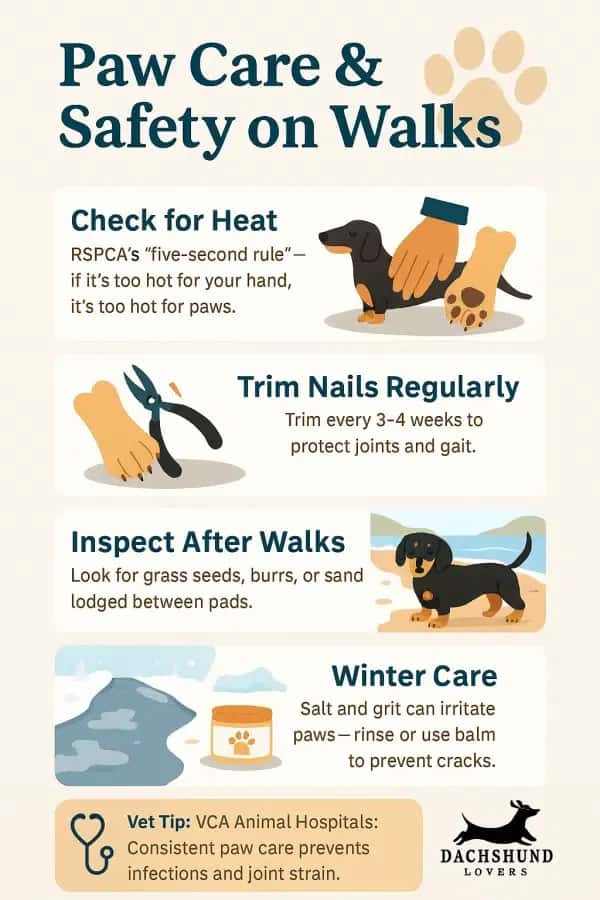
Paws are a dachshund’s foundation, and keeping them healthy ensures safe, enjoyable walks.
- Check for Heat: Pavement can get scorching in summer. The RSPCA recommends the “five-second rule” — place your hand on the ground for five seconds; if it’s too hot for you, it’s too hot for your dog. Here In Australia in those hot summer days we really have to be mindful with Harvey as his over exposure to pavements. We try to always avoid walking Harvey in the middle of the day.
- Trim Nails Regularly: Overgrown nails can affect gait and strain joints. Dachshunds’ nails grow quickly, so trimming every 3–4 weeks is often needed.
- Inspect After Walks: Grass seeds, burrs, or small cuts can lodge between paw pads. After walks at places like Coalcliff Beach, we always check Harvey’s paws for hidden sand or grit.
- Winter Care: In the UK and US, winter means salt and grit on sidewalks, which can irritate paw pads. Using a paw balm or rinsing paws after walks helps protect against dryness and cracking.
According to VCA Animal Hospitals, consistent paw care not only prevents discomfort but also reduces the risk of infections and joint strain.
Balancing Daily Walk Needs
How much walking is enough for a dachshund? The answer lies in balancing their exercise with their energy rhythms and health.
- Puppies: Puppies need short, frequent walks — usually 5 minutes per month of age, up to twice daily. Too much too soon risks damaging growing joints.
- Adults: Most adult dachshunds need around 30–60 minutes of walking daily, often broken into two sessions. The walk should balance sniffing time (mental stimulation) with steady-paced exercise.
- Seniors: Older dachshunds may need gentler, shorter walks, but consistency is key to preventing stiffness.
Harvey is a classic example. He isn’t a morning walker — after breakfast and his toileting, he prefers a nap and saves his energy. By late afternoon or evening, though, he’s raring to go. We’ve found that one solid evening walk, plus some backyard play during the day, is his sweet spot.
The American Kennel Club stresses that exercise should be tailored to each dog’s temperament and health status, not just breed averages. Watching for cues like lagging behind, panting heavily, or resistance to walking helps you know when your dachshund has had enough.
FAQs About Walking Dachshunds
More from This Series
- How Much Exercise Do Dachshunds Need?
- Dachshund Swimming: Safety Tips & Training
- Dachshund Walking: Daily Routines & Enrichment
- Hiking with Dachshunds: A Complete Guide
- Are Dachshunds High Energy Dogs?
Authored by
James
James is the founder of Dachshund Lovers and the proud human of Harvey, a mini dapple with a big personality. He writes to empower and connect the dachshund community, blending founder insights with honest, experience-based stories about life with this incredible and special breed. James brings candid, experience-backed opinions to the community and always focused on fewer, better products and ideas that genuinely improve life for dachshunds and their people.
Read moreJames is the founder of Dachshund Lovers and the proud human of Harvey, a mini dapple with a big personality. He writes to empower and connect the dachshund community, blending founder insights with honest, experience-based stories about life with this incredible and special breed. James brings candid, experience-backed opinions to the community and always focused on fewer, better products and ideas that genuinely improve life for dachshunds and their people.
Read moreDisclaimer
This content is for informational purposes only and should not be considered veterinary advice. Always consult with a licensed veterinarian regarding your dog’s health and wellbeing.
There are no comments yet
Leave a comment