Dachshund Swimming
Dachshund Swimming
Dachshunds can swim—but many are hesitant unlike our Harvey. Here’s how to encourage calm, safe swimming while keeping their unique body shape in mind.

James
Posted on October 30, 2025.
Updated on July 22, 2026.
Table of Contents
- 1.Key Takeaways on Dachshund Swimming
- 2.Can Dachshunds Swim?
- •Harvey’s Story
- 3.Benefits of Swimming for Dachshunds
- •Why Swimming Matters for Dachshunds
- •Mental Benefits of Swimming
- •Harvey’s Story: From Hesitant to Pool-Lover
- •How Swimming Fits Into Dachshund Exercise Routines
- •Precautions and Safety Considerations
- •Professional Endorsements: Hydrotherapy
- •When Swimming Isn’t Ideal
- •The Bottom Line
- 4.How to Introduce a Dachshund to Swimming
- -Step 1: Start Slow and Safe
- -Step 2: Use Positive Associations
- -Step 3: Consider a Canine Life Jacket
- -Step 4: Stay by Their Side
- -Step 5: Provide Easy Exit Points
- -Step 6: Keep Sessions Short
- -Step 7: Reward, Don’t Force
- 5.Best Places for Dachshunds to Swim – Pools, Calm Beaches, Dog-Friendly Lakes, Hydrotherapy Pools
- -More from This Series
- -Disclaimer
Share

I’ll never forget the summer Harvey first discovered swimming. It was at my mother- and father-in-law’s home in Lilli Pilli, where their backyard pool became the stage for Harvey’s unexpected obsession. We thought, like many dachshund owners, that his short legs and long body would keep him firmly on the sidelines. But Harvey had other plans. The moment his ball splashed into the water, he launched himself in after it without a second thought.
From that day on, he wasn’t just “okay” with water — he loved it. By the time summer rolled around at our place, Harvey would spend entire afternoons in the pool, paddling happily from side to side or waiting at the edge for someone to toss his ball in. There was no fear, no hesitation, only pure joy. These days, when the weather heats up, you’ll find him swimming nearly every day, living proof that dachshunds can enjoy the water when introduced safely and positively.
Still, Harvey’s story isn’t every dachshund’s story. As the American Kennel Club points out, dachshunds are not natural-born swimmers like retrievers or spaniels. Their long backs and short legs can make swimming more tiring, and without precautions, it can put them at risk. That’s why understanding both the benefits and safety considerations of swimming is essential for dachshund owners.
In this guide, I’ll share what research says about dachshunds and swimming, why some love it while others shy away, the benefits it brings as a form of exercise, and step-by-step tips to introduce your pup to the water safely. Along the way, I’ll connect it back to Harvey’s own journey — from his first fearless dive in Lilli Pilli to his poolside summer routine today.
Key Takeaways on Dachshund Swimming
Topic | Summary | Key Notes |
|---|---|---|
Natural Ability | Dachshunds can swim, but they’re not natural swimmers. | Short legs and long backs make it harder to stay buoyant; stamina is limited. |
Safety First | Always supervise swimming sessions. | Pools, beaches, and rivers come with risks (tiredness, currents, pool exits). |
Benefits of Swimming | Excellent low-impact exercise for dachshunds. | Helps manage weight, builds muscle, and reduces pressure on joints and spine. |
Risks to Watch | Back strain, overexertion, or swallowing water. | Limit sessions to short bursts (5–10 minutes) and always provide rest breaks. |
Teaching to Swim | Start slow and positive with shallow water. | Gradual exposure, toys, and encouragement build confidence. |
Life Jackets | Strongly recommended, especially for beginners or open water. | Adds buoyancy, reduces fatigue, makes rescue easier if needed. |
Pool Safety | Make exits visible and easy | Teach your dachshund how to use pool steps or ramps to avoid panic. |
Not Every Dachshund Will Love It | Some adore swimming (like Harvey), others dislike it. | Respect your dog’s temperament; never force them into water. |
Indoor Alternatives | On non-swimming days, try puzzle feeders or short walks. | Keeps them engaged without needing daily pool or beach access. |
Signs of Trouble | Excessive panting, frantic paddling, or sinking. | End the session immediately if these occur and consult a vet if needed. |
Can Dachshunds Swim?

At first glance, dachshunds don’t look like natural swimmers. Their short legs, long backs, and muscular chests weren’t designed for gliding through water — they were bred to dig into burrows and chase badgers underground, not paddle across lakes. Yet, many dachshunds can and do swim, often with surprising enthusiasm once they’ve been introduced safely.
The American Kennel Club notes that while most dogs have some instinct to paddle when placed in water, certain body shapes make swimming more challenging (AKC, 2023). Dachshunds fall into this category. Their compact legs mean they tire more quickly, and their long backs mean owners must be cautious to avoid strain.
That doesn’t mean dachshunds can’t enjoy the water — far from it. With the right training and supervision, swimming can become a safe and rewarding part of their exercise routine.
Harvey’s Story
For Harvey, it all started at my in-laws’ place in Lilli Pilli. They had a backyard pool, and one hot afternoon he stood staring at the water while his ball bobbed just out of reach. To our surprise, he leapt straight in, paddling furiously until he reached it. From that moment, his fascination with water took off. Now, whenever summer rolls around, Harvey is in the pool almost daily — diving after toys, swimming alongside us, and climbing out only when he’s exhausted.
What makes Harvey’s story important is that it highlights how dachshunds are individuals. Some may need months of coaxing, while others like him have no fear at all. The key takeaway is this: dachshunds can swim, but their safety and enjoyment depend on thoughtful introduction, positive reinforcement, and close monitoring.
For owners who want to learn how to build a routine around swimming, we’ve created a complete guide on How Much Exercise Do Dachshunds Need? to help balance pool time with daily walks and play.
Benefits of Swimming for Dachshunds
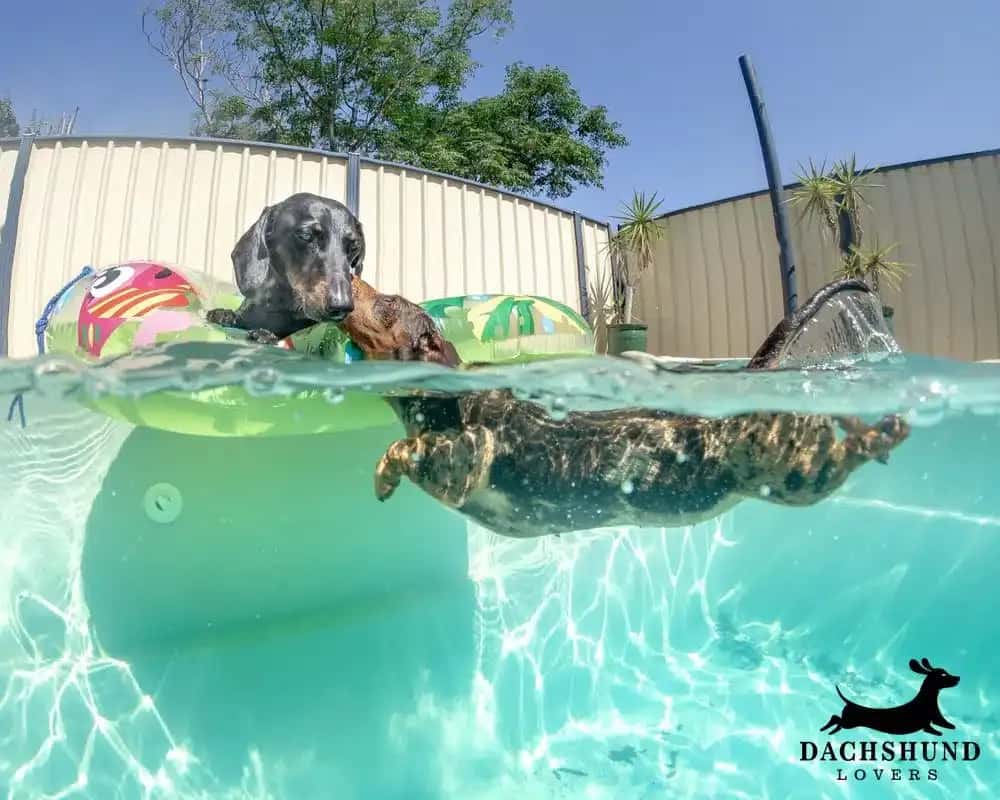
Swimming might not be the first exercise that comes to mind for a dachshund, but for many sausage dog owners, it quickly becomes a favourite activity — especially during the warmer months. While dachshunds are not natural-born swimmers like retrievers or spaniels, they can become confident, enthusiastic swimmers with the right introduction. And the benefits go well beyond splashing around in the pool.
Why Swimming Matters for Dachshunds
The biggest health challenge dachshunds face is their unique body shape. Their elongated spines and short legs make them prone to intervertebral disc disease (IVDD), a painful and sometimes debilitating spinal condition. According to the Royal Veterinary College, dachshunds are among the most at-risk breeds for IVDD, with up to 25% experiencing it in their lifetime. Preventing obesity and strengthening the muscles that support their spine are two of the best defences against this condition — and swimming does both.
The American Kennel Club points out that swimming provides an excellent cardiovascular workout while sparing joints from the repetitive impact of running or jumping. For dachshunds, who love to dig and chase but shouldn’t be encouraged to leap or climb excessively, swimming provides a rare opportunity to burn off energy in a way that’s safe for their build.
Physical Benefits of Swimming
- Strengthens Core and Back-Supporting Muscles
Swimming engages muscles that aren’t used as heavily during walking. Dachshunds rely on their shoulders, chest, and abdominal muscles to move through water, which in turn supports their long spines and improves posture. Stronger muscles mean less strain on the vertebrae and discs. - Low-Impact, Joint-Friendly Exercise
Running on hard surfaces like concrete can be tough on dachshunds’ joints, particularly when they’re puppies or seniors. Swimming provides resistance without impact, making it one of the safest exercises for dachshunds of all ages. - Improved Cardiovascular Health
A good swim raises the heart rate in a controlled way, improving stamina and circulation. Just five to ten minutes of swimming can equate to a much longer walk in terms of energy expenditure. - Weight Management
Dachshunds are prone to obesity, which significantly raises the risk of back problems. The VCA Animal Hospitals note that keeping dogs lean is critical for long-term health, and swimming is an excellent calorie-burning activity that doesn’t overstrain their bodies.
Mental Benefits of Swimming
- Stress Relief
Like humans, dogs release endorphins when they exercise. Swimming helps release pent-up tension, leaving dachshunds calmer and more relaxed afterward. - Confidence Building
Dachshunds are courageous but often cautious with new experiences. Learning to swim can help build confidence, especially if they initially approach water with hesitation. Once they succeed, that confidence carries into other areas of life. - Enrichment and Variety
Dogs thrive on new experiences. Adding swimming to their routine prevents boredom, reduces destructive behaviour, and provides mental stimulation beyond daily walks.
Harvey’s Story: From Hesitant to Pool-Lover
For Harvey, swimming became a passion almost by accident. His very first experience was at Caitlin’s parents’ home in Lilli Pilli, where a sparkling backyard pool caught his eye. At first, he circled the edge nervously, barking at the water whenever a ball splashed in. But Harvey’s curiosity won out. One day, his favourite tennis ball bounced into the pool — and before we could stop him, he leapt straight in after it.
That moment was the start of a love affair with swimming. By the following summer, Harvey would launch himself into our own pool every afternoon, retrieving balls again and again without hesitation. What surprised us most wasn’t just his confidence but how much calmer he was afterward.
How Swimming Fits Into Dachshund Exercise Routines
It’s important to note that swimming isn’t a complete replacement for walking. Dachshunds still need their daily strolls to satisfy their prey drive, sniff the world, and interact socially. However, swimming can be slotted into their daily 45–60 minutes of recommended exercise (see our full guide: How Much Exercise Do Dachshunds Need?).
A good rule of thumb is to treat swimming as one of their sessions for the day. For example:
- Morning: 20–30 minute walk.
- Afternoon: 10–15 minutes of swimming.
- Evening: 15–20 minutes of puzzle games or obedience training.
This combination covers their physical, mental, and emotional needs without putting excessive stress on their spine.
Precautions and Safety Considerations
While the benefits are enormous, swimming does come with some important safety rules for dachshunds:
- Always supervise – Dachshunds can tire quickly due to their short legs and dense bodies. Never leave them unattended in a pool, lake, or ocean.
- Start slow – Introduce swimming gradually, using a ramp or shallow entry where possible.
- Life jackets help – A properly fitted dog life jacket provides buoyancy and makes it easier to lift them out of the water if needed.
- Rinse after swimming – Chlorine, salt, or algae can irritate the skin and coat. A quick rinse helps keep their skin healthy.
- Watch for fatigue – If your dachshund starts paddling frantically, holding their head too high, or trying to climb out, they’ve had enough.
Professional Endorsements: Hydrotherapy
Many vets and canine physiotherapists recommend hydrotherapy (structured swimming in a controlled pool) as a rehabilitation method for dachshunds with IVDD or joint issues. The American College of Veterinary Surgeons lists hydrotherapy as a valuable part of recovery and ongoing management for spinal health. Even healthy dachshunds can benefit from hydrotherapy sessions, which build endurance in a safe, professional environment.
When Swimming Isn’t Ideal
Not all dachshunds take to water as easily as Harvey. Some are naturally anxious, while others may have pre-existing health concerns that make swimming unsafe. In such cases, alternative low-impact exercises — like sniff walks, gentle play, or puzzle feeders — should take priority. Owners should always consult a vet if unsure.
The Bottom Line
Swimming can transform a dachshund’s health and happiness. From stronger muscles and better heart health to calmer behaviour and reduced risk of obesity, the benefits are undeniable. But perhaps the most important part is that dachshunds often find sheer joy in it. For Harvey, summer means splashing in the pool almost daily — a tradition that keeps him fit, content, and, most importantly, safe from the risks of overexertion on land.
For owners, the lesson is simple: swimming isn’t just an “extra.” For many dachshunds, it’s one of the best possible complements to their exercise routine.
How to Introduce a Dachshund to Swimming
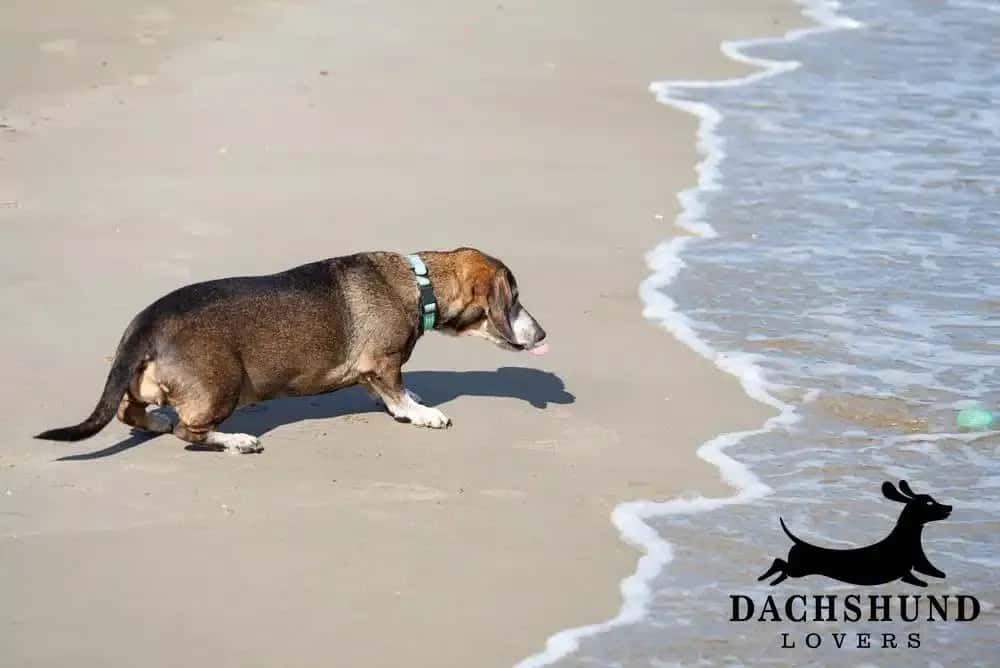
Introducing a dachshund to swimming is less about throwing them in the water and more about building confidence step by step. Because of their long bodies, short legs, and natural wariness, some dachshunds may hesitate at first. But with patience, swimming can become one of their favorite activities — as it did for Harvey.
When Harvey was a puppy, his first encounter with water happened at Caitlin’s parents’ home in Lilli Pilli. They had a backyard pool, and we thought Harvey might be scared. To our surprise, he showed curiosity rather than fear. At first, he’d simply place his paws on the edge and bark at the ripples. Eventually, with a little encouragement and a floating toy tossed close to the shallow step, he waded in. Within weeks, swimming became second nature. Now in summer, it’s his absolute favorite pastime — he’ll launch himself into the water daily if it means chasing after his ball.
Step 1: Start Slow and Safe
Never toss a dachshund straight into the water. Begin with shallow, calm areas — whether it’s the first step of a pool, a shallow section of a dog-friendly beach, or even a kiddie pool in your backyard. According to the American Kennel Club, gradual exposure to water helps dogs avoid developing fear or trauma around swimming (AKC, 2023).
Step 2: Use Positive Associations
Bring their favorite toy or a small floating ball. Harvey’s swimming confidence skyrocketed once he realized diving in meant he could retrieve his beloved toy. This links water with fun rather than fear.
Step 3: Consider a Canine Life Jacket
Especially during the early stages, a life jacket gives added buoyancy and reassurance for both dog and owner. Many trainers recommend them for dachshunds because of their elongated build, which can make paddling more tiring compared to longer-legged breeds.
Step 4: Stay by Their Side
Dogs feed off their owner’s calmness. Wade in alongside your dachshund, keeping your hands nearby to guide or support them. Speak reassuringly, and keep early sessions short — even five minutes can be enough to build trust.
Step 5: Provide Easy Exit Points
Whether in a pool or natural water, dachshunds need a safe way to climb out. Use ramps, steps, or shallow shorelines. Harvey learned quickly where the pool steps were, and we always reinforce his exit point to avoid panic.
Step 6: Keep Sessions Short
Because swimming is a full-body workout, dachshunds can tire faster than expected. Short, frequent swims are healthier than one long session. Watch for signs of fatigue, such as splashing instead of smooth paddling or trying to climb onto you for support.
Step 7: Reward, Don’t Force
After each attempt, reward your dachshund with praise, a treat, or playtime on dry land. Forcing them into the water can create fear that’s hard to undo. The goal is building a happy association, not rushing progress
Best Places for Dachshunds to Swim – Pools, Calm Beaches, Dog-Friendly Lakes, Hydrotherapy Pools
Not every body of water is equally suited to dachshunds. Because of their long backs and shorter legs, they thrive best in calm, shallow, and safe environments where they can build confidence without being overwhelmed. Over the years, we’ve discovered that Harvey has his absolute favourites — and they’ve shaped his love for swimming into a daily ritual, especially in summer.
Backyard Pools
For many dachshund owners, the family pool is the first step in introducing their pup to water. That was certainly true for Harvey. His fascination began at my in-laws’ place in Lilli Pilli, where he’d spend afternoons circling the pool, eyeing his ball. One day, when it rolled into the water, he surprised us by leaping straight in after it. From that moment, there was no stopping him. These days, Harvey spends almost every summer afternoon in the pool at our place — happily diving in after his ball, swimming laps, and climbing out only when he’s ready for a rest. If you have a pool, make sure it’s always supervised, and provide a safe exit such as stairs or a doggy ramp to prevent accidents.
Calm, Dog-Friendly Beaches
Some of Harvey’s favourite swimming spots are Sydney’s quieter beaches. Kurnell’s Silver Beach is a go-to — shallow water, sandy bottoms, and gentle waves make it perfect for small dogs to paddle without getting knocked about. Coalcliff Beach is another favourite, especially on calm afternoons when the surf is light and the beach is quiet. Harvey feels right at home diving in confidently, retrieving his ball, and swimming back to shore with ease. For owners elsewhere, look for bays or inlets where the water is calmer and off-leash access is allowed. Internationally, places like Bayview Dog Beach (Sydney’s Northern Beaches) ,Perranporth Beach in Cornwall or Carmel Beach in california can provide safe, shallow entry points for dachshunds to enjoy.
Dog-Friendly Lakes and Ponds
Lakes and ponds can also be excellent choices, offering shallow edges where dachshunds can wade in gradually. These natural environments give them the chance to explore new scents while cooling off in summer. Just be mindful to check that the water is clean, free from harmful blue-green algae, and safe according to local council or park guidelines.
Hydrotherapy Pools
For dachshunds recovering from injury or managing long-term back issues, canine hydrotherapy pools are an incredible option. According to the Canine Hydrotherapy Association, water-based rehab provides low-impact exercise that strengthens muscles, supports weight management, and reduces strain on fragile spines. Many vets recommend hydrotherapy specifically for dachshunds with IVDD or arthritis, and it can be a life-changing addition to their routine.
From backyard splashes to coastal swims, Harvey has taught us that dachshunds can absolutely love the water when introduced safely. Whether it’s a calm beach like Kurnell, a quiet stretch like Coalcliff, or simply chasing a ball in the family pool, swimming has become not just Harvey’s favourite exercise — but also his happiest place to be.
FAQs About Dachshunds and Swimming
More from This Series
If you enjoyed learning about dachshunds and swimming, you may also find these articles helpful:
- How Much Exercise Do Dachshunds Need? – A complete guide to daily activity needs for dachshunds of all ages.
- Dachshund Walking: How Far and How Often? – Tips for safe, enjoyable walks that keep your dachshund fit without overdoing it.
- Hiking with a Dachshund: Is It Safe? – Everything you need to know before taking your dachshund on the trails.
- Are Dachshunds High Energy? – Explore their natural energy levels and how to manage them.
- Dachshund Beach Adventures – Discover the joys (and safety tips) of taking your dachshund to the beach
Authored by
James
James is the founder of Dachshund Lovers and the proud human of Harvey, a mini dapple with a big personality. He writes to empower and connect the dachshund community, blending founder insights with honest, experience-based stories about life with this incredible and special breed. James brings candid, experience-backed opinions to the community and always focused on fewer, better products and ideas that genuinely improve life for dachshunds and their people.
Read moreJames is the founder of Dachshund Lovers and the proud human of Harvey, a mini dapple with a big personality. He writes to empower and connect the dachshund community, blending founder insights with honest, experience-based stories about life with this incredible and special breed. James brings candid, experience-backed opinions to the community and always focused on fewer, better products and ideas that genuinely improve life for dachshunds and their people.
Read moreDisclaimer
This content is for informational purposes only and should not be considered veterinary advice. Always consult with a licensed veterinarian regarding your dog’s health and wellbeing.
There are no comments yet
Leave a comment