Dachshund Puppy Diet
Dachshund Puppy Diet
Not sure what’s safe or how much to feed your dachshund puppy? Here’s the feeding plan I wish I had from day one, plus what to skip.
James
Posted on October 30, 2025.
Updated on July 21, 2026.
Table of Contents
- 1.Key Takeaways — Dachshund Puppy Diet
- 2.Why Dachshund Puppies Need a Special Diet
- 3.Feeding Stages: Week-by-Week & Month-by-Month
- •Week-by-Week (0–8 Weeks)
- •Month-by-Month (2–12 Months)
- 4.Best Foods for Dachshund Puppies (Kibble, Wet, Raw Options)
- •Dry Kibble
- •Wet Food
- •Raw & Fresh Diets
- •Homemade Diets
- •Personal Note with Harvey
- 5.Foods to Avoid for Dachshund Puppies
- -Why Certain Foods Are Dangerous
- 6.Table: Dangerous & Risky Foods for Dachshund Puppies
- -Extra Notes for Owners
- 7.Sample Meal Plans & Feeding Schedule for Dachshund Puppies
- •Why Routine Matters
- •General Feeding Schedule by Age
- 8.Table: Miniature vs. Standard Dachshund Puppy Feeding
- 9.Example Meal Plans
- -Miniature Dachshund Puppy (10–12 lbs adult)
- -Standard Dachshund Puppy (16–32 lbs adult)
- •Dry Food vs. Wet Food for Puppies
- •Portion Control Tools
- •Transitioning Between Stages
- •Key Takeaways
- 10.Transitioning to Adult Food & Long-Term Feeding Habits
- •When to Transition: Timing Matters
- •Why the Transition Matters
- •How to Transition Safely
- •Long-Term Feeding Habits for Dachshunds
- 11.Table: Puppy vs. Adult Feeding Comparison (Mini vs. Standard Dachshunds)
- •Healthy Feeding Habits for Life
Share

When Harvey was just a tiny silver dapple dachshund puppy, Caitlin and I quickly learned that what he ate had a huge impact on his health. Unlike other small breeds, dachshunds carry extra risks tied to their unique build — their long spines, short legs, and fast-growing bodies mean diet isn’t just about keeping them full, it’s about protecting their future.
Choosing the right dachshund puppy diet sets the foundation for healthy growth, strong bones, and even reduces the risk of back issues like IVDD (Intervertebral Disc Disease) later in life. In this guide, I’ll share everything you need to know about feeding your dachshund puppy — from weaning stages to portion sizes — along with tips I wish I knew when Harvey first came home.
For specific feeding amounts, check out our guide on How Much to Feed a Dachshund Puppy. If your pup is at that exciting milestone, you might also like our breakdown of the 8 Week Old Dachshund.
Key Takeaways — Dachshund Puppy Diet
Topic | Summary | Key Notes |
|---|---|---|
Feeding Frequency | Small, frequent meals suit tiny stomachs and steady growth. | 8–12 weeks: 3–4 meals/day → 3–6 months: 3/day → 6–12 months: 2/day. |
Portion Control | Precision matters for a long spine and short legs. | Measure every meal; avoid free-feeding. Slight overages add up quickly in minis. |
Growth Stages | Nutrition changes fast in the first year. | Weaning (3–6 wks), fully weaned by ~8 wks, rapid growth to 6 mos, then steady to 12 mos. |
Nutrient Balance | Choose complete “puppy” or “growth” formulas. | Aim for quality protein, DHA, and balanced calcium/phosphorus for bones and joints. |
Food Types | Kibble, wet, or a careful mix can all work. | Mixed feeding is fine; transition any change over 7–10 days. |
Treats | Great for training, easy to overdo. | Keep treats ≤10% of daily calories; use tiny, soft rewards. |
Hydration | Constant access to fresh water. | Low, stable bowls; refresh and wash daily. |
Weight Monitoring | Early prevention beats later correction. | Weekly weigh-ins; you should feel ribs without seeing them. |
Supplements | Only if advised by your vet. | Omega-3s and probiotics can help; avoid DIY calcium/vitamins. |
Transition Timing | Move to adult food when growth plateaus. | Typically around 12 months (some minis 12–14 mos); shift gradually over 3–4 weeks. |
Red Flags | Act early on diet-related issues. | Rapid weight gain, persistent soft stools, dull coat, or low energy → vet check. |
Why Dachshund Puppies Need a Special Diet

A dachshund puppy isn’t just a smaller version of an adult doxie — they have unique needs that set them apart:
- Long spine, short legs: Carrying extra weight puts immediate stress on their back. Even a few ounces over can matter.
- Rapid growth: From 3 to 12 months, dachshunds grow quickly, building muscles and bones that will support them for life.
- Small stomach capacity: They can’t eat big meals — which is why smaller, more frequent feedings are important.
- Prone to obesity: Dachshunds are notorious food lovers. Without careful control, a playful puppy can easily become overweight, setting them up for long-term health issues.
Good nutrition during this early stage is a game-changer. A balanced puppy diet helps build strong muscles, supports healthy joints, and ensures steady, safe growth. It’s also one of the best ways to protect your dachshund’s spine for years to come.
Feeding Stages: Week-by-Week & Month-by-Month
Week-by-Week (0–8 Weeks)
- 0–3 Weeks: Puppies rely entirely on their mother’s milk. At this point, no solid food. Breeders monitor weight gain and health.
- 3–4 Weeks: Start weaning. A gruel of puppy kibble mixed with warm water or a vet-recommended milk replacer. Small, sloppy meals 3–4 times a day.
- 5–6 Weeks: More kibble, less milk replacer. Pups are exploring and burning energy. Food should be high in protein and fat for growth.
- 7–8 Weeks: Puppies transition to solid puppy food almost fully. By the time they’re ready for new homes, meals should be small but consistent.
External Reference: The American Kennel Club (AKC) notes that small breed puppies like dachshunds often need more frequent meals than larger breeds to avoid blood sugar drops (source).
Month-by-Month (2–12 Months)
Age | Mini Dachshund Feeding | Standard Dachshund Feeding | Notes |
|---|---|---|---|
2–3 months | 4 small meals/day | 4 small meals/day | Focus on puppy-specific formulas with DHA for brain development. |
4–5 months | 3 meals/day | 3 meals/day | Growth spurts kick in. Watch weight — dachshunds gain quickly. |
6–8 months | 3 meals/day | 2–3 meals/day | Transition to fewer meals but keep portions balanced. |
9–12 months | 2 meals/day | 2 meals/day | Puppies move towards adult schedules. Portion control is critical to protect their back and joints. |
I still remember when Harvey hit the 6-month mark — Caitlin and I cut him down from three meals to two. You’d think the world was ending by the way he sat at his bowl staring at us. But his energy leveled out within a week. What matters isn’t how hungry they act, but how steady their weight and energy look.
Best Foods for Dachshund Puppies (Kibble, Wet, Raw Options)
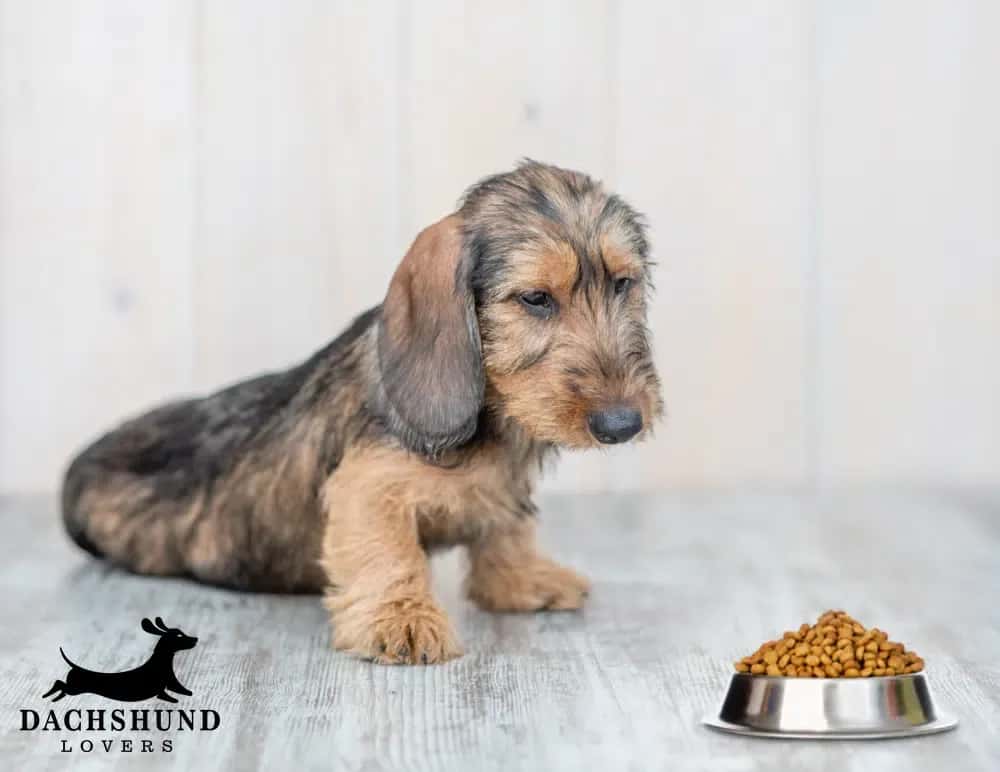
Choosing the right food for your dachshund puppy can feel overwhelming — shelves stacked with kibble, pouches, and raw options, all promising “optimal growth.” The truth is, the best diet depends on your puppy’s size (mini vs. standard), activity level, and your lifestyle. Here’s how the main options stack up:
Dry Kibble
- Pros: Convenient, affordable, helps keep teeth cleaner.
- Cons: Lower moisture content, some formulas can be too grain-heavy.
- What to Look For: Puppy-specific kibble with named protein (like chicken or salmon) as the first ingredient, plus DHA and calcium for development.
Reference: PetMD recommends that small breed puppies like dachshunds get formulas designed for their size, as kibble pieces are smaller and nutrient levels are balanced for faster metabolisms (source).
Wet Food
- Pros: High moisture (good for hydration), often more palatable for picky eaters.
- Cons: More expensive, doesn’t clean teeth as well.
- Best Use: Can be mixed with kibble (“topping”) to encourage eating. Great for puppies with smaller appetites.
Raw & Fresh Diets
- Pros: Can be very nutrient-dense, higher protein, fewer fillers. Many owners feel it’s closer to a “natural” canine diet.
- Cons: Higher cost, requires strict food safety handling, not always balanced unless vet-approved or pre-formulated.
- Vet Note: If you go this route, consult a vet or canine nutritionist to avoid nutrient gaps.
Homemade Diets
- Pros: Complete control over ingredients, can cater to allergies or sensitivities.
- Cons: Difficult to balance without professional input; time-consuming.
- Tip: Always work from a recipe developed by a veterinary nutritionist.
Personal Note with Harvey
When we first brought Harvey home, he flat-out refused dry kibble on its own. We ended up mixing a tablespoon of wet puppy food through to get him started. Within a month, he transitioned fine. Sometimes dachshund puppies just need that extra encouragement.
Foods to Avoid for Dachshund Puppies
Knowing what to feed your dachshund puppy is vital, but understanding what to keep out of their bowl is equally important. Dachshunds are a small breed with fast metabolisms, meaning even tiny amounts of harmful food can have a big impact. While some items cause mild tummy upsets, others can lead to serious health emergencies.
Why Certain Foods Are Dangerous
Puppies’ digestive systems are still developing, and their organs — especially the liver and kidneys — can’t process toxins the way adult dogs can. Combine that with the dachshund’s small size, and you’ll see why a “harmless” table scrap could be anything but.
Table: Dangerous & Risky Foods for Dachshund Puppies
Food | Why It’s Harmful | Possible Symptoms | Severity |
|---|---|---|---|
Chocolate | Contains theobromine and caffeine — toxic to the heart and nervous system. | Vomiting, diarrhea, tremors, seizures, irregular heartbeat. | High |
Grapes & Raisins | Unknown toxin that causes sudden kidney failure. | Lethargy, vomiting, abdominal pain, loss of appetite, kidney issues. | High |
Xylitol | Artificial sweetener causing rapid insulin release and liver damage. | Low blood sugar, vomiting, seizures, liver failure. | Very High |
Cooked Bones | Splinter easily, causing choking or internal tears. | Gagging, constipation, bloody stool, abdominal pain. | High |
High-fat foods | Overloads the pancreas; dachshunds are prone to pancreatitis. | Vomiting, diarrhea, hunched posture, abdominal pain. | Medium–High |
Alcohol & Caffeine | Direct toxins that overstimulate the nervous system and depress organ function. | Restlessness, tremors, vomiting, seizures, coma. | Very High |
Dairy Products | Many dachshunds are lactose intolerant. | Gas, diarrhea, bloating. | Low–Medium |
Salty Foods | Can cause dehydration and, in large doses, salt poisoning. | Excessive thirst, vomiting, seizures. | Medium |
Spicy/Seasoned Food | Irritates stomach lining and can trigger long-term digestive issues. | Drooling, vomiting, diarrhea. | Low–Medium |
Extra Notes for Owners
- Puppy-sized risk: Remember, what might be “just a crumb” to you could be a dangerous dose for a tiny dachshund.
- Emergency rule: If your puppy ever eats something questionable, call your vet immediately. Time is critical with toxins like xylitol, chocolate, or grapes.
- Safe alternatives: Instead of table scraps, reward with dachshund-friendly treats like small pieces of cooked chicken, carrot sticks, or training-specific puppy snacks.
Reference: The American Kennel Club (AKC) has a complete guide to foods dogs can and can’t eat (source).
For safe, long-term diet guidance, please refer to our core resource:
Sample Meal Plans & Feeding Schedule for Dachshund Puppies
Feeding a dachshund puppy isn’t just about filling the bowl — it’s about creating a structured routine that supports steady growth, healthy digestion, and long-term well-being. Because dachshunds are prone to weight issues and skeletal strain, consistency in diet is critical. The right meal plan and schedule will keep your puppy fuelled without overloading their delicate joints or tiny stomachs.
Why Routine Matters
Veterinarians stress that puppies thrive on predictable schedules. Their metabolism runs fast, and because of their small size, they can’t store large amounts of energy the way bigger breeds do. Regular feeding prevents blood sugar dips, supports brain development, and teaches good eating habits that carry into adulthood.
The American Kennel Club (AKC) highlights that toy and small-breed puppies like dachshunds often need three to four small meals per day to stay stable in growth and energy. Source: AKC Nutrition Guide.
General Feeding Schedule by Age
Here’s a rough breakdown of how often dachshund puppies should be fed:
- 6–12 weeks: 4 meals per day
- 3–6 months: 3 meals per day
- 6–12 months: 2–3 meals per day (transition to adult feeding schedule)
- 12+ months: 2 meals per day (adult maintenance)
Table: Miniature vs. Standard Dachshund Puppy Feeding
This chart gives you a side-by-side look at how much to feed, how often, and what a balanced meal plan looks like for miniature dachshunds (10–12 lbs adult weight) vs. standard dachshunds (16–32 lbs adult weight).
Age | Mini Dachshund (Adult 10–12 lbs) | Standard Dachshund (Adult 16–32 lbs) | Notes |
|---|---|---|---|
6–12 weeks | ¼–⅓ cup kibble per meal, 4 meals daily. Approx. 200–250 calories/day. | ½ cup kibble per meal, 4 meals daily. Approx. 350–400 calories/day. | Use puppy-specific food rich in protein & DHA. Small kibble size helps prevent choking. |
3–6 months | ⅓ cup kibble per meal, 3 meals daily. Approx. 250–300 calories/day. | ½–⅔ cup kibble per meal, 3 meals daily. Approx. 400–500 calories/day. | Introduce healthy snacks like carrot sticks or blueberries (sparingly). |
6–12 months | ½ cup kibble per meal, 2–3 meals daily. Approx. 300–350 calories/day. | ¾ cup kibble per meal, 2–3 meals daily. Approx. 500–600 calories/day. | Monitor weight closely; dachshunds are prone to early obesity. |
12+ months (Adult) | ½ cup kibble, twice daily. Approx. 350 calories/da | ¾–1 cup kibble, twice daily. Approx. 600–700 calories/day. | Transition to adult food around 12 months. Avoid free feeding. |
Example Meal Plans
Below are sample daily menus designed to balance nutrition with dachshund-specific needs. These should always be tailored with your vet’s advice, especially if your puppy has allergies or sensitivities.
Miniature Dachshund Puppy (10–12 lbs adult)
- Breakfast (7 AM): ⅓ cup puppy kibble (small-breed formula) + 1 tsp pumpkin puree (for digestion).
- Midday Meal (12 PM): ⅓ cup kibble + small training treats (counted in calorie total).
- Dinner (6 PM): ⅓ cup kibble mixed with 1 tbsp cooked lean chicken.
- Evening Snack (8 PM): A few pieces of carrot or apple slices (no seeds).
Total: ~280 calories.
Standard Dachshund Puppy (16–32 lbs adult)
- Breakfast (7 AM): ½ cup puppy kibble + 1 tbsp salmon oil (for coat & joints).
- Midday Meal (12 PM): ½ cup kibble + puppy-safe dental chew.
- Dinner (6 PM): ½ cup kibble mixed with 2 tbsp cooked sweet potato.
- Evening Snack (8 PM): Blueberries or a Kong filled with puppy kibble + a teaspoon of plain yogurt.
Total: ~450 calories.
Dry Food vs. Wet Food for Puppies
- Dry Kibble (preferred): Strengthens teeth, easier to measure portions, avoids messy feeding.
- Wet Food: Palatable and hydrating but can lead to softer stools. Best used sparingly or as a topper.
- Mix Feeding: Many owners combine both to encourage appetite and balance textures.
The PetMD Veterinary Nutrition Guide notes that dry food remains the most practical option for small-breed puppies, provided it’s formulated specifically for growth. Source: PetMD.
Portion Control Tools
Because dachshunds gain weight quickly, portion control is essential. Instead of eyeballing, use:
- A digital kitchen scale for exact gram measurements.
- The Miniature Dachshund Food Calculator on our website to quickly calculate portions by age, weight, and activity level.
Harvey, for instance, needed much less food than packaging labels suggested — when Caitlin and I overfed him early on, he gained too quickly and became sluggish. Using precise measurement tools (and yes, cutting back on sneaky table scraps) helped him grow lean and strong.
Transitioning Between Stages
- Weaning (3–4 weeks): Puppies shift from mother’s milk to soft puppy mush.
- 6–8 weeks: Introduce dry kibble, moistened if needed.
- 12 weeks onward: Kibble should make up 90–95% of diet. Treats are fine but limited to <10% of daily calories.
Key Takeaways
- Dachshund puppies need structured feeding schedules to avoid hypoglycemia and obesity.
- Minis eat significantly less than standards, so use a calculator for accuracy.
- Choose small-breed puppy food with protein, DHA, and calcium balanced for growth.
- Introduce safe treats like pumpkin, carrot, and lean meats in moderation.
- Always avoid toxic foods (chocolate, grapes, onions, xylitol).
- Reassess portion sizes every 2–4 weeks as your puppy grows.
Transitioning to Adult Food & Long-Term Feeding Habits

One of the most important milestones in your dachshund’s life is the switch from puppy food to adult food. While it might seem like a simple label change on the bag, this transition carries big implications for growth, bone health, weight control, and even long-term back protection. Dachshunds are particularly vulnerable to obesity and intervertebral disc disease (IVDD), so how you handle this stage can literally shape their quality of life.
When to Transition: Timing Matters
Most dachshunds are ready to transition from puppy to adult food between 10–12 months of age. Miniature dachshunds often mature a little sooner, while standards may benefit from staying on puppy formulas until closer to their first birthday. According to the American Kennel Club (AKC), small breeds generally finish growing earlier than large ones, which is why their transition window is slightly narrower (source: AKC Puppy Nutrition).
Veterinarians often advise looking at your pup’s growth curve, energy levels, and body condition rather than simply the calendar. A dachshund that has reached their adult weight and height, and is no longer showing the calorie demands of growth spurts, is usually ready.
Why the Transition Matters
Puppy food is formulated with higher protein, fat, and calories to fuel rapid development. Keeping a dachshund on puppy food for too long can easily lead to:
- Excess weight gain (a major risk factor for IVDD).
- Joint strain due to excess calories and calcium.
- Behavioral issues like hyperactivity or digestive upset.
On the other hand, switching too soon may deprive your puppy of the nutrients needed for proper skeletal and muscle development.
How to Transition Safely
The golden rule? Slow and steady. Most vets recommend a 7–10 day transition period:
- Days 1–3: 75% puppy food, 25% adult food.
- Days 4–6: 50% puppy food, 50% adult food.
- Days 7–9: 25% puppy food, 75% adult food.
- Day 10: 100% adult food.
If your dachshund shows signs of digestive upset (loose stools, vomiting, loss of appetite), slow the process down. Patience here prevents a lot of discomfort.
When Caitlin and I transitioned Harvey at 11 months, we thought he’d handle it like a champ — but after rushing the changeover, his tummy protested. We reset, stretched the switch to two weeks, and it worked perfectly. Now I always recommend owners listen to their pup first, not just the bag label.
Long-Term Feeding Habits for Dachshunds
Once your dachshund is officially on adult food, the focus shifts from growth to maintenance and prevention. Here are the pillars of healthy long-term feeding:
- Weight control: Dachshunds thrive at a lean body condition score (BCS). You should feel their ribs but not see them prominently.
- Portion guidance: For minis, this often means ½–1 cup of food daily; for standards, 1–1.5 cups depending on activity. To calculate more precisely, try our Miniature Dachshund Food Calculator.
- Meal frequency: Two meals per day reduces bloating risks and keeps blood sugar stable. Avoid free-feeding — it often leads to overeating.
- Nutrient quality: Choose adult foods with lean proteins (chicken, turkey, fish), moderate fat, and joint-supporting extras like glucosamine and chondroitin.
According to PetMD, overweight dachshunds are 4.2 times more likely to develop IVDD compared to their healthy-weight peers (source: PetMD Dachshund Health Risks).
Table: Puppy vs. Adult Feeding Comparison (Mini vs. Standard Dachshunds)
Aspect | Puppy (8 weeks–12 months) | Adult (12 months+) | Miniature Dachshund | Standard Dachshund |
|---|---|---|---|---|
Calories | High (to support growth) | Moderate (maintenance) | 200–400 kcal/day | 400–600 kcal/day |
Protein | 22–32% | 18–25% | Focus on lean protein | Same, scaled up |
Fats | 8–20% | 8–15% | Slightly lower for weight control | Moderate for energy |
Feeding Frequency | 3–4 meals/day | 2 meals/day | 2–3 small meals recommended | 2 meals typical |
Key Additives | DHA, calcium, phosphorus | Glucosamine, omega-3 | Portion-controlled, avoid fillers | Balanced but not |
Risks if Mismanaged | Stunted growth, undernutrition | Obesity, IVDD, diabetes | High risk of overfeeding | Joint strain if overweight |
Healthy Feeding Habits for Life
After your dachshund is fully transitioned to adult food, maintaining a healthy feeding routine becomes second nature. Here are my long-term golden rules:
- Stick to routine: Same feeding times each day help regulate digestion.
- Measure portions: Use a measuring cup, not “eyeballing,” to avoid accidental overfeeding.
- Treats sparingly: Treats should never exceed 10% of daily calories. Opt for healthy choices like small carrot slices or training treats.
- Regular vet weigh-ins: Schedule weight checks at every vet visit, or weigh at home with a bathroom scale trick (hold the dog, weigh yourself, subtract).
Key Takeaways for Owners
- Transition from puppy to adult food at 10–12 months, depending on size and maturity.
- Switch gradually over 7–10 days to avoid tummy upsets.
- Use adult formulas focused on weight management and joint support.
- For precision, use tools like our Miniature Dachshund Food Calculator.
- Long-term habits (portion control, set meal times, and limited treats) are the foundation for a healthy dachshund life.
Frequently Asked Questions about Dachshund Puppy Diet
There are no comments yet
Leave a comment