Dachshund Pregnancy Care: What to Expect and How to Support Her
Dachshund Pregnancy Care: What to Expect and How to Support Her
Dachshund pregnancy care: from early signs and feeding routines to safe exercise and birth prep. Calm guidance for expectant doxie mums.
James
Posted on August 28, 2025.
Updated on July 20, 2026.
Table of Contents
- 1.Nesting Nerves and Nurturing Instincts
- 2.Key Takeaways
- 3.Nutrition Overview
- •The First Few Weeks: Keep It Steady
- •Week 5 Onward: Time to Power Up
- •Smaller, More Frequent Meals
- •Foods & Habits to Avoid
- 4.Safe Exercises
- •Why Gentle Movement Matters
- •Best Forms of Exercise
- •What to Avoid
- •Listen to Her Cues
- 5.Weight Monitoring & Belly Checks
- •When Does Belly Growth Start?
- •How to Monitor Weight Safely
- •Safe Belly Checks
- 6.Vet Care Timeline for Pregnant Dachshunds
Share

Nesting Nerves and Nurturing Instincts
The first time we supported a friend through a dachshund pregnancy, we weren’t standing in a vet clinic. We were sitting outside at HAM Café in Cronulla, halfway through a flat white, talking about sock hoarding and skipped breakfasts. Her miniature dachshund had been acting off — digging behind furniture, refusing walks, dragging towels around like it was a job. By the end of that week, she had her answer: pregnant.
When we visited the next day, her girl was curled up in a cardboard box lined with tea towels, dead silent and watching everything. My friend had the basics sorted — food plan, supplement list, a local vet on standby — but like most first-time owners dealing with pregnancy, she was half-prepared and fully overwhelmed.
That moment hit hard. Not because we hadn’t read about this stuff before — we had. But because it reminded me how useless most of it feels when you’re actually in the middle of it.
Harvey’s never been through pregnancy, obviously, but he’s still our filter for what works and what doesn’t. He’s the reason we’re so particular about food ingredients, back-safe gear, and setups that actually suit dachshunds. If it doesn’t hold up in real life, we don’t recommend it. That thinking applies here too.
This guide exists to help you stay grounded — not just informed. If you’re trying to support your girl through pregnancy, and you’re sick of fluffy articles and generic advice, you’re in the right place.
For a more detailed breakdown of what happens week by week, check out our Dachshund Pregnancy Week-by-Week Guide. It’s one of our most referenced pieces — for good reason.
Key Takeaways
Topic | Summary |
|---|---|
Ideal Diet | High-quality puppy food from Week 4 onward supports increased calorie needs |
Exercise | Light daily walks only — avoid jumping or strenuous play |
Vet Checkup Timeline | Initial scan at Week 4, regular check-ins through Week 9 |
Supplements | Only with vet approval — calcium, folic acid may be recommended |
Signs of Trouble | Vomiting, extreme lethargy, loss of appetite, or vaginal discharge |
Emotional Support | Calm, structured routines help reduce anxiety and promote bonding |
Nutrition Overview
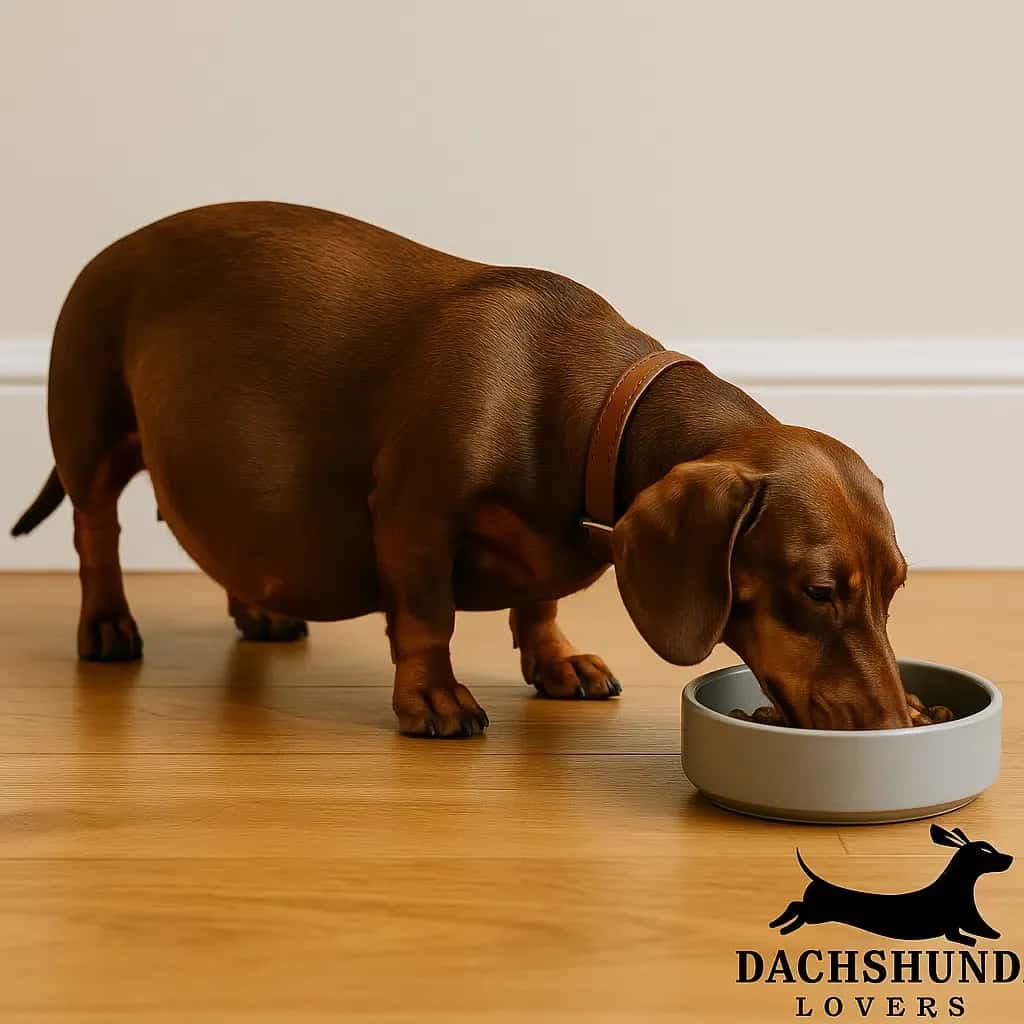
Feeding a pregnant dachshund isn’t hard — unless you’re getting your advice from five different sources and trying to follow all of them at once. That’s where most people go wrong.
When our friend’s girl was confirmed pregnant, the first question was food. “Do I switch to puppy kibble now? Add in folic acid? Feed more? Less?” Honestly, we’ve asked the same things.
The short answer: it depends on timing. What works in Week 2 doesn’t work in Week 6. But if you follow a few simple rules, you’ll avoid most of the problems before they start.
The First Few Weeks: Keep It Steady
Weeks 1–4 aren’t the time to panic. Your dachshund doesn’t need extra calories yet — and overfeeding early usually causes more trouble later. Bloating, sluggishness, and difficult labor are all more likely if you jump the gun.
If you’re already feeding a proper, small-breed adult dog food — one with a real protein listed first and no corn, soy, or mystery “meal” blends — you’re in good shape.
Stick to the basics:
- No sudden food switches unless your vet tells you to
- Expect appetite to shift slightly — both up and down is normal
- If you’re unsure what’s changing, track meals for a week — patterns show up quickly
Want the full picture by stage? Our Week-by-Week Dachshund Pregnancy Guide maps it out clearly.
Week 5 Onward: Time to Power Up
Around Week 5, things start to shift. Her body needs more calories to support the pups — and most vets will suggest transitioning to a high-quality puppy formula around this time.
What to look for:
- DHA (for brain development)
- Protein around 25–30%
- Fat between 15–20%
- Balanced calcium and phosphorus levels
- No artificial preservatives, colors, or fillers
Don’t switch cold turkey. Mix the new formula in gradually over 5–7 days. Pregnant dachshunds often have more sensitive digestion — and one wrong move can throw things off fast.
Need a deeper dive into why these nutrients matter? The AKC’s nutrition guide explains it well — especially for small breeds.
Smaller, More Frequent Meals
By Weeks 7–9, the pups are growing fast. That means more pressure on her stomach, and less room for big meals.
The fix is simple:
- Feed 3–4 smaller meals per day
- Space them out evenly
- Watch for signs of discomfort or skipped meals
If she starts turning down food completely near the end, don’t panic — it might mean labor’s close. Switch to soft, easy-to-eat meals, keep water available, and stay observant
Foods & Habits to Avoid
Some things are common sense. Others aren’t talked about enough. Here’s what not to do:
- Raw diets: Risk of salmonella and listeria isn’t worth it — even if she’s eaten raw before
- Too many treats: Keep them under 10% of daily intake
- Supplements without guidance: Especially calcium — too much can cause real harm
James’s tip:
Weigh her once a week. Not obsessively — just enough to catch any major spikes or drops. Gradual gain is good. Anything extreme? Talk to your vet.
Safe Exercises

One of the first questions we get from dachshund owners once pregnancy is confirmed: “So… should I stop walking her?”
Short answer: absolutely not.
The goal isn’t to stop movement — it’s to adjust it. What you want is calm consistency. Nothing high-impact. Nothing chaotic. But movement? That’s essential.
Why Gentle Movement Matters
You’ve probably heard the comparison to human pregnancy, and it holds up here. Staying active (in the right way) helps with:
- Healthy weight gain
- Stronger muscles to support labor
- Better digestion and circulation
- Lower stress levels
In our experience, dachshunds that stay gently active are less anxious, recover quicker, and don’t go stir-crazy in the final weeks.
Best Forms of Exercise
The best routine is the one she already knows. This isn’t the time to introduce a new dog sport or start jogs along the Esplanade.
Stick to the familiar:
- Short, flat walks — Two to three a day is ideal. Nothing steep. Nothing slippery.
- Low-key indoor play — Tug or slow fetch on carpet works well. No chasing.
- Sniff walks — Let her move at her own pace. We do these with Harvey around Shelly Park — shaded, quiet, no pressure.
What to Avoid
As her belly grows, her balance shifts. She’s more prone to slips, strains, and fatigue. That’s where most injuries creep in.
Here’s what to cut out completely:
- Jumping off furniture
- Roughhousing with other dogs
- Long hikes, rocky trails, or uneven surfaces
- Fast-paced fetch (especially on concrete or tile)
If you haven’t already, this is a good time to check out our full Dachshund Pregnancy Care Guide for tips on setting up your home — ramps, no-stair zones, bedding tweaks, and more.
Listen to Her Cues
Some dachshunds stay playful through Week 8. Others hit the brakes at Week 5. Neither is wrong.
Watch for the signs:
- Slowing down mid-walk
- Sudden panting
- Avoiding games she usually loves
When that happens, don’t force it. And if it changes quickly or seems off, call your vet. Movement is good — unless she’s clearly saying otherwise.
Weight Monitoring & Belly Checks
Tracking weight and belly growth isn’t about curiosity — it’s about catching issues early. Most of the time, things go smoothly. But when they don’t, it’s usually because something small got missed.
This part doesn’t need to be complicated. You’re not looking for exact numbers — you’re looking for patterns. That’s what tells you if things are on track or veering off.
When Does Belly Growth Start?
Most dachshunds start to show somewhere between Weeks 4 and 6. But don’t lock in that timeline — it varies.
First-time mums and minis often show later. Standards with big litters might start earlier. We’ve seen one girl look “normal” until Week 7 — and then her belly practically doubled overnight.
You can get a better sense of timing in our full Week-by-Week Pregnancy Guide. It walks through what to expect and when.
How to Monitor Weight Safely
You don’t need a fancy setup. A digital scale and five minutes a week will do it.
Here’s what we recommend:
- Weigh her once a week, same day and time if possible
- Use the same scale each time (switching throws off accuracy)
- Log it somewhere — notebook, app, whatever you’ll check
- Flag any sudden gain or drop — don’t ignore it
Most pregnant dachshunds gain about 15–25% of their body weight by the end. Smaller girls carrying one or two pups? Less. A standard with six? She’ll feel heavier fast.
Safe Belly Checks
This part’s simple: observe, don’t poke.
You’re not checking for individual puppies — that’s your vet’s job. What you can do is keep an eye on:
- Firmness — gradually increases as the pups grow
- Symmetry — should look and feel even (though puppy position can shift this)
- Discomfort — if she flinches or pulls away, that’s a red flag
By Weeks 6–7, you might feel movement. Not always — but sometimes, after she’s eaten and settled, you’ll catch a gentle shift under your palm.
Make it part of your routine. After walks or during cuddle time. Keep it low-key and non-invasive. It helps her stay calm — and helps you spot any changes early.
Vet Care Timeline for Pregnant Dachshunds
There are no comments yet
Leave a comment