Dachshund for Apartment Living
Dachshund for Apartment Living
Apartment life with a dachshund can work brilliantly, if you’re prepared. Here’s what to expect, and how to keep your sausage dog happy in tight quarters.

James
Posted on November 4, 2025.
Updated on July 22, 2026.
Table of Contents
- 1.Key Takeaways on Dachshund For Apartment Living
- 2.Why Dachshunds Can Thrive in Apartments
- 3.Managing Barking in Shared Spaces
- 4.Exercise Solutions Without a Backyard
- 5.Creating a Dachshund-Friendly Apartment Layout
- 6.Creating a Stimulating Environment in a Small Space
- •Build a Predictable Daily Flow
- •Rotate Toys and Activities
- •Carve Out Micro-Adventure Spaces
- •Maximise Your Outdoor Time
- •Use Vertical Space Thoughtfully
- •Balance Alone Time and Company
- •Respect Their Rest
- •More from This Series
- •Disclaimer
Share

When Caitlin and I first brought Harvey home, we were living in a two-bedroom apartment in Cronulla right next to the Chain Reaction Bicycle Company, just a few streets back from the beach. Friends kept asking the same question: “A dachshund? In an apartment?” The truth is, apartment living with a dachshund isn’t just possible — it can be a great fit, provided you understand what the breed needs to thrive.
Dachshunds aren’t high-rise hermits by nature. They were bred for the open fields and forests of Germany, where their short legs and long backs helped them tunnel after badgers. That hunting heritage means they need stimulation — both mental and physical — even if they’re living in a space without a backyard. According to the American Kennel Club, dachshunds can adapt well to apartment life if their exercise and enrichment needs are met consistently.
In this guide, we’ll look at how to create a daily routine that works in smaller spaces, manage barking in shared buildings, protect your neighbours’ peace, and give your dachshund enough variety to stay happy and healthy. Along the way, I’ll share what worked for us — from early morning walks through Gunnamatta Park to clever indoor games on rainy Sutherland Shire afternoons.
Key Takeaways on Dachshund For Apartment Living
Fact | Why It Matters |
|---|---|
Dachshunds can adapt well to apartment living. | With consistent exercise, mental stimulation, and clear boundaries, they can be just as content in a flat as in a house. |
Barking can be the biggest challenge in apartments. | Proactive training and environmental management help keep neighbours happy in shared walls situations. |
Small spaces require creative enrichment. | Indoor games, puzzle toys, and short training sessions can replace some outdoor activity on busy or wet days. |
Regular walks are essential. | Daily outings to parks, quiet streets, or dog-friendly areas maintain physical and mental health. |
Safety indoors matters as much as outdoors. | Securing balconies, limiting jumping from furniture, and providing ramps can prevent injuries in a breed prone to back issues. |
Why Dachshunds Can Thrive in Apartments

When Caitlin and I first brought Harvey home, we were still living in a small apartment in Cronulla. Friends kept asking if we were worried about space. “He’s a dachshund,” I’d say. “He’s already half the height of the coffee table — we’ve got plenty of room.” What I didn’t know then was how much more apartment life is about routine, stimulation, and boundaries than it is about square footage.
Dachshunds are surprisingly well-suited to apartment living. They’re a small breed, yes, but that’s not the whole story. Their moderate exercise needs mean they’re content with a couple of good walks each day and a mix of indoor play. They don’t need a backyard to be happy — though they will happily claim one if offered.
The key is mental engagement. These dogs were bred for problem-solving, and a bored dachshund can quickly become a noisy or destructive one. Short training sessions, hide-and-seek games with treats, and puzzle feeders can keep their minds busy even in tight spaces.
Of course, their voice travels — and in an apartment, barking can feel magnified. That’s why early training on cues like “quiet” and managing triggers (like closing blinds when the postman comes) is just as important as exercise. The American Kennel Club lists dachshunds among breeds that can do well in smaller homes, but always with the caveat that they need consistent stimulation and owner involvement.
If you can give them that — and make peace with the occasional low “guard dog” growl at hallway noises — they’ll thrive in a unit, flat, or city apartment just as well as in a sprawling suburban home.
Harvey has what I call “selective diplomacy.” He’s calm as anything when we walk through Gunnamatta Bay on a Sunday morning, but the second he hears footsteps in our apartment hallway, he switches to full-time security guard. Living in an apartment means you notice just how quickly sound travels — and how sensitive a dachshund’s ears can be to every shuffle, door click, and elevator chime.
The truth is, dachshunds aren’t natural apartment introverts. They were bred as alert hunters, so their instinct is to announce every unusual sound. In a shared living environment, this can mean more barking triggers: neighbours coming and going, delivery drivers, even a dog two floors down they’ve never actually met.
The first step is knowing when to intervene and when to let them process the sound. If Harvey barks once at a noise and then settles, I let it go. If he escalates into a repeated alert, that’s when I use our “quiet” cue. We paired it with a reward system early on — a treat or toy only when he stopped barking on command — and over time, it’s become second nature.
Sometimes, it’s about prevention rather than correction. We learned to close blinds on the balcony side during peak delivery hours, and to keep a low-level TV or music playing when we were out. This soft background noise masks hallway activity enough to stop Harvey’s “neighbour announcements.” The RSPCA NSW has a solid guide on identifying the cause of barking and creating a routine that keeps your dog calm, even when you’re not home.
It’s worth talking to your neighbours, too. A friendly chat can make them more understanding if a bark slips through now and then — and in some cases, you might even discover they have a dog with the same habit, making them more forgiving.
With consistency, a bit of environmental management, and a realistic understanding that some barking is part of the dachshund package, you can keep harmony in both your apartment and your building.
Exercise Solutions Without a Backyard
When Caitlin and I first brought Harvey home, we were in a place without much of a secure backyard. I remember wondering how we’d give such an energetic little dog enough exercise without the convenience of a door that opened onto grass. What we learned quickly is that while a backyard is nice, it’s not essential — especially if you’re intentional about building movement into their day.
For dachshunds in apartments, the key is variety. The same short walk twice a day isn’t going to cut it for their physical and mental stimulation. Harvey thrives on a mix of routes and environments. Some mornings we do a lap around Gunnamatta Park, other days we head to the quieter side streets near Cronulla Beach, where the mix of new smells and the occasional friendly dog makes the walk feel like an adventure.
If time is short, even a 10-minute game of fetch down a long hallway or in a safe indoor area can burn off energy. Soft toys are best indoors to avoid damage — and Harvey has a knack for turning our living room into his personal agility course, weaving between the coffee table and couch legs.
Indoor exercise isn’t just about movement — it’s about engagement. Puzzle toys that make him work for treats can keep him occupied for 20 minutes, which for a dachshund is a decent mental workout. On rainy days, we’ve even set up a “scent trail” in the apartment by hiding bits of kibble under cushions or inside boxes for him to sniff out.
The American Kennel Club recommends short but frequent play sessions for smaller breeds living indoors, which aligns perfectly with a dachshund’s energy bursts. Two or three mini-sessions spread throughout the day can be more effective than one long walk.
If you have access to a balcony, use it for quick bathroom breaks or sunbathing sessions, but never as a substitute for real walks. Dachshunds are social and curious — they need the change of scenery and interaction that comes with getting outside.
Living without a backyard means you become more deliberate about exercise, but in a way, that’s a positive. Every outing becomes an opportunity to bond, explore, and train. And when you get back, there’s a certain satisfaction in seeing your dachshund curl up on the couch, happy and tired, even without a blade of grass in sight.
Creating a Dachshund-Friendly Apartment Layout
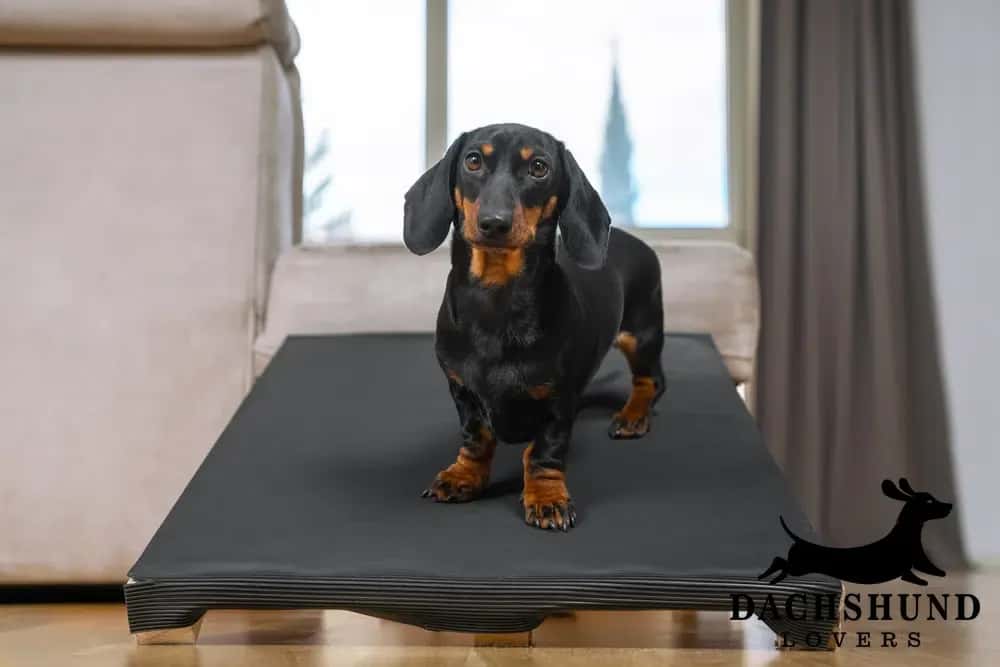
One of the first things Caitlin and I learned when we moved Harvey into an apartment was that space planning matters more than square footage. You can have 100 square metres and still make it uncomfortable for a dachshund if it’s cluttered or unsafe. On the flip side, a smaller apartment can feel spacious and secure if it’s thoughtfully arranged with your dog in mind.
Prioritise Safe Pathways
Dachshunds love to follow you from room to room, but their low-slung bodies put them at risk for back injuries if they’re constantly navigating obstacles. In our place, we make sure there’s a clear path from Harvey’s bed to the kitchen and living room, without anything that might make him jump or twist awkwardly. Rugs with non-slip backings are a must — especially on hardwood or tile floors.
Create Ground-Level Comfort Zones
Harvey has a knack for trying to launch himself onto the couch. To protect his back, we invested in a set of pet stairs and a low ramp that matches the rest of our furniture. They blend in with the room’s style but give him safe access to his favourite napping spots. If your dachshund is allowed on the bed, the same principle applies — a ramp isn’t just a luxury, it’s a necessity for their long-term health.
Zoning the Apartment
Even in smaller spaces, it helps to define “Harvey’s zone” — a cosy corner with his bed, a basket of toys, and a water bowl. It’s his retreat when things get noisy, and it helps contain the inevitable toy scatter that comes from an enthusiastic game of tug-of-war.
Storage That Doubles as Safety
Dachshunds are curious, and in an apartment, that curiosity can lead them into trouble. We keep cleaning products, small objects, and anything edible (but not meant for dogs) in secure cabinets or on high shelves. In the kitchen, a simple baby gate keeps Harvey from “helping” when we’re cooking.
Natural Light and Fresh Air
Dachshunds are sun-seekers. Harvey spends entire mornings shifting positions to catch the light coming through our balcony doors. If possible, arrange their bed or a mat near a sunny spot. Just make sure there’s also a shaded area so they can regulate their body temperature.
Sound Management
In an apartment setting, barking can strain neighbour relations. We use white noise in the background when Harvey’s home alone — it masks the sounds of passing dogs or hallway footsteps that might otherwise set him off.
By thinking like a dachshund — at their height, with their instincts — you can design an apartment that feels as comfortable to them as a home with a big backyard. It’s not about size; it’s about making every square metre work for both of you.
Noise Sensitivity and Apartment Life for Dachshunds
Living in an apartment means you hear more of your neighbours, and your dachshund does too. For Harvey, this was the biggest adjustment. In our house, he only reacted to the occasional postman or delivery driver. In the apartment, there are footsteps in the hallway, dogs in the lift, and conversations drifting through the walls. For a breed bred to be alert and vocal, this can be a recipe for excessive barking if not managed early.
Understanding the Trigger
Dachshunds bark for a reason — it’s their way of alerting the pack (you) to something unusual. In an apartment, “unusual” can mean the sound of an elevator ding or the neighbour’s cat walking across their balcony. The first step is figuring out which sounds set your dog off the most. For Harvey, it was the echoing footsteps in the stairwell.
Desensitisation Training
Once you know the trigger, you can start working on desensitisation. We recorded the sounds that made Harvey bark and played them at a very low volume while giving him treats for staying calm. Over time, we increased the volume until the real-life sound barely got a reaction. It’s slow work, but it pays off in the long run.
Create a Sound Buffer
Rugs, curtains, and fabric furniture absorb sound and make the environment less echo-prone. We also use a small white noise machine near the front door when Harvey is home alone — it helps mask hallway noise that might otherwise get him riled up.
Give Them a Job
Barking often comes from boredom as much as from noise. Interactive toys, puzzle feeders, and short but frequent training sessions can give your dachshund a mental workout and reduce the urge to react to every sound. I’ll often give Harvey a frozen Kong before we head out — by the time he’s finished it, he’s ready for a nap instead of standing guard by the door.
Communicate with Neighbours
We’ve found it helps to let neighbours know you’re actively training your dog not to bark at every sound. Most people are more understanding if they see you’re putting in the effort. In Harvey’s case, a friendly introduction to the neighbours he barked at the most actually reduced his reactivity — once he knew them, they stopped being “strangers” in his eyes.
Noise management in an apartment is a combination of training, environment design, and relationship building. For dachshunds, whose instincts are tuned to every creak and shuffle, it’s about teaching them which sounds matter and which ones can be safely ignored.
Creating a Stimulating Environment in a Small Space

When Caitlin and I first moved into our smaller apartment in Cronulla, I was worried about whether Harvey would feel restricted. Dachshunds aren’t high-rise greyhounds, but they do have bursts of energy that need an outlet. What I quickly learned is that apartment living isn’t about the size of the space — it’s about the quality of the environment you create.
The reality is, dachshunds were bred for bursts of activity followed by long periods of rest. They’re not like border collies that pace if they haven’t run a kilometre before breakfast. But what they do need is structured mental and physical stimulation spread throughout the day. This is where apartment owners have to be a little more intentional.
Build a Predictable Daily Flow
Predictability can be a dachshund’s best friend, especially in a small home. Knowing when walks, meals, and play happen helps them settle into a calm rhythm instead of bouncing between restless and overexcited.
If you’re unsure how to design your own schedule, my guide on Dachshund Daily Routine breaks down morning, midday, and evening activities to suit both working-from-home owners and those out for most of the day.
Harvey thrives on this — he knows when Caitlin’s morning coffee means “walk time” is coming, and when the sound of the blinds closing at night means he can curl up without expecting more play.
Rotate Toys and Activities
In an apartment, your dachshund will quickly tire of the same two toys lying in the same spot. Instead, rotate them every few days. Keep a small storage basket and swap in a “new” toy while hiding one they haven’t seen for a week. You’ll be surprised how much enthusiasm returns when an old rope tug reappears.
You can also create “foraging” opportunities indoors. Scatter a handful of kibble across a snuffle mat, hide a chew under a cushion, or use puzzle feeders. According to the RSPCA Knowledgebase, interactive feeding can reduce boredom-related behaviours such as excessive barking or chewing — common complaints from apartment neighbours.
Carve Out Micro-Adventure Spaces
Even if your living room is the size of a large rug, you can still create zones that keep your dachshund engaged. Consider:
- Window perches where they can watch the world (and, let’s be honest, provide running commentary on every bird).
- Hide-and-seek corners with a blanket draped over a chair to create a tunnel.
- Balcony “patios” with weatherproof mats for fresh-air lounging.
Caitlin and I often set up a “weekend den” by moving Harvey’s bed to the sunniest patch of the apartment. He’ll spend hours there, watching the afternoon light shift.
Maximise Your Outdoor Time
Apartment living puts more weight on the quality of your outdoor trips. Instead of quick bathroom breaks, try making one of your daily walks a longer, more varied outing — even if it’s only 20–30 minutes. Change the route, visit a different park, or walk along the beach path. The sensory novelty works wonders for a dachshund’s mood.
In the Sutherland Shire, we often rotate between Gunnamatta Bay for calm, shady walks and the esplanade at Cronulla for a busier, more social atmosphere. Each location gives Harvey something different — new scents, different textures underfoot, and fresh social opportunities.
Use Vertical Space Thoughtfully
Because dachshunds have long backs and short legs, they’re not natural climbers. But safe, low-rise furniture and ramps can give them more ways to navigate your apartment. Think of it as expanding their territory without adding square footage.
Place ramps by couches or beds if you allow them on furniture, and make sure any elevated areas have non-slip surfaces. This is especially important for apartments with slick tile or timber floors, where a sudden sprint can end in a slide.
Balance Alone Time and Company
In a smaller home, your dachshund may be more aware of when you’re coming and going. Separation anxiety can be amplified if they hear every sound outside the door but aren’t used to being left alone. Start by practising short absences — leave for five minutes, then return calmly. Build up gradually so they understand that departures are normal and temporary.
If you work long hours away from home, consider enlisting a neighbour, pet sitter, or dog walker to break up their day. Harvey has a retired neighbour who pops in occasionally, and it makes a world of difference for his afternoon energy levels.
Respect Their Rest
One thing people often overlook is just how much dachshunds sleep. On average, adult dogs snooze 12–14 hours a day, and puppies even more. Over-scheduling can be just as stressful as under-stimulation. Make sure your apartment setup includes quiet zones where they can retreat — ideally in a spot where they won’t be tripped over.
FAQs — Dachshund for Apartment Living Are dachshunds good apartment dogs?
More from This Series
- Dachshund for Apartment Living — Practical ways to make small spaces work beautifully for a big personality.
- Dachshund Daily Routine — A balanced day plan that keeps your doxie settled, exercised, and engaged.
- Dachshund in Bed — Comfort, safety, and sleep hygiene if your dachshund shares the covers.
- Owning a Dachshund — The honest guide to life with a long dog, from costs to care to community.
- Dachshund and Cold Weather — How to keep them warm and moving well when the temperature drops.
- Do Dachshunds Like Water — Swimming, safety, and building confidence around the beach and bath.
- Dachshund and Cats — Introducing species gently and setting up a calm, shared home.
Authored by
James
James is the founder of Dachshund Lovers and the proud human of Harvey, a mini dapple with a big personality. He writes to empower and connect the dachshund community, blending founder insights with honest, experience-based stories about life with this incredible and special breed. James brings candid, experience-backed opinions to the community and always focused on fewer, better products and ideas that genuinely improve life for dachshunds and their people.
Read moreJames is the founder of Dachshund Lovers and the proud human of Harvey, a mini dapple with a big personality. He writes to empower and connect the dachshund community, blending founder insights with honest, experience-based stories about life with this incredible and special breed. James brings candid, experience-backed opinions to the community and always focused on fewer, better products and ideas that genuinely improve life for dachshunds and their people.
Read moreDisclaimer
This content is for informational purposes only and should not be considered veterinary advice. Always consult with a licensed veterinarian regarding your dog’s health and wellbeing.
There are no comments yet
Leave a comment