The Evolution of Dachshund Breeding Standards Over the Centuries
The Evolution of Dachshund Breeding Standards Over the Centuries
Curious about the evolution of dachshund breeding? Learn how these dogs went from badger hunters to beloved companions and what was lost along the way.
James
Posted on September 2, 2025.
Updated on July 21, 2026.
Table of Contents
- 1.Key Takeaways: Dachshund Breed Standards History
- 2.Dachshunds in Early Breeding History
- 3.The Role of German Hunters in Defining Early Standards
- •Coat Types Built for Function
- •No Formal Standards — Yet
- 4.The Rise of Formal Breed Standards in the 19th Century
- •From Forests to Drawing Rooms
- •The Queen Victoria Effect
- •The Birth of Kennel Clubs and Breed Standards
- •The Introduction of Size Categories
- •Coat Types and Their Recognition
- •Why These Standards Mattered
- 5.The 20th Century: Show Dogs vs. Working Dogs
- •The Rise of the Show Dog
- •The Impact of Wartime
- •Diverging Lines: Show vs. Field Dachshunds
- •The 1950s and 60s: A Cultural Comeback
- 6.Modern Breed Standards: Balancing Health and Aesthetics
- •The Legacy of the Show Ring
- •Health vs. Aesthetics
- •Miniatures, Standards, and Tweenies
- •Coat Variety and Care
- •The Modern Companion
- 7.The Future of Dachshund Breeding
- •Health-Focused Breeding
- •DNA Testing and Technology
- •Balancing Tradition and Modern Demand
- •Ethics Over Aesthetics
- •The Return of Functional Traits
- •The Influence of Pop Culture and Social Media
- •What’s Next for the Breed?
- •The Modern Dachshund Owner’s Role
- -More from This Series
- -Disclaimer
Share

When I look at Harvey, curled up under a blanket on our lounge, I see a modern dachshund that’s very different from the rugged hunters that roamed the forests of 17th-century Germany. His sleek, compact body and softer temperament aren’t just by chance — they’re the result of hundreds of years of selective breeding and evolving standards that have shaped what the breed is today.
Dachshunds didn’t always have the polished, refined look we see in dog shows or on Instagram. The first dachshunds were stockier, heavier, and bred purely for function — chasing and confronting badgers, rabbits, and even wild boar. Over time, as the breed’s popularity grew and demand shifted from hunters to households, the standards that defined the dachshund also changed.
“Dachshunds were originally bred for stamina and toughness. Over centuries, they’ve been refined to balance both function and form.”
— The Kennel Club UK
In this article, we’ll explore how the dachshund breed standards have evolved, from their origins as German hunting dogs to the modern classifications of size, coat, and temperament. Along the way, we’ll look at what these changes tell us about the breed’s adaptability — and why, even after centuries, they remain true to their roots.
Key Takeaways: Dachshund Breed Standards History
Topic | Summary |
|---|---|
Origins | Early dachshunds were heavier, larger, and bred solely for hunting efficiency. |
Coat Evolution | Smooth coats came first, with wire-haired and long-haired varieties emerging later for different terrains. |
Size Categories | Miniature and tweenie sizes were developed to chase smaller game and suit domestic life. |
Show Standards | Kennel clubs formalized standards in the 19th century, focusing on proportions, coat quality, and temperament. |
Modern Shifts | Today’s dachshunds balance companion traits with a nod to their hunting heritage. |
Dachshunds in Early Breeding History
The earliest dachshunds, dating back to 15th- and 16th-century Germany, were bred with a clear purpose: hunt burrowing animals. Their bodies were long and muscular, their legs short and powerful — designed to dig, track, and fight if needed. These early dogs were often larger than today’s standards, with some weighing up to 18 kg (40 lbs).
Unlike the modern breed, early dachshunds didn’t have a single, formal standard. Breeding decisions were made purely for functionality, not aesthetics. A good dachshund was measured by its performance in the field, not its appearance
The Role of German Hunters in Defining Early Standards
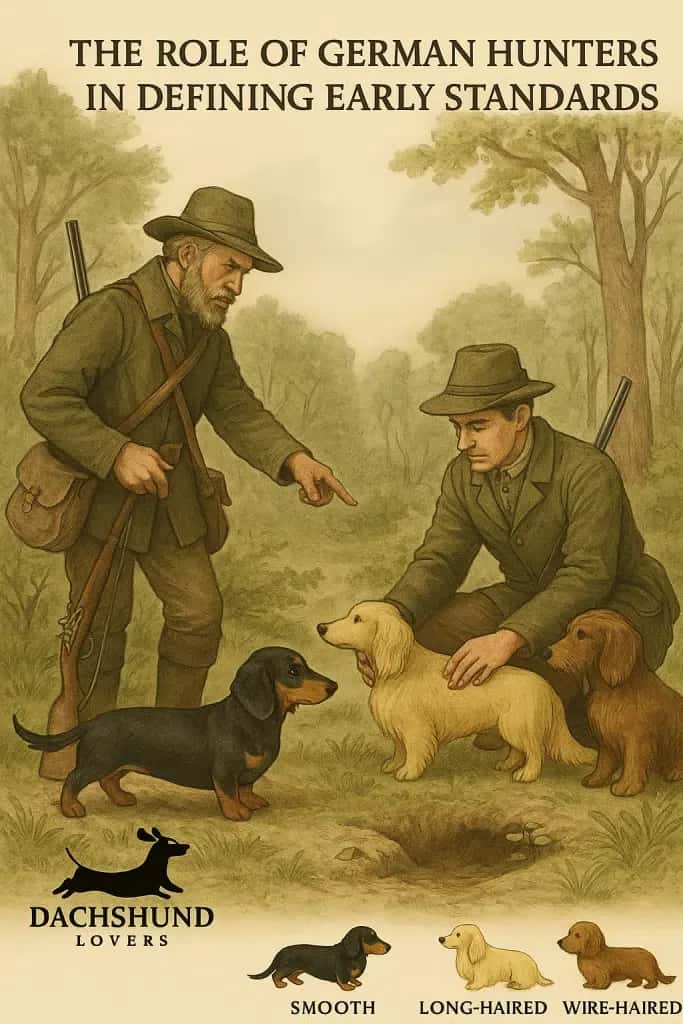
The first “standards” for dachshunds weren’t written on paper — they were set in the dense forests and open fields of Germany. Hunters knew exactly what they needed in a dog: courage, stamina, and a body that could do what others couldn’t. Dachshunds were bred for a single mission — go underground and face burrowing prey like badgers, rabbits, and foxes.
In these early days, a successful dachshund was judged on performance, not polish. Breeders prioritized traits like:
- Powerful front legs for digging.
- A long, sturdy spine to slither through narrow tunnels.
- A fearless, independent temperament to confront prey without hesitation.
- A deep, loud bark so hunters could track them underground.
The term “badger dog” — or “dachshund” — literally described their function. These dogs were the working-class heroes of German hunting culture, admired for their utility rather than their looks. For a closer look at these origins, see Where Do Dachshunds Come From? Unpacking Their German Origins.
Coat Types Built for Function
The first dachshunds were smooth-coated, ideal for mild climates and easy maintenance after a day in the field. Wire-haired dachshunds came later, bred for harsher terrain where protection from thorns and weather was essential. Long-haired dachshunds were influenced by crosses with spaniels, making them better suited to colder environments.
Each coat type had a purpose: it wasn’t about fashion — it was about ensuring the dog could do its job effectively.
No Formal Standards — Yet
While hunters valued performance over appearance, these functional traits created an unofficial template for the dachshund breed. Even today, many modern standards — like the proportions of their body and chest depth — trace back to these early working requirements.
The Rise of Formal Breed Standards in the 19th Century
The 19th century marked the moment when the dachshund transitioned from a purely functional hunter to a companion and show dog. This shift didn’t happen overnight — it was the result of growing urbanization, cultural changes, and, perhaps most significantly, royal influence.
From Forests to Drawing Rooms
Before the 1800s, dachshunds were bred with a single purpose in mind: performance in the field. Their body shape, stamina, and barking ability were carefully selected to create fearless badger hunters. But as industrialization and urban life reshaped Europe, fewer people needed dogs for hunting. Instead, they wanted companions that reflected social status and could adapt to life indoors.
The dachshund, with its distinct silhouette and spirited character, caught the eye of British nobility, who were looking for dogs that were both unique and charming. These early adopters laid the groundwork for formal breed standards.
The Queen Victoria Effect
Queen Victoria’s love for animals — and particularly dachshunds — catapulted the breed into the public eye. Her fondness for smooth-coated red dachshunds, including her famous dog Waldman IV, helped popularize the breed among aristocrats and the middle classes.
Victoria’s influence cannot be overstated. She wasn’t just a monarch; she was a trendsetter. If she had dachshunds, people across England wanted dachshunds. Her affection for the breed shifted the focus from their utility as hunters to their temperament and appearance as companions.
This royal endorsement sparked a wave of interest, encouraging breeders to refine the dachshund’s size, proportions, and coat types. What had once been a rugged, heavier-bodied hunter was gradually streamlined into a smaller, sleeker dog — perfect for homes and social gatherings rather than just forests and fields.
For a deeper dive into Victoria’s influence, see Queen Victoria’s Role in Making Dachshunds Famous.
The Birth of Kennel Clubs and Breed Standards
By the late 1800s, the rise of dog shows and kennel clubs formalized the process of defining breeds. Kennel clubs across Europe and the U.S. began setting precise standards for dachshunds, ensuring uniformity in size, structure, and temperament.
The American Kennel Club (AKC) officially recognized the dachshund in 1885, one of the earliest non-native breeds to gain acceptance. The standards they set — focusing on body proportions, chest depth, and overall appearance — laid the foundation for the dachshund we know today.
Key characteristics defined during this period included:
- A long, low body with a strong, muscular build.
- A deep chest to support stamina and lung capacity.
- Short, sturdy legs that allowed them to move close to the ground.
- A bold, intelligent temperament — still essential for their hunting roots.
- Distinctive head shape, with a slightly arched skull and almond-shaped eyes.
The Introduction of Size Categories
While early dachshunds varied significantly in size, breeders began standardizing two main categories in the 19th century:
- Standard dachshunds (16–32 pounds) for hunting larger prey like badgers and foxes.
- Miniature dachshunds (under 11 pounds) for rabbits and smaller game.
The “tweenie” size — those in between standard and miniature — naturally appeared as breeders focused on healthy proportions rather than strict weight limits. Today, tweenies are common and beloved by many owners, as we explain in What Makes a Tweenie Dachshund?.
Coat Types and Their Recognition
By the late 19th century, all three coat types — smooth, long-haired, and wire-haired — were formally recognized. Each coat was linked to the breed’s hunting history:
- Smooth coats were the “original” type, perfect for mild climates.
- Wire coats were introduced via terrier crossings, giving dachshunds better protection for rough terrain and thorny brush.
- Long-haired coats were influenced by spaniels, creating a softer, warmer coat for colder climates.
Breeders at the time saw function and form as interconnected. A dog’s coat had to look good for shows but also serve a practical purpose.
Why These Standards Mattered
The formalization of breed standards in the 19th century wasn’t just about aesthetics — it was about preserving the breed’s identity. Breeders were determined to retain the working dog characteristics that made dachshunds unique, even as they gained popularity as household pets.
Today, many of these original standards remain unchanged. The dachshund’s long body, strong chest, and keen expression all trace back to this period, when the breed’s image was carefully shaped to balance tradition and modern appeal.
The 20th Century: Show Dogs vs. Working Dogs
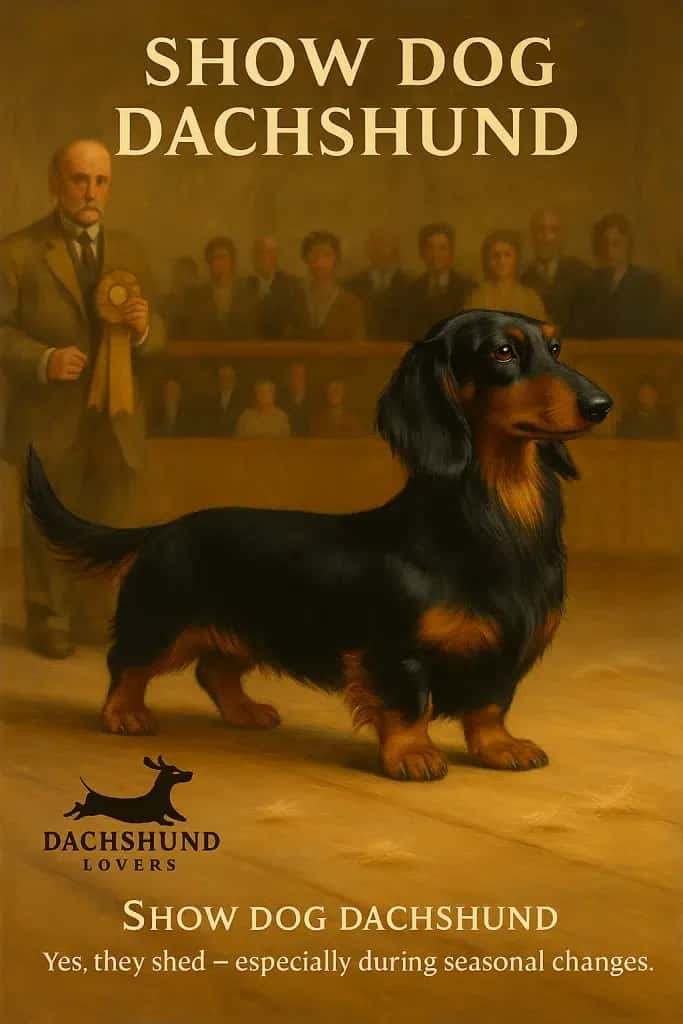
The 20th century was a defining era for the dachshund. By this time, the breed had been carefully standardized for shows, but it hadn’t entirely lost its roots as a working dog. The tension between these two identities — the polished show dog and the rugged hunter — became a central theme in the breed’s history throughout the century.
The Rise of the Show Dog
In the early 1900s, dog shows and competitions gained mainstream popularity. Breeders began focusing on producing dachshunds that matched the ideal proportions and appearance set by kennel clubs. A premium was placed on symmetry, coat quality, and temperament, especially traits that would shine in the show ring.
Show dogs were bred to have:
- A longer, sleeker body with smooth lines.
- More defined coat textures, whether smooth, long, or wire.
- Temperaments that balanced alertness with a calmer, companion-friendly demeanor.
This focus on aesthetic perfection sometimes came at the expense of the rugged traits that had defined dachshunds in their hunting days. Their physicality was still strong, but breeders were now just as concerned about presentation as performance.
The Impact of Wartime
World War I and World War II disrupted nearly every aspect of dachshund breeding and ownership. During these periods, the breed faced sharp declines in popularity due to its German origins. As we covered in Dachshunds in Wartime: A Complex History, dachshunds were unfairly vilified, and many breeding programs came to a halt.
Key Challenges of the Wartime Era:
- Anti-German propaganda led to drops in AKC and Kennel Club registrations.
- Breeders struggled to maintain healthy bloodlines due to limited demand and resources.
- Dachshunds were sometimes abandoned or hidden, especially in public-facing areas.
Despite these challenges, loyal owners and small-scale breeders kept the breed alive. After WWII, returning soldiers who brought dachshunds home from Europe helped revive public interest, and the breed quickly transitioned back into family life.
Diverging Lines: Show vs. Field Dachshunds
By the mid-20th century, a split emerged between dachshunds bred for show purposes and those still valued as working or field dogs.
- Show dachshunds leaned toward a refined appearance with slightly longer bodies, polished coats, and a more even temperament.
- Field dachshunds retained their sturdier build and hunting instincts, often used for tracking small game.
This divergence remains visible today. While most modern dachshunds are kept as companions, field-bred lines still exist, especially in Europe, where hunting traditions continue.
The 1950s and 60s: A Cultural Comeback
By the post-war decades, dachshunds were enjoying a cultural revival. They became a favorite breed among artists, celebrities, and designers. Their silhouette was seen as both modern and playful, making them a popular choice for mid-century advertisements and design motifs. This era helped cement the dachshund as not just a pet but a pop culture icon — a legacy we explore in Famous Dachshunds in Pop Culture and History.
Modern Breed Standards: Balancing Health and Aesthetics
Today’s dachshunds look a little different from their ancestors. Breeders and kennel clubs have refined the breed to strike a balance between the traditional working traits and the aesthetic appeal that makes dachshunds such popular companion dogs. But there’s a fine line between enhancing the breed’s signature look and compromising its health — a tension that modern breeding standards are working hard to address.
The Legacy of the Show Ring
The show ring still plays a major role in shaping how dachshunds are bred. Kennel clubs around the world — including the American Kennel Club and The Kennel Club UK — maintain strict standards for size, coat, and proportions. For example, the ideal dachshund should have:
- A long, muscular body that is strong but not overly exaggerated.
- A deep chest that allows for stamina and lung capacity.
- Short, sturdy legs that enable efficient movement close to the ground.
- Confident, intelligent expression with almond-shaped eyes and an alert posture.
These criteria aim to preserve the dachshund’s distinct silhouette while avoiding traits that could lead to structural weaknesses. However, not all breeders interpret these standards the same way, which is why some lines have developed overly elongated backs or extreme features that increase the risk of back injuries like Intervertebral Disc Disease (IVDD).
Health vs. Aesthetics
One of the key challenges in modern dachshund breeding is managing the risk of IVDD. This spinal condition, which affects around 1 in 4 dachshunds at some point in their lives, is linked to the breed’s long back and short legs. Ethical breeders are working to find the right balance — producing dogs that meet show standards but without exaggerated features that compromise mobility or long-term health.
This is why responsible breeders prioritize health screenings, genetic testing, and well-structured breeding programs. As discussed in Dachshund Genetics: How Health and Traits Are Connected, these efforts are critical for maintaining both the character and health of the breed.
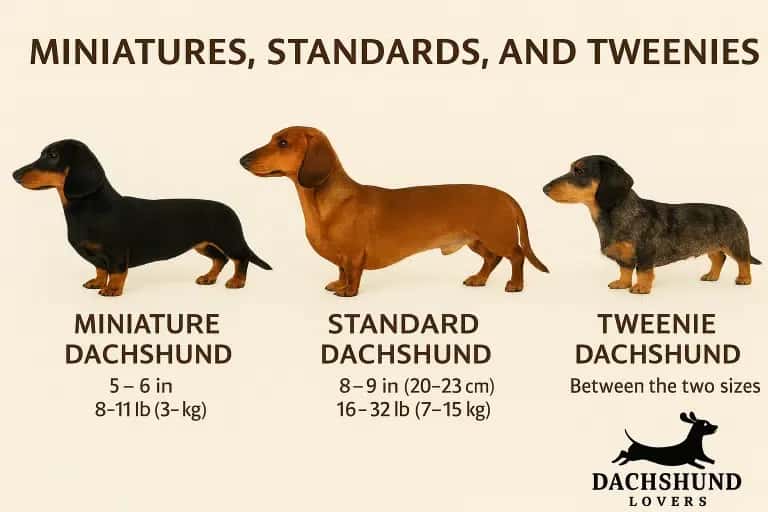
Miniatures, Standards, and Tweenies
Modern breed standards recognize three distinct size categories:
- Standard dachshunds (16–32 lbs): The traditional size for larger game hunting.
- Miniature dachshunds (under 11 lbs): Originally bred for rabbits and smaller prey, now popular as urban pets.
- Tweenies: While not officially recognized, these mid-sized dachshunds (11–16 lbs) are often seen as a sweet spot — big enough for sturdiness, small enough for city living. (Learn more in What Makes a Tweenie Dachshund?.)
Each size type is bred with specific conformation guidelines, ensuring they retain the iconic dachshund proportions.
Coat Variety and Care
Modern standards also celebrate the three official coat types:
- Smooth-coated: The classic low-maintenance option.
- Long-haired: Adds elegance and requires regular grooming.
- Wire-haired: Rugged and textured, with a terrier-like appearance.
These coats reflect the breed’s history — each type developed to suit specific climates and terrains. Standards now focus not just on color and texture but on ensuring coats are healthy and functional.
Ethical Breeding Practices
Today, reputable breeders go beyond show-ring aesthetics. They consider:
- Genetic testing for conditions like IVDD and PRA (Progressive Retinal Atrophy).
- Balanced body proportions to reduce strain on the spine.
- Temperament to ensure dogs are confident, adaptable, and family-friendly.
This commitment reflects a growing awareness that dachshunds are more than their looks. Their health, personality, and heritage matter just as much.
The Modern Companion
The dachshunds we see today — whether in show rings, on Instagram, or curled up on our sofas — are the result of centuries of adaptation and refinement. Yet, their personality remains unchanged: bold, affectionate, and irresistibly stubborn.
The Future of Dachshund Breeding
Dachshund breeding today is at a crossroads. While the breed’s history has been defined by its utility as a hunter and later its appeal as a show dog, the next chapter is all about health, longevity, and maintaining the breed’s character without compromising its well-being.
Health-Focused Breeding
Modern breeders are increasingly focused on preventing health issues that have historically plagued dachshunds, such as Intervertebral Disc Disease (IVDD). Instead of chasing exaggerated physical traits, responsible breeders prioritize:
- Balanced body proportions: Avoiding overly elongated spines and extremely short legs.
- Strong muscle tone: Selecting dogs with robust builds to support their unique structure.
- Genetic testing: Screening for common hereditary conditions, including PRA (Progressive Retinal Atrophy) and skin-related issues.
According to research from the Dachshund Breed Council UK, breeding strategies that emphasize muscle development and spinal strength can significantly reduce the risk of IVDD. These strategies, combined with responsible exercise and weight management, are helping modern dachshunds live healthier, longer lives.
DNA Testing and Technology
Advancements in canine DNA testing are changing the way breeders operate. Tests can now identify carriers of harmful genetic traits, enabling breeders to make informed decisions that minimize the risk of inherited diseases. Companies like Embark and Wisdom Panel offer breed-specific panels for dachshunds, screening for everything from coat color genes to health predispositions.
These tools aren’t just for breeders. Owners are increasingly using DNA tests to learn about their dachshund’s lineage, personality traits, and potential health risks. (We cover this in detail in Dachshund DNA Testing: What Can It Tell You?.)
Balancing Tradition and Modern Demand
While health is now a primary focus, breeders are still committed to preserving the heritage and personality that make dachshunds unique. The challenge lies in balancing tradition with modern expectations:
- Companion-first breeding: Today’s dachshunds are bred more for life as family pets than as hunters, though their boldness and curiosity remain intact.
- Size diversity: The demand for miniature dachshunds and “designer” coat colors (like Isabella or blue) is growing, but ethical breeders warn against prioritizing rare colors over genetic health. (See Rare Dachshund Colors: Beautiful or Risky? for a deep dive.)
- Show standards vs. practical health: Some breeders are pushing back against show standards that encourage overly exaggerated features, arguing that health should come before aesthetics.
Ethics Over Aesthetics
The conversation around ethical breeding has never been louder. Dachshunds, like many popular breeds, have occasionally fallen victim to overbreeding and careless genetic pairings by those seeking to capitalize on demand. This has led to an increase in puppy farms and unethical “rare color” breeders who ignore health standards.
Modern breed councils and kennel clubs are working to combat these practices by:
- Enforcing stricter health testing requirements.
- Educating buyers about the risks of purchasing from unethical sources.
- Promoting adoption through dachshund-specific rescues where possible.
The Return of Functional Traits
Interestingly, there’s a renewed interest in field dachshunds — dogs that retain their original hunting instincts and more balanced builds. Some breeders, particularly in Germany and Scandinavia, are reviving these working lines to ensure that the breed’s core abilities aren’t lost to show-ring aesthetics. These dogs tend to have slightly shorter backs, more muscular frames, and a temperament that leans toward alert independence.
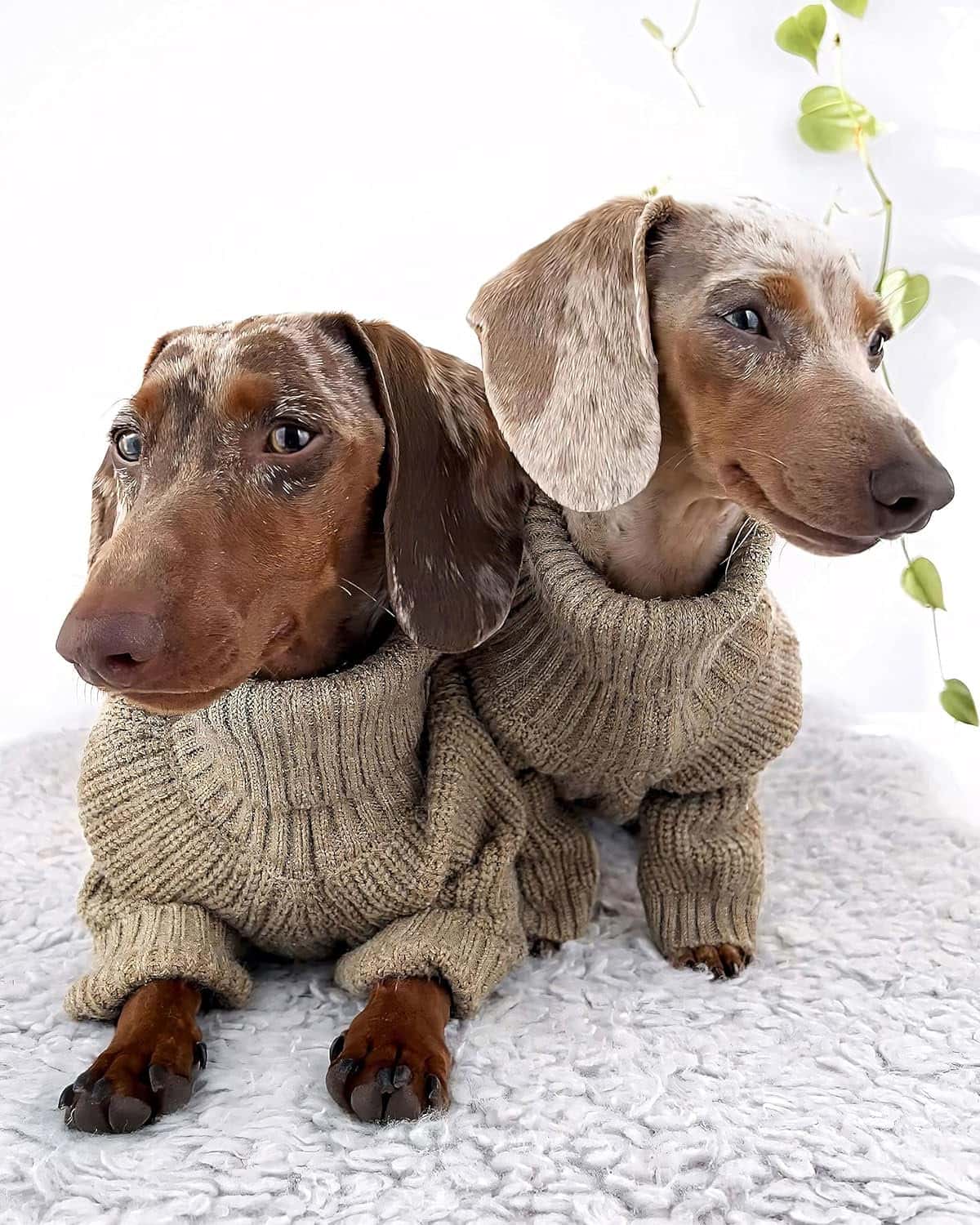
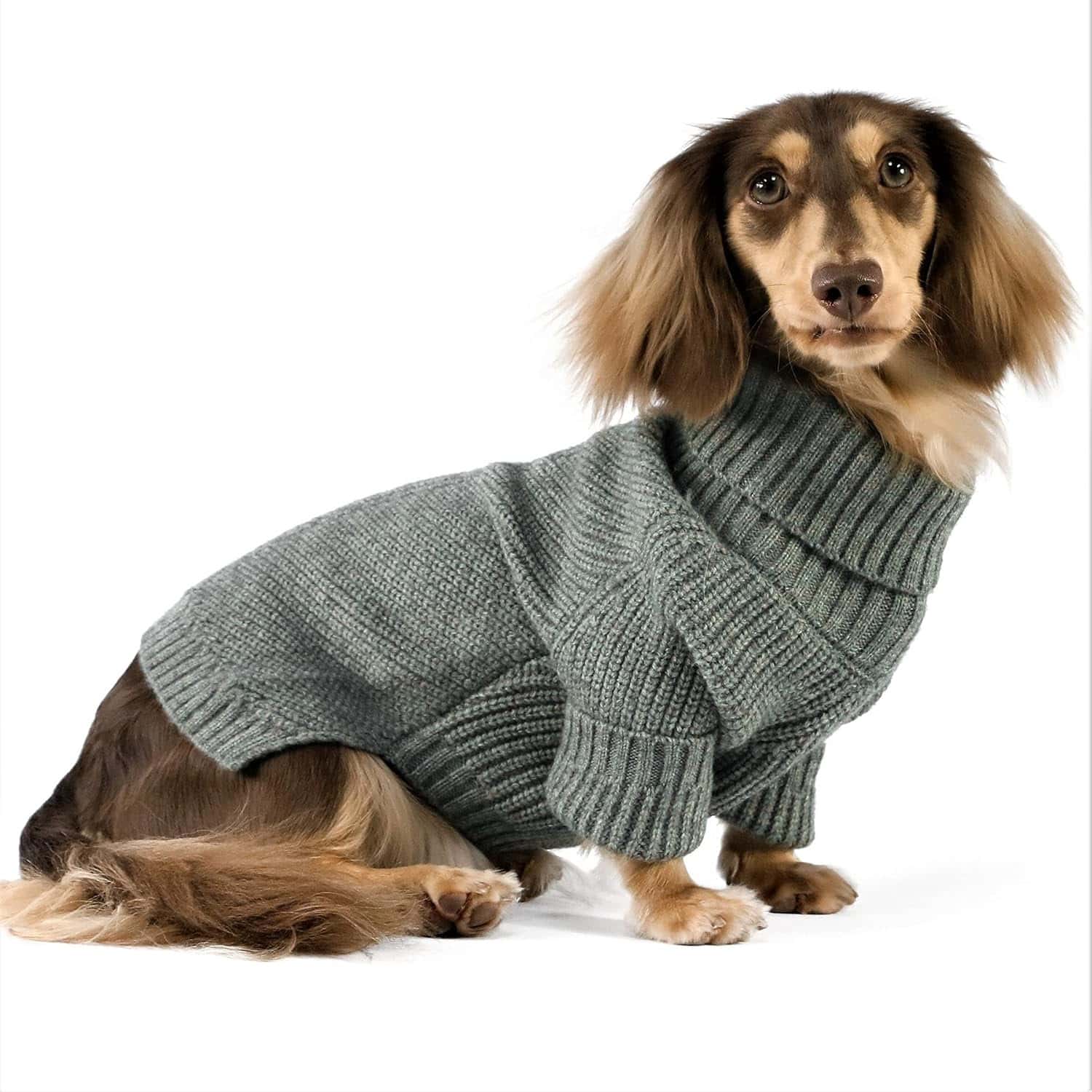
Dachshunds are social media darlings. Instagram, TikTok, and YouTube are filled with miniature dachshunds in stylish sweaters or viral videos, driving a surge in demand. While this exposure has increased awareness, it has also fueled impulse buying — something reputable breeders caution against. Dachshunds are not low-maintenance pets; they require patience, training, and an understanding of their stubborn, clever nature.
Social media has also highlighted the diversity of dachshund coats, colors, and personalities, further blurring the lines between show standards and what the public views as “ideal.” This shift in visibility is both exciting and challenging for the future of the breed.
What’s Next for the Breed?
Looking ahead, the future of dachshund breeding will likely involve:
- Stronger health regulations — prioritizing spinal health and genetic diversity.
- Increased transparency — with DNA results and health certifications becoming the norm.
- A hybrid focus — blending the aesthetics of the show dog with the durability of the field dog.
- Global collaboration — with breeders sharing best practices across countries to protect the breed’s integrity.
The Modern Dachshund Owner’s Role
As owners, we’re part of this story too. Supporting reputable breeders, rescue groups, and education efforts helps ensure the dachshund remains as strong, healthy, and iconic as ever. Harvey, with his cheeky dapple coat and endless energy, is a daily reminder that this breed thrives when it’s treated as more than just a trend — when we respect its history, health, and unique character.
FAQs About Dachshund Breed Standards History
More from This Series
Continue exploring the Dachshund History & Origin
- Where Do Dachshunds Come From? Unpacking Their German Origins
- Queen Victoria’s Role in Making Dachshunds Famous
- Dachshunds in Wartime: A Complex History
- Dachshund History: From German Hunters to Modern Companions
- Famous Dachshunds in Pop Culture and History
- Dachshunds in Art and Literature: From Muse to Icon
- 10 Surprising Historical Facts About Dachshunds
Authored by
James
James is the founder of Dachshund Lovers and the proud human of Harvey, a mini dapple with a big personality. He writes to empower and connect the dachshund community, blending founder insights with honest, experience-based stories about life with this incredible and special breed. James brings candid, experience-backed opinions to the community and always focused on fewer, better products and ideas that genuinely improve life for dachshunds and their people.
Read moreJames is the founder of Dachshund Lovers and the proud human of Harvey, a mini dapple with a big personality. He writes to empower and connect the dachshund community, blending founder insights with honest, experience-based stories about life with this incredible and special breed. James brings candid, experience-backed opinions to the community and always focused on fewer, better products and ideas that genuinely improve life for dachshunds and their people.
Read more
Disclaimer
This content is for informational purposes only and should not be considered veterinary advice. Always consult with a licensed veterinarian regarding your dog’s health and wellbeing.
There are no comments yet
Leave a comment