Dachshund Beach
Dachshund Beach
They might have short legs, but dachshunds love a seaside sprint. Here’s how to prep for sun, sand, and wagging tails all day long.
James
Posted on October 30, 2025.
Updated on July 19, 2026.
Table of Contents
Share

Some of Harvey’s best days are spent at the beach. Watching him sprint across the sand, nose down in the seaweed, then stopping dead when a wave rolls in — it’s the perfect reminder of why dachshunds need variety in their exercise. Living in the Sutherland Shire, we’re lucky. Places like Greenhills Beach, Cronulla and the tidal flats at Silver Beach, Kurnell have become our regular go-tos, with space for Harvey to burn off his energy and enough shallow water for him to wade safely.
But not every stretch of sand is dachshund-friendly, and not every dog is a natural beachgoer. Dachshunds in particular have unique needs: their low frame, sensitive backs, and cautious nature around water make preparation more important than spontaneity.
The benefits, though, are huge. According to RSPCA NSW, beach exercise is excellent enrichment — providing new textures, scents, and challenges that aren’t found on suburban footpaths. The American Kennel Club echoes this globally, recommending dog-friendly beaches as some of the best outlets for small breeds, provided owners manage heat, hydration, and safety.
And while Harvey has his favourites in Sydney, this isn’t just an Australian story. In the UK, beaches like Camber Sands in East Sussex and Holkham Beach in Norfolk are well-known for their wide, flat sand and shallow water. In the US, Cannon Beach, Oregon and Montrose Beach, Chicago are iconic destinations for safe off-lead play.
So, whether it’s Cronulla at sunset, Norfolk on a crisp morning, or Oregon with the Pacific wind at your back, beaches can be brilliant for dachshunds — if you know how to prepare. This guide covers what to bring, what to watch for, and how to make sure your doxie gets all the benefits of beach time without the risks.
Key Takeaways on Dachshund Beach
Topic | Summary | Key Notes |
|---|---|---|
Natural Ability | Dachshunds can enjoy beaches, but they’re not natural swimmers. | Short legs + long backs limit stamina in water; always supervise. |
Exercise Benefits | Beaches provide new ways to burn energy and stimulate senses. | Sand adds resistance, waves add variety, scents keep them mentally engaged. |
Safety First | Not all beaches are dachshund-friendly. | Choose flat, dog-friendly beaches like Greenhills Beach, Cronulla, Camber Sands, or Cannon Beach, Oregon. |
Paw Protection | Sand, salt, and hot ground can damage paws | Use paw balm, rinse after swimming, and avoid mid-day heat. |
Hydration & Shade | Small dogs overheat quickly in coastal environments. | Offer water every 20–30 minutes; pack shade or cooling mats for rest. |
Sun Protection | Dachshunds are vulnerable to heatstroke and sunburn | Keep sessions short, avoid peak sun, and consider dog-safe sunscreen. |
Gear Essentials | The right kit makes beach visits safer. | Collapsible bowl, harness (not collar), towel, paw balm, carrier backpack. |
Not One-Size-Fits-All | Some dachshunds thrive at beaches, others don’t. | Respect your dog’s temperament; never force them into water. |
Benefits of Beach Exercise for Dachshunds
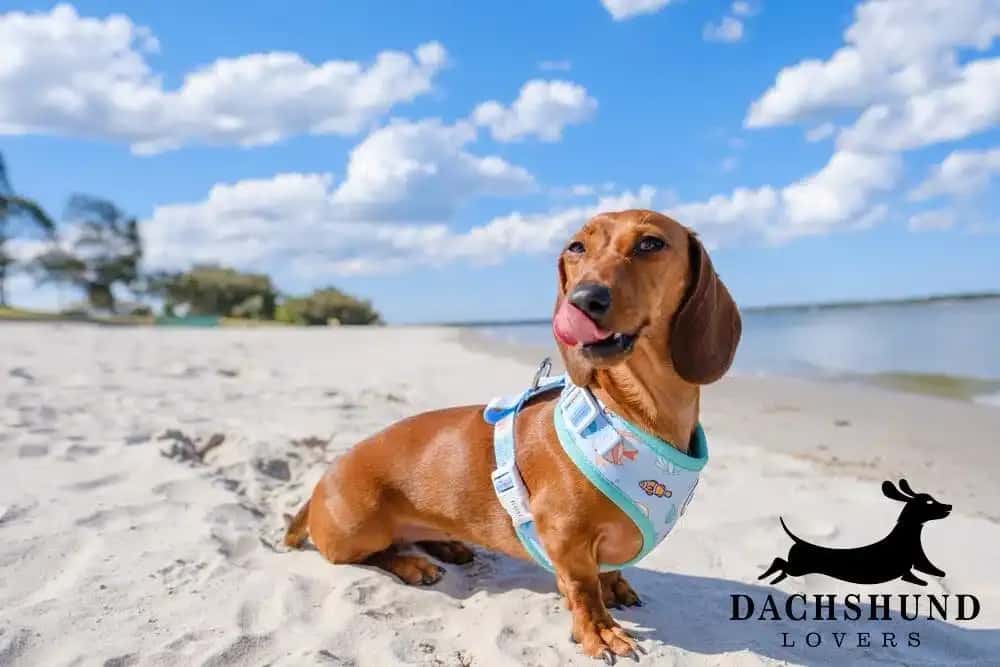
Taking a dachshund to the beach isn’t just about a change of scenery — it’s one of the most enriching forms of exercise you can give them. Beaches combine new textures, scents, and challenges that go beyond what a suburban footpath can offer.
Physical exercise with variety.
Walking on sand gives dachshunds a natural workout. The shifting surface engages muscles differently, adding resistance without the pounding impact of concrete. Soft sand is an excellent low-impact option for small breeds prone to joint or back strain. For Harvey, even a 20-minute stroll across Greenhills Beach, Cronulla leaves him satisfied in a way that a 40-minute street walk doesn’t.
Mental stimulation.
Dachshunds are scent-driven dogs. Beaches provide endless sensory input: seaweed, driftwood, shells, and all the smells left behind by other dogs. The RSPCA NSW emphasises the importance of “environmental enrichment” for small breeds and few environments are as stimulating as a coastline. Harvey will spend minutes locked onto a single patch of sand, convinced there’s a story buried beneath it.
Socialisation opportunities.
Many beaches allow off-lead access in designated zones, giving dachshunds the chance to socialise with other dogs in open, neutral territory. In the US, Montrose Beach, Chicago is one of the largest off-lead beaches, while in the UK, Holkham Beach is famous for its wide, open sand that attracts hundreds of dogs daily. Beaches like these let dachshunds build confidence in safe, spacious settings.
Bonding with owners.
Beyond the exercise, beaches create shared rituals. For us, weekends often mean a short drive to Silver Beach, Kurnell, where Harvey gets his sniffing fix while Caitlin and I grab coffee from the local kiosk. Those small rituals are as important for us as they are for him they’re moments of connection, outdoors, with space to breathe.
In short, the beach amplifies what dachshunds need most: short bursts of activity, rich sensory stimulation, and structured downtime afterwards. Done right, it’s one of the healthiest and happiest environments for them.
Safety Considerations at the Beach

Beaches can be brilliant for dachshunds — but they also carry risks if you’re not prepared. Their size, build, and tendency to overdo it make them more vulnerable than larger breeds. Here’s what to watch for.
Heat and sun exposure.
Dachshunds sit closer to the ground, which means they absorb more radiant heat from sand. Hot sand and bitumen can burn paws in minutes. I use the “seven-second test”: if you can’t hold your hand on the ground for seven seconds, it’s too hot for your dog. We always time Harvey’s visits to Greenhills Beach, Cronulla for early mornings or late afternoons when the sand is cooler.
Water safety.
Dachshunds aren’t natural swimmers. Their long backs and short legs mean stamina runs out fast. The American Kennel Club recommends life jackets for small breeds in open water. Harvey is cautious with waves — he’ll happily paddle in the shallows but freezes if a wave hits his chest. That’s why we stick to flat tidal areas like Silver Beach, Kurnell, and why I’d suggest avoiding rough surf entirely.
Paw care.
Salt, sand, and shells can wreak havoc on dachshund paws. VCA Hospitals note that repeated exposure to rough surfaces often leads to cracks or cuts. I apply paw balm before and after every beach trip and rinse Harvey’s paws with fresh water before we head home. It’s a simple step that prevents long-term issues.
Hydration and shade.
Saltwater isn’t safe for dogs to drink. Ingesting too much can cause dehydration or worse. I bring a collapsible water bowl and fresh water every time — offering it every 20 minutes. Shade is just as important. At Holkham Beach, Norfolk, UK owners often bring pop-up tents to give small breeds a place to cool down. I’ve started carrying a lightweight umbrella on longer outings for Harvey, which he uses without hesitation.
Wildlife and local rules.
Many beaches are shared with protected wildlife, especially in Australia. NSW National Parks prohibits dogs from most national park beaches to protect native birds. Always check signage or council websites before heading out. Overseas, places like Cannon Beach, Oregon allow dogs off-lead, but with conditions (voice control, waste collection).
Know your dachshund’s limits.
Not every dachshund will love the beach. Some will embrace the sand and surf; others will treat it like punishment. Harvey enjoys wading and sniffing, but swimming isn’t his thing. Forcing the issue is a fast way to create fear. The beach should feel like a reward — not a stress test.
Safety Considerations at the Beach
Dachshunds can thrive at the beach, but their size and build make them more vulnerable to certain risks. Here’s what to watch for:
Risk | Why It Matters for Dachshunds | Practical Tips (with Harvey’s Notes) |
|---|---|---|
Heat & Sun | Low bodies absorb more radiant heat from hot sand. | Time visits for early morning/evening. At Greenhills Beach, Cronulla, we only go when the sand passes the “seven-second test.” |
Water Safety | Short legs + long backs = poor stamina in waves. | Stick to shallows or tidal flats. Harvey does well at Silver Beach, Kurnell, but we avoid surf. Consider a small-dog life jacket. |
Paw Care | Sand, salt, shells can crack or cut paw pads. | Apply paw balm before/after, rinse with fresh water. Harvey’s routine is a quick rinse at the car park tap. |
Hydration & Shade | Saltwater is unsafe; dachshunds overheat quickly. | Fresh water + collapsible bowl. Stop every 20 mins. Portable shade or a small umbrella helps prevent fatigue. |
Wildlife & Rules | Many beaches have restrictions for dog safety + conservation. | Always check local signage. In Australia, many national park beaches prohibit dogs. In the US, Cannon Beach, Oregon allows off-lead if under voice control. |
Individual Limits | Not every dachshund enjoys water or open sand. | Respect temperament. Harvey loves sniffing seaweed but freezes if waves reach his chest — so we keep him in shallow zones. |
Gear Essentials for Beach Days
Heading to the beach with a dachshund takes a little more planning than with most dogs. Their unique build means you need to think about back safety, paw care, and hydration before you even leave the house. Over the years, we’ve narrowed it down to a simple kit that works every time.
Dachshund Beach Day Essentials
Item | Why It Matters for Dachshunds | Notes from Experience |
|---|---|---|
Harness (not collar) | Prevents neck/back strain if they pull in sand or water. | Harvey wears a padded harness — spreads force across his chest and avoids back tension. |
Leash (1.5–2m) | Safer than retractables on busy beaches. | Enough freedom to sniff without tangling; especially important at places like Montrose Beach, Chicago. |
Collapsible water bowl + fresh water | Saltwater is unsafe to drink; dehydration is a real risk. | We stop every 20 minutes, even if Harvey refuses at first. Routine is key. |
Paw balm / rinse kit | Protects against salt, hot sand, and shell cuts | A quick rinse at the tap before the drive home is part of Harvey’s ritual at Silver Beach, Kurnell. |
Towel or cooling mat | Helps reduce heat and keeps your car clean. | Helps reduce heat and keeps your car clean. We keep a dedicated “Harvey towel” in the boot. On hot days, he’ll happily lie on a cooling mat between runs. |
Portable shade | Prevents overheating during rest. | An umbrella or pop-up tent works. I’ve seen UK owners at Holkham Beach use small tents for their dachshunds. |
Carrier backpack | Essential if your dachshund tires suddenly. | I resisted this at first, but now it’s always in the kit — safer than carrying 7kg in your arms. |
Beach Activities & Exercise Ideas for Dachshunds

The beach isn’t just another walking track — it’s a playground full of natural enrichment. The key with dachshunds is knowing how to use it without pushing them too far.
Walking on sand.
Even a short stroll across soft sand works muscles differently than a footpath. Harvey tires faster at Greenhills Beach, Cronulla than he ever does on our street walks. The shifting ground builds strength in his core and legs, but it also means we keep sessions shorter — 20 minutes of steady walking is usually enough.
Sniffing and exploring.
For dachshunds, the real joy of the beach is in their nose. Seaweed piles, driftwood, shells, and the scent trails of other dogs — all of it feeds into their natural hunting instincts. The RSPCA NSW emphasises enrichment as essential for small breeds, and beaches deliver it in spades. Harvey will happily spend 10 minutes investigating one patch of seaweed, convinced there’s a secret worth finding.
Water play.
Not every dachshund is a swimmer — Harvey certainly isn’t — but shallow paddling can be great fun and low-impact exercise. At tidal spots like Silver Beach, Kurnell, he’ll wade up to his belly and splash a little, then retreat when he feels waves. In the UK, Camber Sands is popular for dachshunds because of its long, shallow shorelines that make paddling less intimidating.
Social play.
Beaches like Montrose Beach, Chicago or Holkham Beach, Norfolk are favourites with dachshund groups because the open space lets dogs meet and play safely. Socialisation in these settings can burn as much energy as a structured walk but it’s important to know your dog’s temperament. Harvey is friendly, but he prefers sniffing over wrestling, so we keep his social time relaxed.
Structured rest.
It’s easy to forget that resting is part of the activity cycle. Dachshunds will often keep going until they’re wiped out, which isn’t good for their back or paws. I enforce shade and water breaks every half hour, even if Harvey protests. A quick rest under an umbrella or a drink from his bowl makes the difference between a fun beach trip and a risky one.
At its best, a beach outing is a mix: a little walking, a lot of sniffing, some optional paddling, and plenty of resting. The rhythm matters more than the mileage.
FAQs
More From This Series
- How Much Exercise Do Dachshunds Need
- Dachshund Swimming
- Dachshund Walking Guide
- Hiking with Dachshunds
- Are Dachshunds High Energy?
Authored by
James
James is the founder of Dachshund Lovers and the proud human of Harvey, a mini dapple with a big personality. He writes to empower and connect the dachshund community, blending founder insights with honest, experience-based stories about life with this incredible and special breed. James brings candid, experience-backed opinions to the community and always focused on fewer, better products and ideas that genuinely improve life for dachshunds and their people.
Read moreJames is the founder of Dachshund Lovers and the proud human of Harvey, a mini dapple with a big personality. He writes to empower and connect the dachshund community, blending founder insights with honest, experience-based stories about life with this incredible and special breed. James brings candid, experience-backed opinions to the community and always focused on fewer, better products and ideas that genuinely improve life for dachshunds and their people.
Read moreDisclaimer
This content is for informational purposes only and should not be considered veterinary advice. Always consult with a licensed veterinarian regarding your dog’s health and wellbeing.
There are no comments yet
Leave a comment