Dachsador Size & Growth: Full Grown Dachsador Guide
Dachsador Size & Growth: Full Grown Dachsador Guide
Curious about the size of a full grown black Lab dachshund mix? This complete Dachsador growth guide covers average height, weight, and how to support healthy growth from puppyhood to adulthood.
James
Posted on November 10, 2025.
Updated on July 21, 2026.
Table of Contents
- 1.Key Takeaways on Dachsador Size
- 2.What Impacts Dachsador Size?
- •1. Genetics and Parent Breed Influence
- •2. Gender Differences
- •3. Diet and Nutrition
- •4. Exercise and Activity Levels
- •5. Health Factors
- •6. Full Grown Black Lab Dachshund Mix
- 3.Dachsador Growth Stages
- •Month-by-Month Growth Chart
- •Puppy Stage (0–6 Months)
- •Adolescent Stage (6–12 Months)
- •Adult Stage (12–15 Months)
- •Tips for Monitoring Growth
- •Full Grown Black Lab Dachshund Mix
- 4.Average Size & Weight of a Full Grown Dachsador
- •Average Adult Size and Weight
- •Size and Weight Variations by Coat Color
- •Regional Differences in Size (US, AUS, UK)
- •Body Structure: The Long-and-Low Factor
- •How to Maintain Healthy Weight
- 5.Comparing Dachsador Size to Other Mixes
- •Dachsador vs. Chiweenie
- •Dachsador vs. Labradoodle
- •Dachsador vs. Golden Dox
- •Dachsador vs. Other Dachshund Mixes
- •Dachsador vs. Beagle Dachshund Mix (Doxle)
- •Dachsador vs. Standard Labrador
- •Why Size Comparisons Matter
- •James’ Note
- •1. Feeding Your Dachsador: Puppy to Adult
- •2. Healthy Treats & Supplements
- •3. Exercise Guidelines by Age
- •4. Mental Stimulation
- •5. Maintaining a Healthy Weight
- •6. James’ Note
- •More From This Series:
- •Disclaimer
Share

When I first saw a full grown black Lab dachshund mix on a stroll around Miranda near BodyFit, I was struck by its unusual proportions. It wasn’t as tall as a Labrador, but it had a sturdier build than any dachshund I’d met. The owner laughed and said, “We never know if people will call him a mini Lab or a stretched-out retriever.” That’s the Dachsador for you — a dog that defies traditional size categories.
So how big does a Dachsador get? The answer depends on which parent they take after. Some grow to look like a compact Labrador with slightly shorter legs, while others lean toward the dachshund’s long-and-low frame. On average, most full grown Dachsadors weigh 25–40 lbs (11–18 kg) and stand 12–18 inches tall, but there’s a lot of variation even within the same litter.
This guide is your complete resource for understanding Dachsador size and growth — from puppyhood to adulthood. We’ll cover growth milestones, ideal weight ranges, and how proper nutrition and exercise can support healthy development. You’ll also find insights into how Dachsadors compare to other popular Lab mixes, plus expert-backed advice on avoiding common weight-related health issues.
Whether you’re raising a Dachsador puppy or considering adopting a full grown one, this article will give you the knowledge you need to ensure they thrive physically and mentally.
Key Takeaways on Dachsador Size
Topic | Summary |
|---|---|
Average Adult Size | A full grown Dachsador typically weighs 25–40 lbs (11–18 kg) and stands 12–18 inches tall. |
Size Variation | Depends heavily on whether the Labrador or dachshund traits dominate — some look like small Labs, others like sturdy dachshunds. |
Growth Timeline | Most Dachsadors reach 75% of their adult size by 6–8 months, with full growth by 12–15 months. |
Full Grown Black Lab Dachshund Mix | Black Lab mixes often have denser muscle and weigh towards the upper end of the range (35–40 lbs). |
Factors Affecting Size | Genetics, diet, exercise, and overall health all influence a Dachsador’s growth. |
Weight Management | Both Labradors and dachshunds are prone to obesity — maintaining a healthy weight protects joints and the spine (PetMD Guide). |
Growth Monitoring | Regular vet checkups help ensure healthy weight gain and skeletal development. |
Ideal Owners | Families or individuals who can provide a mix of exercise and careful diet control during growth stages. |
What Impacts Dachsador Size?
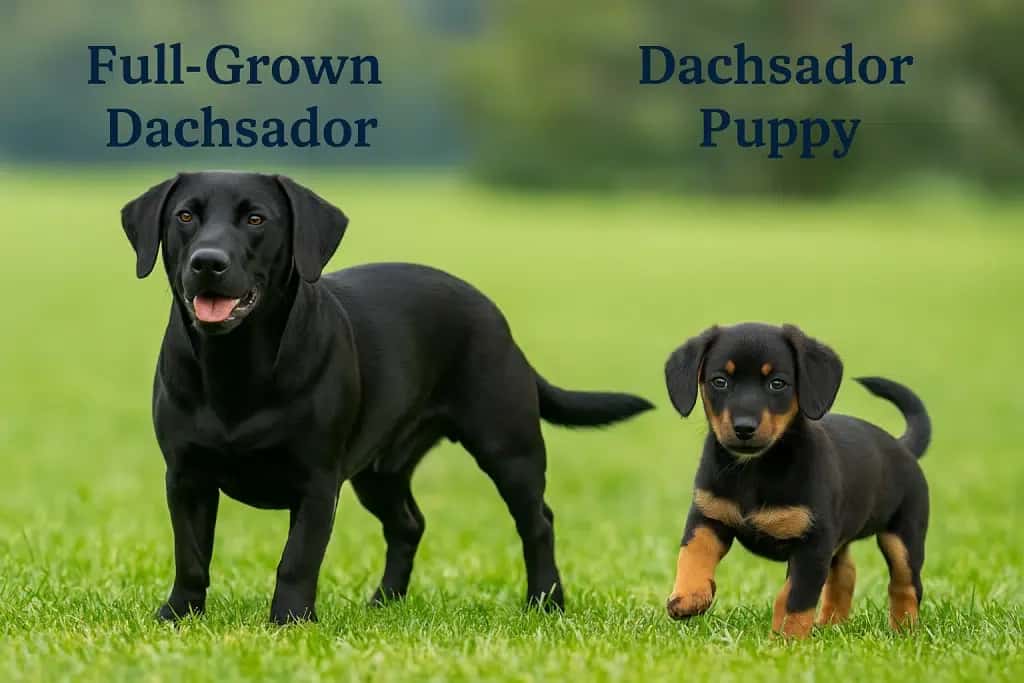
A Dachsador’s adult size isn’t as predictable as a purebred dog’s because it’s influenced by a range of genetic and environmental factors. Understanding these factors helps you set realistic expectations and ensures your dog grows at a healthy rate.
1. Genetics and Parent Breed Influence
The primary determinant of size is the genetic contribution from the Labrador Retriever and dachshund parents.
- Labrador Size: According to the AKC Labrador Retriever breed standard, adult Labs weigh 55–80 lbs (25–36 kg) and stand 21.5–24.5 inches tall. Even when crossed with a dachshund, this size influence is significant, often resulting in Dachsadors that are medium-sized rather than small.
- Dachshund Size: The AKC Dachshund profile lists two main types — standard dachshunds (16–32 lbs / 7–14.5 kg) and miniatures (under 11 lbs / 5 kg). If a miniature dachshund is the parent, the resulting Dachsador can be noticeably smaller, sometimes closer to 20–25 lbs (9–11 kg) when full grown.
Each puppy in a litter may inherit a different combination of traits — some may have a more compact build with shorter legs, while others are taller and resemble a “mini Lab.”
2. Gender Differences
As with many breeds, male Dachsadors are often slightly larger than females, sometimes by 2–4 lbs (1–2 kg) and an inch or two in height. This difference becomes noticeable around the 6–8 month mark when males start to bulk up faster.
3. Diet and Nutrition
Proper nutrition during the first year is crucial. Puppies require balanced meals formulated for medium breeds to support healthy bone development without adding unnecessary weight. Overfeeding, particularly with calorie-dense treats, can lead to obesity — which is risky for a dog with dachshund genetics due to potential back strain (IVDD risk).
The AKC puppy feeding guide suggests dividing meals into 3–4 small portions daily for the first 6 months.
4. Exercise and Activity Levels
While Labradors thrive on physical activity, dachshunds are prone to spinal issues if overexerted or allowed to jump excessively. A balanced approach is best:
- Young Puppies (under 4 months): Short walks (5–10 minutes) and gentle play.
- 6+ Months: Increase to 30–45 minutes of walking and play daily, with mental stimulation like puzzle toys.
Regular, controlled exercise not only builds muscle but also prevents unhealthy weight gain.
5. Health Factors
Growth can also be influenced by overall health:
- Spinal Alignment: Dogs with longer backs need proper muscle support to avoid strain as they grow.
- Joint Development: Labrador genetics increase the risk of hip dysplasia, which can affect size and posture (PetMD Hip Dysplasia Guide).
- Neutering/Spaying: Timing can slightly affect growth. Puppies neutered too early may grow taller due to delayed closure of growth plates, though the effect is often minimal.
6. Full Grown Black Lab Dachshund Mix
Black Labs tend to have denser musculature compared to other Lab colors. When mixed with a dachshund, a full grown black Lab dachshund mix often weighs toward the higher end of the range (35–40 lbs) and may have a slightly broader chest and shoulders.
Dachsador Growth Stages
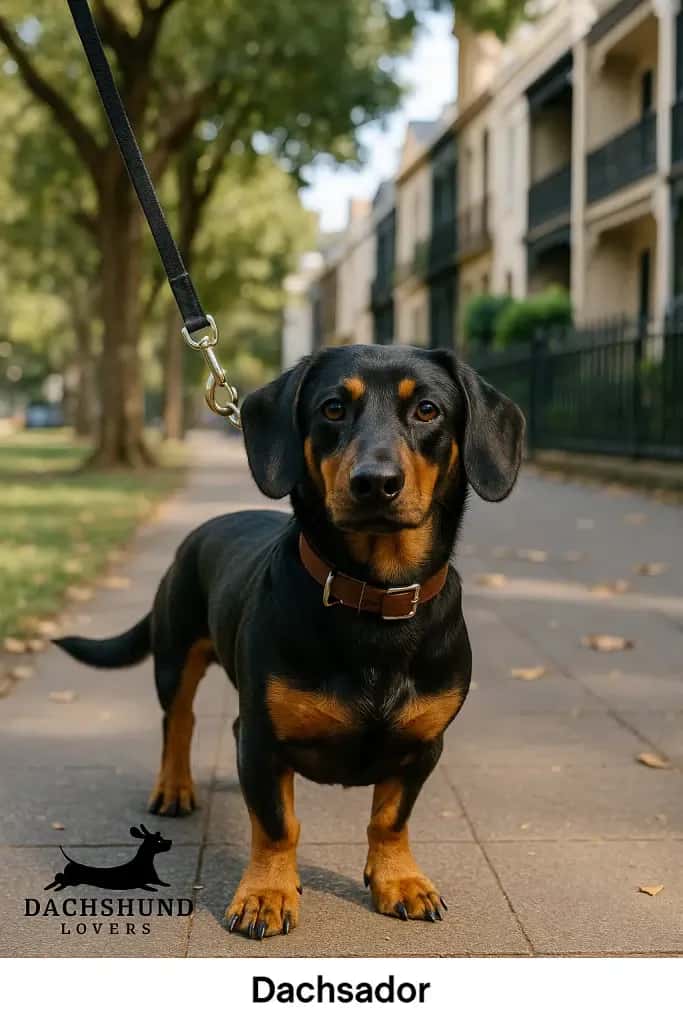
A Dachsador’s growth pattern is unique because it blends the dachshund’s compact frame with the Labrador’s athletic build. While most reach their adult height by 10–12 months, they may continue filling out and gaining muscle until around 15 months. Monitoring growth during this period is vital for preventing overfeeding, joint stress, or spinal strain.
Month-by-Month Growth Chart
Age | Average Weight | Growth Notes |
|---|---|---|
8 Weeks | 4–8 lbs (1.8–3.6 kg) | First vaccinations; rapid growth phase begins. |
3 months | 10–15 lbs (4.5–7 kg) | Teething starts; socialization window is wide open. |
4 months | 12–18 lbs (5.4–8.1 kg) | Growth in height begins to slow; more muscle development. |
6 months | 18–25 lbs (8–11 kg) | Most puppies are ~75% of their adult size. |
9 months | 20–30 lbs (9–13.6 kg) | Energy peaks; may experience a “gangly” adolescent phase. |
12 months | 25–40 lbs (11–18 kg) | Most Dachsadors reach full adult size by 12–15 months. |
(Weights are averages; genetics and diet can cause variation.)
Puppy Stage (0–6 Months)
This stage is all about rapid development. Dachsador puppies grow quickly, especially if the Labrador genes are dominant. Controlled feeding and portion management are critical to avoid excess weight during this fast-growth window.
Key Milestones:
- Teething: Starts around 3–4 months. Provide safe chew toys to protect furniture and help with gum pain.
- Training Foundation: Begin crate training, potty training, and basic commands (sit, stay, come).
- Socialization: Introduce your puppy to new people, environments, and sounds to prevent future fear or anxiety.
Tip: Avoid long walks or stairs during this phase — their growing bones and joints are vulnerable. Instead, opt for gentle play on soft surfaces.
Adolescent Stage (6–12 Months)
Around 6 months, your Dachsador will start looking like a smaller version of their adult self. However, this is often the most challenging phase for owners. Adolescents can be stubborn, energetic, and curious, testing boundaries as they mature.
Growth Highlights:
- Rapid muscle development, particularly in the chest and legs.
- Females may stop growing slightly earlier (~10 months), while males may continue until 12–15 months.
- Energy levels peak — regular exercise is key to managing restlessness.
Training Focus:
This is the perfect time to work on leash walking and reinforcing recall. Their mix of Labrador intelligence and dachshund independence means positive reinforcement works best (treats, play, or praise).
AKC’s adolescence training guide suggests 10–15 minute sessions, multiple times daily, to keep their focus sharp.
Adult Stage (12–15 Months)
By 12 months, most Dachsadors have reached their adult size and weight, though some continue to “fill out” with muscle until 15 months. This is the stage where their true adult personality emerges — typically a mix of Labrador friendliness and dachshund curiosity.
Size Snapshot at Adulthood:
- Height: 12–18 inches (30–45 cm) at the shoulder.
- Weight: 25–40 lbs (11–18 kg), with males leaning toward the heavier side.
Health Focus:
Switch from puppy food to adult dog food around 12 months to avoid excessive calories. Keep an eye on their spine and joints, especially if they’ve inherited a longer dachshund-like body.
The PetMD joint health guide emphasizes balanced exercise and controlled weight to prevent hip dysplasia or back strain.
Tips for Monitoring Growth
- Regular Weigh-Ins: Weigh your Dachsador every 2–4 weeks during the first year to ensure steady growth.
- Vet Checkups: Schedule wellness visits at 3, 6, and 12 months to track skeletal and muscular development.
- Adjust Feeding: If your puppy is gaining too quickly, consult your vet to adjust calorie intake. Overweight puppies are at higher risk for future joint problems.
Full Grown Black Lab Dachshund Mix
Black Lab genetics can add denser muscle mass and slightly taller stature. A full grown black Lab dachshund mix may weigh closer to 35–40 lbs and often displays a broader chest with a shiny, jet-black coat.
James’ Note:
The first time I met a full grown black Dachsador, I mistook it for a shrunken Labrador. These mixes often have the best of both worlds — the athletic, confident stance of a Lab with the smaller, manageable frame of a dachshund mix.
Average Size & Weight of a Full Grown Dachsador
The size of a full grown Dachsador varies more than most hybrid breeds because of the stark difference between its parent breeds — the compact dachshund and the athletic Labrador Retriever. While general averages are helpful, individual Dachsadors may be smaller or heavier depending on which parent’s genes dominate.
Average Adult Size and Weight
On average, a full grown Dachsador stands 12–18 inches (30–45 cm) at the shoulder and weighs 25–40 lbs (11–18 kg).
- Dogs with more Labrador traits are typically at the higher end (35–40 lbs).
- Those taking after the dachshund side, especially when crossed with a miniature dachshund, often weigh closer to 20–25 lbs.
For a closer comparison of growth rates and size expectations, you can revisit our Dachsador Puppies Guide, where we outline typical milestones from 8 weeks to 12 months.
Size and Weight Variations by Coat Color
Certain coat lines may affect muscle mass and structure. For instance, a full grown black Lab dachshund mix (a popular color variant) often weighs towards the upper end of the spectrum (35–40 lbs) due to the dense muscle inherited from black Labradors. These mixes may also have a sturdier chest and thicker tail compared to lighter-coated counterparts.
Regional Differences in Size (US, AUS, UK)
While genetics largely dictate size, feeding habits and lifestyle also play a role, which can differ by region.
United States:
US-bred Dachsadors often lean larger because many Labrador lines here are from working stock, which tend to be more athletic and muscular. Owners in suburban or rural areas may also allow more outdoor exercise, contributing to higher muscle tone.
Australia:
Australian Dachsadors are slightly smaller on average, particularly when bred with miniature dachshunds to create a more apartment-friendly dog. In major cities like Sydney or Melbourne, 30–35 lbs is common for adults, but country-bred dogs may reach closer to 40 lbs.
United Kingdom:
UK Dachsadors usually fall within the 25–35 lbs range, reflecting the UK’s preference for smaller, compact crossbreeds similar to Cockapoos or Cavapoos. Many UK breeders favor smaller Labrador lines or even fox-red Labradors, which can produce slightly lighter offspring.
For pricing and adoption details by region, check our Dachsador Price & Adoption Guide, which also covers breeder trends in the US, AUS, and UK.
Body Structure: The Long-and-Low Factor
Dachsadors inherit a longer spine from their dachshund parent, but the Labrador influence usually results in shorter, sturdier backs compared to purebred dachshunds. This body shape impacts:
- Height: Most Dachsadors are taller than standard dachshunds, with a more upright stance.
- Weight Distribution: Their chest and shoulders may be broader, reducing spinal strain.
Owners should still avoid activities that involve jumping (e.g., off couches or stairs) to prevent potential back injuries — a common concern in both dachshunds and mixes like the Dachsador.
How to Maintain Healthy Weight
A Dachsador’s weight can fluctuate based on diet and activity level. Both Labradors and dachshunds are prone to obesity, which can strain the spine and joints. Here’s how to maintain a healthy adult weight:
- Follow a feeding plan: Stick to 2 meals per day for adults, using portion sizes recommended by your vet.
- Monitor treats: Treats should make up no more than 10% of daily calories.
- Balance exercise: Aim for 45–60 minutes of exercise per day — split between walks, fetch, and mental enrichment games.
The Dachsador Puppies Guide includes specific feeding tips to support healthy growth into adulthood.
Comparing Dachsador Size to Other Mixes
The Dachsador sits in an interesting middle ground among hybrid dogs — bigger than small dachshund crosses like the Chiweenie, but smaller and more compact than larger Labrador mixes like the Labradoodle. Understanding how the Dachsador compares to these other breeds can help you determine if their size and build are a good fit for your lifestyle.
Dachsador vs. Chiweenie
The Chiweenie — a cross between a dachshund and Chihuahua — is significantly smaller than a Dachsador.
- Chiweenie Size: Typically 5–12 lbs (2.3–5.4 kg) and 6–10 inches tall.
- Dachsador Size: 25–40 lbs (11–18 kg) and 12–18 inches tall.
A Chiweenie is easier to carry, but the Dachsador’s medium size makes them sturdier and better suited for active families. If you’re debating between the two, consider whether you want a lap-sized companion or a slightly larger, adventure-ready dog.
Dachsador vs. Labradoodle
The Labradoodle — a mix of Labrador Retriever and Poodle — is significantly larger on average.
- Labradoodle Size: Standard Labradoodles often weigh 50–70 lbs (23–32 kg) and stand 21–24 inches tall.
- Dachsador Size: About half the weight and height, with a leaner frame.
Dachsadors are easier to handle for those living in smaller homes or apartments, while Labradoodles need more space and exercise. For owners who want Labrador-like personality traits without the large size, the Dachsador is often the better choice.
Dachsador vs. Golden Dox
The Golden Dox — a cross between a Golden Retriever and a dachshund — shares many similarities with the Dachsador.
- Golden Dox Size: Usually 30–50 lbs (13–23 kg), slightly larger due to the Golden Retriever’s influence.
- Dachsador Size: Typically 25–40 lbs, making them a little lighter and more compact.
Golden Doxes often have a fluffier coat that requires more grooming, while Dachsadors tend to have shorter coats with easier maintenance.
Dachsador vs. Other Dachshund Mixes
There are numerous dachshund hybrids, but most remain smaller than the Dachsador, which inherits size from the Labrador side. For example:
- Dorkie (Dachshund x Yorkie): 7–15 lbs.
- Papshund (Dachshund x Papillon): 8–15 lbs.
- Jackshund (Dachshund x Jack Russell): 15–25 lbs.
The Dachsador’s size makes them more robust for outdoor adventures while still being manageable in smaller spaces — something many owners appreciate compared to the delicate frames of smaller mixes.
Dachsador vs. Beagle Dachshund Mix (Doxle)
The Beagle Dachshund Mix — also called the Doxle — is comparable in size, though often a little lighter.
- Doxle Size: 18–30 lbs (8–13.5 kg) and 11–15 inches tall.
- Dachsador Size: 25–40 lbs, usually broader and more muscular due to the Labrador influence.
Both breeds have similar energy levels and need moderate exercise, but the Dachsador is a better option if you want a sturdier medium-sized dog.
Dachsador vs. Standard Labrador
For anyone who loves Labradors but can’t manage their 55–80 lb size, the Dachsador is the perfect “downsized Lab.” A full grown black Lab dachshund mix has many Labrador traits — loyal, playful, affectionate — but in a 25–40 lb frame, which is easier for city living and smaller households.
Why Size Comparisons Matter
When choosing between hybrid breeds, size affects everything from feeding costs to travel convenience. A Dachsador’s medium build strikes a balance between portability and durability.
- Apartment Living: A Dachsador is easier to manage than a Labradoodle or Golden Dox due to their moderate size and adaptable energy.
- Families with Kids: They’re sturdy enough to handle play without being overly fragile, unlike smaller mixes.
- Travel: At 25–40 lbs, they can comfortably fit in medium-sized crates for road trips and don’t require as much space as larger breeds.
James’ Note
I’ve seen firsthand how size influences the dog-owner relationship. The Dachsador’s sweet spot — not too big, not too small — is one of the reasons they’re becoming so popular. If you’re curious about how their size compares during early life, our Dachsador Puppies Guide outlines their growth milestones in detail.
A Dachsador’s unique mix of Labrador and dachshund genetics means they can be prone to weight gain while also being active and playful. Proper nutrition and balanced exercise during the first year — and beyond — are critical for healthy growth and joint protection. Without the right routine, their long back (from the dachshund side) and strong frame (from the Labrador side) can be at risk of strain.
1. Feeding Your Dachsador: Puppy to Adult
Puppy Nutrition:
During the first 12 months, Dachsador puppies should eat a high-quality puppy formula designed for medium-sized dogs. Puppies grow rapidly during the first 6–8 months, and food must provide the right balance of protein, calcium, and healthy fats to support muscle and bone development. The AKC Puppy Feeding Guide recommends feeding puppies 3–4 small meals daily until around 6 months, then transitioning to 2 meals per day.
Portion Control:
Portion sizes depend on your puppy’s weight, age, and activity level. Labradors are known for overeating, and dachshunds gain weight easily — a combination that requires strict portion management. Check your dog’s body condition score (BCS) every month and adjust feeding accordingly.
Avoid Overfeeding:
Overweight puppies are more likely to develop joint issues and spinal stress. Stick to the feeding schedule outlined in our Dachsador Puppies Guide, which includes specific tips for portion control.
Transition to Adult Food:
Around 12 months, most Dachsadors are ready to switch to adult dog food. Look for options with 25–30% protein and moderate fat content to maintain lean muscle while avoiding excess calories.
2. Healthy Treats & Supplements
Treats:
Use treats sparingly, especially during training. Aim for treats that are less than 10% of daily calorie intake. Lean options like freeze-dried meats, carrot sticks, or small pieces of apple are healthier alternatives.
Supplements:
Joint supplements (e.g., glucosamine and chondroitin) may be beneficial for Dachsadors due to the risk of hip dysplasia or back strain. Consult your vet before starting any supplement regimen.
3. Exercise Guidelines by Age
A full-grown Dachsador thrives on 45–60 minutes of exercise per day, but puppies require shorter, age-appropriate sessions to protect their growing joints.
Puppy Exercise (0–6 months):
- Limit walks to 5 minutes per month of age (e.g., 15 minutes for a 3-month-old).
- Focus on short bursts of play, gentle fetch, and indoor activities like training games.
- Avoid high-impact activities like jumping off furniture or climbing stairs, as these can damage a dachshund-like spine.
Adolescent Exercise (6–12 months):
- Gradually increase walks to 20–30 minutes twice a day.
- Introduce mental enrichment games (snuffle mats, puzzle feeders) to burn energy without stressing the body.
- Socialize with other dogs in controlled environments to improve confidence and behavior.
Adult Exercise (12+ months):
- Most Dachsadors enjoy a mix of daily walks, free play, and brain games.
- Activities like fetch, short hikes, or tug-of-war are excellent, but avoid long-distance running or repetitive jumping.
4. Mental Stimulation
A Dachsador’s intelligence requires regular mental engagement to prevent boredom and destructive behavior.
- Rotate toys weekly to keep them interested.
- Use interactive feeders and training sessions to challenge them.
- Hide treats around the house for short “scent hunts,” which appeal to their dachshund hunting instincts.
For more enrichment ideas, see the training section of our Dachsador Puppies Guide.
5. Maintaining a Healthy Weight
Why Weight Matters:
Extra weight is especially dangerous for Dachsadors. An overweight dog places additional strain on both the longer spine (risking IVDD) and joint structure (risking hip and elbow issues).
- Ideal Body Condition: You should be able to feel but not see your dog’s ribs.
- Monthly Weigh-Ins: Regularly track weight and adjust food portions accordingly.
Vet Advice:
The PetMD obesity guide warns that dogs even 10–20% overweight have significantly higher risks of joint and spinal issues. Dachsador owners need to be especially vigilant about weight management.
6. James’ Note
One of the first things I learned with Harvey (our dachshund) was that diet and exercise are about balance, not extremes. Too much exercise puts pressure on their joints, while too little leads to boredom and weight gain. With a Dachsador, it’s even more important — they’re strong, smart, and sometimes a little too clever about stealing snacks. A structured routine (two measured meals, daily walks, and a mix of play) makes all the difference.
FAQs About Dachsador Size & Growth
More From This Series:
If you’re exploring the Dachsador breed, these related guides dive deeper into everything from puppy care to long-term health:
- Dachsador: The Complete Guide to the Dachshund Lab Mix – A full overview of temperament, appearance, and training tips for this unique crossbreed.
- Dachsador Puppies: Buying, Raising & Care Tips – A must-read if you’re bringing a puppy home, with growth timelines and early socialization advice.
- Dachsador Price & Adoption Guide – A detailed look at what Dachsadors cost in the US, Australia, and UK, plus adoption options.
- Dachsador Lifespan & Health: How Long Do They Live? – Insights into lifespan, common health concerns, and preventative care.
These guides are part of our Dachsador content cluster, designed to give you a clear, research-backed understanding of this lovable dachshund–Labrador mix.
Authored by
James
James is the founder of Dachshund Lovers and the proud human of Harvey, a mini dapple with a big personality. He writes to empower and connect the dachshund community, blending founder insights with honest, experience-based stories about life with this incredible and special breed. James brings candid, experience-backed opinions to the community and always focused on fewer, better products and ideas that genuinely improve life for dachshunds and their people.
Read moreJames is the founder of Dachshund Lovers and the proud human of Harvey, a mini dapple with a big personality. He writes to empower and connect the dachshund community, blending founder insights with honest, experience-based stories about life with this incredible and special breed. James brings candid, experience-backed opinions to the community and always focused on fewer, better products and ideas that genuinely improve life for dachshunds and their people.
Read moreDisclaimer
This content is for informational purposes only and should not be considered veterinary advice. Always consult with a licensed veterinarian regarding your dog’s health and wellbeing.
There are no comments yet
Leave a comment