Dachsador Puppies
Dachsador Puppies
Dachsador puppies are a growing favorite, but are they right for you? This guide covers costs, care, and what breeders might not always tell you.
James
Posted on November 9, 2025.
Updated on July 21, 2026.
Table of Contents
- 1.Key Takeaways on Dachsador Puppies
- 2.What Are Dachsador Puppies?
- 3.Where to Find Dachsador Puppies for Sale (US, AUS, UK)
- 4.United States
- •Where to Look:
- •Red Flags to Watch Out For in the US:
- 5.Australia
- •Where to Look:
- •Red Flags to Watch Out For in Australia:
- 6.United Kingdom
- •Where to Look:
- •Red Flags to Watch Out For in the UK:
- 7.General Buying Checklist (All Countries)
- 8.Why Adoption Is Often Better
- 9.What to Look For in a Dachsador Puppy
- -1. Health Checks and Documentation
- -2. Breeder Quality and Reputation
- -3. Puppy Temperament Testing
- -4. Early Training and Socialization
- -5. Physical Traits to Inspect
- -6. Questions to Ask the Breeder
- -James’ Note:
- 10.Raising a Dachsador Puppy
- -1. Early Training
- -2. Socialization
- -3. Exercise for Dachsador Puppies
- -4. Feeding a Dachsador Puppy
- -5. Grooming Habits
- -6. Mental Stimulation
- -7. Building Good Behavior
- -8. Vet Care and Preventative Health
- -More From This Series:
- -Disclaimer
Share

I still remember meeting my first Dachsador puppy on a Sunday stroll through South Cronulla passing HAM. It was this tiny bundle of energy, part Labrador sweetness and part dachshund mischief, bouncing around like it owned the world. The owner told me, “He’s a Dachsador — and already smarter than both of us put together.” That’s when I realized why this mix is capturing hearts everywhere.
Dachsador puppies are the ultimate surprise package. One pup might look like a scaled-down Labrador, while another might have the unmistakable “long-and-low” silhouette of a dachshund. But they all share that signature mix of curiosity, loyalty, and boundless affection.
If you’re here, chances are you’re either looking for “dachsador puppies for sale near me” or you’re curious about how to raise one right. This guide covers everything — from where to find reputable breeders and adoption options in the US, Australia, and the UK, to what daily care, training, and socialization look like for a Dachsador puppy.
Think of this as your no-nonsense, founder-backed resource. We’ll talk about how to pick a healthy puppy, what red flags to watch for when buying, and why early training is key to managing that clever mix of Labrador enthusiasm and dachshund stubbornness.
Key Takeaways on Dachsador Puppies
Topic | Summary |
|---|---|
Breed Type | A hybrid of a Labrador Retriever and a dachshund, offering a mix of playfulness, loyalty, and curiosity. |
Size at 8 Weeks | Typically 5–8 lbs (2.2–3.6 kg), depending on parent size (standard vs. miniature dachshund). |
Temperament | Energetic, affectionate, and intelligent — with a dash of the dachshund’s independent streak. |
Training Needs | Early training and socialization are essential; positive reinforcement is most effective (AKC Training Tips). |
Coat & Grooming | Most puppies have short coats, requiring weekly brushing and occasional baths. |
Cost Range | US: $700–$1,200 USD, AUS: $900–$1,800 AUD, UK: £600–£1,200 GBP. Adoption fees are much lower. |
Health Concerns | Monitor for dachshund-related spinal issues (IVDD) and Labrador tendencies like hip dysplasia (PetMD on IVDD). |
Ideal Owners | Active singles, couples, or families ready to commit to daily exercise and consistent training. |
Life Expectancy | 12–14 years with proper care, diet, and preventative vet visits. |
What Are Dachsador Puppies?

Dachsador puppies are a cross between a dachshund, known for its distinctive long body and bold personality, and a Labrador Retriever, one of the world’s most popular family dogs. While they’re not officially recognized by major kennel clubs such as the American Kennel Club (AKC), their parent breeds give a reliable clue about what to expect in terms of size, temperament, and energy levels.
Parent Breed Traits:
- Dachshund: Bred in Germany for hunting badgers, dachshunds are smart, stubborn, and loyal. According to the AKC Dachshund profile, they are courageous dogs with an instinct to dig and chase scents.
- Labrador Retriever: Known for being friendly, trainable, and family-oriented, Labradors are consistently ranked among the top dog breeds in the US, UK, and Australia (AKC Labrador profile).
What Makes Dachsador Puppies Special?
This mix often combines the playful, outgoing personality of a Lab with the alert, quirky nature of a dachshund. As puppies, they’re energetic and intelligent but can also show early signs of that dachshund determination — which means training should start as soon as they come home.
Appearance:
Dachsador puppies don’t have a uniform look. Some resemble a “mini Labrador,” with a more proportionate body and a smooth, short coat, while others lean heavily toward the dachshund side, with shorter legs and an elongated frame. Their coat colors range from black, yellow, or chocolate (common in Labs) to more unique dapple or brindle markings inherited from the dachshund side.
Temperament Insights:
According to PetMD, mixed breeds like the Dachsador often inherit balanced temperaments — in this case, the Lab’s friendliness combined with the dachshund’s loyalty and curiosity. These puppies tend to bond closely with their families and thrive on mental stimulation.
Energy & Playfulness:
A young Dachsador is typically full of energy. They love games like fetch and benefit from short, structured play sessions. Their Labrador genetics make them natural retrievers, while the dachshund side can bring a love for digging and exploring. Enrichment toys like treat puzzles or snuffle mats are ideal for channeling this curiosity.
Why Early Socialization Matters:
Socializing your Dachsador puppy early will shape how they interact with other dogs, people, and environments. Enrolling in a puppy class by 12–16 weeks is strongly recommended by organizations like the AKC Canine College to encourage confidence and reduce stubborn or timid behaviors.
Where to Find Dachsador Puppies for Sale (US, AUS, UK)
Dachsador puppies are not as widely available as purebred Labradors or dachshunds, so finding one requires patience, research, and discernment. Because they’re a hybrid mix, there’s no official registry or centralized breeder database like you’d find with AKC or Kennel Club-recognized breeds. This means the onus is on you to evaluate the reputation, transparency, and ethics of whoever you buy or adopt from.
Below is a country-specific guide to help you source Dachsador puppies responsibly while avoiding common pitfalls like puppy farms or online scams.
United States
The US has the largest market for hybrid breeds, with regions like California, Texas, and Florida seeing high demand for “designer” mixes. While this makes it easier to find Dachsador puppies, it also means the risk of encountering unethical breeders is higher.
Where to Look:
- AKC Marketplace:
The AKC Marketplace primarily lists purebred dogs but also serves as a resource for finding reputable breeders who may occasionally have mixed litters. Start here to check for Lab or dachshund breeders who also breed mixes. - Good Dog:
GoodDog.com is one of the best online directories for responsible breeders. Every breeder is vetted for ethical practices, health testing, and adherence to animal welfare standards. You can search specifically for mixed-breed puppies or reach out to breeders directly. - Local Rescues & Shelters:
Labradors and dachshunds are both among the most surrendered breeds in the US. Mixed versions, including Dachsadors, frequently appear in shelters. Sites like Petfinder and Adopt-A-Pet allow you to filter by breed mixes and region. - Facebook Groups & Breed Forums:
Some responsible breeders advertise in dachshund or Labrador owner groups. Always verify references before making a commitment.
Red Flags to Watch Out For in the US:
- No Health Testing: Reputable breeders should provide vet records for both parents, particularly hip/elbow scoring for Labs and back/spinal evaluations for dachshunds.
- Puppy Mills or Overbreeding: Avoid websites that list dozens of litters at once, particularly if the breeder can’t answer detailed questions about the puppy’s care.
Unrealistically Low Prices: A price under $500 USD for a Dachsador is often a sign of a backyard breeder or scam.
Australia
Dachsadors are less common in Australia compared to the US, but they’re gaining traction in cities like Sydney, Brisbane, and Melbourne, where crossbreeds are often seen as family-friendly and apartment-suitable.
Where to Look:
- PetRescue:
PetRescue.com.au is Australia’s largest rescue directory. Many mixed-breed puppies, including dachshund or Labrador crosses, are listed here. - Dachshund Rescue Australia:
This volunteer-run group focuses on dachshunds and mixes. Dachshund Rescue Australia occasionally lists puppies or young adults that need rehoming. - RSPCA Adopt A Pet:
The RSPCA regularly lists Labrador and dachshund mixes across its national shelters. Adoption fees often include vaccinations, desexing, and microchipping, which makes this a cost-effective option. - Specialist Breeders:
Although Dachsador breeders are rare, you may find Lab breeders who have accidental litters with dachshunds or intentionally create this cross. Ask to see both parents and health test results.
Red Flags to Watch Out For in Australia:
- Unlicensed Breeders: The ACCC has warned against unregistered sellers using Gumtree or Facebook Marketplace. Ask for breeder registration numbers (if applicable).
- Puppy Farms: Always insist on visiting the breeder’s property (or at least a video tour) to ensure the puppies are raised in a clean, socialized environment.
Overpriced Puppies: Some breeders exploit demand by charging $3,000 AUD or more for “rare” crossbreeds without providing any health guarantees.
United Kingdom
In the UK, crossbreeds like Labradoodles and Cockapoos have exploded in popularity, but the Dachsador remains a more niche mix. London, Birmingham, and Manchester have the highest number of listings, but you’ll need to filter carefully for quality breeders.
Where to Look:
- The Kennel Club Find a Puppy:
While The Kennel Club only registers purebred litters, many responsible Lab breeders produce occasional mixed litters and advertise here. - Pets4Homes:
Pets4Homes.co.uk is the UK’s largest pet classifieds platform. Use advanced search filters (Labrador x Dachshund) but beware of over-commercial breeders. - Blue Cross & Dogs Trust:
Organizations like Blue Cross and Dogs Trust often have mixed-breed dogs, including Lab-dachshund crosses, available for rehoming. - Breed-Specific Facebook Pages:
Groups like “Labrador Owners UK” or “Dachshund Lovers UK” occasionally share adoption opportunities or breeder recommendations.
Red Flags to Watch Out For in the UK:
- No Puppy Contract: The UK’s reputable breeders follow the Puppy Contract guidelines from the RSPCA. If a breeder can’t provide one, proceed with caution.
- “Too Young” Puppies: Puppies should never be sold under 8 weeks old.
Lack of Transparency: Avoid sellers unwilling to show you the mother or provide documentation of health checks.
General Buying Checklist (All Countries)
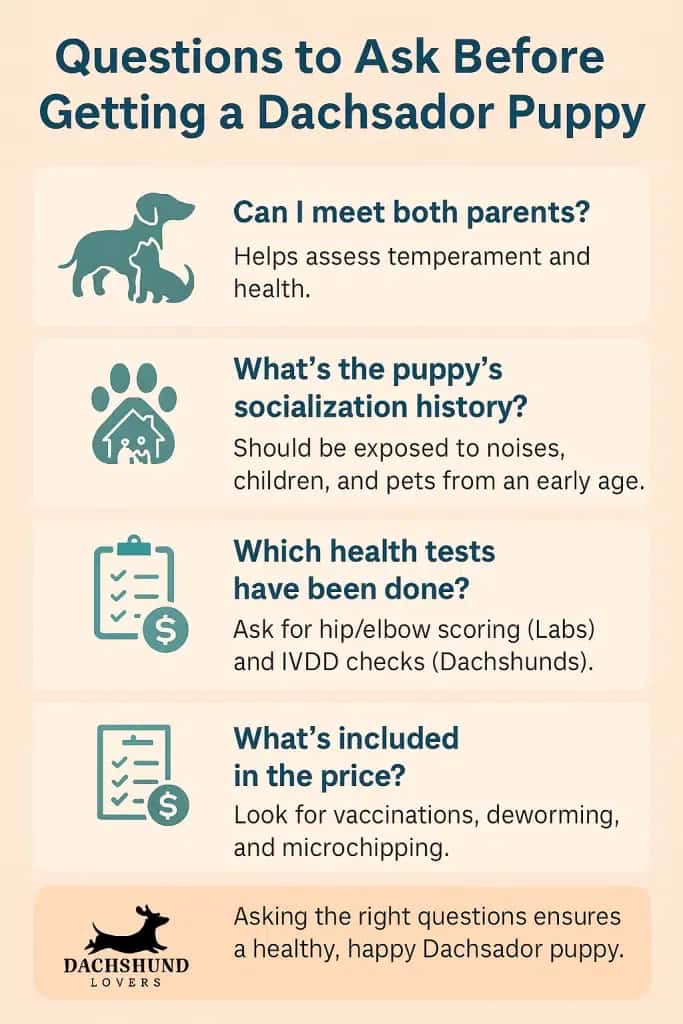
When considering a Dachsador puppy, always ask:
- Can I meet both parents? This helps you assess temperament and health.
- What’s the puppy’s socialization history? Puppies should be exposed to household noises, children, and other pets from an early age.
- Which health tests have been done? Ask for hip/elbow scoring (Labs) and IVDD risk checks (dachshunds).
- What’s included in the price? Look for puppies that come with vaccinations, deworming, and microchipping.
Why Adoption Is Often Better
Adopting a Dachsador is not only more affordable but also helps reduce the number of dogs in shelters. Many mixed-breed puppies are surrendered simply because their owners didn’t anticipate their energy levels.
- US Adoption Fees: $150–$350 USD, often including initial vet care.
- Australia Adoption Fees: $300–$500 AUD, with desexing included.
- UK Adoption Fees: £150–£350 GBP, including vaccinations and microchipping.
Recommended Adoption Resources:
- US: Petfinder, Adopt-A-Pet.
- AUS: PetRescue, RSPCA Adopt A Pet.
- UK: Dogs Trust, Blue Cross.
James’ Note
Whether you’re in Sydney, New York, or London, the key is not to rush. The Dachsador is a mix of two highly intelligent breeds, and getting a healthy, well-socialized puppy will save you endless headaches later. I’ve seen families regret buying from backyard breeders who cut corners on care. It’s worth waiting for the right pup, even if it means driving a few extra hours or sitting on a waiting list.
What to Look For in a Dachsador Puppy
Choosing the right Dachsador puppy is about much more than appearance. Because this hybrid can inherit traits from both the Labrador Retriever and the dachshund, a careful evaluation of health, temperament, and early socialization is key to finding a happy, well-adjusted companion.
1. Health Checks and Documentation
Why Health Testing Matters:
Dachsadors may inherit health risks from both parent breeds — notably IVDD (Intervertebral Disc Disease) from the dachshund side and hip or elbow dysplasia from the Labrador side. Ethical breeders will screen for these conditions to reduce the likelihood of passing them on.
Ask for These Records:
- Hip and Elbow Scores (Labrador parent): The American Kennel Club recommends hip and elbow evaluations for Labrador Retrievers.
- Spinal X-Rays or IVDD Screening (Dachshund parent): Ask for vet documentation showing that the dachshund parent has no signs of chronic spinal issues.
- Eye and Heart Checks: Both Labs and dachshunds can be prone to eye conditions and heart murmurs, so breeders should have recent test results.
- Vaccination and Deworming Records: Ensure the puppy has received age-appropriate vaccinations and deworming treatments.
Red Flag: If a breeder can’t provide written health certificates or avoids answering questions about the parents’ health, walk away. A cheap puppy can cost thousands in vet bills later.
2. Breeder Quality and Reputation
Signs of a Responsible Breeder:
- They welcome visits (or video calls) and are transparent about how puppies are raised.
- Puppies are raised inside the home, not in a kennel or shed, meaning they are exposed to everyday sounds and environments.
- They ask you questions about your lifestyle, ensuring their puppies go to suitable homes.
- They provide a written contract or guarantee that outlines health and return policies.
Avoid These Breeders:
- Sellers advertising dozens of different “designer” breeds.
- Breeders who offer “next day shipping” or refuse to let you see the puppy’s living conditions.
- Online listings with stock photos or unusually low prices (e.g., “dachsador puppies for sale for $200”).
For verified breeder directories, check resources like Good Dog in the US, PetRescue in Australia, and Pets4Homes in the UK.
3. Puppy Temperament Testing
Puppies between 7 and 12 weeks are at a critical socialization stage. A good breeder will have already started exposing them to gentle handling, basic sounds, and simple interactions.
What to Look For:
- Confidence: Does the puppy approach you with curiosity rather than fear?
- Sociability: A balanced puppy will engage but also relax when held or stroked.
- Energy Levels: Dachsador puppies can be playful but shouldn’t be hyperactive or unable to settle.
- Response to Noise: Gently clap your hands or drop a set of keys nearby — the puppy should startle briefly, then recover quickly.
Tip: The Volhard Puppy Aptitude Test is a well-known method breeders use to assess puppy temperaments. Even if the breeder hasn’t used it formally, ask about each puppy’s personality.
A well-bred Dachsador puppy will already be introduced to basic routines before you bring them home:
- Crate Familiarity: Ethical breeders often begin crate training early to make the transition easier.
- Noise Desensitization: Exposure to household sounds like vacuum cleaners or doorbells reduces fear responses later.
- Handling: Puppies should be comfortable being touched on their paws, ears, and mouth — important for grooming and vet visits.
Research Insight: According to PetMD’s puppy socialization guide, early positive experiences between 7–16 weeks significantly shape a dog’s confidence and adaptability as an adult.
5. Physical Traits to Inspect
- Eyes and Nose: Clear, bright eyes and a moist nose (no discharge or redness).
- Coat Condition: A healthy coat is shiny and free of bald patches or excessive dandruff.
- Weight: Puppies should be well-fed but not bloated — a distended belly can indicate worms.
- Movement: Watch the puppy walk and play. Limping, stiffness, or trouble standing can be early signs of joint issues.
6. Questions to Ask the Breeder
- “Can I meet or see videos of both parents?”
- “How have you socialized the puppies so far?”
- “Do you provide a health guarantee or support if issues arise?”
- “What type of food and feeding schedule do you recommend?”
- “What’s your return policy if the puppy isn’t a fit?”
A responsible breeder will be happy to answer all of these — and often will ask you just as many questions.
James’ Note:
When we tested products with Harvey (our dachshund), I realized how much early care impacts a puppy’s confidence. If a breeder can’t tell you what experiences they’ve given the puppies in those first 8–10 weeks, it’s usually a sign that they’re cutting corners. With a mix like the Dachsador, early structure and positive exposure are everything — you’ll thank yourself later when training is smoother.
Raising a Dachsador Puppy

Bringing home a Dachsador puppy is exciting, but raising this mix requires intention. A Dachsador combines the Labrador’s friendly energy with the dachshund’s intelligence and stubborn streak — which can be both delightful and challenging. Setting the right foundation in their first year will shape them into a well-behaved, confident dog.
1. Early Training
Start from Day One:
The dachshund side of your Dachsador may have an independent streak, so consistency is key. Begin house training, crate training, and simple commands (sit, stay, come) the moment they arrive home. According to the AKC’s Puppy Training Guide, puppies benefit from 5–10 minute training sessions multiple times a day.
Positive Reinforcement Works Best:
Dachsadors are food-motivated thanks to their Labrador genes, making treats and praise excellent motivators. Avoid harsh corrections — sensitive dachshunds respond better to encouragement and consistency.
Crate Training:
Crate training not only helps with housebreaking but also gives your puppy a safe, quiet space to relax. Use the crate for naps and bedtime, and never as punishment. Start with short periods (5–10 minutes) and gradually increase the time.
James’ Note:
When we crate-trained Harvey (our mini dachshund), we paired the crate with something positive — like scattering a few treats or feeding him inside it. It made him see the crate as his “den,” not a cage. The same principle works for a Dachsador puppy.
The Socialization Window:
The critical period for socialization is between 8–16 weeks of age. This is when your puppy is most open to new experiences. Take your Dachsador out to meet friendly dogs, children, and strangers — always in a controlled, positive way.
Experiences to Include:
- Different Environments: Parks, quiet streets, pet-friendly cafes, or even short car rides.
- Household Sounds: Vacuum cleaners, hairdryers, and doorbells can be scary if introduced too late.
- Handling: Regularly touch your puppy’s paws, ears, and mouth to prepare them for grooming and vet visits.
Insight: According to PetMD’s Socialization Guide, puppies that are not socialized by 16 weeks are more likely to develop fear or aggression toward unfamiliar situations.
3. Exercise for Dachsador Puppies
Moderation Is Key:
While Labs are athletic, dachshunds are prone to back issues. Over-exercising a young Dachsador (especially high jumps or stairs) can strain developing joints and the spine.
Recommended Routine:
- 10–15 minutes of gentle play, 3–4 times per day.
- Short walks (5–10 minutes) once or twice daily for puppies under 4 months.
- Avoid running or rough play on hard surfaces. Instead, opt for grass or carpeted areas.
Interactive Play:
Puzzle toys, snuffle mats, or “find the treat” games are excellent for mental stimulation and will satisfy their hunting instincts without overexertion.
4. Feeding a Dachsador Puppy
Portion Control:
Both Labradors and dachshunds are prone to obesity, so a feeding schedule is essential. Use high-quality puppy food and follow portion guidelines based on your puppy’s weight.
- 8–12 weeks: 3–4 small meals per day.
- 3–6 months: 3 meals per day.
- 6+ months: Transition to 2 meals per day.
Trusted Guidance:
The AKC’s Puppy Feeding Guide recommends using puppy-specific kibble with balanced calcium and phosphorus levels for proper bone development.
Foods to Avoid:
- Table scraps, especially fatty or salty foods.
- Chocolate, grapes, onions, and other toxic ingredients listed on ASPCA’s dog food safety page.
5. Grooming Habits
Dachsador puppies usually have short, smooth coats that require minimal grooming:
- Brush weekly with a soft bristle brush.
- Bath every 6–8 weeks, or sooner if they get dirty.
- Nail trimming every 3–4 weeks (or when nails click on the floor).
- Ear checks weekly to prevent infections, especially with floppy-eared pups.
Tip: Start grooming routines early, so your puppy learns to tolerate handling. Even a quick “pretend” nail trim or tooth brushing session gets them used to the process.
6. Mental Stimulation
Dachsadors are clever and easily bored. A mix of training, play, and interactive toys will help prevent destructive behaviors:
- Food puzzles keep them occupied while satisfying their retrieving and digging instincts.
- Training games like “find it” or “touch” can burn mental energy.
7. Building Good Behavior
Bite Inhibition:
Puppies naturally nip during play. Redirect biting to chew toys, and reward gentle play with praise. If biting persists, stop the play session briefly — this teaches them that rough play ends the fun.
Leash Training:
Dachsadors may pull due to the Lab’s enthusiasm or stop suddenly to sniff due to dachshund instincts. Start leash training indoors with short, positive sessions.
8. Vet Care and Preventative Health
- First Vet Visit: Schedule an initial checkup within the first week of bringing your puppy home.
- Vaccination Schedule: Core vaccines (distemper, parvovirus, rabies) and region-specific shots.
- Parasite Prevention: Monthly flea, tick, and worm preventatives are essential, especially in Australia and the southern US.
FAQs About Dachsador Puppies
More From This Series:
If you’re exploring Dachsador puppies, these guides will give you a deeper understanding of the breed mix:
- Dachsador: The Complete Guide to the Dachshund Lab Mix – Our comprehensive overview of the breed’s history, temperament, grooming, health, and more.
- Dachsador Lifespan & Health: How Long Do They Live? – A must-read if you want to understand the mix’s long-term health needs and preventative care.
- Dachsador Size & Growth: Full Grown Dachsador Guide – Insight into how big your Dachsador puppy might get and how to manage their growth stages.
- Dachsador Price & Adoption Guide – An in-depth breakdown of prices, adoption fees, and regional comparisons across the US, Australia, and UK.
Authored by
James
James is the founder of Dachshund Lovers and the proud human of Harvey, a mini dapple with a big personality. He writes to empower and connect the dachshund community, blending founder insights with honest, experience-based stories about life with this incredible and special breed. James brings candid, experience-backed opinions to the community and always focused on fewer, better products and ideas that genuinely improve life for dachshunds and their people.
Read moreJames is the founder of Dachshund Lovers and the proud human of Harvey, a mini dapple with a big personality. He writes to empower and connect the dachshund community, blending founder insights with honest, experience-based stories about life with this incredible and special breed. James brings candid, experience-backed opinions to the community and always focused on fewer, better products and ideas that genuinely improve life for dachshunds and their people.
Read moreDisclaimer
This content is for informational purposes only and should not be considered veterinary advice. Always consult with a licensed veterinarian regarding your dog’s health and wellbeing.
There are no comments yet
Leave a comment