Dachsador Cost
Dachsador Cost
From breeder prices to adoption savings, this is your guide to how much a Dachsador really costsand why the value goes beyond the number.
James
Posted on November 9, 2025.
Updated on July 21, 2026.
Table of Contents
- 1.Key Takeaways on Dachsador Cost
- 2.What Determines Dachsador Price?
- •1. Breeder Reputation
- •2. Health Testing & Veterinary Care
- •3. Coat Color & Appearance
- •4. Location & Demand
- •5. Age of the Puppy
- •6. Adoption as an Alternative
- •James’ Note
- 3.Average Cost of a Dachsador (US, AUS, UK)
- •Average Dachsador Price by Region
- •United States
- •Australia
- •United Kingdom
- •Buying vs. Adopting: Cost Comparison
- •What About Ongoing Costs?
- •James’ Note
- 4.Dachsador Adoption vs. Buying from Breeders
- •1. Why Consider Adoption?
- •2. Why Buy from a Breeder?
- •3. Cost Comparison: Breeder vs. Adoption
- •4. Which Option Is Right for You?
- •James’ Note
- 5.How to Find Ethical Dachsador Breeders
- •1. What Makes a Breeder Ethical?
- •2. Breeder Checklist
- •3. Red Flags to Avoid
- •4. Where to Find Verified Breeders
- •5. Cost from Ethical Breeders
- •James’ Note
- •More From This Series:
- •Disclaimer
Share

When I first met a Dachsador at a park in Engadine, the owner laughed when I asked about its breed. “He’s a Lab-dachshund mix — cost me more than I expected, but worth every cent,” they said. That conversation stuck with me because hybrid breeds like the Dachsador don’t have a set price tag. Instead, costs vary widely depending on where you live, the breeder’s reputation, and whether you choose to buy or adopt.
So, what’s the average price of a Dachsador?
In general, you can expect to pay $700–$1,200 USD in the United States, $900–$1,800 AUD in Australia, or £600–£1,200 GBP in the UK for a puppy from a reputable breeder. Adoption, however, is often significantly cheaper — with fees ranging from $150–$350 USD or £150–£350 GBP — and comes with the added benefit of giving a dog a second chance.
This guide breaks down everything you need to know about Dachsador prices and adoption. We’ll explore what factors influence the cost (like coat color or health testing), the pros and cons of adopting versus buying, and where to find trustworthy breeders or shelters. You’ll also find regional insights for the US, Australia, and the UK — including links to adoption sites and breed-specific rescue groups.
Whether you’re looking for a “Dachsador for sale” or want to understand the true cost of ownership, this guide will give you a clear and realistic starting point.
Key Takeaways on Dachsador Cost
Topic | Summary |
|---|---|
Average Price | US: $700–$1,200 USD, AUS: $900–$1,800 AUD, UK: £600–£1,200 GBP for a well-bred puppy. |
Adoption Costs | $150–$350 USD / $300–$500 AUD / £150–£350 GBP — often includes vaccinations, desexing, and microchipping. |
Price Factors | Breeder reputation, health testing, coat color, size (mini vs. standard), and location. |
Ethical Breeders | Typically perform health screenings and raise puppies in clean, home-based environments — higher cost but fewer health risks. |
Adoption vs. Buying | Adoption is cheaper and helps rescue dogs, while buying offers more control over lineage and puppy age. |
Hidden Costs | Expect to spend $1,000–$1,500 USD annually on food, vet care, and grooming, regardless of initial price. |
Dachsador for Sale | Look for listings through reputable breeder directories or breed-specific rescues — avoid puppy mills and low-cost “backyard” breeders. |
Lifetime Cost | A Dachsador’s lifetime cost (10–14 years) is $10,000–$20,000 USD when factoring in care, food, and vet bills. |
What Determines Dachsador Price?
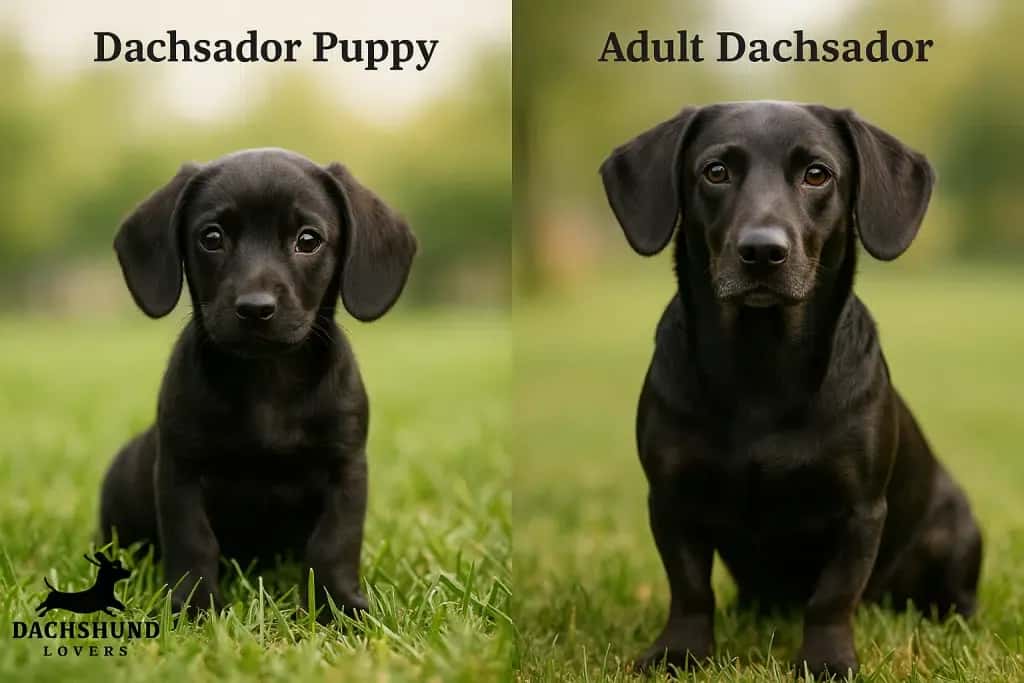
Unlike purebred Labradors or dachshunds, Dachsadors are not recognized by major kennel clubs like the American Kennel Club (AKC). This means their price isn’t set by strict breed standards but instead influenced by a mix of breeding quality, regional demand, and the unique traits of the litter.
1. Breeder Reputation
One of the biggest factors in a Dachsador’s price is the breeder’s experience and ethical standards.
- Reputable breeders charge more because they invest in health testing for both parents (e.g., hip and elbow screening for the Labrador side, spinal checks for the dachshund side).
- Breeders who socialize puppies in home environments (not kennels) also ensure better temperament and early training.
A low price tag — such as a puppy listed for under $400 USD — is often a red flag for backyard breeders or puppy mills, which can result in health problems later on.
2. Health Testing & Veterinary Care
Responsible breeders factor in the cost of:
- Initial vet visits, vaccinations, and deworming.
- Microchipping and health certificates.
- Genetic testing to reduce the risk of hereditary issues like hip dysplasia or IVDD (intervertebral disc disease).
These upfront investments improve the puppy’s quality of life — but also increase the purchase price.
3. Coat Color & Appearance
Rare coat colors or markings often come at a premium.
- Black Dachsadors: Common but still popular for their Labrador-like shine.
- Dapple or Brindle Patterns: If inherited from the dachshund side, these patterns can add $100–$300 to the price because of their rarity.
- Mini Dachsadors: Crosses with miniature dachshunds are often marketed as “designer mini Labs,” pushing prices toward the upper range ($1,200 USD+).
4. Location & Demand
Prices vary based on where you live:
- Urban Centers (US, UK): Demand in cities like New York, Los Angeles, London, or Manchester tends to drive prices up.
- Australia: Due to smaller breeding networks, Sydney and Melbourne prices can exceed $2,000 AUD.
- Rural Areas: Prices can be lower, but transportation costs (or waiting lists) might offset this.
5. Age of the Puppy
8–12 week-old puppies fetch the highest prices, while older puppies or young adults from breeders are often discounted (by $200–$400) because they are past the “ideal adoption window.”
6. Adoption as an Alternative
Adoption costs are generally $150–$350 USD (US), $300–$500 AUD (Australia), or £150–£350 GBP (UK). This often includes:
- Vaccinations and desexing.
- Health checks.
- Microchipping.
Adopting through organizations like Petfinder or Dogs Trust is not only cost-effective but also gives a dog a second chance. For details on adoption options, see our Dachsador Puppies Guide and Dachsador Size & Growth Guide for what to expect in adult dogs.
James’ Note
We’ve seen first-hand how low-cost breeders cut corners — skipping health tests or raising puppies in poor conditions. A slightly higher upfront cost with a trusted breeder (or a well-run rescue) often saves you thousands in future vet bills.
Average Cost of a Dachsador (US, AUS, UK)
The price of a Dachsador varies significantly by region due to breeder practices, demand, and availability. While Labradors are widely bred across the US, Australia, and the UK, dachshunds are less common — making this particular mix somewhat rare and sometimes more expensive.
Average Dachsador Price by Region
Region | Price Range (Buying) | Adoption Fee | Notes |
|---|---|---|---|
United States | $700–$1,200 USD | $150–$350 USD | Higher in urban centers (NYC, LA) due to demand |
Australia | $900–$1,800 AUD | $300–$500 AUD | Limited breeders, especially for mini Dachsador mixes. |
United Kingdom | £600–£1,200 GBP | £150–£350 GBP | Price can exceed £1,500 for rare colors or patterns. |
United States
In the US, most reputable Dachsador breeders charge $700–$1,200 USD. Prices may climb as high as $1,500 USD for puppies from health-tested parents or those with desirable coat colors (like dapple or cream). Cities like Los Angeles, New York, and Chicago often have higher prices due to urban demand for hybrid breeds.
Adoption fees are far more affordable — ranging from $150–$350 USD — and usually include vaccinations, desexing, and microchipping. You can find Dachsador mixes in shelters or through platforms like Petfinder and Adopt-A-Pet.
Australia
In Australia, Dachsadors are less common. Prices from reputable breeders range between $900–$1,800 AUD, with urban breeders (Sydney, Melbourne) sometimes listing puppies at $2,000 AUD+ due to limited availability. Smaller “mini” Dachsador mixes are especially sought after and may carry a premium price tag.
Adoption fees are typically $300–$500 AUD, and often include desexing, microchipping, and vet checks. Organizations like PetRescue and RSPCA Adopt A Pet frequently list Lab and dachshund mixes that can closely resemble Dachsadors.
United Kingdom
The UK’s Dachsador price range is £600–£1,200 GBP, with some breeders charging £1,500+ for puppies with rare coat patterns or strong health certifications. Cities like London and Manchester tend to have higher prices, while rural breeders often offer slightly lower costs.
Adoption fees are generally £150–£350 GBP, with reputable organizations like Dogs Trust and Blue Cross providing a cost-effective and ethical route to find a Dachsador or similar mix.
Buying vs. Adopting: Cost Comparison
Buying:
- Pros: Predictability of size, temperament, and parent lineage. Puppies are younger and easier to train from scratch.
- Cons: Higher upfront cost, and not all breeders are ethical or health-focused.
Adoption:
- Pros: Lower cost (often includes medical care), and the chance to rescue a dog in need. Many Dachsadors in rescues are already socialized and partially trained.
- Cons: Less predictability in appearance or age, and availability depends on location.
Example Cost Difference (US):
- Breeder Puppy: $1,000 USD + $300 (first-year vet & vaccines) = $1,300 USD+.
- Adoption: $250 USD (including vetting) = ~$1,000 savings upfront.
What About Ongoing Costs?
Regardless of whether you buy or adopt, expect to spend $1,000–$1,500 USD annually (or equivalent in AUD/GBP) on:
- Food and treats.
- Routine vet care and vaccinations.
- Pet insurance ($30–$50 USD/month or £25–£40 GBP/month).
- Grooming supplies and accessories.
Over a lifetime (12–14 years), the total cost of ownership can reach $10,000–$20,000 USD (or $15,000–$30,000 AUD). Our Dachsador Size & Growth Guide includes advice on feeding and exercise to keep these costs manageable by preventing weight-related health problems.
James’ Note
I often tell new owners: the initial price is just the start. A cheaper puppy from a backyard breeder might cost you thousands in vet bills later, while adoption fees often cover the basics (vaccines, desexing, microchipping). It’s always better to invest upfront with a reputable breeder or a trusted rescue organization.
Dachsador Adoption vs. Buying from Breeders
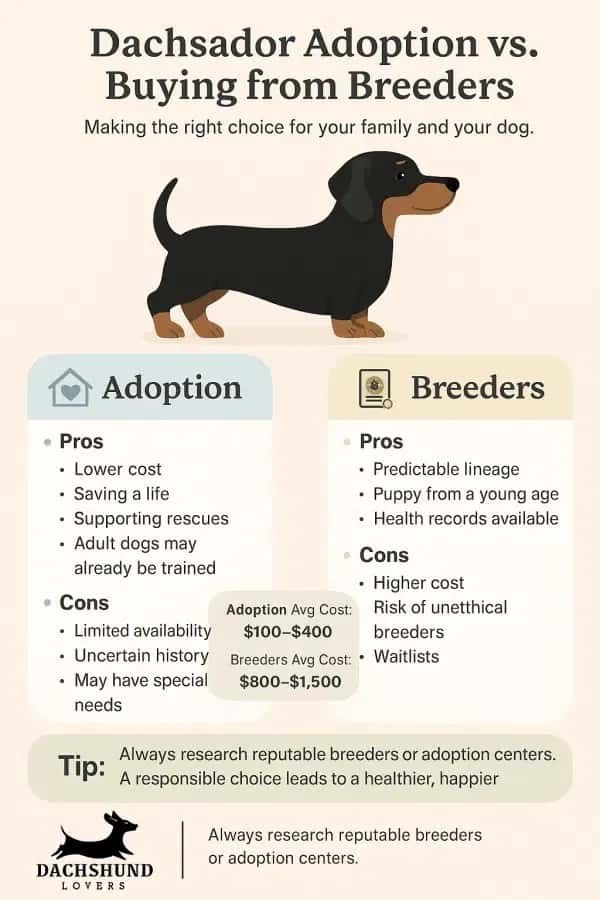
When deciding between adopting a Dachsador or buying from a breeder, it’s worth weighing the pros and cons of each option. While adoption is more affordable and gives a home to a dog in need, buying from a breeder offers more control over a puppy’s lineage, temperament, and early socialization.
1. Why Consider Adoption?
Adopting a Dachsador — or a similar Lab-dachshund mix — is often the most ethical and cost-effective option. Many mixed breeds end up in shelters through no fault of their own, and rescues frequently have puppies or young adults that are already socialized.
Advantages of Adoption:
- Lower Cost: Adoption fees range from $150–$350 USD, $300–$500 AUD, or £150–£350 GBP. These fees often include spaying or neutering, microchipping, and vaccinations — costs you would pay separately if buying a puppy.
- Health Checks: Reputable shelters and rescue organizations provide medical evaluations and often cover initial vetting.
- Training Foundation: Many rescue dogs have basic training or are housebroken, saving time and effort.
- Giving Back: Adoption directly helps reduce the number of dogs in shelters and supports the work of animal welfare organizations.
Where to Adopt:
- US: Petfinder and Adopt-A-Pet often list Dachsador-type mixes.
- Australia: PetRescue and RSPCA Adopt A Pet are reliable sources.
- UK: Dogs Trust and Blue Cross frequently have Labrador or dachshund crosses.
2. Why Buy from a Breeder?
For those who prefer a puppy with a known background, breeders offer the advantage of predictability in terms of size, appearance, and temperament.
Advantages of Breeders:
- Puppy Age: Puppies are typically available at 8–12 weeks, which is ideal for early socialization and training.
- Health Screening: Responsible breeders conduct genetic testing for hip dysplasia (common in Labradors) and IVDD (common in dachshunds) to minimize hereditary health issues.
- Lineage Transparency: Breeders can provide information about the parents’ temperament and size, giving you a better idea of your dog’s future traits.
Risks:
Not all breeders operate ethically. Backyard breeders or puppy mills often prioritize profit over health, which can lead to poorly socialized or sick puppies. When buying, always verify the breeder’s practices (see “How to Find Ethical Breeders” below).
3. Cost Comparison: Breeder vs. Adoption
Expense | Breeder (US) | Adoption |
|---|---|---|
Puppy Price | $700–$1,200 USD | $150–$350 USD |
Vaccinations & Vetting | $300–$400 USD | Included in fee |
Microchipping | $50–$70 USD | Included in fee |
Spay/Neuter | $150–$300 USD | Included in fee |
Total (Initial) | $1,200–$2,000 USD | $150–$350 USD |
In Australia and the UK, the savings are similar, with adoption often being 70–80% cheaper than purchasing from a breeder.
4. Which Option Is Right for You?
Choose Adoption If:
- You’re open to a range of ages or appearances.
- You want to save on upfront costs.
- You want to help a dog in need rather than support overbreeding.
Choose a Breeder If:
- You want a young puppy with a predictable size and personality.
- You’re prepared to research thoroughly to ensure the breeder is ethical.
- You want detailed health records and parent lineage.
James’ Note
I’ve spoken with dozens of owners who paid top-dollar for “designer” mixes from unverified breeders, only to face health problems later. If you do go the breeder route, make sure they health-test the parents and provide proof of care. Otherwise, I’d always recommend checking rescues first — not only is it cheaper, but it’s incredibly rewarding to give a dog a second chance.
For more insights on selecting the right puppy, see our Dachsador Puppies Guide, which includes a breeder checklist and tips for spotting red flags.
How to Find Ethical Dachsador Breeders
Finding an ethical Dachsador breeder can be challenging since this mix is not officially recognized by major kennel clubs like the American Kennel Club (AKC). Without an established registry, anyone can claim to breed “designer” dogs. This makes due diligence critical if you want a healthy, well-socialized puppy.
1. What Makes a Breeder Ethical?
An ethical breeder prioritizes the health and temperament of their dogs over profit. They invest time and resources into:
- Health testing for both parents (e.g., hip and elbow scoring for Labs, spinal checks for dachshunds).
- Raising puppies in a clean, home environment rather than commercial kennels.
- Early socialization (introducing puppies to people, sounds, and household environments).
- Providing transparency with documentation, contracts, and lifetime breeder support.
Good breeders don’t produce multiple litters at once or focus solely on “rare colors” for higher prices. Instead, they aim to match each puppy with the right family.
2. Breeder Checklist
When researching breeders, ask these questions:
- Can I see both parents (or at least the mother)? Meeting the parents gives you insight into temperament and size expectations.
- Do you conduct health screenings? Ask for proof of hip/elbow evaluations, IVDD screening, and genetic testing.
- Are puppies raised indoors? Puppies raised in family homes tend to be more social and confident.
- Will you provide references from past buyers? Reputable breeders are happy to connect you with previous owners.
- What socialization and training have you started? Early crate training, handling, and basic obedience are signs of a responsible breeder.
- Do you have a contract or health guarantee? A proper agreement outlines both buyer and breeder responsibilities.
3. Red Flags to Avoid
- Unrealistic promises: Beware of breeders who guarantee “teacup” or “hypoallergenic” Dachsadors — these claims are misleading.
- Lack of health records: If they can’t show vaccination or vet documentation, walk away.
- Too many litters: Large-scale “puppy farms” often cut corners, leading to poor socialization and health problems.
- Low pricing or cash-only deals: Puppies priced significantly below market rate (e.g., $300 USD) are often from backyard breeders.
- No visitation: Refusing to let you visit (in person or via video) is a major red flag.
4. Where to Find Verified Breeders
- US:
- Good Dog – Focuses on ethical breeders with verified health standards.
- Regional Labrador or Dachshund clubs (some breeders of these purebreds also produce cross-litters).
- Good Dog – Focuses on ethical breeders with verified health standards.
- Australia:
- Dogzonline – While focused on purebreds, some crossbreeders advertise here.
- Small-scale family breeders often list through local vet clinics or breed networks.
- Dogzonline – While focused on purebreds, some crossbreeders advertise here.
- UK:
- Pets4Homes – A popular platform, but check reviews carefully.
- Kennel Club Assured Breeders (for parent breeds).
- Pets4Homes – A popular platform, but check reviews carefully.
5. Cost from Ethical Breeders
Expect to pay $700–$1,200 USD, $900–$1,800 AUD, or £600–£1,200 GBP from reputable breeders. While this is higher than some backyard breeders charge, you’re paying for health, temperament, and transparency.
James’ Note
I’ve seen countless “too good to be true” breeder listings — flashy photos, rock-bottom prices, zero health records. Don’t rush. The right breeder is happy to answer every question, provide proof of vet care, and sometimes even say no if they think a home isn’t a good fit.
For a complete checklist of what to ask breeders, refer to our Dachsador Puppies Guide, which includes red flags and sample questions you can bring to your first meeting.
FAQs About Dachsador Price & Adoption
More From This Series:
If you’re exploring the Dachsador breed, our other guides dive deeper into essential topics:
- Dachsador: The Complete Guide to the Dachshund Lab Mix – A full overview of this unique hybrid’s temperament, appearance, and care needs.
- Dachsador Puppies: Buying, Raising & Care Tips – Focused on early puppy care, socialization, and training.
- Dachsador Size & Growth: Full Grown Dachsador Guide – Covers size expectations, growth stages, and healthy weight management.
- Dachsador Lifespan & Health: How Long Do They Live? – Insights into health issues, preventative care, and long-term wellbeing.
Authored by
James
James is the founder of Dachshund Lovers and the proud human of Harvey, a mini dapple with a big personality. He writes to empower and connect the dachshund community, blending founder insights with honest, experience-based stories about life with this incredible and special breed. James brings candid, experience-backed opinions to the community and always focused on fewer, better products and ideas that genuinely improve life for dachshunds and their people.
Read moreJames is the founder of Dachshund Lovers and the proud human of Harvey, a mini dapple with a big personality. He writes to empower and connect the dachshund community, blending founder insights with honest, experience-based stories about life with this incredible and special breed. James brings candid, experience-backed opinions to the community and always focused on fewer, better products and ideas that genuinely improve life for dachshunds and their people.
Read moreDisclaimer
This content is for informational purposes only and should not be considered veterinary advice. Always consult with a licensed veterinarian regarding your dog’s health and wellbeing.
There are no comments yet
Leave a comment