Corgi vs. Dorkie: Which Small Dog Is Right for You?
Corgi vs. Dorkie: Which Small Dog Is Right for You?
Whether you’re after royal heritage or Yorkie-Dachshund spice, this comparison breaks down what it’s really like to live with a Corgi or a Dorkie.

James
Posted on November 9, 2025.
Updated on July 21, 2026.
Table of Contents
- 1.Key Takeaways on Corgi vs Dorkie
- 2.Corgi vs. Dorkie: Breed Origins & Lineage
- •Corgi Origins: Herding Dogs of Wales
- •Dorkie Origins: A Lovable Designer Crossbreed
- 3.Appearance Comparison: Size, Coat, & Color Differences
- •Shedding & Grooming
- 4.Temperament: Cuddles or Chaos?
- •Intelligence & Trainability
- •Family Life & Social Needs
- 5.Energy Levels & Exercise Needs
- •Corgis: Always Ready to Go
- •Dorkies: A More Measured Tempo
- 6.Trainability & Intelligence
- •Corgi: Eager to Learn, Sometimes a Little Bossy
- •Dorkie: Sensitive and Smart with a Stubborn Edge
- 7.Exercise & Energy Needs
- •Corgi: Always Ready to Move
- •Dorkie: Bursts of Energy Balanced with Couch Time
- 8.Grooming Needs
- •Corgi: The Constant Shedder
- •Dorkie: A Mixed Bag of Coats
- 9.Health Considerations & Lifespan
- •Corgi Health Overview
- •Dorkie Health Overview
- 10.Trainability & Intelligence
- •Corgi: Eager to Please, Occasionally Stubborn
- •Dorkie: Smart, but with a Stubborn Streak
- 11.Which Breed Fits Best Into Your Family?
- •Corgis in the Family Home
- •Dorkies and Household Dynamics
- -More From This Series:
- -Author: James
- -Disclaimer
Share

Choosing the right small dog can feel surprisingly personal. It’s not just about size or cuteness — it’s about energy levels, temperament, lifestyle fit, and that intangible connection you feel when you meet “your dog.” If you’ve narrowed your options to the playful, fox-faced Corgi and the scruffy-chic Dorkie (a Dachshund-Yorkie mix), you’re in good company.
Both dogs have fiercely loyal followings, and for good reason. Corgis are famously associated with British royalty — especially Queen Elizabeth II — and bring herding instincts, bold personality, and a surprisingly loud bark in a small package. Dorkies, on the other hand, are the quieter creatives of the small dog world. They blend the spirited independence of the Yorkie with the loyal stubbornness of the Dachshund — creating a deeply affectionate and quirky companion.
Before you decide which pup fits your lifestyle better, it’s worth zooming out to compare both breeds across key categories like trainability, grooming needs, and behavior with children. This guide explores all of that — including voice-search-style answers to questions like “Is a Corgi easier to train than a Dorkie?” or “Which one sheds more?”
For more detailed breed info, you can check out the AKC’s official Corgi profile or our own Dorkie breed guide.
Key Takeaways on Corgi vs Dorkie
Trait | Dorkie | Corgi |
|---|---|---|
Breed Type | Mixed (Dachshund × Yorkie) | Purebred (Pembroke or Cardigan Welsh Corgi) |
Size | 7–12 lbs, 5–9 inches | 22–30 lbs, 10–12 inches |
Coat Type | Can be long, silky, or wiry | Medium, double-coated |
Shedding Level | Low to moderate | Moderate to high (especially during shedding season) |
Temperament | Affectionate, quirky, loyal | Outgoing, confident, alert |
Exercise Needs | Moderate – enjoys short walks & playtime | High – requires daily activity |
Trainability | Intelligent but stubborn | Very trainable, eager to please |
Good with Kids? | Yes, if socialized early | Generally yes, but can be nippy |
Barking Tendency | Moderate | High |
Life Expectancy | 12–15 years | 12–14 years |
Ideal For | Apartment living, singles, small families | Active households, families, dog sports fans |
Corgi vs. Dorkie: Breed Origins & Lineage
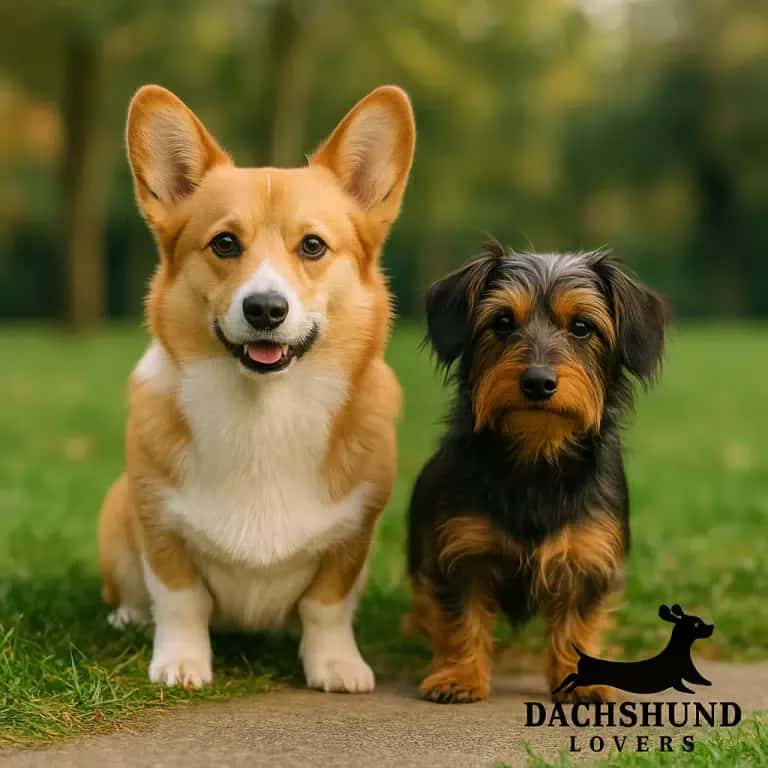
Understanding the lineage behind each dog gives valuable insight into their personality, instincts, and behavior around people and other animals. While the Corgi and Dorkie are both small in size, their ancestral roots lead to very different histories — one rooted in working fields, the other in companionship and hunting.
Corgi Origins: Herding Dogs of Wales
The Pembroke Welsh Corgi traces its roots to 10th-century Wales, where it was bred as a herding dog for cattle. Despite its low stature, the Corgi was incredibly agile — its short legs allowed it to nip at the heels of livestock while staying out of kick range. Over time, Corgis became cherished not just for their utility, but for their intelligence and expressive nature. In modern times, the Corgi gained global recognition thanks to Queen Elizabeth II, who owned more than 30 during her reign.
Learn more via the Pembroke Welsh Corgi breed history.
Dorkie Origins: A Lovable Designer Crossbreed
The Dorkie is a relatively recent mix, likely originating in the U.S. within the past few decades. This intentional cross between a Dachshund and a Yorkshire Terrier brings together two breeds known for their tenacity, loyalty, and distinctive looks. Dachshunds, originally bred to hunt badgers, are clever and determined, while Yorkies were ratters in Victorian-era England — feisty, elegant, and surprisingly bold.
When combined, these two create a companion dog that thrives in homes where they’re given attention, consistency, and gentle boundaries. Unlike the Corgi’s working heritage, the Dorkie’s purpose is firmly rooted in companionship.
Appearance Comparison: Size, Coat, & Color Differences
When it comes to looks, the Corgi and Dorkie are both eye-catching in their own right — but they wear their charm in very different ways. Let’s break down what you can expect in terms of size, coat, and grooming needs.
Trait | Corgi | Dorkie |
|---|---|---|
Height | 10–12 inches at the shoulder | 5–9 inches |
Weight | 22–30 lbs | 7–15 lbs |
Build | Sturdy, long body with short legs | Delicate frame; varies depending on dominant parent |
Coat Type | Double-coated; thick, weather-resistant | Varies: silky (Yorkie-dominant) or wiry (Dachshund-dominant) |
Shedding | Moderate to heavy (especially seasonally) | Low to moderate; more manageable with regular grooming |
Common Colors | Red, sable, fawn, black & tan | Black, tan, silver, cream, or combinations |
Shedding & Grooming
Corgis shed significantly — especially during seasonal changes — and require consistent brushing to avoid excess fur buildup. Their double coat keeps them warm but can trap heat in warmer climates.
Dorkies, on the other hand, are usually lower-shedding thanks to their Yorkshire Terrier lineage. If the Yorkie coat is dominant, the Dorkie may have long, silky strands that grow continuously, much like human hair. This means regular trims and brushing are key to avoid mats or tangles — especially around the legs and ears.
Grooming preferences can be a deciding factor, especially for allergy-prone households or those looking for less maintenance.
Temperament: Cuddles or Chaos?
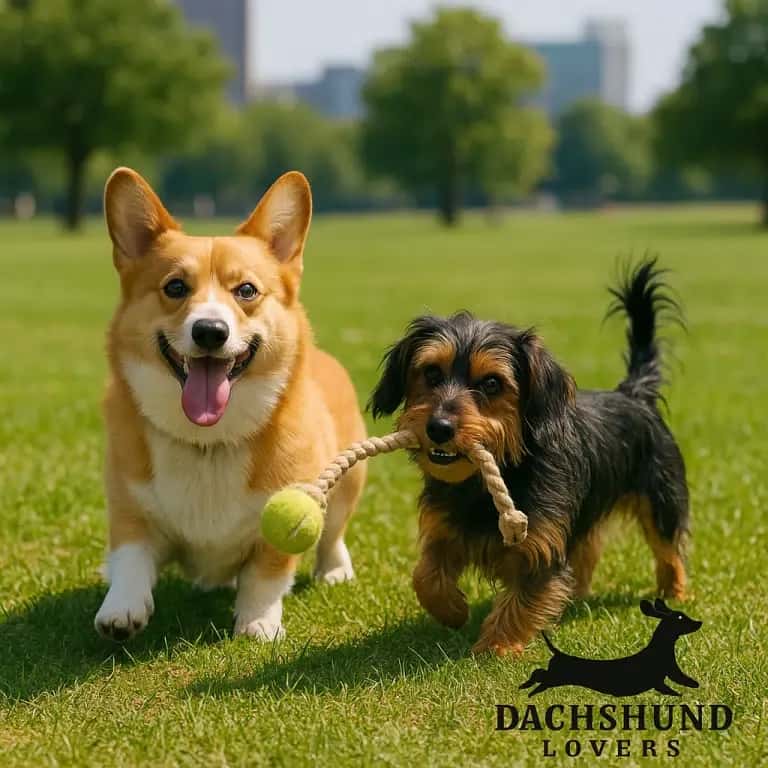
Both Corgis and Dorkies are affectionate, clever, and loyal — but they express their personalities differently. Understanding the subtle (and not-so-subtle) contrasts can help you determine which dog suits your lifestyle best.
Intelligence & Trainability
Corgis were bred to herd livestock — and they haven’t forgotten it. They’re quick learners, eager to please, but also independent. Their intelligence makes them a joy to train if you stay consistent. That same intelligence, however, can lead to cheeky stubbornness. They’re often testing boundaries.
Dorkies, blending the wit of a Yorkie and the sass of a Dachshund, are clever in a more selective way. They can be a little headstrong, especially during early training. Dorkies do best with positive reinforcement and shorter training sessions — otherwise, they may check out.
Trait | Corgi | Dorkie |
|---|---|---|
Intelligence | Very high — loves learning and games | High, but occasionally stubborn |
Easy of Training | Generally easy with consistency | Moderate — short sessions and patience required |
Watchdog Tendency | Strong — alert and vocal | Moderate — will bark but usually settles quickly |
Sociability | Outgoing and friendly | Affectionate, may be reserved with strangers |
Corgis adore being involved in family activities. They’re social dogs and often thrive in active households where they have jobs — even if it’s just greeting the mail carrier. Because of their herding background, they can occasionally nip at heels during play with young children, so supervision is important.
Dorkies, while social, often form a deep bond with one person in the household. They’re great lap dogs, often preferring snuggles to zoomies, though they can have bursts of energetic play. Socialization from a young age is important to prevent shyness or yappiness.
Energy Levels & Exercise Needs
When choosing between a Corgi and a Dorkie, understanding their energy levels — and how that translates into daily life — is essential. Both breeds require regular movement and stimulation, but the intensity differs.
Corgis: Always Ready to Go
Corgis are high-energy dogs in deceptively compact bodies. Originally bred for herding, they need physical and mental outlets — ideally 45 to 60 minutes per day. Without it, boredom sets in fast, often leading to barking, digging, or restlessness indoors.
They enjoy structured play, dog sports like agility, and walks where they can sniff and explore. Apartment living is fine if they get regular exercise, but a backyard certainly doesn’t hurt.
Dorkies: A More Measured Tempo
Dorkies fall somewhere in the moderate zone. They’ll happily trot beside you for a daily walk but don’t need as much sustained activity as a Corgi. They love interactive play — especially games that tap into their terrier roots, like fetch or tug — but also adore a cozy couch afternoon.
Mental stimulation is important for Dorkies. Puzzle toys and gentle obedience training go a long way in keeping them happy (and out of mischief).
Feature | Corgi | Dorkie |
|---|---|---|
Energy Level | High — requires daily vigorous exercise | Moderate — 30 minutes of daily movement |
Best Activities | Agility, hiking, herding games | Walks, fetch, enrichment games |
Apartment Friendly? | Yes, if exercised properly | Yes, very suitable |
Mental Stimulation Need | High — gets bored easily | Moderate — benefits from variety |
Trainability & Intelligence
When it comes to teaching commands, housebreaking, and general behavior management, intelligence and temperament both come into play. While both the Corgi and the Dorkie are clever in their own right, they express that intelligence differently — and that can shape the training journey.
Corgi: Eager to Learn, Sometimes a Little Bossy
Corgis are working dogs at heart, originally bred to herd livestock. This gives them a sharp mind, quick reflexes, and a strong desire for routine. They’re typically:
- Fast learners, especially with consistency and praise
- Motivated by treats and mental stimulation
- Slightly stubborn — they like to feel in control
Their high intelligence makes them ideal for agility training, scent work, and even canine competitions. However, without enough stimulation, their cleverness can turn into mischief.
Dorkie: Sensitive and Smart with a Stubborn Edge
Dorkies, inheriting smarts from both Yorkies and Dachshunds, are intelligent dogs — but their personalities lean a little more independent. They often respond well to:
- Positive reinforcement
- Short, fun training sessions
- A calm, gentle trainer (they can shut down if scolded too harshly)
The dachshund side can bring out a touch of willfulness, while the Yorkie influence adds energy and enthusiasm. House training may take longer than with a Corgi, but with patience, Dorkies can become polite and well-mannered companions.
Training Trait | Corgi | Dorkie |
|---|---|---|
Intelligence Level | Very high | High |
Ease of Training | Generally easy | Moderate — can be stubborn |
Motivation Style | Food, praise, tasks | Praise, food, gentle tone |
Best For | Owners who enjoy structured training | Owners with patience and flexibility |
Exercise & Energy Needs
Both Corgis and Dorkies are small in size but big on personality — and that includes their approach to exercise. While neither needs marathon-level workouts, their daily energy output (and input!) can influence whether they thrive in your home environment.
Corgi: Always Ready to Move
Corgis are surprisingly athletic for their short legs. As former herders, they crave purposeful movement and structured activity. A typical Corgi benefits from:
- At least 60 minutes of daily exercise
- Interactive play like tug, fetch, or frisbee
- Mental challenges such as puzzles or obstacle courses
Without enough stimulation, Corgis can become barky, restless, or even destructive. Apartment living is possible — but only if their energy is consistently burned off.
Dorkie: Bursts of Energy Balanced with Couch Time
Dorkies tend to have a moderate-to-high energy level. While they love a game or a backyard zoom, they’re also quite content napping beside you. Most Dorkies will thrive with:
- 30–45 minutes of daily activity
- Short walks, indoor play, or light agility games
- Occasional off-leash exploration (in secure areas)
Because of their smaller frame and mix of breeds, overexertion should be avoided, especially in hot weather. They don’t need as much exercise as a Corgi, but without regular movement, they can become anxious or vocal.
Exercise Trait | Corgi | Dorkie |
|---|---|---|
Daily Exercise Time | 60+ minutes | 30–45 minutes |
Energy Style | High, driven, needs structure | Playful, needs variety |
Best Activities | Fetch, hikes, puzzles, structured play | Walks, indoor games, light fetch |
Boredom Behavior | Barking, chewing, herding children | Whining, clinginess, mischief |
Grooming Needs
When it comes to grooming, both Corgis and Dorkies bring a bit of maintenance to the table — but for very different reasons. Their coat types, shedding habits, and general upkeep needs vary enough to sway a potential owner’s choice.
Corgi: The Constant Shedder
Corgis have a double coat — a dense undercoat for insulation and a rougher topcoat to protect against the elements. This means:
- Heavy seasonal shedding, particularly in spring and autumn
- Weekly brushing is a must — more often during shedding seasons
- Occasional professional grooming can help keep mats at bay
Despite their shorter coat, Corgis leave a surprising trail of fur on floors, furniture, and clothing. For allergy-sensitive households, this may be a concern.
Dorkie: A Mixed Bag of Coats
Because Dorkies are a cross between a long-haired Dachshund and a Yorkshire Terrier, their coat can vary significantly — even within the same litter.
Common Dorkie coat types:
- Silky and fine (like a Yorkie)
- Long and wavy (like a long-haired Dachsie)
- Medium, with feathering behind the ears and legs
Dorkies are usually low shedders but may require:
- Brushing 2–3 times a week to avoid tangles
- Regular trims or tidy-ups around the face and paws
- Occasional bathing depending on activity
Grooming Trait | Corgi | Dorkie |
|---|---|---|
Coat Type | Double coat (short to medium length) | Varies: silky, long-haired, or feathered |
Shedding Level | High, seasonal blowouts | Low to moderate |
Brushing Frequency | 2–4x/week (daily during shedding) | 2–3x/week |
Professional Grooming | Optional but helpful | Recommended for longer coats |
Bathing Needs | Once every 4–6 weeks | Every 4–8 weeks |
Health Considerations & Lifespan
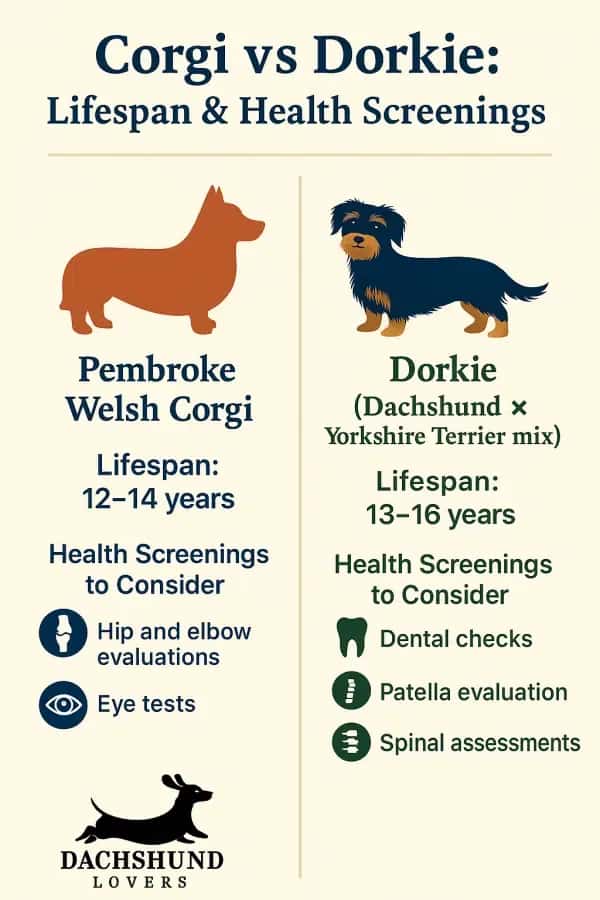
Both Corgis and Dorkies are generally healthy small breeds, but each comes with unique genetic predispositions and potential issues to be mindful of. Understanding their health risks — and expected lifespans — can help prospective owners make an informed choice that aligns with their lifestyle and long-term plans.
Corgi Health Overview
Corgis, particularly Pembroke Welsh Corgis, are hardy dogs but can be prone to a few issues:
- Intervertebral Disc Disease (IVDD): Due to their long backs, Corgis are susceptible to spinal problems, especially if allowed to jump excessively.
- Hip Dysplasia: Though more common in larger breeds, this can occasionally affect Corgis.
- Progressive Retinal Atrophy (PRA): An inherited eye condition leading to vision loss over time.
- Obesity: Corgis love food — and without proper exercise, they can gain weight quickly, putting stress on joints.
Lifespan: 12–14 years
Health Screenings to Consider: Hip and elbow evaluations, eye tests
Dorkie Health Overview
Dorkies inherit traits from two small but genetically distinct breeds — Dachshund and Yorkie — which creates a mixed bag of potential health traits.
- Dental Issues: Like many toy breeds, Dorkies often struggle with plaque buildup and early tooth loss.
- Tracheal Collapse: A condition more common in Yorkies that causes the airway to narrow.
- Luxating Patella: Kneecaps that slip out of place, more common in small breeds.
- Hypoglycemia: Especially in very small puppies, low blood sugar can be dangerous.
Because of the Dachshund lineage, spinal care is also important. Disc injuries are less common than in Corgis but still worth watching.
Lifespan: 13–16 years
Health Screenings to Consider: Dental checks, patella evaluation, and spinal assessments
Trainability & Intelligence
Both the Corgi and Dorkie are clever, curious, and capable — but how easily they learn (and how willingly they follow instructions) varies between these two small breeds. This section compares their learning styles, potential training hurdles, and best-fit training strategies for each dog.
Corgi: Eager to Please, Occasionally Stubborn
Corgis were bred as herding dogs, and with that background comes a strong work ethic and above-average trainability. They’re often at the top of the class in obedience — as long as the training is consistent and mentally stimulating.
- Strengths:
- Fast learners
- Strong food and praise motivation
- Good at mastering routines and commands
- Fast learners
- Challenges:
- Can be bossy or pushy if not given structure
- Prone to boredom if drills are repetitive
- May try to “herd” family members or pets
- Can be bossy or pushy if not given structure
Dorkie: Smart, but with a Stubborn Streak
Dorkies are also intelligent — but their Dachshund and Yorkie lineage means they tend to be more independent thinkers. They may know what you’re asking… and simply decide whether it suits them.
- Strengths:
- Sharp memory and quick pattern recognition
- Respond well to positive reinforcement
- Affectionate, which can help bonding during training
- Sharp memory and quick pattern recognition
- Challenges:
- House training can take longer
- Sensitive to harsh tones or punishment
- Can lose focus easily, especially as puppies
- House training can take longer
Trait | Corgi | Dorkie |
|---|---|---|
Trainability | High — fast learners | Moderate — depends on motivation |
Best Motivator | Food, structure | Treats, patience, short sessions |
Training ChallengesTraining Challenges | Bossiness, herding instinct | Stubbornness, short attention span |
House Training | Generally quick | May require more consistency and time |
Obedience Potential | High with consistent training | Moderate; varies by personality |
Training Tip: For both breeds, early socialization and puppy classes can lay the foundation for success. Look for reward-based programs that are small in size and suited to toy or small-breed dogs.
External Resource: Victoria Stilwell’s Positive Dog Training Tips — a trusted voice in gentle, effective training methods.
Which Breed Fits Best Into Your Family?
Choosing between a Corgi and a Dorkie often comes down to lifestyle compatibility. Both breeds are affectionate and devoted, but they offer different energy levels, space needs, and household dynamics. Here’s how they stack up in real family settings.
Corgis in the Family Home
Corgis tend to be energetic, alert, and vocal — all traits that suit active homes. They’re excellent with children (especially school-age and up), and their loyalty often makes them natural watchdogs. However, their herding instincts can surface as nipping or bossy behavior if boundaries aren’t set early.
Ideal For:
- Families with kids 6+
- Households with a backyard or space for play
- Owners who enjoy structured training and mental challenges
Things to Consider:
- May bark at unfamiliar noises or visitors
- Benefit from routine and firm-but-kind discipline
- Can become possessive if not socialized young
Dorkies and Household Dynamics
Dorkies are typically gentler and smaller than Corgis, making them well-suited for apartment living and households without children. While they can thrive with respectful kids, they tend to bond deeply with one or two adults and may shy away from rough handling or noisy environments.
Ideal For:
- Singles, couples, or retirees
- Calm households or homes with older children
- First-time dog owners seeking companionship
Things to Consider:
- Can be nervous or yappy without socialization
- Don’t require large yards — daily walks and affection matter more
- Need protection from rough play due to their smaller size
Trait | Corgi | Dorkie |
|---|---|---|
Best With | Active families with older kids | Calm adults, seniors, or quiet homes |
Space Needs | Moderate (benefits from yard) | Low (apartment-friendly) |
Kid Friendliness | High (if well-trained) | Moderate (best with gentle handling) |
Adaptability | Moderate — prefers routine | High — adjusts to various settings |
Bonding Style | Loyal to all family members | Deeply attached to 1–2 people |
Frequently Asked Questions (FAQs)
More From This Series:
- About Dorkie: The Dachshund Yorkie Mix
- Dorkie Puppies: Buying, Raising & Care Tips
- Full Grown Dorkie: Size, Weight & Temperament
- Dorkie Price Guide: Cost to Own This Adorable Mix
- Dapple Dorkie: Everything About This Spotted Beauty
- Long-Haired Dorkies: Grooming, Temperament & Appearance
Authored by
James
James is the founder of Dachshund Lovers and the proud human of Harvey, a mini dapple with a big personality. He writes to empower and connect the dachshund community, blending founder insights with honest, experience-based stories about life with this incredible and special breed. James brings candid, experience-backed opinions to the community and always focused on fewer, better products and ideas that genuinely improve life for dachshunds and their people.
Read moreJames is the founder of Dachshund Lovers and the proud human of Harvey, a mini dapple with a big personality. He writes to empower and connect the dachshund community, blending founder insights with honest, experience-based stories about life with this incredible and special breed. James brings candid, experience-backed opinions to the community and always focused on fewer, better products and ideas that genuinely improve life for dachshunds and their people.
Read moreDisclaimer
This content is for informational purposes only and should not be considered veterinary advice. Always consult with a licensed veterinarian regarding your dog’s health and wellbeing.
There are no comments yet
Leave a comment