Soft-Spoken, Stunning, and Steadfast: The Long Haired Dachshund
Soft-Spoken, Stunning, and Steadfast: The Long Haired Dachshund

Ellie
Posted on May 24, 2025.
Updated on July 21, 2026.
Table of Contents
Share

What Is a Black and Tan Long Haired Dachshund?
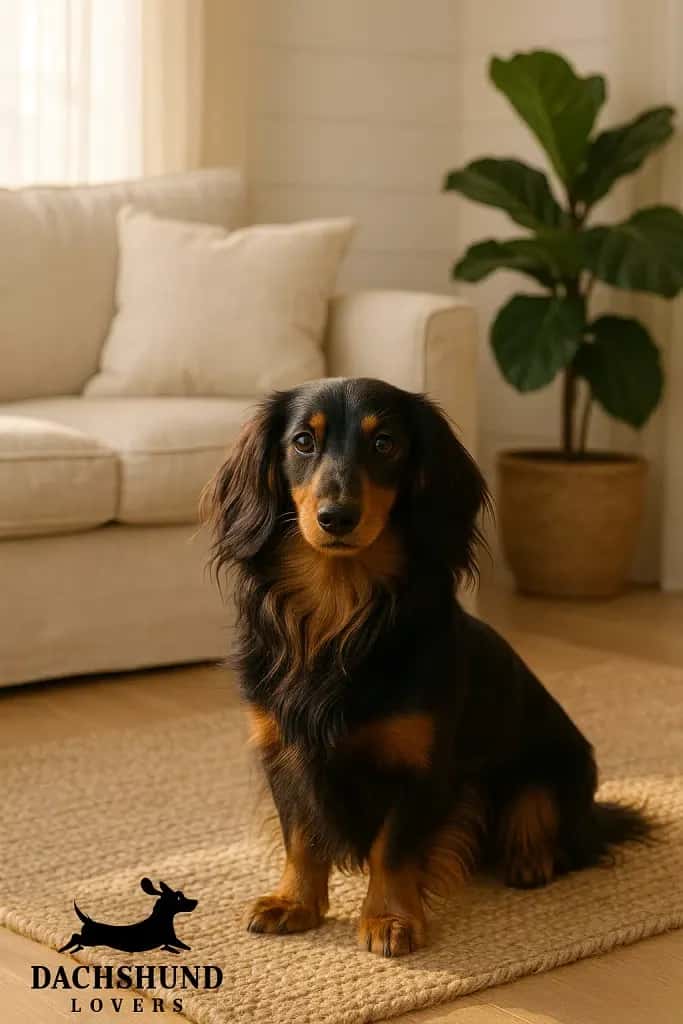
A black and tan long haired dachshund has a rich black coat with warm tan markings and a soft, flowing texture. The tan “points” appear above the eyes, on the muzzle, chest, paws, and under the tail — giving them a symmetrical, regal appearance.
This coat type can be found in both standard and miniature sizes, and is known for its elegance and gentle demeanor.
In motion, their feathered tail and silky ear fringes make them look like they’re gliding. Compared to their short-haired cousins, long-haired dachshunds are often described as the ‘refined’ version — not just for their looks, but their energy too. There’s something quietly assured about how they carry themselves, even if they’re just strutting past your coffee table.
Read the foundational guide: Black and Tan Dachshund
Black and Tan Coat: Defined
The black and tan pattern is one of the most recognizable in dachshunds. The tan areas accentuate expression and give structure to the face and limbs.
Common tan point placements:
- Eyebrows (often referred to as “eyebrow dots”)
- Cheeks and lower jaw
- Chest and underarms
- Feet and lower legs
- Beneath the tail
In long-haired dachshunds, the tan flows into the feathering, creating a soft-edged contrast that is both natural and refined.
The black coat should be deep and even — ideally with a glossy shine. When well-groomed, this contrast becomes even more striking in natural light. And because the feathered sections move with the dog, you get flashes of tan that almost seem to shimmer with every step.
Curious about smaller sizes? Explore the Black and Tan Miniature Dachshund
Long-Haired Dachshund Temperament
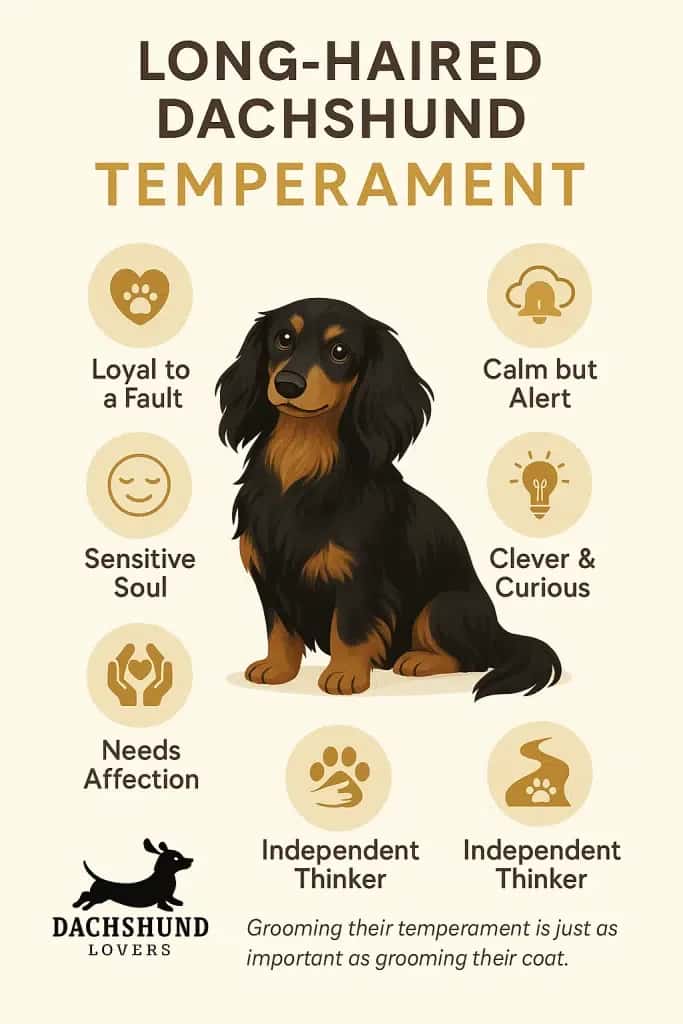
When we say long-haired dachshunds are more mellow, we don’t mean lazy. They still love to explore, chase leaves, and patrol the backyard. But their default energy tends to be softer and more balanced compared to smooth or wire-haired doxies.
Personality Traits:
- Affectionate: They love being near their humans — the shadow-at-your-feet kind.
- Emotionally tuned-in: Long-haired dachshunds often mirror your mood. If you’re calm, so are they.
- Less reactive: They’re often more tolerant of noise, children, and new environments.
- Loyal and gentle: Once bonded, they stay close — but are rarely pushy.
Ideal Environments:
- Homes with structured routines
- Families with children who understand boundaries
- Owners who enjoy daily brushing and close companionship
Ellie’s Note: Maple’s best friend Iris is a long-haired black and tan — and she’s a couch shadow, a tea-time companion, and the softest thing I’ve ever brushed.
And while all dachshunds can be a little stubborn, long-haired types often come across as more measured in how they show it — like they’re thinking it through first, then choosing to ignore you with poise.
Coat Maintenance for Long-Haired Dachshunds
Maintaining the gloss and texture of a black and tan long-haired dachshund’s coat is about more than brushing — it’s about lifestyle, diet, and being consistent.
Seasonal Considerations:
- Spring and Autumn: These are peak shedding times. Daily brushing may be needed to manage fluff and keep your home less fuzzy.
- Summer: Their black coat absorbs heat and fades easily. Limit midday sun and consider a dog-safe UV spray.
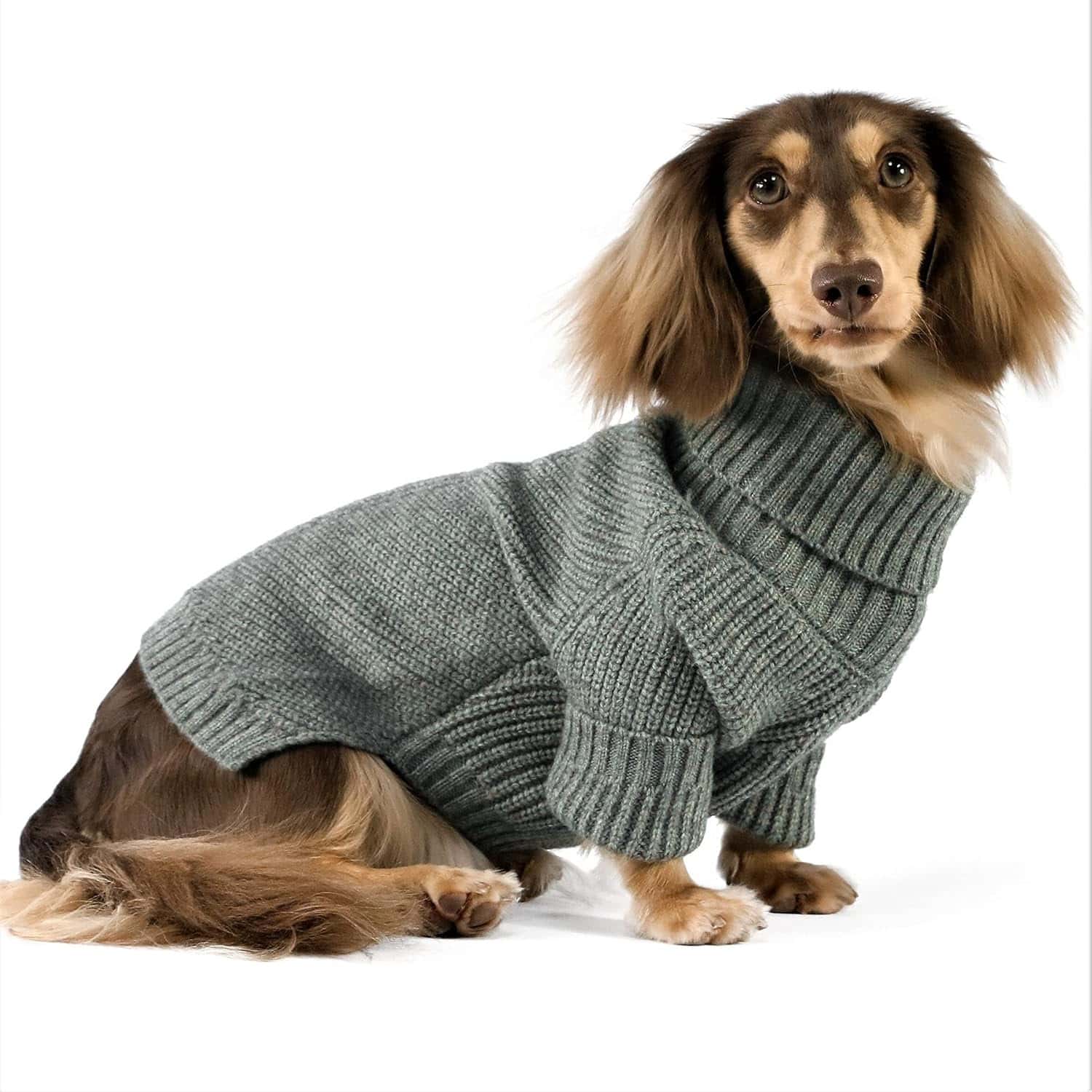
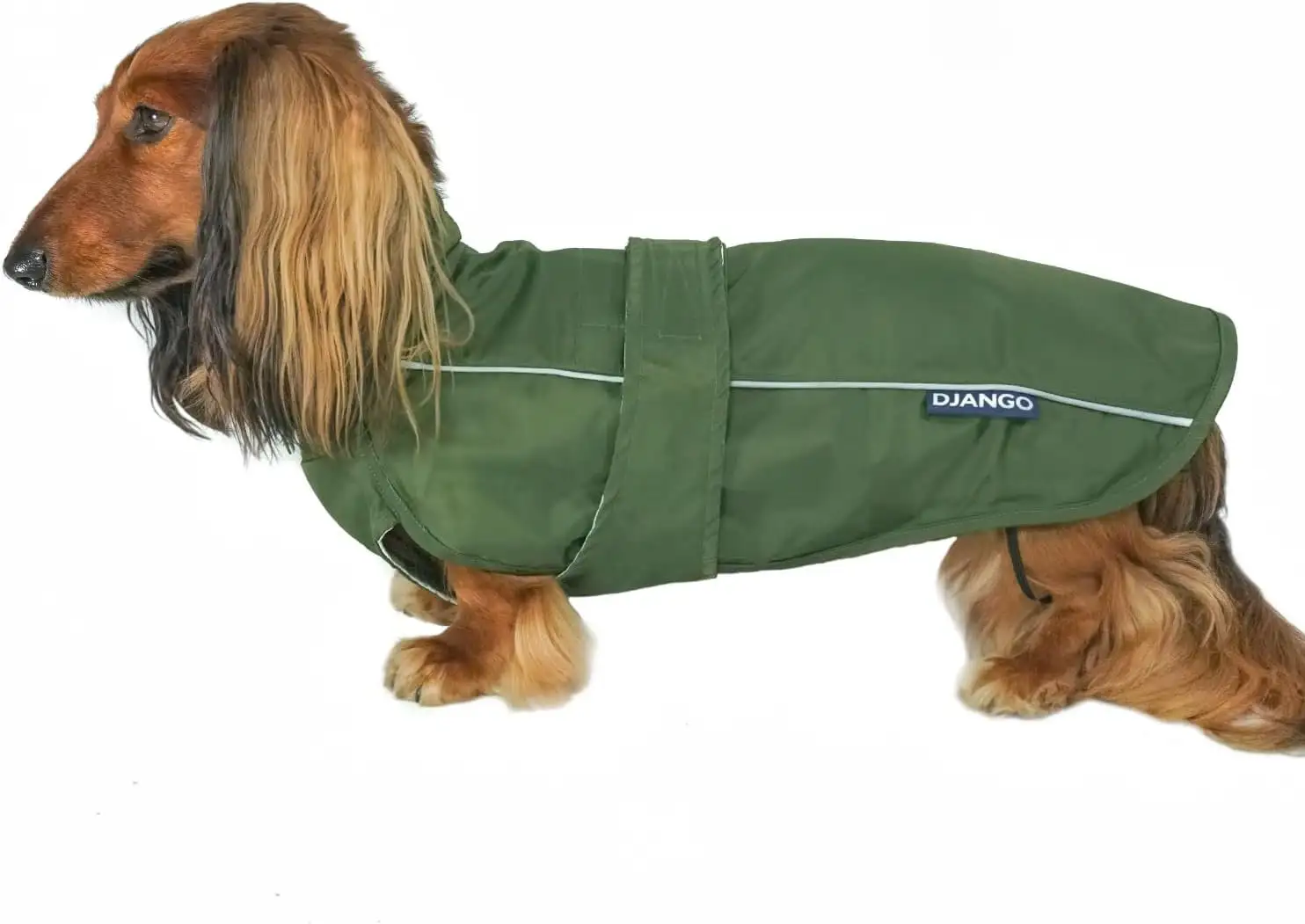
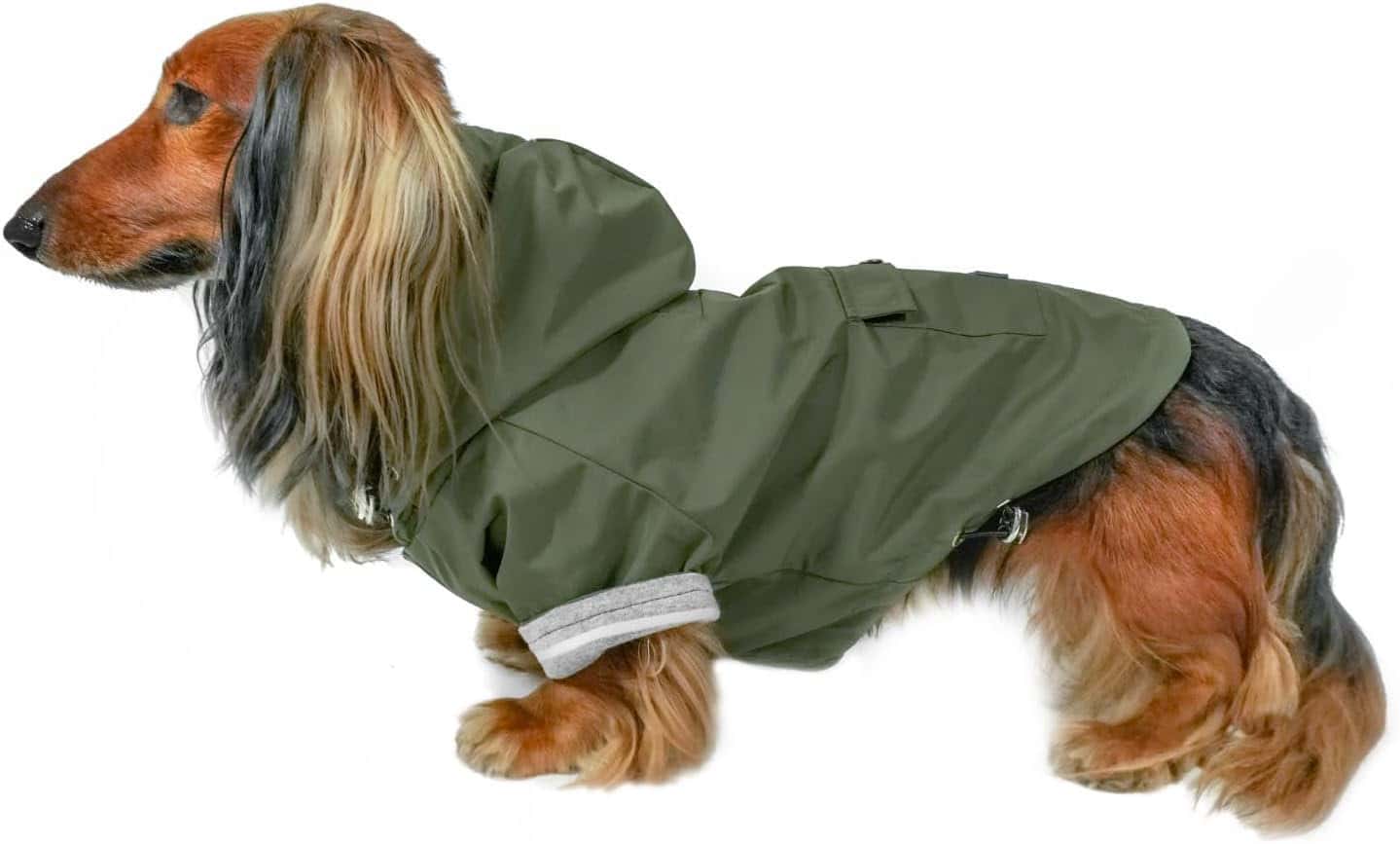
- Winter: Rainy walks? Dry thoroughly, especially behind the ears and under the chest. A soft jacket helps keep their coat dry and prevents matting.
Nutrition for Coat Health:
Feed a diet high in omega-3 fatty acids (like fish oil) and ensure proper protein levels. Healthy skin = a healthy coat that resists tangling and dullness.
Detail Work:
- Trim paw hair to prevent dirt clumping.
- Check ears weekly for wax or debris.
- Wipe the underside after wet walks — it’s where most tangles and mud hide.
Even their tail feathering needs gentle detangling — it can act like a little mop if left unchecked. The good news? Once you fall into a routine, it becomes second nature — like brushing your hair, just more rewarding.
Grooming Tips
Here are some grooming tips I’ve picked up over the years (and tested on friends like Iris):
- Start young: Begin brushing and handling early so they learn that grooming is safe and rewarding.
- Use a leave-in conditioner spray: This helps reduce static and keeps feathering soft, especially in humid weather.
- Comb before brushing: Use a metal comb to check for hidden mats behind the ears, in the armpits, and under the tail before brushing with a pin brush.
- Avoid clippers: Their coat is meant to flow. Clipping can permanently change the texture and blunt the tan tips.
- Make it relaxing: Keep grooming sessions calm and quiet. Pair it with soft pats, praise, or a treat at the end.
Ellie’s Tip: Grooming isn’t just hygiene — it’s trust-building. Make it part of your routine, not a rushed task.
And don’t forget to celebrate the little wins — like when they finally stop chewing the brush handle, or let you trim those fuzzy paw tufts without protest.
Authored by
Ellie
Ellie is a lifelong dachshund lover and the proud human of Maple, a long-haired brown doxie with a regal side-eye. While not a vet, Ellie brings honest, researched, and experience-based insights into every article she writes for the Dachshund Lovers community.
Read moreEllie is a lifelong dachshund lover and the proud human of Maple, a long-haired brown doxie with a regal side-eye. While not a vet, Ellie brings honest, researched, and experience-based insights into every article she writes for the Dachshund Lovers community.
Read moreThere are no comments yet
Leave a comment