Beagle Dachshund Mix Training Guide
Beagle Dachshund Mix Training Guide
Beagle Dachshund mix training requires consistency and calmness. Here’s how to handle barking, recall, housebreaking, and more without losing your cool.

Ellie
Posted on November 9, 2025.
Updated on July 21, 2026.
Table of Contents
- 1.Key Takeaways: Beagle Dachshund Mix Training
- •Why Training Matters for Doxles
- •Key Challenges in Training a Beagle Dachshund Mix
- •Why Start Training Early?
- 2.Understanding the Doxle Mindset
- •The Beagle’s Influence: Scent-Driven Curiosity
- •The Dachshund’s Influence: Stubborn Independence
- •Balancing Beagle Playfulness with Dachshund Determination
- •Common Doxle Training Challenges
- •Why Positive Reinforcement Works Best
- •Mental Stimulation is Non-Negotiable
- •When to Start Training
- 3.Doxle Puppy Training Essentials
- •Start with Crate Training
- •Potty Training the Right Way
- •Basic Commands to Teach First
- •Leash Training for Scent-Obsessed Puppies
- •Socialization: The Foundation of a Well-Behaved Doxle
- •Positive Reinforcement from Day One
- •Managing Stubbornness in Puppies
- •The Role of Play in Training
- •Key Takeaways: Puppy Training
- 4.Core Training Techniques for Adult Doxles
- •Recall Training: Overcoming Scent Distractions
- •Barking and Vocal Control
- •Scent-Based Games for Mental Stimulation
- •Leash Manners: Walking Without Pulling
- •Advanced Training: Beyond Basic Commands
- •Exercise + Training Balance
- •Key Takeaways: Adult Doxle Training
- 5.Common Training Mistakes to Avoid
- •1. Harsh Corrections or Punishment
- •2. Inconsistency
- •3. Neglecting Mental Stimulation
- •4. Skipping Early Socialization
- •5. Relying Too Much on Food Rewards
- •6. Expecting Too Much Too Soon
- •7. Forgetting Their Physical Limitations
- •Key Takeaways: Mistakes to Avoid
- 6.Advanced Training & Fun Tricks for Doxles
- •Why Go Beyond Basic Training?
- •Advanced Commands to Teach Your Doxle
- •Scent-Based Training Games
- •Fun Tricks That Reinforce Obedience
- •Incorporating Puzzle Toys and Interactive Games
- •The Role of Clicker Training in Advanced Skills
- •Daily Training Routine for Advanced Skills
- •Key Takeaways: Advanced Training
- -More From This Series:
- -Disclaimer
Share

Training a beagle dachshund mix (Doxle) is not about “controlling” your dog — it’s about channeling a clever and stubborn personality into positive behaviors. This hybrid combines the best and most challenging traits of two iconic hounds. The beagle’s strong scenting ability means they’re naturally inclined to follow their nose, while the dachshund’s independent streak makes them determined problem-solvers. Together, you get a dog that’s playful, loyal, but also very capable of ignoring you if something more interesting (like the smell of last night’s BBQ) crosses their path.
The American Kennel Club (AKC) describes beagles as “curious, friendly, and determined,” while dachshunds are “clever, lively, and courageous to the point of rashness” (AKC Beagle Profile & AKC Dachshund Profile). These traits shine through in the Doxle’s personality and dictate how you approach training. Standard “obedience drills” rarely work on this mix. Instead, training has to feel like a game, filled with rewards, scent-based activities, and consistent routines.
If there’s one thing to know about beagle dachshund mix training, it’s this: you can’t out-stubborn a Doxle. Positive reinforcement is essential. The American Veterinary Society of Animal Behavior states that reward-based training “is both more effective and less likely to cause fear, anxiety, or aggression than punishment-based methods.” For Doxles, this approach is non-negotiable. Harsh corrections or yelling will make them shut down or rebel even more.
Key Takeaways: Beagle Dachshund Mix Training
Topic | Summary |
|---|---|
Trainability | Intelligent but independent — thrives with short, reward-based sessions. |
Best Method | Positive reinforcement: food rewards, praise, and interactive play. |
Main Challenges | Scent obsession, stubborn streak, and barking habits. |
Puppy Training Focus | Crate training, potty training, and recall from day one. |
Adult Doxle Training | Continuous reinforcement of commands and mental stimulation. |
Exercise + Training | 30–60 minutes daily; scent games and puzzles to satisfy hunting instincts. |
Avoid | Harsh correction — it undermines trust and increases anxiety. |
Expert Tip | Link commands to scent-based rewards (like treat trails) for better focus. |

Why Training Matters for Doxles
Training a Doxle isn’t just about teaching commands like sit or stay. It’s about:
- Managing their hunting instincts: Without structure, their beagle nose will dictate every walk.
- Preventing stubborn habits: Dachshund genes mean they’ll test limits unless you establish consistent boundaries.
- Building confidence: Positive reinforcement not only teaches behavior but also strengthens the bond between you and your dog.
- Channeling energy: A bored Doxle can quickly turn to destructive behaviors like chewing furniture, barking excessively, or digging holes in the yard.
Key Challenges in Training a Beagle Dachshund Mix
- Scent Distractions: If a scent catches their attention, your recall command may as well be background noise.
- Food Obsession: Both beagles and dachshunds are highly food-motivated — which is a blessing and a curse. Treats work wonders but can lead to overeating if not managed carefully.
- Vocal Tendencies: Doxles inherit the beagle’s howl and the dachshund’s sharp bark, making “quiet” training an essential part of your toolkit.
- Short Attention Spans: Long training sessions often fail; Doxles respond better to short, focused bursts of learning.
Why Start Training Early?
Puppyhood is the golden window for shaping behavior. According to the American Veterinary Medical Association (AVMA), early socialization and positive training between 8–16 weeks of age leads to better long-term behavior outcomes (AVMA Puppy Socialization Guidelines). For Doxles, this means introducing leash manners, crate comfort, and basic commands early — before stubborn habits set in.
Understanding the Doxle Mindset

To train a beagle dachshund mix, you first need to understand what makes them tick. Doxles are highly intelligent, but intelligence alone doesn’t mean they’re easy to train. This hybrid comes from two breeds with strong working instincts — the beagle, bred for scent tracking, and the dachshund, bred for independent hunting. Both are hounds, but their approach to the world differs slightly, and these differences shape how a Doxle learns.
The Beagle’s Influence: Scent-Driven Curiosity
The beagle side of your Doxle brings a powerful sense of smell — in fact, beagles have one of the most developed scent-tracking abilities of any dog breed. The American Kennel Club describes them as “merry, curious, and determined,” traits that often mean their nose leads the way. During training, you’ll notice that even the smallest whiff of an interesting smell can derail their attention.
Training Insight:
Instead of fighting this instinct, work with it. Use scent-based games like “find the treat” or hide-and-seek with their favorite toy. Incorporating their natural scent drive into training builds focus and turns what could be a distraction into a reward system.
The Dachshund’s Influence: Stubborn Independence
On the other side, the dachshund genes contribute a bold and determined streak. The AKC Dachshund Profile calls them “clever, lively, and courageous to the point of rashness.” This independence was originally bred into them to help them make quick decisions underground while hunting — but in a home setting, it can come across as selective listening.
Training Insight:
Patience and consistency are key. Keep training sessions short (5–10 minutes) but engaging. Harsh corrections won’t work — they’ll simply dig their heels in (sometimes literally). Instead, focus on high-value rewards (small bits of chicken or cheese work well) and keep your tone encouraging.
Balancing Beagle Playfulness with Dachshund Determination
A Doxle’s personality can swing between playful affection and laser-focused determination. For example:
- During a walk, they might happily trot by your side one moment, then suddenly drag you toward a bush because they’ve picked up an intriguing scent.
- In training, they’ll quickly learn simple commands like sit or down — but mastering recall (come when called) can take time, as their independent streak and scent drive often compete for attention.
This combination of traits means that flexible, fun, and reward-based training is your best strategy. If a session feels too rigid, they’ll lose interest or become distracted.
Common Doxle Training Challenges
- Recall Issues
Once a Doxle picks up a scent, it can be hard to get them back. Start recall training in a controlled, low-distraction environment and gradually build up to busier areas. Using a long-line leash can help you safely train recall without risking them bolting off. - Barking and Vocalizing
Beagles are natural barkers and howlers, and dachshunds are equally vocal when alert. A Doxle may develop a habit of barking at strangers, noises, or even out of boredom. Training commands like quiet and providing plenty of mental stimulation can keep their vocal tendencies in check. - Food Obsession
Both parent breeds are food-motivated, which makes training easier — but it also means you have to be careful with treat portions. Overfeeding can lead to rapid weight gain, especially since dachshunds are prone to intervertebral disc disease (IVDD), where excess weight puts strain on their backs.
Why Positive Reinforcement Works Best
The American Veterinary Society of Animal Behavior emphasizes that positive reinforcement is the gold standard for dog training, as it “builds trust and strengthens the human-animal bond.” For Doxles, this approach is particularly important.
- Use verbal praise combined with small treats or playtime.
- Reward every success, especially during early training stages.
- Avoid punishment, which can make them anxious or rebellious.
Mental Stimulation is Non-Negotiable
A bored Doxle is a mischievous Doxle. Because of their intelligence and hunting instincts, mental enrichment is as crucial as physical exercise.
- Try puzzle toys or snuffle mats to engage their nose.
- Rotate toys weekly to keep things fresh.
- Incorporate short training sessions throughout the day rather than one long session.
When to Start Training
Start as early as possible — ideally when your Doxle is a puppy. Early crate training, socialization, and leash manners will set the tone for adult behavior. For structured puppy advice, check our Beagle Dachshund Mix Puppies: What New Owners Should Know.
Doxle Puppy Training Essentials
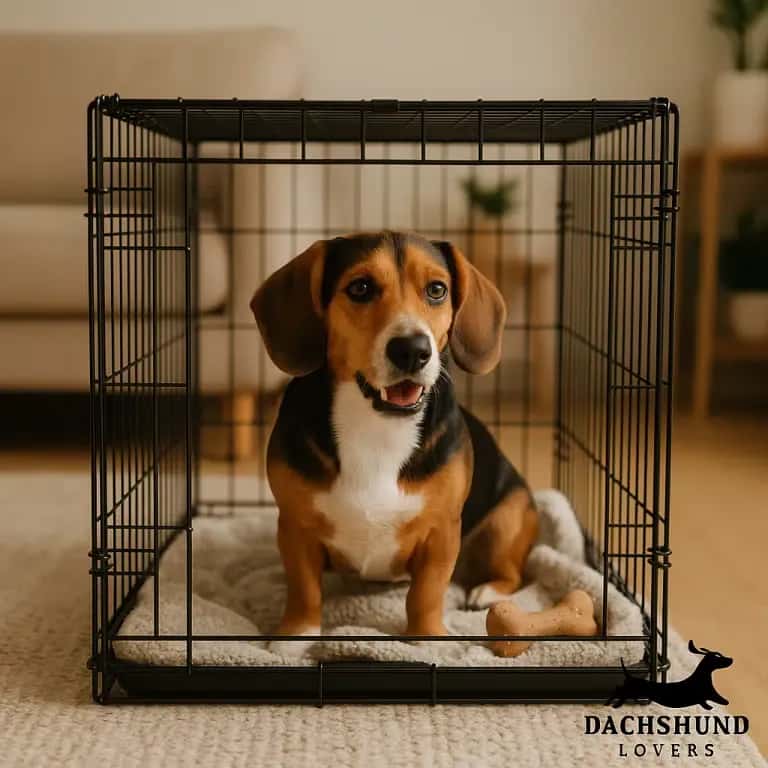
Training a beagle dachshund mix puppy is all about setting the right habits early. Both parent breeds are smart but can be stubborn, so the sooner you establish structure, the smoother life will be for both of you. Puppies are like blank slates — what you teach them between 8–16 weeks often sticks for life. The American Veterinary Medical Association (AVMA) notes that this early period is critical for socialization and foundational training (AVMA Puppy Socialization Guidelines).
Start with Crate Training
A crate isn’t a punishment for a Doxle — it’s a safe, quiet den where they can relax. This is especially important for dachshund mixes, as it prevents spinal injuries (IVDD) by limiting unsupervised jumping or rough play.
Tips for Crate Training:
- Choose a crate just large enough for your puppy to stand, turn, and lie down.
- Make it comfortable with soft bedding and a blanket that smells like you.
- Introduce it slowly — feed your puppy meals inside the crate to create positive associations.
- Keep early sessions short (10–15 minutes) and always reward calm behavior.
For step-by-step advice, see our Beagle Dachshund Mix Puppies Guide.
Potty Training the Right Way
Both beagles and dachshunds can be tricky to house-train, so patience is key.
- Take your Doxle puppy out every 2–3 hours during the day and always after meals, naps, or play.
- Use one command phrase like “go potty” so they link words to actions.
- Reward success immediately with praise and a tiny treat.
Accidents will happen, but scolding won’t help. Instead, clean up with an enzyme-based cleaner to remove lingering scents.
Basic Commands to Teach First
Start with essential commands:
- Sit: Easy for most puppies and builds impulse control.
- Come: Crucial for recall, especially with the beagle’s strong scent drive.
- Stay: Helps prevent dashing out doors or away from you.
- Leave It: A lifesaver when your Doxle wants to investigate something unsafe.
Training Sessions:
Keep sessions short — 5 to 10 minutes — and end on a win. Doxles lose focus if training feels like a chore.
Leash Training for Scent-Obsessed Puppies
Beagles are natural pullers, and dachshunds love to dart after anything that moves. Early leash training prevents bad habits.
- Use a no-pull harness rather than a collar to protect their neck and back.
- Start leash practice indoors before moving to busy areas.
- Reward walking calmly at your side with treats or praise.
A well-socialized Doxle is less anxious, less barky, and more confident. The AVMA stresses that positive exposure to new sights, sounds, and people during the critical 8–16 week window reduces behavior problems later in life.
Ideas for Socialization:
- Visit dog-friendly cafés or parks (but avoid busy off-leash areas until fully vaccinated).
- Expose your puppy to common household sounds like the vacuum or blender.
- Introduce them to different surfaces (grass, sand, pavement) during walks.
For a deeper dive, see our Beagle Dachshund Mix Temperament Guide.
Positive Reinforcement from Day One
Doxle puppies respond best to high-value rewards — tiny pieces of cooked chicken or liver treats are irresistible. Praise with a cheerful tone and pair it with touch (gentle pats or scratches) to build trust. As the American Veterinary Society of Animal Behavior states, reward-based training “not only teaches skills but strengthens the human-animal bond.”
Managing Stubbornness in Puppies
Expect testing behavior — it’s part of the dachshund DNA. Instead of getting frustrated, use short, playful training bursts and end every session with success. For example, if your puppy is struggling with stay, revert to a simpler command like sit, reward them, and stop there.
The Role of Play in Training
Play isn’t just fun — it’s a powerful training tool. Tug games, fetch, and scent-based games (like hiding treats around the house) keep your puppy mentally engaged and build responsiveness to your cues.
Key Takeaways: Puppy Training
Focus Area | Quick Tips |
|---|---|
Crate Training | Make the crate a den — use food and toys to create positive associations. |
Potty Training | Frequent breaks + consistent praise = faster results. |
Basic Commands | Start with sit, stay, come, and leave it. |
Leash Training | Harness > collar for safety; start indoors. |
Socialization | Early exposure to people, sounds, and places builds confidence. |
Positive Reinforcement | Use high-value treats and praise; avoid punishment. |
Core Training Techniques for Adult Doxles
Training an adult beagle dachshund mix is about refining skills, managing stubborn behaviors, and keeping their intelligent minds busy. Whether you’ve raised your Doxle from puppyhood or adopted an older dog, the key is consistency and positive reinforcement. Both beagles and dachshunds are independent thinkers, which means they won’t always comply just because you say so — but when you make training fun and rewarding, they’ll surprise you with how quickly they learn.
Recall Training: Overcoming Scent Distractions
A reliable recall is often the hardest command for a Doxle to master. Their beagle nose is hardwired to follow scents, while their dachshund side loves to chase and explore. As the AKC Beagle Training Guide points out, “Beagles are excellent trackers and may become easily distracted if they catch an interesting scent.”
Steps to Improve Recall:
- Start Indoors: Begin recall training in a distraction-free environment. Call your dog’s name, say “come,” and reward them with a high-value treat when they respond.
- Move to a Long-Line Leash: Transition to outdoor training using a long leash (10–20 ft) in a quiet park. This gives them freedom to roam but keeps them safe while you reinforce the command.
- Pair Recall with Play: Make recall part of a game, like calling them back during fetch or hide-and-seek.
- Always Reward Recall: No matter how slow they are to respond, give them a reward for coming back — never punish them for delay, as it discourages future response.
Barking and Vocal Control
Beagles are known for their howls, and dachshunds for their sharp, alert barks. Together, a Doxle can be quite vocal if left unchecked. Barking isn’t inherently bad — it’s communication — but excessive barking at doorbells, passersby, or noises can frustrate owners.
Training for Bark Control:
- Identify Triggers: Is it strangers, noises, or boredom? Tailor your approach accordingly.
- Teach “Quiet”: Wait for a bark, then say “quiet” and reward the instant they stop.
- Redirect Attention: Use toys, commands (sit, stay), or puzzle feeders when they bark for attention.
- Exercise First: A tired Doxle is a quieter Doxle. Ensure they get 30–60 minutes of physical and mental stimulation daily.
The Humane Society of the United States notes that “dogs bark out of boredom, fear, or alertness — solving the root cause is more effective than punishment.” (HSUS Training Guide)
Scent-Based Games for Mental Stimulation
For Doxles, training is most effective when you tap into their natural instincts. Scent-based games are not only fun but also mentally tiring, which helps reduce unwanted behaviors like digging or chewing.
Easy Nose Work Games:
- Treat Trails: Hide treats along a path in the yard or home and let them sniff their way to each prize.
- Find It: Hide a favorite toy or treat under cups or blankets and encourage them to find it.
- Snuffle Mats: These puzzle mats allow you to hide kibble for them to “hunt” — a fantastic way to slow down fast eaters too.
The AKC Canine Enrichment Program suggests that “mental stimulation can be as exhausting as physical exercise for dogs,” which is why incorporating scent games is key for this mix.
Leash Manners: Walking Without Pulling
Walking a Doxle can feel like steering a sniffing machine — their beagle nose wants every detail, while their dachshund body pulls with determination. Teaching loose-leash walking will save your shoulders and make walks more enjoyable.
Tips for Loose-Leash Walking:
- Use a Harness: A Y-style harness is safer for their spine than a collar, reducing strain on their neck.
- Reward Positioning: Reward your dog for walking calmly by your side every few steps.
- Stop & Go: If they pull, stop walking until the leash slackens, then proceed.
- Short Sessions: Practice in 10–15 minute increments, gradually increasing distractions.
For detailed leash advice, see our Beagle Dachshund Mix Temperament Guide.
Advanced Training: Beyond Basic Commands
Once your Doxle masters sit, stay, and come, it’s time to challenge their brains with advanced commands and tricks:
- Wait vs. Stay: Teach them to pause before crossing roads or going through doors.
- Leave It: Essential for preventing them from grabbing unsafe items during walks.
- Target Training: Use a hand target or clicker training to teach them to touch, push, or move to specific spots.
Clicker training is particularly effective with Doxles. According to the American Veterinary Society of Animal Behavior, clicker-based training “creates a clear link between desired behavior and reward,” which is perfect for stubborn or distracted breeds.
Exercise + Training Balance
Training isn’t just about commands — it’s about ensuring your Doxle’s physical and mental needs are met. A daily routine might include:
- Morning: A 20-minute walk with some leash training.
- Midday: 5 minutes of recall or command practice indoors.
- Evening: A short sniffing game, puzzle feeder session, or play in the yard.
This consistent routine keeps your Doxle calm, focused, and less likely to develop destructive behaviors.
Key Takeaways: Adult Doxle Training
Focus Area | Quick Tips |
|---|---|
Recall | Practice on long lines, always reward coming back. |
Barking Control | Teach quiet and remove triggers; exercise to reduce energy-based barking. |
Leash Skills | Use a harness, reward loose-leash walking, and keep sessions short. |
Mental Games | Use scent-based puzzles to keep them focused and engaged. |
Advanced Commands | Introduce clicker training for more complex behaviors. |
Common Training Mistakes to Avoid
Training a beagle dachshund mix (Doxle) can be straightforward when done right, but certain mistakes can turn a smart, willing dog into a stubborn challenge. Both beagles and dachshunds are sensitive and independent — meaning they won’t respond well to old-school, dominance-based methods or inconsistent routines.
1. Harsh Corrections or Punishment
A Doxle’s independent streak doesn’t mean they can “handle” harsh discipline. In fact, yelling or using force often backfires with this mix. Dachshunds are known for their pride, while beagles can become timid or anxious when scolded too harshly. The American Veterinary Society of Animal Behavior (AVSAB) advises against punishment-based training, stating that “reward-based methods are both more effective and less likely to cause fear, anxiety, or aggression.”
Better Approach:
- Use positive reinforcement (treats, praise, or play).
- If your Doxle misbehaves, redirect them to a more appropriate activity rather than punishing the behavior.
- Keep your tone firm but calm — consistency is more powerful than shouting.
2. Inconsistency
Inconsistent rules confuse dogs, especially breeds as clever as Doxles. For example, if you allow them on the couch one day but scold them for jumping up the next, they’ll struggle to understand what you want.
Better Approach:
- Set clear boundaries from the start (e.g., crate time, furniture rules).
- Use the same commands and phrases every time — don’t mix “come” and “here” interchangeably.
- Ensure all family members follow the same training approach.
3. Neglecting Mental Stimulation
Doxles are not “set and forget” dogs. Without enough mental engagement, they’ll invent their own activities — usually ones you won’t like, like chewing shoes, digging holes, or barking excessively. As the AKC Training Insights highlight, hound breeds thrive on problem-solving tasks and enrichment.
Better Approach:
- Incorporate puzzle toys, snuffle mats, and scent games into daily routines.
- Rotate their toys weekly to keep things interesting.
- Mix short training sessions with interactive play — even 5 minutes of nose work can wear them out.
If your Doxle misses the critical socialization window (8–16 weeks), they may develop anxiety or reactivity toward strangers and other dogs. This is especially true for dachshund-heavy Doxles, as dachshunds tend to be more suspicious of unfamiliar people.
Better Approach:
- Expose your puppy to varied environments (parks, markets, dog-friendly cafés) early and often.
- Encourage positive interactions with other dogs and people.
- For adopted adult Doxles, slowly desensitize them to new experiences with treats and calm praise.
5. Relying Too Much on Food Rewards
Yes, Doxles are highly food-motivated — which makes treats an excellent training tool. But relying on treats too much can create a “will only work for food” mindset, and overeating can lead to obesity, which is a big risk factor for dachshund-related spinal issues (IVDD).
Better Approach:
- Pair treats with verbal praise and affection.
- Gradually phase out treats by using them intermittently once commands are learned.
- Use tiny treats (pea-sized pieces of chicken or liver) to avoid weight gain.
6. Expecting Too Much Too Soon
Doxles are clever, but they can also be slow to master certain commands — especially recall, given their beagle heritage. Expecting perfect behavior within a week often leads to frustration.
Better Approach:
- Break training into short, daily sessions rather than marathon attempts.
- Celebrate small wins — even 30 seconds of calm leash walking is progress.
- Remember: consistency over time creates lasting habits.
7. Forgetting Their Physical Limitations
Doxles inherit the dachshund’s long back, which means certain training exercises (like jumping) can be harmful. Using agility-style training without caution can lead to spinal strain or injuries.
Better Approach:
- Avoid exercises that involve repeated jumping or high-impact landings.
- Use ramps instead of stairs during training sessions that involve “up” commands.
- Build core strength with gentle activities like walking on uneven terrain or controlled fetch.
Key Takeaways: Mistakes to Avoid
Mistake | Better Alternative |
|---|---|
Harsh corrections | Positive reinforcement with calm consistency. |
Inconsistent rules | Clear boundaries and commands from day one. |
Ignoring mental stimulation | Scent games, puzzle toys, and rotating enrichment. |
Overuse of food treats | Mix treats with praise and phase them out gradually. |
Expecting fast results | Celebrate small wins and train in short, focused sessions. |
Unsafe exercises | Low-impact training, ramps, and spinal safety. |
Advanced Training & Fun Tricks for Doxles
Once your beagle dachshund mix (Doxle) has mastered the basics — sit, stay, come, and leave it — you can start moving into advanced training and fun tricks. This isn’t just about teaching party tricks for entertainment. Advanced training challenges their mind, strengthens your bond, and provides mental stimulation that’s just as important as physical exercise.
The American Kennel Club highlights that dogs thrive on mental engagement, and breeds with hunting and scenting backgrounds (like beagles and dachshunds) are happiest when given “jobs” to do. For Doxles, advanced training and scent games are the perfect way to keep their intelligence busy and reduce unwanted behaviors like barking or digging.
Why Go Beyond Basic Training?
Doxles are a high-energy hybrid, and without mental challenges, they can become bored or stubborn. Teaching advanced commands or interactive tricks helps to:
- Improve impulse control and focus.
- Reinforce obedience in distracting environments.
- Satisfy their beagle scent drive and dachshund curiosity.
- Build confidence through problem-solving activities.
Think of it as giving your dog a mental workout — something they need just as much as a 30-minute walk.
Advanced Commands to Teach Your Doxle
- Wait vs. Stay
While stay is about holding position until released, wait is a useful “pause” command, like waiting before crossing a street or exiting the car. Start indoors:
- Ask your dog to sit.
- Hold your hand up (like a stop signal) and say “wait.”
- Reward after a few seconds, gradually increasing time and distance.
- Place (Go to Your Spot)
Teaching your Doxle to go to a mat or bed on command helps with impulse control when guests arrive or during mealtimes.
- Use a treat to lure them onto the mat.
- Say “place” and reward when they step onto it.
- Over time, add distance and distractions.
- Heel
Walking politely on a loose leash is great, but heel teaches them to walk directly beside you. Start with a few steps at a time, rewarding when they stay in the correct position.
Scent-Based Training Games
Since both beagles and dachshunds are driven by their nose, scent-based games are some of the most effective ways to engage a Doxle.
Easy Scent Games to Try:
- Find the Treat: Hide small treats around the room or yard and encourage them to “find it.” Start simple, then increase difficulty.
- Scent Trails: Drag a treat or toy across the ground to create a scent trail, then reward them when they follow it.
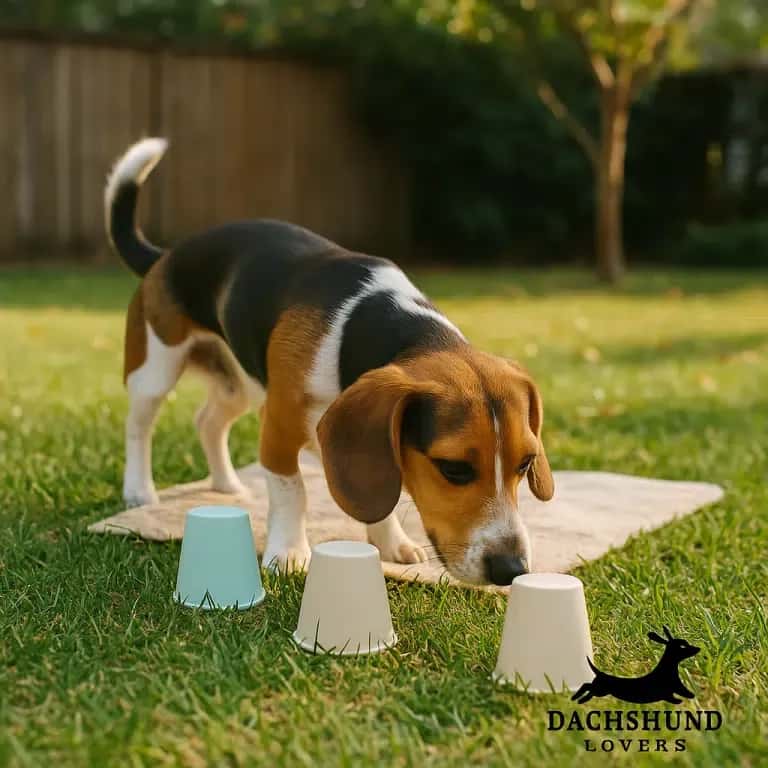
- Cup Game: Place treats under one of three cups, shuffle them, and let your Doxle use their nose to find the prize.
The AKC Nosework Program suggests that scent training “builds confidence and satisfies natural hunting instincts,” making it ideal for hound mixes like the Doxle.
Fun Tricks That Reinforce Obedience
Teaching tricks isn’t just fun — it improves focus and deepens your communication with your dog.
Try These Simple Tricks:
- Spin: Use a treat to guide them in a circle, rewarding when they complete the spin.
- High Five or Shake: Lift their paw gently while saying the command, then reward.
- Roll Over: Start with down, then use a treat to lure them over onto their side, eventually completing a roll.
- Take a Bow: Encourage them to stretch their front legs down while keeping the back up, rewarding when they hold the position.
Incorporating Puzzle Toys and Interactive Games
Interactive toys and puzzles can reinforce training while keeping your Doxle mentally stimulated.
- Puzzle Feeders: Make them “work” for their meals by hiding kibble in a puzzle toy.
- Kong Toys: Fill with frozen treats or peanut butter to keep them busy.
- DIY Snuffle Mats: Use old towels or felt strips to create a sniffing mat.
The Role of Clicker Training in Advanced Skills
Clicker training is a game-changer for clever but independent breeds like the Doxle. It provides instant, precise feedback that speeds up learning.
- Start simple: Teach your dog that the click = reward.
- Add complexity: Use the click to “mark” the exact behavior you want, like when they touch a target or sit quietly.
- Layer commands: Once your dog associates the click with success, you can chain commands together for multi-step tricks.
Daily Training Routine for Advanced Skills
A balanced training schedule prevents burnout and keeps progress consistent:
- Morning: 5 minutes of commands (sit, stay, heel) before breakfast.
- Afternoon: A 10-minute session of nose games or puzzle toys.
- Evening: A few minutes of trick training — spin, shake, or roll over.
Short bursts are more effective than long, repetitive drills. End every session on a positive note.
Key Takeaways: Advanced Training
Area | Focus |
|---|---|
Advanced Commands | Wait, heel, and place improve control and safety. |
Scent Games | Find-it and trail games satisfy hunting instincts and build focus. |
Fun Tricks | Spin, roll over, and high five reinforce basic obedience in creative ways. |
Puzzle Toys | Interactive feeders and Kongs prevent boredom and reinforce problem-solving. |
Clicker Training | Marks correct behavior quickly and helps with complex tricks. |
FAQs About Beagle Dachshund Mix Training
More From This Series:
Explore the full Beagle Dachshund Mix Collection for in-depth guides on care, training, and breed traits:
- Beagle Dachshund Mix: The Complete Doxle Guide
Your ultimate resource on Doxle temperament, size, coat colors, and health. - Beagle Dachshund Mix Temperament: Is the Doxle Right for You?
A deep dive into the personality traits, family fit, and quirks of this hybrid. - Beagle Dachshund Mix Size & Growth Chart
How big Doxles get and what to expect as they grow. - Beagle Dachshund Mix Lifespan & Health
Learn how long Doxles live, common health risks, and preventative care. - Beagle Dachshund Mix Coat Colors & Patterns
Explore their coat types, color variations, and grooming needs. - Beagle Dachshund Mix Grooming & Shedding Guide
How to manage shedding and keep your Doxle’s coat in peak condition. - Beagle Dachshund Mix Puppies: What New Owners Should Know
Essential tips for raising a happy and healthy Doxle puppy. - Beagle Dachshund Mix Cost & Adoption Guide
A complete breakdown of pricing, adoption, and finding reputable breeders. - Beagle vs Dachshund vs Doxle: Which Breed Fits Your Lifestyle?
Side-by-side comparison of beagles, dachshunds, and their hybrid.
Authored by
Ellie
Ellie is a lifelong dachshund lover and the proud human of Maple, a long-haired brown doxie with a regal side-eye. While not a vet, Ellie brings honest, researched, and experience-based insights into every article she writes for the Dachshund Lovers community.
Read moreEllie is a lifelong dachshund lover and the proud human of Maple, a long-haired brown doxie with a regal side-eye. While not a vet, Ellie brings honest, researched, and experience-based insights into every article she writes for the Dachshund Lovers community.
Read moreDisclaimer
This article was written by Ellie, a dachshund owner and enthusiast — not a veterinarian. Please consult your vet for personalized guidance.