Beagle Dachshund Mix Puppies: What New Owners Should Know
Beagle Dachshund Mix Puppies: What New Owners Should Know
Beagle Dachshund mix puppies don’t stay small for long. Here’s how to keep up with their energy, attitude, and surprisingly loud opinions.

Ellie
Posted on November 9, 2025.
Updated on July 21, 2026.
Table of Contents
- 1.Key Takeaways: Beagle Dachshund Mix Puppies
- 2.Doxle Puppy Care Basics
- •Routine Is Everything
- •Crate Training & Safe Spaces
- •Mental Stimulation: Scent Games
- •Exercise & Play
- •Quick Checklist for New Doxle Owners
- 3.Feeding Guide for Beagle Dachshund Mix Puppies
- •How Much Should a Doxle Puppy Eat?
- •Choosing the Right Food
- •Wet vs. Dry Food (and Mixing Both)
- •Treats & Training Snacks
- •Avoid Overfeeding
- •Hydration & Feeding Environment
- •Human Foods to Avoid
- •Transitioning to Adult Food
- •Key Takeaways: Feeding Guide
- 4.Training & Socialization for Doxle Puppies
- •Crate Training: A Safe Retreat
- •Potty Training: Routine + Patience
- •Basic Obedience Commands
- •Leash Training: Following, Not Leading
- •Mental Stimulation & Scent Games
- •Handling Stubbornness
- •Key Training Takeaway
- 5.Grooming & Health Basics for Doxle Puppies
- •Brushing: Establishing Early Habits
- •Bathing: Keep It Minimal
- •Nail Trimming: Start Early
- •Ear Cleaning: A Must for Doxles
- •Dental Health: Don’t Wait
- •Back Health & IVDD Prevention
- •Key Takeaways: Grooming & Health
- -More From This Series:
- -Disclaimer
Share

I’ll never forget the first time I saw a beagle dachshund mix puppy. It was in Rome, during a late summer evening in 2017, when my soon to be wife Caitln and I were wandering through Trastevere. There was this tiny pup, all floppy ears and short legs, trotting confidently behind its owner along the cobblestones. It had the soft, pleading eyes of a beagle and the slightly comical, low-to-the-ground stride of a dachshund. The owner smiled when I stopped to ask about it: “He’s a Doxle part beagle, part wiener dog. He runs the house already”.
That moment stuck with me because it summed up the Doxle perfectly: small in size, big in personality, and absolutely charming.
Beagle dachshund mix puppies often called Doxle puppies are a clever, affectionate hybrid, but they do come with quirks. A beagle’s independence mixed with a dachshund’s stubborn streak means they’ll test your patience if not guided early. Yet, with the right structure and care, they grow into loyal, playful companions who adore being part of the family.
Raising a Doxle isn’t about perfection; it’s about understanding the mix of traits you’re dealing with. According to the American Kennel Club’s Dachshund profile, dachshunds are “clever, lively, and courageous to the point of rashness.” Meanwhile, the AKC Beagle overview describes beagles as “merry and fun-loving, with a nose that knows everything.” Put those two together, and you have a puppy that’s curious, bold, and always ready for an adventure even if it’s just finding that one sock you’d rather they didn’t chew.
This guide will cover doxle puppy care basics, a feeding guide tailored to their growth, early training strategies, and the grooming tips you’ll need for those first 12 months.
Key Takeaways: Beagle Dachshund Mix Puppies
Topic | Summary |
|---|---|
Size & Growth | 4–7 lbs at 8–12 weeks; 15–30 lbs fully grown (12–15 months). |
Temperament | Playful, affectionate, but independent — early training is key. |
Doxle Puppy Care | Structure routines around meals, potty breaks, and rest. |
Feeding Guide | 3–4 small meals per day of high-quality puppy food. |
Training Needs | Begin crate and potty training at 8–10 weeks. |
Socialization | Expose to people, pets, and environments during 8–16 weeks. |
Grooming | Weekly brushing; frequent ear checks to avoid infections. |
Health Watchpoints | Back support (IVDD risk) and beagle ear issues. |
Exercise | Short play sessions; avoid stairs and jumping during early growth. |
Personality Quirks | Food-driven and persistent — great for reward-based learning. |
Doxle Puppy Care Basics

Raising a beagle dachshund mix puppy isn’t just about surviving the early weeks — it’s about setting up a foundation that shapes the dog they’ll become. Doxles are intelligent, playful, and full of character, but they thrive best with structure, consistency, and clear boundaries.
Routine Is Everything
Like all puppies, Doxles thrive on routine. The American Kennel Club (AKC) notes that predictable daily schedules for feeding, play, and naps help puppies feel secure and prevent behavioral issues.
A Typical Daily Routine for a Doxle Puppy:
- Morning: Potty break, short play session, and breakfast.
- Midday: Another potty break, 15–20 minutes of interactive play (puzzle toys or light fetch).
- Afternoon: Crate rest or nap time, followed by a short walk or supervised yard time.
- Evening: Dinner, gentle training exercises, and a final toilet break before bedtime.
Short, frequent potty breaks — every 1–2 hours at first — are essential. Doxle puppies have small bladders, and early consistency is key to success with potty training.
Crate Training & Safe Spaces
A crate is one of the most useful tools for doxle puppy care. It provides a safe, den-like environment for rest and helps with toilet training. Harvey, my silver dapple dachshund, slept in a crate for the first 6 months, and I swear it made all the difference in avoiding chewed furniture and accidents.
Crate Training Tips (Inspired by AKC Crate Training Basics):
- Place the crate in a quiet, cozy area of your home.
- Line it with a soft blanket or mat (bonus points if it smells like you).
- Introduce the crate slowly — leave the door open at first and toss treats inside.
- Never use the crate as punishment. It should feel like a safe retreat, not a time-out corner.
For a deeper dive into structured crate training, check our Beagle Dachshund Mix Training Guide.
Socialization Window: 8–16 Weeks
The VCA Hospitals Puppy Development Guide explains that the period between 8 and 16 weeks is crucial for shaping a confident, well-adjusted dog. During this stage, Doxle puppies should be gently exposed to:
- Different environments (parks, markets, outdoor cafés).
- A variety of sounds (traffic, vacuum cleaners, or even street musicians if you’re in a place like Rome).
- People of all ages, including kids.
- Other dogs — always supervised and in controlled settings.
Harvey’s best trait comes from early socialization: he can sit calmly at a café without barking at every passing dog or person. Doxles need that same early exposure. Though I need to have a bucket load of treats to keep him calm.
Mental Stimulation: Scent Games
Beagle dachshund mix puppies have incredible noses, thanks to both parent breeds. Without activities to channel this natural instinct, they can become bored or destructive.
- Scent Trails: Hide a few treats in small boxes or under cups for them to sniff out.
- Snuffle Mats: Scatter kibble across a snuffle mat for breakfast — it’s like a puzzle and meal combined.
- Short Training Games: Practice simple commands (sit, stay, come) using food rewards.
As DogTime highlights, scent-based games not only provide mental exercise but also reduce stress and improve behavior in scent-driven dogs (DogTime Beagle Guide).
Exercise & Play
Doxle puppies need short, gentle bursts of play — no long runs or high-impact jumping (to protect their growing spines). Two or three short play sessions (10–15 minutes) a day are perfect. Avoid stairs and high furniture; using pet ramps early on is a smart way to prevent back strain, a common issue inherited from dachshunds.
Quick Checklist for New Doxle Owners
- Puppy-proof your home (cords, shoes, and low-hanging bags are fair game for chewing).
- Create a cozy rest area (crate + playpen combo works well).
- Invest in a few puzzle toys or safe chew toys.
Establish a feeding schedule — 3–4 meals per day for puppies
Feeding Guide for Beagle Dachshund Mix Puppies
Feeding a beagle dachshund mix puppy is about finding the sweet spot between providing enough nutrition for growth and avoiding overfeeding because if there’s one thing both beagles and dachshunds have in common, it’s a serious love of food. Left unchecked, this mix can pack on weight fast, which isn’t just a cosmetic issue it puts stress on their long backs and joints.
During my 2017 to Europe, we were in Marseille , the Doxle puppy I met in Trastevere (a tiny tri-color named Giotto) was already showing his food drive. I remember his owner saying, “He’ll do any trick for a piece of prosciutto.” That’s the beagle side coming through these pups will happily train themselves if food is involved. But it also means you need to be mindful of portion control and feeding routines.
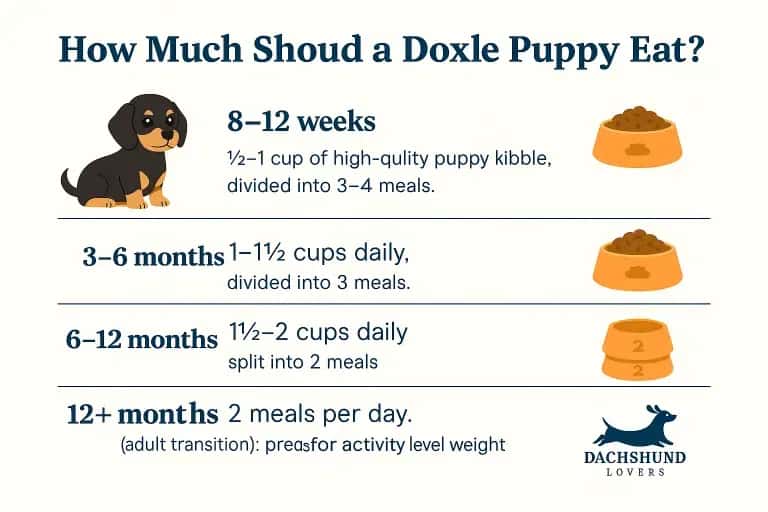
How Much Should a Doxle Puppy Eat?
The American Kennel Club (AKC) recommends dividing meals into 3–4 smaller feedings a day for puppies under six months. This helps maintain steady energy levels and avoids overloading their small stomachs.
General Portion Guidelines:
- 8–12 weeks: ½–1 cup of high-quality puppy kibble, divided into 3–4 meals.
- 3–6 months: 1–1½ cups daily, divided into 3 meals.
- 6–12 months: 1½–2 cups daily, split into 2 meals.
- 12+ months (adult transition): 2 meals per day, adjusted for activity level and weight.
Portions will vary based on your puppy’s size, metabolism, and activity level. Check with your vet for personalized recommendations, especially since dachshund-dominant Doxles (smaller frames) require fewer calories than beagle-dominant Doxles.
Choosing the Right Food
The quality of the food is just as important as the quantity. Look for puppy-specific formulas with:
- High-quality protein (chicken, turkey, salmon, or lamb as the first ingredient).
- Healthy fats (for energy and coat health).
- Balanced calcium and phosphorus (critical for bone and joint development).
- No fillers or artificial colors.
Brands often recommended by vets for small-to-medium breed puppies include Royal Canin, Hill’s Science Diet, and Orijen Puppy. If your Doxle has sensitive skin or stomach, consider a limited-ingredient formula.
Wet vs. Dry Food (and Mixing Both)
While dry kibble is excellent for dental health and convenience, many owners mix in a little high-quality wet food to increase palatability — especially during the teething stage when gums are sore. A mix of 75% dry and 25% wet can provide texture and added flavor while maintaining the benefits of kibble.
Treats & Training Snacks
Doxles are food-motivated learners, which makes training easier but also riskier for weight gain. Treats should make up no more than 10% of daily calories.
- Use pea-sized training treats during short sessions.
- Swap high-calorie treats for healthier alternatives like small apple slices (without seeds) or carrot sticks.
Pro Tip: For crate training or scent games, I often take a portion of Harvey’s kibble from his daily allowance and use it as rewards. That way, he’s not eating “extra” calories.
Avoid Overfeeding
Both beagles and dachshunds are prone to obesity, and the Doxle is no exception. Extra weight is more than just a belly issue — it increases the risk of intervertebral disc disease (IVDD), a condition dachshunds are particularly vulnerable to.
Signs of Overfeeding:
- Lack of a visible waistline (puppies should still have a slight “tuck” when viewed from above).
- Sluggishness or difficulty running.
- Constant soft stools (a sign of too much food or the wrong diet).
Regular weigh-ins — once a week for puppies — will help you stay on track. For detailed growth milestones, see our Beagle Dachshund Mix Size & Growth Chart.
Hydration & Feeding Environment
Always provide fresh water, especially during summer or after walks. Doxle puppies are active explorers, and proper hydration supports digestion and temperature regulation.
- Use shallow, non-slip bowls to prevent spills and reduce neck strain.
- Avoid “free feeding” (leaving food out all day). Stick to scheduled meals to build routine and avoid overeating.
Human Foods to Avoid
Some owners are tempted to share table scraps, but certain foods are toxic to dogs:
- Chocolate, caffeine, grapes, raisins, onions, garlic, and macadamia nuts.
- Rich, fatty meats (bacon, sausage) — they can upset sensitive stomachs.
- Anything containing xylitol (often found in gum or sugar-free snacks).
The ASPCA Animal Poison Control Center lists all dangerous foods in detail — worth bookmarking.
Transitioning to Adult Food
Around 12 months, start transitioning to an adult small-to-medium breed formula. Do this gradually over 7–10 days to avoid digestive upset:
- Day 1–2: 25% adult food, 75% puppy food.
- Day 3–4: 50/50 mix.
- Day 5–6: 75% adult food, 25% puppy food.
- Day 7+: 100% adult food.
Key Takeaways: Feeding Guide
Focus Area | Recommendation |
|---|---|
Meal Frequency | 3–4 small meals per day (puppies under 6 months). |
Best Food Type | High-protein puppy formula with balanced calcium/phosphorus. |
Treats & Snacks | Max 10% of daily calories — choose healthy, low-calorie options. |
Hydration | Fresh water available at all times. |
Weight Management | Monitor weekly; adjust portions as needed to prevent obesity. |

Training a beagle dachshund mix puppy is equal parts patience, persistence, and creativity. These pups inherit the beagle’s strong scent drive and the dachshund’s independent streak, which means they can be quick learners but also quick to ignore you if something more interesting like a whiff of yesterday’s barbecue catches their attention.
I remember a Doxle pup I met at Villa Borghese gardens in Rome during our 2017 Europe trip. He was around 10 weeks old, ears flopping as he bounded through the grass. His owner, an older Italian man, laughed as he tried to get the pup’s attention with a “Vieni qui!” (come here!). The puppy glanced back, nose deep in a trail of smells, and continued on like it had more pressing business. It was the perfect example of what makes these dogs such characters they’re smart, but they like to set their own agenda.
That’s why early training and socialization are so critical. The habits you build in the first 6–12 months will shape their behavior for life.
Why Early Training Matters
According to the American Kennel Club, the first 12 weeks are a crucial learning window. Puppies are like sponges — everything they experience (good or bad) leaves a lasting impression. For a Doxle, this means you need to establish boundaries, encourage positive behaviors, and prevent bad habits before they stick.
Key goals for early training:
- Potty training: Start the moment they come home.
- Crate training: Builds routine, security, and helps with toilet training.
- Basic commands: Sit, stay, come, and leave it.
- Leash skills: Essential for a scent-driven pup that likes to wander.
Crate Training: A Safe Retreat
Crate training is one of the best things you can do for a Doxle puppy. It gives them a safe place to relax, prevents accidents, and sets the tone for independence.
Crate Training Tips:
- Make the crate inviting: Use a soft bed and place a few safe chew toys inside.
- Introduce the crate slowly: Leave the door open at first and toss treats inside to build positive associations.
- Use meal times: Feeding your puppy in the crate can create an automatic comfort connection.
- Keep sessions short and positive, never use the crate as punishment.
For a detailed approach, see our Beagle Dachshund Mix Training Guide.
Potty Training: Routine + Patience
Potty training a Doxle puppy can take a little extra time, especially if they lean toward their stubborn dachshund side. The trick is consistency.
- Take them out every 2 hours, plus after meals and naps.
- Use a designated spot outside and reward them immediately when they go.
- Expect accidents — it’s normal. Clean up with an enzyme-based cleaner to remove any lingering scent that could encourage repeat mistakes.
The AKC Potty Training Guide suggests a structured schedule: after waking, after play, and right before bedtime.
Basic Obedience Commands
Start with the essentials:
- Sit: Easy to teach and builds impulse control.
- Stay: Teaches patience and focus.
- Come: Vital for recall, especially when your Doxle is chasing a scent.
- Leave it: Prevents them from picking up dangerous objects.
Keep sessions short — 5 to 10 minutes, 2–3 times per day. Use small, tasty treats and plenty of praise.
Leash Training: Following, Not Leading
Beagles are notorious for pulling because of their scent hound heritage, and dachshunds are no strangers to “doing their own thing.” Start leash training early with a no-pull harness to avoid strain on their back.
Training Tip:
Practice walking in quiet areas first. Use treats to reward them for walking beside you rather than pulling ahead.
Socialization: 8–16 Weeks Is Key
The VCA Hospitals Puppy Socialization Guide stresses that proper socialization during 8–16 weeks is essential to prevent fear or aggression later in life. For Doxles, socialization should include:
- Meeting other friendly dogs in controlled environments.
- Exposure to different people — kids, men with hats, people with umbrellas.
- Trips to pet-friendly cafés, markets, or parks.
- Gentle handling exercises (touch their paws, ears, tail) to prepare them for grooming and vet visits.
Mental Stimulation & Scent Games
A bored Doxle is a mischievous Doxle. Their hunting background means they crave mental challenges. Scent games are the perfect solution.
- Hide treats under cups and let them “find it.”
- Scatter kibble on a snuffle mat for them to sniff out.
- Use puzzle feeders to turn mealtime into a game.
Handling Stubbornness
Both parent breeds have a streak of independence. If your Doxle isn’t listening, don’t resort to punishment. Positive reinforcement (treats, play, praise) works far better.
As DogTime notes, “Doxles respond best to reward-based training and patience” (DogTime Doxle Overview).
Key Training Takeaway
Focus Area | Tip |
|---|---|
Start Early | 8–12 weeks is the prime learning stage. |
Crate Training | Builds security and helps with potty training. |
Basic Commands | Keep sessions short and reward-based. |
Socialization | Expose them to people, pets, and sounds during 8–16 weeks. |
Mental Games | Omega-3 oil, biotin (with vet approval) |
Grooming & Health Basics for Doxle Puppies
Beagle dachshund mix puppies (Doxles) are fairly low-maintenance, but grooming and early health routines are essential for their long-term well-being. Starting these habits early not only keeps them looking good but also builds trust, making future vet visits and home care much smoother.
Brushing: Establishing Early Habits
Even if your Doxle puppy has a short, sleek coat, weekly brushing is a must. It helps reduce shedding, keeps their skin healthy, and strengthens the bond between you and your pup.
- For smooth coats: Use a soft-bristle brush or grooming mitt once a week.
- For medium or feathered coats: Use a slicker brush 2–3 times per week to prevent tangles.
The AKC Grooming Guidelines emphasize that regular brushing improves coat health and helps you spot early signs of skin irritation or parasites.
Bathing: Keep It Minimal
Bathing too often strips natural oils from the coat. Aim for every 4–6 weeks, unless your puppy gets particularly dirty.
- Use a mild puppy shampoo (oatmeal-based options are ideal for sensitive skin).
- Always brush before bathing to remove loose fur.
- Dry gently with a towel or use a low-heat pet dryer for a fluffier finish.
Nail Trimming: Start Early
Getting your puppy comfortable with nail trimming early will save you stress later.
- Trim nails every 3–4 weeks.
- Use puppy nail clippers or a nail grinder for smoother results.
- Avoid the quick (the blood vessel in the nail) — trim small amounts at a time.
For step-by-step guidance, see the VCA Nail Care Guide.
Ear Cleaning: A Must for Doxles
Both beagles and dachshunds are prone to ear infections due to their floppy ears. A quick weekly ear check is essential:
- Use a vet-approved ear cleaner and a cotton pad to wipe away dirt.
- Watch for redness, swelling, or odor — all signs of infection.
The AKC Ear Cleaning Guide recommends making ear checks part of a regular grooming routine.
Dental Health: Don’t Wait
Small breeds like dachshunds are more prone to dental issues, so start brushing your Doxle’s teeth while they’re young.
- Use a dog-safe toothpaste (never human toothpaste).
- Brush 2–3 times a week to prevent tartar build-up.
- Pair brushing with dental chews or frozen carrot sticks for natural cleaning.
Vet Visits & Preventative Care
Your Doxle puppy’s first vet visit will set the tone for a lifetime of good health.
- Vaccinations: Typically start at 6–8 weeks, with boosters until 16 weeks.
- Parasite Prevention: Ask your vet about flea, tick, and heartworm medications.
- Weight Checks: Regular weigh-ins help track growth and prevent early obesity.
For growth stages and weight milestones, see our Beagle Dachshund Mix Size & Growth Chart.
Back Health & IVDD Prevention
Because of their dachshund heritage, Doxles can be prone to intervertebral disc disease (IVDD). Start preventive habits early:
- Avoid letting them jump off couches or beds.
- Use ramps or steps for furniture.
- Keep them lean to reduce pressure on their spine.
The VCA Dachshund Health Guide stresses that maintaining a healthy weight is one of the best ways to prevent IVDD.
Puppy Grooming Checklist
- Brush weekly (or 2–3 times for medium coats).
- Bathe every 4–6 weeks.
- Trim nails every 3–4 weeks.
- Check and clean ears weekly.
- Brush teeth 2–3 times per week.
- Regular vet visits for vaccinations and growth checks.
Key Takeaways: Grooming & Health
Focus Area | Recommendation |
|---|---|
Coat Care | Weekly brushing to reduce shedding and mats. |
Bathing | Every 4–6 weeks with mild puppy shampoo. |
Nail Care | Trim every 3–4 weeks to prevent discomfort. |
Ear Health | Weekly cleaning to prevent infections. |
IVDD Prevention | Use ramps, avoid jumping, and maintain a healthy weight. |
FAQs About Beagle Dachshund Mix Puppies
More From This Series:
Explore the full Beagle Dachshund Mix Collection for complete care, training, and health insights:
- Beagle Dachshund Mix: The Complete Doxle Guide
Your all-in-one resource for Doxle temperament, size, health, and coat colors. - Beagle Dachshund Mix Temperament: Is the Doxle Right for You?
A closer look at their personality, family compatibility, and unique traits. - Beagle Dachshund Mix Size & Growth Chart
Track your Doxle’s growth stages from puppyhood to adulthood. - Beagle Dachshund Mix Lifespan & Health
Lifespan expectations, common health risks, and preventive care tips. - Beagle Dachshund Mix Coat Colors & Patterns
Learn about their unique coat colors and markings. - Beagle Dachshund Mix Training Guide
Proven strategies for training a clever but sometimes stubborn Doxle. - Beagle Dachshund Mix Grooming & Shedding Guide
Grooming routines to keep your Doxle’s coat healthy and shiny. - Beagle Dachshund Mix Cost & Adoption Guide
Price ranges, adoption advice, and finding a reputable breeder. - Beagle vs Dachshund vs Doxle: Which Breed Fits Your Lifestyle?
Compare the personalities, sizes, and care needs of each breed.
Authored by
Ellie
Ellie is a lifelong dachshund lover and the proud human of Maple, a long-haired brown doxie with a regal side-eye. While not a vet, Ellie brings honest, researched, and experience-based insights into every article she writes for the Dachshund Lovers community.
Read moreEllie is a lifelong dachshund lover and the proud human of Maple, a long-haired brown doxie with a regal side-eye. While not a vet, Ellie brings honest, researched, and experience-based insights into every article she writes for the Dachshund Lovers community.
Read moreDisclaimer
This article was written by Ellie, a dachshund owner and enthusiast — not a veterinarian. Please consult your vet for personalized guidance.