Beagle Dachshund Mix Lifespan & Health
Beagle Dachshund Mix Lifespan & Health
How long does a Beagle Dachshund mix live? We explore the real-life Doxle lifespan, what affects it, and how to help your dog thrive through the years.

Ellie
Posted on November 8, 2025.
Updated on July 21, 2026.
Table of Contents
- 1.A Streak of Cream and Smoke in the South of Sydney
- 2.Key Takeaways: Beagle Dachshund Mix Lifespan & Health
- 3.How Long Does a Beagle Dachshund Mix Live?
- •Factors That Influence Doxle Lifespan
- -1. Weight Management and Body Condition
- -2. Exercise and Activity Levels
- -3. Preventive Veterinary Care
- -4. Genetics and Breeding Quality
- -5. Nutrition and Diet Quality
- •Average Lifespan by Parentage Influence
- •Lifespan Expectations
- •Key Health Watchpoints
- •Further Reading
- 4.Common Health Issues in Beagle Dachshund Mixes
- •1. Intervertebral Disc Disease (IVDD)
- •2. Obesity
- •3. Ear Infections
- •4. Dental Disease
- •5. Joint and Hip Issues
- •6. Eye Conditions
- •7. Other Health Concerns
- •How to Minimize Health Risks
- 5.How to Keep a Beagle Dachshund Mix Healthy
- •1. Diet and Nutrition
- •2. Exercise and Activity
- •3. Spinal Health and IVDD Prevention
- •4. Grooming and Skin Care
- •5. Dental Health
- •6. Vet Care and Health Monitoring
- •7. Supplements for Longevity
- •8. Environment & Lifestyle Adjustments
- •9. Socialization and Training
- •9. Senior Care
- -More From This Series:
- -Disclaimer
Share

A Streak of Cream and Smoke in the South of Sydney
I met Max, a 14-year-old Doxle, on an early morning walk at Wanda Beach. He wasn’t fast anymore, but his tail wagged like a puppy’s. His owner, a retired vet nurse, told me, “The key to his long life has been simple: keep the weight down, keep him moving, and don’t let him jump.” It’s advice that rings true for every beagle dachshund mix owner — especially since both parent breeds come with unique health challenges.
The average beagle dachshund mix lifespan is 12–15 years, but with proactive care, some live well into their 16th or 17th year. This longevity comes from the combination of two relatively healthy breeds, bolstered by what’s known as “hybrid vigor” — the genetic advantage often seen in crossbreeds. However, Doxles still inherit risks like:
- IVDD (Intervertebral Disc Disease) from the dachshund’s elongated spine (VCA Animal Hospitals – IVDD Guide)
- Obesity and ear infections from the beagle side (AKC Beagle Profile)
- Dental issues and early-onset arthritis if weight management or care is neglected (PetMD – Dog Arthritis)
This article breaks down the factors that influence lifespan, common health concerns, and practical steps you can take to keep your Doxle healthy at every stage of life. From diet and exercise to vet-recommended preventive care, it’s all about setting up a routine that supports their back, teeth, and overall well-being.
Key Takeaways: Beagle Dachshund Mix Lifespan & Health
Topic | Summary |
|---|---|
Average Lifespan | 12–15 years, with some reaching 16+ with good care and weight control. |
Health Risks | IVDD, obesity, ear infections, dental disease, arthritis, and eye conditions. |
Weight Management | A lean body (ribs easily felt, waistline visible) prevents spinal strain. |
Exercise Needs | 30–45 minutes of low-impact activity daily, including walks and sniff games. |
Preventive Vet Care | Annual check-ups, early dental care, ear cleaning, and IVDD monitoring. |
Senior Care | Adjust diet for reduced activity, add joint supplements (glucosamine/chondroitin), and schedule bi-annual vet visits after age 8. |
More Reading | See our Beagle Dachshund Mix Grooming & Diet Guide for feeding and coat health tips. |
How Long Does a Beagle Dachshund Mix Live?
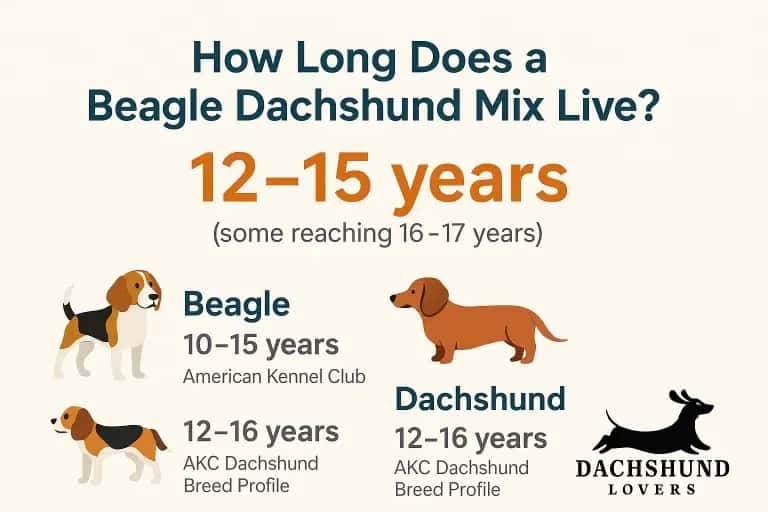
A healthy, well-cared-for beagle dachshund mix (Doxle) generally lives between 12 and 15 years, with some reaching 16 or 17 years. This lifespan is a balanced average derived from the longevity of its parent breeds:
- Beagles typically live 10–15 years, as noted by the American Kennel Club (AKC).
- Dachshunds are known for a longer lifespan, often 12–16 years, as highlighted in the AKC Dachshund Breed Profile.
Crossbreeding sometimes introduces hybrid vigor — a term describing the potential for mixed-breed dogs to inherit fewer genetic disorders compared to purebred parents. While this can benefit Doxles, it does not eliminate the need for proactive health management. Factors such as diet, exercise, genetics, preventive care, and mental stimulation have a direct impact on their lifespan.
Factors That Influence Doxle Lifespan
1. Weight Management and Body Condition
Weight is arguably the most critical factor for longevity. Doxles are prone to obesity due to their beagle heritage, while their dachshund genetics mean they have an elongated spine that is vulnerable to Intervertebral Disc Disease (IVDD).
Excess weight places pressure on the spinal discs, increasing the risk of injury or herniation. The VCA Animal Hospitals IVDD Guide emphasizes:
“Maintaining a lean body condition significantly reduces the likelihood and severity of IVDD in long-backed breeds.”
An adult Doxle’s ideal weight range is 15–30 pounds (7–13.5 kg), depending on whether they inherit a stockier beagle frame or a slimmer dachshund build. Weight should be checked monthly to prevent slow, unnoticed weight gain.
2. Exercise and Activity Levels
Doxles inherit high energy levels from both parent breeds, requiring at least 30–45 minutes of activity daily. A mix of physical exercise (walks, controlled play) and mental enrichment (scent trails, puzzle feeders, or interactive toys) supports both physical and cognitive health.
The Beagle Club of America notes that beagles thrive with scent-based games due to their hunting background. This applies to Doxles as well — activities like hide-and-seek with treats or controlled digging areas help satisfy natural instincts.
However, high-impact exercise (jumping off furniture, running up and down stairs) should be avoided to protect their spine. Low-impact activities such as flat walks or swimming (if introduced early) are excellent for joint health.
3. Preventive Veterinary Care
Annual veterinary check-ups are crucial for catching health problems early, while bi-annual visits are recommended after age 8. Key preventive measures include:
- Spinal health checks (especially for signs of IVDD).
- Dental care to prevent gum disease, which has been linked to heart and kidney problems (AVMA Dental Care Guide).
- Ear cleaning (beagle genes make them prone to ear infections).
- Weight assessments and dietary adjustments.
4. Genetics and Breeding Quality
The health of a Doxle’s parents plays a significant role in its lifespan. Puppies from responsible breeders, who screen for conditions like hip dysplasia, eye disorders, and spinal issues, tend to live longer and healthier lives. Conversely, poorly bred dogs may carry hidden genetic risks that reduce lifespan.
5. Nutrition and Diet Quality
High-quality dog food that prioritizes real protein (chicken, turkey, fish) as the first ingredient, balanced with healthy fats and essential vitamins, supports joint and coat health. Omega-3 fatty acids, for example, are well-documented to reduce inflammation and improve mobility in aging dogs (PetMD Nutritional Guide).
A Doxle should have:
- Puppies: 3–4 small meals per day until 6 months.
- Adults: 2 meals per day.
- Seniors: Reduced calories with continued protein to prevent muscle loss.
Average Lifespan by Parentage Influence
The parent breed dominance can subtly influence lifespan:
- Beagle-dominant Doxles: May have slightly shorter average lifespans (12–14 years) due to higher risks of obesity-related illnesses.
- Dachshund-dominant Doxles: Often live 13–16 years but may face a higher IVDD risk.
- Balanced mixes: Typically live 12–15 years with proper care, often benefiting from both breeds’ hardiness.
Lifespan-Extending Practices
- Maintain a Lean Weight
Studies show that lean dogs live up to 2 years longer than their overweight counterparts (Purina Lifespan Study). For Doxles, weight control also protects the spine from unnecessary stress. - Supportive Exercise Routines
Gentle daily walks combined with mental challenges (snuffle mats, puzzle feeders) can help prevent boredom-driven behaviors while keeping muscles strong. - Preventive Supplements
Vet-approved supplements like glucosamine, chondroitin, and omega-3 fatty acids may reduce joint inflammation and slow age-related degeneration, particularly for breeds prone to IVDD. - Spinal Safety Protocols
- Use dog ramps for beds, couches, and cars.
- Discourage jumping off furniture or climbing steep stairs.
- Use a supportive harness during walks to distribute pressure away from the neck.
5. Routine Dental Care
Brushing teeth 2–3 times per week, offering dental chews, or scheduling professional cleanings can prevent periodontal disease — a common yet preventable issue that impacts overall health and lifespan.
Lifespan Expectations
12–15 years is considered the normal lifespan for a healthy Doxle, with many reaching 16 if they remain active and trim. By comparison, overweight Doxles with limited exercise or unmanaged health issues may face a shorter lifespan, often 8–10 years. Preventive care is the deciding factor between an average life and a longer, healthier one.
Key Health Watchpoints
- IVDD (Intervertebral Disc Disease): A spinal condition common in dachshund mixes, preventable with weight control and activity moderation.
- Obesity: Leads to joint issues, diabetes, and heart disease.
- Ear Infections: Regular cleaning is vital due to their floppy ear shape.
- Dental Disease: Can affect organs and shorten life expectancy.
Further Reading
For deeper insights into maintaining a healthy weight and size, check our Beagle Dachshund Mix Size & Growth Chart. To learn about grooming and dietary choices that support a longer lifespan, see our Beagle Dachshund Mix Grooming & Diet Guide.
Common Health Issues in Beagle Dachshund Mixes

While the beagle dachshund mix (Doxle) is generally a healthy crossbreed, it still inherits certain health risks from its parent breeds. Understanding these conditions — and how to prevent or manage them — is crucial for extending your Doxle’s lifespan and quality of life.
The primary concerns for Doxles include IVDD (Intervertebral Disc Disease), obesity, ear infections, dental disease, and joint issues. Each issue has its own triggers and prevention strategies, but the unifying principle is simple: keep them lean, active, and regularly checked by a vet.
1. Intervertebral Disc Disease (IVDD)
IVDD is the single biggest health concern for Doxles due to their dachshund lineage. This condition occurs when the spinal discs — which act as cushions between the vertebrae — bulge or rupture, pressing on the spinal cord and causing pain, nerve damage, or paralysis.
Risk Factors:
- Long, low body structure (typical of dachshunds and some Doxles).
- Excess weight, which adds strain to the spine.
- High-impact activities like jumping off furniture or climbing stairs.
Symptoms to Watch For:
- Difficulty walking or reluctance to move.
- Yelping when picked up or touched on the back.
- Dragging of the hind legs or sudden paralysis.
Prevention Tips:
- Maintain a healthy weight. Even 1–2 extra pounds can increase IVDD risk.
- Use ramps or pet stairs for beds, couches, and cars.
- Avoid rough play or high jumps.
- Harness, not collar: Use a Y-shaped harness during walks to avoid pressure on the spine.
The VCA Animal Hospitals IVDD Guide strongly emphasizes weight management and controlled exercise as key prevention strategies.
2. Obesity
Beagles are known for their hearty appetites, and dachshunds are no strangers to extra weight. Combined, a Doxle is at high risk of obesity if feeding isn’t carefully managed. Obesity doesn’t just affect energy levels — it’s a major contributor to IVDD, arthritis, heart disease, and diabetes.
Prevention Tips:
- Feed a measured, portion-controlled diet (no free-feeding).
- Use low-calorie, high-value training treats like small pieces of cooked chicken or carrots.
- Avoid table scraps and high-fat snacks.
- Aim for 30–45 minutes of daily exercise, broken into shorter walks.
The Pet Obesity Prevention Association notes that “even small amounts of extra weight can shorten a dog’s lifespan by up to 2 years.”
3. Ear Infections
Beagles are prone to ear infections because their floppy ears trap heat, moisture, and debris. This trait often carries over to Doxles. If not cleaned regularly, the warm, damp environment inside their ears can lead to bacterial or yeast infections.
Signs of Ear Infection:
- Frequent scratching or pawing at ears.
- Foul odor or discharge.
- Head shaking or sensitivity when touched.
Prevention Tips:
- Check ears weekly for redness, odor, or buildup.
- Clean gently with a vet-approved ear cleaner.
- Keep ears dry after baths or swimming.
The American Kennel Club (AKC) advises that regular ear maintenance is especially important for breeds with floppy ears like beagles.
4. Dental Disease
Small and medium-sized breeds, including dachshunds, are prone to plaque buildup and periodontal disease. Poor dental hygiene can lead to painful gum infections, tooth loss, and even systemic health issues (heart and kidney disease).
Prevention Tips:
- Brush teeth 2–3 times a week with a dog-safe toothpaste.
- Provide dental chews or raw bones to help reduce plaque naturally.
- Schedule annual dental check-ups and cleanings.
The AVMA Dental Care Guide states:
“Periodontal disease is one of the most common health conditions in dogs — by age 3, over 80% show some form of dental disease.”
5. Joint and Hip Issues
While less common than IVDD, some Doxles may inherit joint problems or mild hip dysplasia from the beagle side. These issues can cause stiffness, lameness, or reduced mobility.
Prevention Tips:
- Keep your Doxle lean to minimize joint stress.
- Add joint supplements (glucosamine, chondroitin) starting in adulthood.
- Encourage low-impact activities like walking or swimming.
For guidance on exercise balance, see our Beagle Dachshund Mix Size & Growth Chart, which outlines age-specific activity levels.
6. Eye Conditions
Beagles and dachshunds can both be prone to progressive retinal atrophy (PRA) and cataracts. These conditions usually appear in senior years and may lead to partial or full blindness.
Signs to Watch For:
- Cloudy or hazy eyes.
- Bumping into furniture or walls.
- Reluctance to go out at night.
Prevention & Care:
- Annual vet eye exams, especially after age 6.
- Keep home layouts consistent to prevent confusion for vision-impaired dogs.
- Use antioxidant-rich diets that promote eye health (consult your vet for brands).
7. Other Health Concerns
- Allergies: Doxles can inherit skin sensitivities from both parent breeds.
- Epilepsy: Beagles have a known predisposition for seizure disorders, which can appear in crossbreeds.
- Hypothyroidism: A condition where the thyroid gland underperforms, leading to weight gain and lethargy.
These conditions are less common but worth monitoring during routine check-ups.
How to Minimize Health Risks
- Early Vet Visits and Screening
Annual exams catch problems early, from dental disease to IVDD symptoms. After age 8, switch to bi-annual vet visits. - Regular Grooming and Inspection
Weekly brushing helps you spot lumps, bumps, or skin issues. Our Beagle Dachshund Mix Grooming & Diet Guide explains how grooming doubles as a health check. - Safe Environment
Invest in pet ramps and non-slip mats to prevent back strain. Keep hazardous foods and objects out of reach — beagles are notorious scavengers. - Balanced Diet
Feed high-quality kibble with protein (meat-based) as the first ingredient. Avoid fillers like corn and wheat. Add fish oil or omega-rich supplements for joint and coat health.
Monitor Behavior Changes
Sudden changes in activity, eating habits, or posture can signal pain or health issues. Quick veterinary intervention can save months of discomfort and prevent long-term damage.
How to Keep a Beagle Dachshund Mix Healthy

Keeping a beagle dachshund mix (Doxle) healthy is all about balance — the right weight, the right exercise, and the right preventive care. This hybrid combines the beagle’s hearty appetite and high energy with the dachshund’s long spine and stubborn streak, which means a tailored approach to care is essential.
The goal? Keep them lean, mentally engaged, and safe from injuries — especially spinal issues like IVDD. Below are the key pillars of a healthy Doxle lifestyle, backed by expert insights from AKC, VCA Animal Hospitals, and PetMD.
1. Diet and Nutrition
Why It Matters:
Beagles are notorious for their love of food, and dachshunds are prone to weight gain. Together, this can lead to rapid weight gain if feeding isn’t carefully managed — and extra pounds can put serious strain on their long back.
Feeding Guidelines:
- Puppies (8 weeks to 6 months): 3–4 small meals per day.
- Adults (6–12 months): Transition to 2 meals per day.
- Seniors (7+ years): Switch to lower-calorie formulas with joint support (glucosamine/chondroitin).
Choosing the Right Food:
Look for high-quality kibble where meat is the first ingredient, with moderate fat levels and added omega-3s for joint health. Avoid filler-heavy kibble with corn or soy as the main ingredient. According to PetMD’s dog nutrition guide, nutrient-rich foods reduce the risk of obesity and improve coat health.
Portion Control:
Doxles have “bottomless stomach syndrome” from the beagle side — they’ll eat anything and everything. Use a kitchen scale or measuring cup for precise portions. Treats should make up no more than 10% of daily calories.
For more on balanced feeding, see our Beagle Dachshund Mix Grooming & Diet Guide.
2. Exercise and Activity
Daily Requirement:
Doxles thrive with 30–60 minutes of daily activity, split into shorter walks or play sessions. Without enough exercise, they can become destructive or vocal — a classic beagle trait.
Low-Impact Activities:
Because of their dachshund spine, avoid jumping, running up and down stairs, or rough fetch games. Instead, focus on:
- Flat walks around your neighborhood or park.
- Scent-based games, like hiding treats in boxes or under leaves.
- Puzzle feeders and snuffle mats, which combine mental and physical stimulation.
Why Mental Stimulation Matters:
A bored Doxle is a mischievous Doxle. Enrichment games — from treat puzzles to hide-and-seek with toys — satisfy their natural hunting instincts and prevent anxiety.
3. Spinal Health and IVDD Prevention
Why It Matters:
Doxles inherit the dachshund’s long back, which makes them prone to IVDD (Intervertebral Disc Disease). Preventing injury is far easier (and cheaper) than treatment.
Spinal Safety Tips:
- Use dog ramps for furniture and cars.
- Avoid stair climbing — install gates if necessary.
- Harnesses over collars: A Y-style harness distributes pressure safely across the chest rather than the neck and spine.
- Keep them lean — even 1–2 extra pounds significantly increases IVDD risk (VCA IVDD Guide).
4. Grooming and Skin Care
Coat Maintenance:
Most Doxles have a short to medium coat that requires brushing once or twice a week. Long-haired mixes may need 2–3 sessions to prevent tangles. Seasonal shedding (spring and autumn) is common, especially for beagle-dominant coats.
Bathing:
A bath every 4–6 weeks is ideal unless they roll in something smelly. Use a gentle, dog-specific shampoo to avoid stripping natural oils.
Ear Care:
Their floppy ears need weekly checks and cleaning to prevent infections. Use a vet-approved ear cleaner and a cotton pad — never cotton swabs.
Nail Trimming:
Trim nails every 3–4 weeks to prevent discomfort or abnormal gait.
See our Beagle Dachshund Mix Coat Colors & Patterns guide for coat-specific grooming tips.
5. Dental Health
Dental issues are a silent killer in small-to-medium breeds. By age 3, 80% of dogs show signs of periodontal disease (AVMA Dental Care Guide).
Prevention Checklist:
- Brush teeth 2–3 times per week with a canine toothpaste.
- Offer dental chews or safe raw bones to naturally reduce plaque.
- Schedule annual professional cleanings.
6. Vet Care and Health Monitoring
Routine Vet Visits:
- Annual check-ups for dogs under 7 years old.
- Bi-annual exams for seniors (7+ years).
Vaccinations & Preventatives:
Stay up to date on core vaccinations, flea/tick preventatives, and heartworm treatments.
Screenings:
Request regular checks for spinal health, ear infections, and dental disease. For senior Doxles, blood panels help detect early signs of thyroid issues, kidney function decline, or diabetes.
7. Supplements for Longevity
Supplements can help prevent or manage breed-specific health concerns:
- Glucosamine & Chondroitin: Supports joints and spine health.
- Fish oil or omega-3s: Reduces inflammation and keeps the coat shiny.
- Probiotics: Improves digestion, especially in older Doxles.
Always consult your vet before starting supplements, as over-supplementation can be harmful.
8. Environment & Lifestyle Adjustments
- Non-slip rugs or mats prevent sliding accidents on hardwood floors.
- Orthopedic beds support the spine and joints during rest.
- Safe play zones: If you live in an apartment, create a designated indoor play area with ramps and enrichment toys.
Good training and socialization are just as important for health as diet and exercise. Early exposure to parks, other dogs, and household sounds reduces anxiety-driven behaviors like barking or chewing.
For training strategies, see our Beagle Dachshund Mix Training Guide.
9. Senior Care
As Doxles age (around 8+ years), they may need lifestyle adjustments:
- Shorter, more frequent walks to reduce joint strain.
- Senior-formula diets with fewer calories but high protein.
- Bi-annual vet exams to catch early signs of arthritis or vision loss.
- Provide ramps, orthopedic bedding, and temperature control (seniors struggle with heat or cold).
FAQs About the Beagle Dachshund Mix
More From This Series:
Explore the full Beagle Dachshund Mix Collection for in-depth guides on care, training, and breed traits.
- Beagle Dachshund Mix: The Complete Doxle Guide
Your ultimate resource on Doxle temperament, size, coat colors, and health. - Beagle Dachshund Mix Temperament: Is the Doxle Right for You?
A deep dive into the personality traits, family fit, and quirks of this hybrid. - Beagle Dachshund Mix Lifespan & Health
Learn how long Doxles live, common health risks, and preventative care. - Beagle Dachshund Mix Coat Colors & Patterns
Explore their coat types, color variations, and grooming needs. - Beagle Dachshund Mix Training Guide
Effective strategies for training a clever but stubborn Doxle. - Beagle Dachshund Mix Grooming & Shedding Guide
How to manage shedding and keep your Doxle’s coat in peak condition. - Beagle Dachshund Mix Puppies: What New Owners Should Know
Essential tips for raising a happy and healthy Doxle puppy. - Beagle Dachshund Mix Cost & Adoption Guide
A complete breakdown of pricing, adoption, and finding reputable breeders.
Beagle vs Dachshund vs Doxle: Which Breed Fits Your Lifestyle?
Side-by-side comparison of beagles, dachshunds, and their hybrid.
Authored by
Ellie
Ellie is a lifelong dachshund lover and the proud human of Maple, a long-haired brown doxie with a regal side-eye. While not a vet, Ellie brings honest, researched, and experience-based insights into every article she writes for the Dachshund Lovers community.
Read moreEllie is a lifelong dachshund lover and the proud human of Maple, a long-haired brown doxie with a regal side-eye. While not a vet, Ellie brings honest, researched, and experience-based insights into every article she writes for the Dachshund Lovers community.
Read more
Disclaimer
This article was written by Ellie, a dachshund owner and enthusiast — not a veterinarian. Please consult your vet for personalized guidance.