Are Dachshunds High Energy?
Are Dachshunds High Energy?
From morning zoomies to evening snuggles, here’s my honest breakdown of how active dachshunds really are, based on daily life and our experiences with Harvey.

James
Posted on October 30, 2025.
Updated on July 21, 2026.
Table of Contents
- 1.KKey Takeaways on Dachshund Energy Levels
- 2.Understanding Dachshund Energy Levels
- 3.How Much Exercise Do Dachshunds Really Need?
- 4.Signs Your Dachshund Is High Energy
- •Managing and Balancing Dachshund Energy
- •Quick Guide: Balancing Dachshund Energy
- 5.Energy Differences by Age
- -Dachshund Energy by Age
- •More From This Series
- -Disclaimer
Share

I’ve lost count of the number of times people, friends and family have asked me whether dachshunds are high-energy dogs, often referring to our dachshund Harvey. Usually, it comes from someone who’s only seen them napping in a sunny corner or waddling around the park at a slow pace. On the surface, they look like laid-back loungers. But spend enough time with one like our boy Harvey and you realise it’s not that simple.
Harvey’s routine is proof. He’ll happily spend most of the morning curled up after breakfast chasing the morning sun, completely uninterested in walking. But come late afternoon? It’s like someone flicked a switch. He bolts around the backyard, chases after his ball, and demands to explore the neighbourhood. His energy comes in bursts not a steady drip, but quick surges spread through the day.
Research backs this up. According to the American Kennel Club, dachshunds are classed as a moderately active breed, bred to hunt badgers with short, powerful sprints underground. They weren’t built for marathon stamina, but they were built for intensity when their instincts kick in. The RSPCA NSW also notes that smaller breeds often require more mental stimulation than many owners realise, which adds to the “high energy” perception.
So, are dachshunds high energy? The answer isn’t a simple yes or no. They’re not endurance dogs, but they’re not couch potatoes either. They’re burst-driven dogs lively when they want to be, stubbornly restful when they don’t. Understanding this is the key to managing their exercise, behaviour, and happiness.
KKey Takeaways on Dachshund Energy Levels
Topic | Summary | Key Notes |
|---|---|---|
Natural Drive | Dachshunds are bred hunters with strong bursts of energy. | Originally designed for underground work; quick, intense activity rather than long stamina. |
Daily Exercise Needs | They require regular activity to stay balanced. | 30–60 minutes of daily movement recommended (AKC). Short walks and play sessions are best. |
Energy Rhythm | Their energy comes in peaks and dips. | Many (like Harvey) sleep most mornings, then surge with energy in late afternoon or evening. |
Mental Stimulation | Energy isn’t just physical. | RSPCA NSW highlights the need for puzzles, toys, and engagement to prevent boredom. |
Indoors vs Outdoors | Small bodies, big curiosity. | They can adapt to apartments, but without stimulation, pent-up energy often shows as barking or digging. |
Signs of High Energy | Watch how they channel it. | Zoomies, digging, barking, and stubborn play-chasing are all common outlets. |
Managing Energy | Balance is key. | Combine walks, sniffing time, and mental games. Overexertion risks back strain (VCA Hospitals). |
Not One-Size-Fits-All | Energy levels vary across dachshunds. | Genetics, age, and lifestyle shape how “high energy” they appear. Harvey thrives on short, lively bursts — not long endurance. |
Understanding Dachshund Energy Levels
When people talk about whether dachshunds are “high energy,” it usually comes down to expectations. If you’re comparing them to a border collie or a kelpie, the answer is no — they don’t have that relentless drive to work all day. But if you’re comparing them to a pug or a greyhound, suddenly a dachshund looks like the energetic one in the room.
The truth sits in the middle. Dachshunds were bred as hunting dogs — small enough to follow prey underground, but tenacious enough to dig, chase, and bark until the job was done. According to the American Kennel Club, their purpose was to work in short, sharp bursts of activity. That instinct hasn’t gone away. Even now, Harvey will spend twenty minutes frantically digging at the corner of our backyard like he’s convinced something’s hiding there, then crash for hours as if nothing happened.
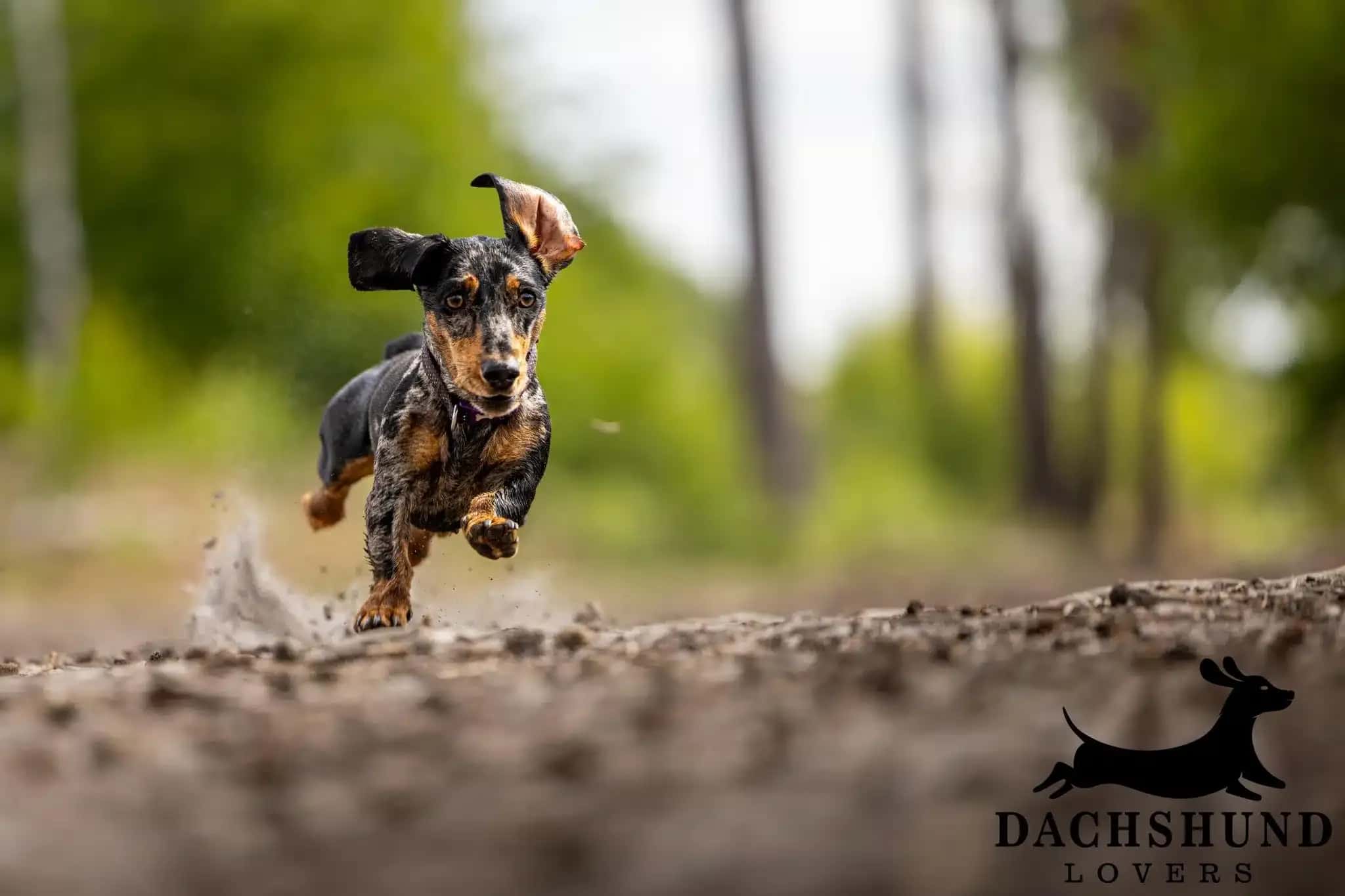
What sets dachshunds apart isn’t the amount of energy they have, but the pattern of how it shows up. They’re burst-driven dogs. One moment they’re snoozing on the couch, the next they’re tearing down the hallway with zoomies that look like they could carry them into orbit. Caitlin often jokes that Harvey has two settings: “statue” and “rocket.”
The RSPCA NSW notes that many small breeds are underestimated when it comes to mental energy as well. For dachshunds, that’s particularly true. Bred to problem-solve underground, they crave challenges — puzzle feeders, scent games, or even just being allowed to sniff their way through a walk. Without that outlet, the energy turns into something else: barking, chewing, or digging in places you wish they wouldn’t.
And then there’s the rhythm of their day. In our house, Harvey is practically immovable in the mornings. Breakfast, toilet, then straight back to bed. But by late afternoon, he’s pacing at the door, ready to burn off his reserves. That rhythm long stretches of low activity punctuated by sudden bursts is typical of the breed.
So, are dachshunds “high energy”? The better answer is that they’re high-intensity, low-endurance. They’ll give you everything they’ve got in a short window, but they’re not designed to go all day. Once you understand that pattern, you can start tailoring their exercise and routines to match.
How Much Exercise Do Dachshunds Really Need?
There’s no single formula for dachshund exercise. Every doxie has their own rhythm, quirks, and limitations. What’s consistent, though, is that they need daily activity both physical and mental — to stay balanced. Without it, you’ll usually see the frustration show up in barking, digging, or stubborn behaviour.
The recommended baseline.
The American Kennel Club sets the benchmark at 30–60 minutes of activity per day for dachshunds. But it’s important to remember this is a guideline, not a prescription. What matters most is how that time is spent. A steady 60-minute jog will do more harm than good for a dachshund’s spine. But two 20-minute walks, broken up with play and sniff breaks, usually hit the sweet spot. We break this down further in our guide on How Much Exercise Do Dachshunds Need.
Short bursts, not marathons.
Dachshunds were bred to hunt badgers — short, sharp, high-intensity work underground. They were never meant for distance running. That’s why long endurance exercise (like a 5 km jog) isn’t suitable. Instead, think quality bursts: a 25-minute evening walk around the neighbourhood, followed by a 10-minute game of tug or fetch in the backyard. These smaller sessions keep energy balanced without overloading the spine.
Mental exercise counts.
One mistake many owners make is only focusing on physical exercise. Dachshunds also need brain work. The RSPCA NSW highlights that small, intelligent breeds benefit from mental stimulation just as much as physical activity. Puzzle feeders, scent games, or simply letting your dachshund sniff their way through a walk can burn energy in ways a straight-line stroll never will. Harvey, for example, can spend 15 minutes happily “working” on a snuffle mat — and afterwards he’s just as satisfied as if he’d walked a kilometre.
Timing is everything.
Exercise isn’t just about minutes; it’s about rhythm. Harvey is the definition of a “burst dog.” In the mornings, he’s dead weight — we’ve tried early walks, but after breakfast he’s back in bed, uninterested. By late afternoon, though, it’s like he’s charged his batteries. That’s when we head out. Sometimes it’s a walk along the Cronulla Esplanade, other times a short bush trail in allowed sections near the Royal National Park. The setting matters less than the timing. Matching exercise to their natural rhythm gets far better results than forcing it when they’re flat.
Mixing surfaces and settings.
Flat suburban paths are fine, but variety keeps a dachshund fitter — and more interested. Harvey does well with beach outings (see our Dachshund Beach Guide), where sand forces him to work his muscles differently, but we always keep those sessions short to avoid paw irritation. Trails are another good option, as long as the terrain is safe (covered in more depth in Hiking with Dachshunds).
Know when to stop.
Overdoing exercise is a genuine risk. Dachshunds are prone to intervertebral disc disease (IVDD), and repetitive strain makes it worse. VCA Hospitals warns against too much jumping, running on hard ground, or back-to-back heavy activity days. That’s why I enforce rest. If Harvey has a big outing on Saturday, Sunday becomes a recovery day. Exercise is about consistency, not constant intensity.
So, how much exercise do dachshunds really need? Enough to burn off their natural bursts, to keep them lean and strong, and to stimulate their problem-solving brain. But never so much that it risks their spine or leaves them exhausted for days. In practice, that usually means 30–60 minutes a day — broken up, tailored to your dog’s rhythm, and supported with mental challenges.
Signs Your Dachshund Is High Energy
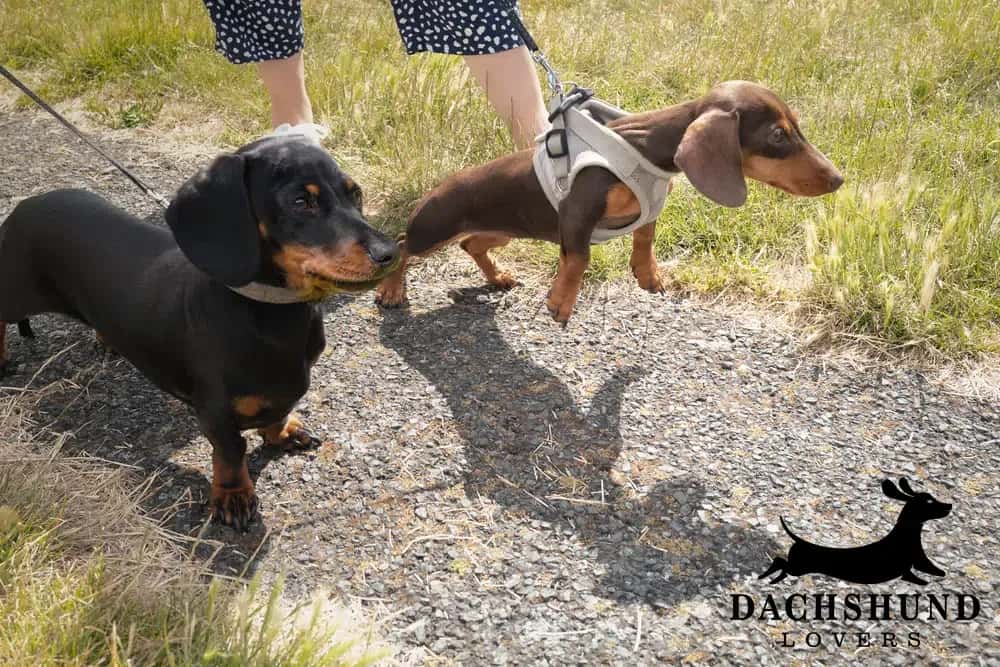
Not every dachshund shows their energy in the same way. Some are content with a couple of walks and plenty of naps. Others — often the ones that catch people off guard — demand constant stimulation. If you’re wondering whether your dachshund falls into the “high energy” camp, here are the signs I’ve seen most often, both with Harvey and across the breed.
Zoomies on repeat.
Zoomies are normal for most dogs, but a high-energy dachshund will do them more often, and at times you least expect. Harvey can go from dozing on the couch to tearing through the hallway at full speed in seconds. According to PetMD, this is a common way for dogs to release pent-up energy — especially if they’re not getting enough structured exercise.
Digging like it’s a full-time job.
Dachshunds were bred to dig, so this isn’t surprising. But when the digging gets obsessive — holes in the backyard, couch cushions flipped, carpet scratched — it’s usually a signal of excess energy. I’ve seen Harvey start excavating in our garden beds after a few rainy days stuck indoors. Once we give him a walk or puzzle game, the digging slows down.
Constant barking or vocalising.
A dachshund with too much unspent energy often turns to their voice. The RSPCA NSW explains that barking is often a sign of boredom or frustration in small breeds. If your dachshund seems to bark at every sound, or “talks” at you throughout the day, it could be their way of asking for more activity.
Restlessness at home.
Some dogs happily flop after a walk. A high-energy dachshund will wander, pace, or look for mischief even after exercise. Harvey sometimes does this in the evenings if he hasn’t had enough sniffing time earlier in the day. It’s less about distance walked and more about whether his brain got a workout.
Demanding play.
All dachshunds love attention, but high-energy ones will push harder — nudging toys into your lap, pawing at your leg, or barking to initiate a game. It’s their way of saying, “I’m not done yet.”
Slow to tire out.
Most dachshunds hit a natural wall after a burst of activity. High-energy ones keep pushing. If your doxie can handle multiple long play sessions and still be ready for more, you’re likely looking at a dog with higher-than-average drive.
The important thing to remember is that “high energy” doesn’t equal “bad.” It just means you need to give your dachshund more outlets — whether that’s longer sniff walks, puzzle toys, or safe adventures like the beach or trails. Without those outlets, that energy will find its own way out — usually in ways you’d rather avoid.
Managing and Balancing Dachshund Energy
The challenge with dachshunds isn’t just their bursts of energy — it’s knowing how to channel them without overdoing it. Too little, and you end up with a frustrated dog digging up your garden. Too much, and you risk strain on their back and joints. Balance is everything.
Structured walks.
Walks are the backbone of energy management. Shorter, consistent outings work far better than occasional long ones. As we covered in the Dachshund Walking Guide, a 20–30 minute walk twice a day beats a single exhausting session. Mixing in sniff breaks also satisfies their hunting instincts, which burns mental energy as much as physical.
Playtime with purpose.
High-energy dachshunds need an outlet at home. Tug-of-war, fetch (with controlled throws, no staircases), or interactive toys can all help. Puzzle feeders are especially effective — the RSPCA NSW recommends enrichment activities to prevent boredom-related behaviours in small breeds. Harvey will happily spend 15 minutes working his way through a snuffle mat, and afterwards, he’s calm and ready to rest.
Safe adventures.
Mixing up environments keeps things interesting. Beach trips, short hikes, or even a change of neighbourhood walk can do wonders. But the key is knowing limits. When we take Harvey on bush trails, I always bring a carrier backpack (see our Hiking with Dachshunds) because once he’s done, he’s done — and carrying him in my arms isn’t realistic.
Enforced rest.
It sounds counterintuitive, but part of managing a dachshund’s energy is ensuring they stop. Overexertion is one of the biggest risk factors for intervertebral disc disease (IVDD), and dachshunds are predisposed. That’s why if Harvey has a busy Saturday (say, a beach morning and an afternoon playdate), Sunday is quiet by design.
Training as energy outlet.
Obedience work and trick training are underrated. Teaching commands like “wait,” “stay,” or even fun ones like “spin” give a dachshund focus and control, while tiring them out mentally. Ten minutes of training can burn as much energy as a short walk.
In the end, managing a dachshund’s energy is about rhythm. Let them burn it in safe bursts, balance it with rest, and give their brain a job to do. Harvey isn’t a “tireless dog” by any means, but when we hit that balance — a walk, some sniffing, a puzzle game, then downtime — he’s content. And that’s the goal.
Quick Guide: Balancing Dachshund Energy
Activity Type | Frequency | Why It Matters | Notes for Owners |
|---|---|---|---|
Structured Walks | 20–30 mins, 1–2 times daily | Burns energy in safe, consistent bursts. | Prioritise controlled pace + sniffing over distance. |
Playtime at Home | 10–15 mins, 1–2 times daily | Provides an outlet for bursts of energy. | Tug, fetch, or toy rotation works well. Avoid high jumps or stairs. |
Mental Stimulation | Daily | Engages their problem-solving instincts. | Use puzzle feeders, snuffle mats, or simple hide-and-seek games. |
Adventure Outings | Weekly (short trips) | Adds variety and enriches their environment. | Beaches, parks, or short hikes — bring a carrier backpack as backup. |
Rest Days | As needed | Prevents overexertion and spinal stress. | If activity was high yesterday, scale back today. |
Training Sessions | 5–10 mins, 3–4 times weekly | Burns mental energy and reinforces good behaviour. | Short, positive sessions — focus on consistency, not duration. |
Energy Differences by Age
Not all dachshunds show their energy in the same way. Age has a huge impact on how much activity they need, how they spend their energy, and how quickly they recover. Puppies burn hot and fast, adults settle into rhythms, and seniors conserve what they’ve got. Knowing the differences helps you tailor routines that work with your dachshund’s stage of life — not against it.
Puppies (under 12 months).
Puppies are bursts of chaos followed by naps. Their growth plates are still developing, so long hikes or stair climbing are dangerous. Instead, focus on short, gentle play sessions and basic training. Mental work is just as important as physical, and it helps channel their natural curiosity.
Adults (1–7 years).
Most dachshunds hit their energy peak in adulthood. They thrive on daily exercise and regular enrichment. Harvey, now in his adult years, is proof: he may nap a lot, but when he’s “on,” he needs structured outlets or the digging and barking start. This is the stage where balance matters most — enough activity to burn energy, but not so much that it strains their back.
Seniors (7+ years).
Older dachshunds slow down, but they don’t lose their need for stimulation. Walks should be shorter and gentler, but still daily. Mental engagement — puzzle toys, light training refreshers — helps keep their mind sharp. Senior dachshunds also need more rest days, and any sudden loss of energy should be checked by a vet.
Dachshund Energy by Age
Age Group | Typical Energy Pattern | Exercise Focus | Key Notes |
|---|---|---|---|
Puppies | Short, chaotic bursts with frequent naps | Gentle play, short walks, early training. | Avoid stairs, jumping, or long-distance walks; growth plates still forming. |
Adults | Balanced but intense bursts; need structured outlets. | Daily walks (30–60 mins split), play, enrichment. | Ideal age for variety — mix walks, play, hikes, and mental stimulation. |
Seniors | Slower pace, conserve energy, longer naps. | Shorter walks, gentle play, puzzle games. | Prioritise joint health; watch for stiffness, fatigue, or sudden slowdown. |
FAQs
More From This Series
- How Much Exercise Do Dachshunds Need
- Dachshund Swimming
- Dachshund Walking Guide
- Hiking with Dachshunds
- Are Dachshunds High Energy?
- Dachshund Beach Guide
Authored by
James
James is the founder of Dachshund Lovers and the proud human of Harvey, a mini dapple with a big personality. He writes to empower and connect the dachshund community, blending founder insights with honest, experience-based stories about life with this incredible and special breed. James brings candid, experience-backed opinions to the community and always focused on fewer, better products and ideas that genuinely improve life for dachshunds and their people.
Read moreJames is the founder of Dachshund Lovers and the proud human of Harvey, a mini dapple with a big personality. He writes to empower and connect the dachshund community, blending founder insights with honest, experience-based stories about life with this incredible and special breed. James brings candid, experience-backed opinions to the community and always focused on fewer, better products and ideas that genuinely improve life for dachshunds and their people.
Read moreDisclaimer
This content is for informational purposes only and should not be considered veterinary advice. Always consult with a licensed veterinarian regarding your dog’s health and wellbeing.
There are no comments yet
Leave a comment