About the Dorkie: The Ultimate Dachshund Yorkie Mix Guide
About the Dorkie: The Ultimate Dachshund Yorkie Mix Guide
Don’t let the size fool you. This Dachshund-Yorkie cross is full of spunk, loyalty, and unexpected energy. Here’s what to expect with a Dorkie.
James
Posted on November 9, 2025.
Updated on July 21, 2026.
Table of Contents
- 1.Key Takeaways on About Dorkie
- 2.Dorkie Appearance & Size
- •Size & Structure
- •Coat Types: A Range of Textures
- •Coat Colors: Classic and Rare
- 3.Dorkie Temperament & Personality Traits
- •Deep Bonds & Devoted Loyalty
- •Clever Minds, Stubborn Hearts
- •Alert, Vocal, and Protective
- •Playful & Energetic (But Not Hyper)
- •Family Compatibility: Great for Older Kids & Gentle Households
- 4.Caring for a Dorkie: Grooming, Food & Exercise Needs
- •Grooming: Depends on the Coat Type
- •Food: A Small Dog with Specific Needs
- •Exercise: Small Dog, Big Curiosity
- 5.Training Tips for Dorkie Puppies
- •Why Early Training Matters
- •Key Training Milestones
- •Dorkies and Crate Training
- •The Art of Housebreaking
- •Socialization Is the Secret Sauce
- •Mental Stimulation: A Must
- 6.Temperament & Personality: What to Expect from a Dorkie
- •A Quick Temperament Snapshot
- •Big Personality, Small Package
- •Are Dorkies Good with Kids and Other Pets?
- •Separation Sensitivity
- •How to Bring Out Their Best
- 7.Dorkie Health Issues & Lifespan
- •How Long Do Dorkies Live?
- •Common Health Conditions in Dorkies
- •Preventative Care for Dorkies
- •Signs Your Dorkie Needs a Vet Visit
- 8.Grooming & Coat Care for Dorkies
- •Types of Dorkie Coats
- •Grooming Checklist for Dorkies
- •Pro Grooming vs At-Home Grooming
- 9.Diet & Nutritional Needs for a Dorkie
- •What to Look for in a Quality Dorkie Diet
- •Fresh, Dry, or Raw?
- 10.Training Tips & Socialization for Dorkies
- •The Dorkie Temperament in Training
- •Early Socialization
- •Smart Socialization Schedule:
- •Commands That Matter Most
- 11.Exercise Needs & Activity Levels for Dorkies
- •How Much Exercise Does a Dorkie Need?
- •Matching Activity to Personality
- •Dorkies & Apartment Living
- 12.Dorkie Shedding & Allergy Considerations
- •Do Dorkies Shed?
- •Are Dorkies Hypoallergenic?
- •Managing Allergies with a Dorkie
- •Dander, Dust, and Dachshunds: What You Need to Know
- •Grooming for Allergy Control
- 13.Dorkies vs Other Small Dogs: How Do They Compare?
- •Comparing Key Traits
- •Breed-by-Breed Breakdown
- -Dorkie vs Yorkie
- -Dorkie vs Mini Dachshund
- -Dorkie vs Corgi
- •Why Choose a Dorkie?
- •What Kind of Owner Fits Best?
- -More From This Series:
- -Disclaimer
- •Related Posts
Share

Some breeds sneak up on you — quietly charming, full of unexpected personality — and the Dorkie is one of them. A hybrid between the clever Dachshund and the tenacious Yorkshire Terrier, the Dorkie isn’t just another lapdog. They’re full of quirks, fiercely loyal, and often smarter than they let on.
Over the past decade, dogs like the Dorkie have become a common sight in urban spaces — especially in pet-forward cities like Sydney where we are based with our dachshund Harvey. You’ll often see them weaving confidently between legs at The Grounds of Alexandria, or keeping pace along the coastal path from Coogee to Bondi. But what makes the Dorkie stand out is their blend of two strong-willed personalities — and how beautifully they can settle into a home that’s both relaxed and rhythm-driven.
As with any crossbreed, understanding their traits means understanding their lineage. Dachshunds, with their stubborn streak and love of burrowing, pair curiously well with Yorkies, known for their confidence and low-shedding coats. The result? A companion that’s affectionate, alert, and likely to outwit you if given the chance.
According to Vetstreet, Dachshunds were originally bred in Germany to hunt badgers — their tenacity runs deep. Meanwhile, Yorkies, as noted by the American Kennel Club, were once rat hunters in Victorian England’s textile mills. Both breeds are small but mighty — and so is their hybrid.
So, what should you expect if you’re thinking about welcoming a Dorkie into your life? Let’s begin with a snapshot of their most notable traits.
Key Takeaways on About Dorkie
Trait | Description |
|---|---|
Breed Type | Designer mix (Dachshund x Yorkshire Terrier) |
Size | 5–12 lbs (2.2–5.4 kg) |
Coat Type | Varies: long, silky (Yorkie) or smooth/wiry (Dachshund) |
Energy Level | Moderate – playful indoors, enjoys daily walks |
Personality | Loyal, smart, affectionate, may be stubborn |
Training Needs | Needs early consistency; both parent breeds can be headstrong |
Grooming Requirements | Moderate – brushing 2–3 times/week depending on coat |
Lifespan | 12–15 years on average |
Good with Families | Yes, especially older children and small households |
Apartment Friendly | Yes – but still needs mental stimulation and outdoor time |
Dorkie Appearance & Size
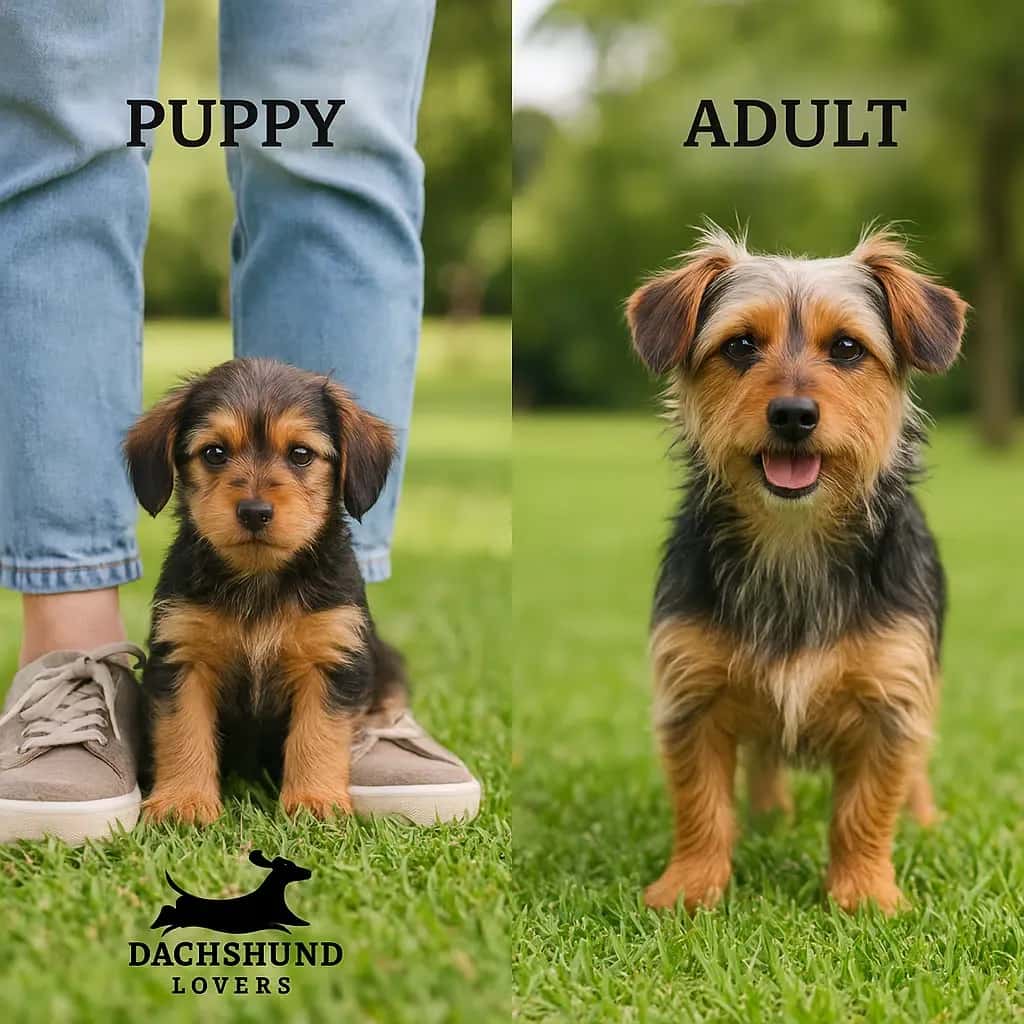
The Dorkie might be small, but this crossbreed is anything but forgettable. A fusion of two iconic toy-sized breeds — the Dachshund and the Yorkshire Terrier — the Dorkie brings together distinctive features in a compact frame. Whether lounging on a sofa or curled up in your tote bag, they tend to attract attention from strangers asking, “Is that a mini Yorkie or a sausage dog?”
Size & Structure
Adult Dorkies usually weigh between 5 to 12 pounds (2.2 to 5.4 kg) and stand about 5 to 10 inches tall at the shoulder. Though technically “toy” size, they often carry themselves with a comical mix of grace and confidence — like they’re on a private mission through your living room.
Their bodies can vary depending on which parent’s genes are stronger. You may notice:
- A longer torso and shorter legs (more dachshund influence), or
- A more square and compact build with upright posture (more Yorkie-influenced)
Because of these genetics, no two Dorkies are exactly alike. This variation is part of their charm — and part of what makes first-time owners curious about how their puppy will grow.
Coat Types: A Range of Textures
The coat of a Dorkie can be a bit of a wildcard. Depending on their lineage, they might inherit:
- Silky, long coats — typical if the Yorkie parent is dominant
- Smooth, short coats — more common in dachshund-leaning crosses
- Wiry, rough coats — especially when a wire-haired dachshund is involved
These coat types affect grooming routines and comfort levels in different seasons. Long-haired Dorkies can be prone to tangling and may benefit from trimming, especially around the chest and underarms. Smooth-coated Dorkies often shed less and require only weekly brushing.
We explore this more deeply in:
Long-Haired Dorkies: Grooming, Temperament & Appearance
Coat Colors: Classic and Rare
Dorkies come in an impressive range of colors. The most common include:
- Black and tan
- Golden brown or blond
- Chocolate
- Red
- Silver-tan or blue-gray (less common)
For those lucky enough to meet a dapple Dorkie — often marked with swirling patches of darker and lighter tones — the visual effect is striking. These marbled coats are rarer, and usually inherited from dachshund lines. We’ll cover the dapple pattern more in our upcoming deep dive.
Because they aren’t a standardized breed, Dorkies vary more in appearance than purebreds. But that’s part of the joy. Each one brings a touch of individuality — and that unmistakable dash of dachshund attitude.
Dorkie Temperament & Personality Traits
The Dorkie — a cross between the spirited Yorkshire Terrier and the loyal Dachshund — is often described as feisty meets affectionate. While they’re undeniably charming, it’s their personality quirks that make them truly memorable. If you’ve ever lived with one, you know: this is not a background dog. This is a full-time companion, always ready to insert themselves into the moment.
Deep Bonds & Devoted Loyalty
One of the most consistent Dorkie traits is emotional closeness with their owner. These dogs thrive on companionship and will often follow you around the house, lie near your feet, or nudge your hand for attention. They’re not overly clingy — just deeply attached. This makes them excellent emotional support dogs for the right person.
That said, their intense loyalty can also lead to separation anxiety if they’re left alone for extended periods. Early training, along with routines that ease them into solo time, is key to avoiding unwanted behaviors like barking or chewing.
As noted by VCA Animal Hospitals, small breeds with strong human attachments can benefit from crate training and puzzle toys to stay mentally engaged when alone. VCA on separation anxiety.
Clever Minds, Stubborn Hearts
Dorkies are smart — sometimes too smart. They’re fast learners, especially when motivated by food, praise, or play. But their intelligence is often paired with a stubborn, independent streak, especially during adolescence. This means:
- Consistency matters. Once they learn they can get away with something once, they’ll try it again.
- Harsh training doesn’t work. They respond best to patience, structure, and a reward-based approach.
- They love having a job. Whether it’s fetching a toy or learning a new trick, Dorkies enjoy being mentally stimulated.
This mix of cleverness and defiance makes them incredibly fun to train — as long as you’re prepared for some eye-roll moments when they pretend not to hear you.
Alert, Vocal, and Protective
In typical dachshund fashion, Dorkies are keenly alert and often very vocal. They’ll let you know if someone’s at the door, a bird is in the yard, or a car door slams two blocks away. While some find this reassuring, others might find it a challenge — especially in apartment settings.
This trait can be softened through early socialization and training. Gradually exposing your Dorkie to new people, environments, and other animals helps temper overprotectiveness and reduces reactive barking.
Playful & Energetic (But Not Hyper)
Dorkies bring a delightful mix of energy levels. They love to play, chase toys, and explore new smells, but they’re also happy to curl up for hours with their human. On average, a Dorkie needs:
- At least 30–45 minutes of daily exercise
- Access to mental stimulation (e.g., treat puzzles or hide-and-seek games)
- Interactive time with their family to feel fulfilled
They don’t require a backyard, but they do need consistent outlets for their curiosity and movement.
Family Compatibility: Great for Older Kids & Gentle Households
Dorkies are typically great with families, especially those who respect their small size and give them space when needed. They’re not fragile, but they don’t always appreciate rough play. This makes them better suited to:
- Households with older children
- First-time dog owners who want a small breed with big personality
- Couples or singles looking for a loyal, expressive companion
If you’re choosing between breeds, we also break down the differences in Corgi vs. Dorkie: Which Small Dog Is Right for You?
Living with a Dorkie is like having a tiny roommate with a strong opinion about when dinner should be served, where the best nap spot is, and who gets to sit on your lap. Their boldness, loyalty, and gentle stubbornness make them an unforgettable addition to any home — especially one that appreciates a dog with just the right amount of spunk.
Caring for a Dorkie: Grooming, Food & Exercise Needs

Despite their small size, Dorkies require thoughtful, consistent care to stay healthy and happy. Their mix of Yorkshire Terrier and Dachshund genes brings a few unique grooming needs and dietary considerations — not to mention a little stubborn flair when it comes to movement.
Grooming: Depends on the Coat Type
Dorkies can have short, medium, or long coats, depending on which parent they take after. Their grooming routine hinges on this:
- Short coat Dorkies (more Dachshund) need brushing once or twice a week to keep shedding under control.
- Long-haired Dorkies (more Yorkie) benefit from daily brushing to prevent matting, especially around the ears, belly, and hind legs.
- Silky-coated or wavy Dorkies (an even mix) usually fall somewhere in between — grooming 3–4 times a week keeps them fresh and tangle-free.
Bathing once a month is typically enough, but if your Dorkie has allergies or gets into something muddy (and they often do), bathe as needed with a gentle, dog-safe shampoo. Don’t forget ear checks — their floppy ears are prone to moisture build-up, which can lead to infections.
The American Kennel Club offers a helpful guide to coat types and brushing needs.
Food: A Small Dog with Specific Needs
Dorkies are prone to dental issues, sensitive tummies, and weight gain — all common in small breeds. Their ideal diet should be:
- High in protein to support their energy and muscle tone
- Balanced with healthy fats (omega-3s are great for coat health)
- Low in fillers like corn or soy, which can cause digestion issues
Most adult Dorkies do well on ¼ to ½ cup of high-quality dry kibble twice a day, depending on activity level and size. Puppies may require three meals daily during their early stages.
Watch for overfeeding. Dorkies can easily become overweight, especially if they live indoors with limited exercise. Treats should make up no more than 10% of their daily calories.
Exercise: Small Dog, Big Curiosity
While they’re not built for endurance, Dorkies love a bit of adventure. Most need about 30–45 minutes of structured exercise a day — this can be split between short walks and indoor play.
Good options for Dorkies:
- Leashed park walks (avoid high heat due to their low stature)
- Puzzle games and hide-and-seek indoors
- Fetch or chase games in a secure yard
- Short bursts of tug-of-war or rope play
Avoid activities that involve jumping from high surfaces, like furniture or stairs, as their long backs can be prone to injury — particularly in mixes leaning heavily toward the dachshund side.
Training Tips for Dorkie Puppies
Dorkie puppies, with their wide eyes and big-dog energy in tiny bodies, are charming — but they can also be challenging. With a Dachshund’s persistence and a Yorkie’s sass, this hybrid breed doesn’t always make training easy. But when you approach it thoughtfully, you’ll discover how eager they are to please (on their own terms, of course).
Why Early Training Matters
Early training lays the foundation for everything — trust, confidence, routine, and safety. While the Dorkie might seem like a lapdog, they thrive when they have clear expectations and consistent cues from their person. Training also taps into their intelligence and gives their busy minds something meaningful to focus on.
As with many small breeds, Dorkies can quickly form habits (both good and not-so-good). Nip the undesired ones early, and reward the behaviors you want to see stick.
Key Training Milestones
Here’s a breakdown of what most Dorkie owners should aim for in the first 6–12 months.
Training Area | When to Start | Goal by 6 Months | Tips |
|---|---|---|---|
Name Recognition | Week 1 | Responds to name consistently | Use a happy tone and reward instantly when they look |
Recall (“Come”) | Week 2–3 | Comes when called, indoors and on lead | Practice with a long line in the backyard |
Crate Training | Week 1 | Sleeps overnight in crate, sees it as safe | Never use crate as punishment |
Potty Training | Week 1 | Asks to go outside, very few indoor accidents | Stick to a routine, especially after meals or naps |
Basic Commands (Sit, Stay) | Week 4–5 | Follows cues in low-distraction environments | Keep sessions short and upbeat |
Socialization | 8–12 Weeks | Comfortable with new people and other dogs | Expose them to controlled environments and stimuli |
Dorkies and Crate Training
Crate training is especially helpful with Dorkies — not just for housebreaking, but for providing emotional structure. Because of their attachment to their people, many Dorkies are prone to separation anxiety. A crate becomes their den, their retreat, their sense of place.
The Humane Society of the United States has a simple guide to crate training that’s beginner-friendly and aligns with small breed needs. You can also refer to our useful source on best practices for crate training for dachshunds specifically.
Recommended Crate Guidelines for Dorkies:
- Size: Look for a crate roughly 24”L x 18”W x 20”H. It should be just big enough for them to stand, turn, and lie down comfortably.
- Type: Wire crates offer airflow and visibility; soft-sided can be cozy once they’re trained.
- Placement: Choose a quiet space but not one isolated from the household.
The Art of Housebreaking
Despite their small size, Dorkies need big patience when it comes to potty training. It’s not unusual for a puppy to regress slightly during growth spurts or after a move.
Tips to Keep It On Track:
- Set a timer: Take them out every 2 hours initially. Consistency is everything.
- Celebrate success: Use a high-value treat or a “yes!” immediately after they go.
- Watch the weather: Many Dorkies hate rain. In bad weather, consider a covered potty spot or use pads indoors as a backup
Common Potty Training Challenges | Solutions |
|---|---|
Name Recognition | Use a covered patio or a coat; reward big when they do |
Accidents after play or guests | Create calm-down time before potty breaks |
Going overnight too early | Limit water an hour before bed and do late-night walk |
One of the most overlooked aspects of raising a good dog is thoughtful socialization. Dorkies who aren’t exposed to the world early may become barky, clingy, or reactive. While they’re not aggressive by nature, they can be vocal watchdogs — especially if they feel unsure.
Expose your Dorkie to:
- Car rides, vacuum cleaners, hair dryers
- Different surfaces (tiles, grass, carpet, stairs)
- Calm, friendly dogs of all sizes
- Kind strangers (ideally not all wearing hats — oddly triggering for some!)
Make every introduction positive and safe. If you’re unsure, observe from a distance and let your Dorkie approach at their own pace
Mental Stimulation: A Must
Both Yorkies and Dachshunds are brainy breeds. Without mental challenges, Dorkies can get bored and find trouble — like chewing cushions or barking at shadows.
Keep their minds busy with:
- Puzzle feeders or snuffle mats
- Hide-and-seek games (with treats or toys)
- Clicker training mini-sessions
You’ll be surprised how quickly they catch on. Dorkies want to work — just not for free.
Temperament & Personality: What to Expect from a Dorkie
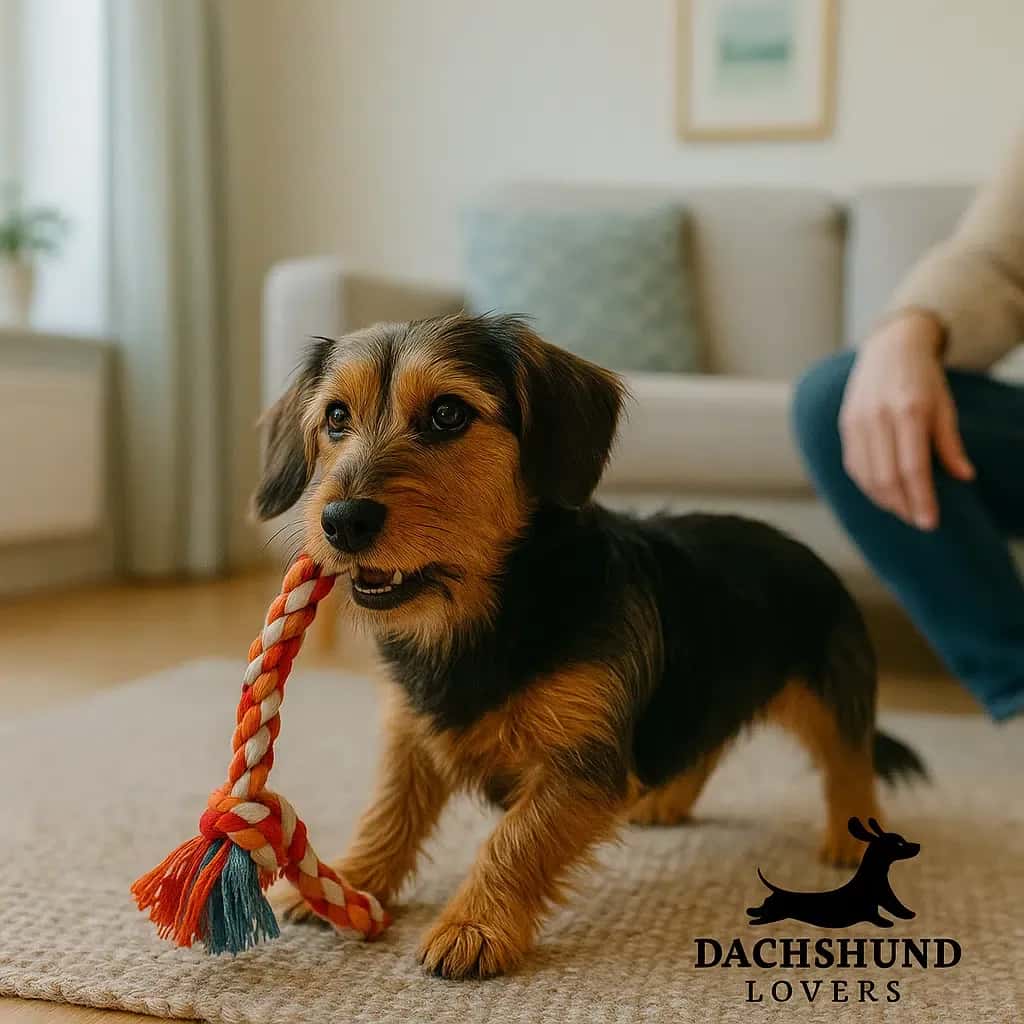
There’s something unmistakably endearing about a Dorkie’s personality. Equal parts sass and sweetness, these Dachshund-Yorkie mixes are compact companions with oversized charisma. If you’ve ever lived with a dog that thinks it’s both the boss and the baby of the house — you already get the idea.
A Quick Temperament Snapshot
Trait | Description |
|---|---|
Energy Level | Medium – bursts of zoomies followed by long naps |
Social Behavior | Affectionate with family, cautious with strangers |
Independence | Moderate – loves being close, but can entertain themselves if trained well |
Intelligence | High – quick to learn, but sometimes too clever for their own good |
Barking Tendencies | High – inherited from both parent breeds |
Suitability for Families | Best with respectful children and adults who understand small-dog dynamics |
Big Personality, Small Package
Dorkies inherit boldness from their Dachshund lineage and a cheeky spark from their Yorkshire Terrier side. This mix tends to result in a confident, alert, and sometimes opinionated little dog. They’re expressive — vocal when they want something, quick to “supervise” visitors, and always up for a game of fetch or tug-of-war.
Some may develop a streak of bossiness if boundaries aren’t clear early on. That’s not to say they’re aggressive — quite the opposite. Most Dorkies form strong attachments with their people and crave inclusion in everyday activities. But their intelligence means they’ll test you. Just once. Maybe twice. Okay, daily.
Are Dorkies Good with Kids and Other Pets?
It depends. While many Dorkies bond closely with their families, they may not tolerate rough handling from toddlers. They’re better suited to households where children are dog-savvy and know how to interact gently.
When it comes to other pets, early socialization is everything. A well-socialized Dorkie can live harmoniously with cats and other dogs. But remember — both Dachshunds and Yorkies were bred for chasing small animals. That prey drive doesn’t always go away.
Separation Sensitivity
This breed mix is known for developing strong bonds, which can sometimes lead to separation anxiety. They prefer to be near their humans — even if it’s just curled up under your desk chair while you work. If left alone for too long or too often, they may vocalize their displeasure (read: barking) or find creative outlets like digging through your laundry basket.
Crate training, puzzle feeders, and a consistent routine can all help reduce anxiety. The key is making them feel secure, even when you’re not physically present.
How to Bring Out Their Best
Dorkies respond well to praise-based training, gentle leadership, and early boundaries. The trick is to be consistent. If you let your Dorkie nap on the sofa one day and scold them for it the next, they’ll look at you like you’re the confusing one. Because to them, consistency = safety.
Regular walks, short bursts of training, and lots of interactive play are great ways to meet both their physical and emotional needs. A mentally tired Dorkie is a well-behaved Dorkie.
Dorkie Health Issues & Lifespan
Like all mixed breeds, Dorkies inherit traits from both sides of their lineage — the Dachshund and the Yorkshire Terrier. While hybrid vigor can offer some benefits, it’s still important to understand the health risks that may come with this particular pairing.
How Long Do Dorkies Live?
With attentive care, Dorkies tend to enjoy relatively long lives. Most live between 12 to 16 years, with some reaching even older ages, especially when kept at a healthy weight and given regular vet care.
According to the American Kennel Club, both Dachshunds and Yorkshire Terriers rank among the longest-living small breeds — a promising foundation for Dorkie longevity.
Common Health Conditions in Dorkies
Condition | Description |
|---|---|
Intervertebral Disc Disease | Inherited from the Dachshund side — affects the spine, especially with age |
Patellar Luxation | A common issue in small breeds — kneecap slips out of place |
Hypoglycemia (Low Blood Sugar) | More common in young or underweight dogs — especially Yorkie-based mixes |
Tracheal Collapse | May occur in smaller dogs, resulting in coughing or difficulty breathing |
Dental Problems | Both parent breeds are prone to plaque and early tooth loss |
Allergies & Skin Sensitivities | Itchy skin or reactions to food/environmental triggers |
Early diagnosis can make a big difference. Some Dorkies may never experience these issues, but being informed allows you to spot subtle signs and act quickly.
Preventative Care for Dorkies
Staying proactive is the most effective approach to keeping your Dorkie healthy. Here’s what we recommend:
- Regular Vet Checkups — Yearly visits for blood work, dental checks, and vaccine updates.
- Dental Hygiene — Brush their teeth a few times a week or provide vet-approved dental chews.
- Weight Monitoring — Obesity can worsen joint and spine issues. Keep treats in check.
- Back-Friendly Environment — Consider ramps or steps for furniture to prevent spinal strain.
- Joint Supplements — Products with glucosamine or omega-3s may support long-term joint health.
You’ll find many of these themes echoed in our Dorkie Puppy Guide — from day one, prevention matters.
Signs Your Dorkie Needs a Vet Visit
If your Dorkie starts showing any of these symptoms, it’s best to book an appointment:
- Hesitance to jump or climb stairs
- Sudden limping or skipping
- Persistent coughing or wheezing
- Unusual fatigue or withdrawal
- Bad breath with visible tartar
- Hair loss, itching, or recurring ear infections
Grooming & Coat Care for Dorkies
Dorkies might be small, but their coat care can be a surprisingly big task — especially if they inherit the longer, silkier strands of their Yorkshire Terrier parent. Whether your Dorkie leans smooth and sleek or fluffy and tousled, a solid grooming routine helps with more than just appearances — it’s also essential for their comfort and skin health.
Types of Dorkie Coats
Because Dorkies are a hybrid, coat types can vary considerably. Here’s a quick overview:
Coat Type | Description | Grooming Needs |
|---|---|---|
Smooth & Short | Inherited from Dachshund side — requires minimal upkeep | Weekly brushing |
Silky & Long | Resembles the Yorkie — prone to knots and mats | Daily brushing |
Wiry or Mixed | A rougher texture, sometimes with an undercoat | Weekly brushing + periodic hand-stripping or trimming |
Some Dorkies even have a double coat, which can result in seasonal shedding and more brushing during spring and fall.
Grooming Checklist for Dorkies
Here’s a go-to checklist to keep your Dorkie fresh, healthy, and tangle-free:
- Brushing:
- Short hair: 1–2 times/week with a rubber curry brush
- Long hair: Daily with a pin or slicker brush
- Short hair: 1–2 times/week with a rubber curry brush
- Bathing:
Every 4–6 weeks, using a gentle, pH-balanced dog shampoo. Overbathing can dry out their skin, so keep it moderate unless they’ve rolled in something… questionable. - Ear Cleaning:
Check ears weekly for wax build-up or odor. Use a vet-recommended ear wash and cotton pad — never a Q-tip. - Nail Trimming:
About every 3–4 weeks. If you can hear clicking on hard floors, it’s time. - Teeth Cleaning:
Ideally 2–3 times per week. Dorkies are prone to dental issues, so this one’s non-negotiable. - Hair Trims:
For long-haired Dorkies, a light trim around the eyes, paws, and hygiene areas every 6–8 weeks keeps things neat.
Pro Grooming vs At-Home Grooming
Grooming Method | Pros | Cons |
|---|---|---|
Professional | Expertise, full-service (nails, ears, anal glands) | More expensive; may stress anxious dogs |
At-Home | Cost-effective, good bonding time | Requires proper tools & patience |
Wiry or Mixed | A rougher texture, sometimes with an undercoat | Weekly brushing + periodic hand-stripping or trimming |
If you’re unsure where to start, many groomers offer a tutorial session to teach you how to safely trim or brush at home — especially useful for long-haired Dorkies.
Diet & Nutritional Needs for a Dorkie
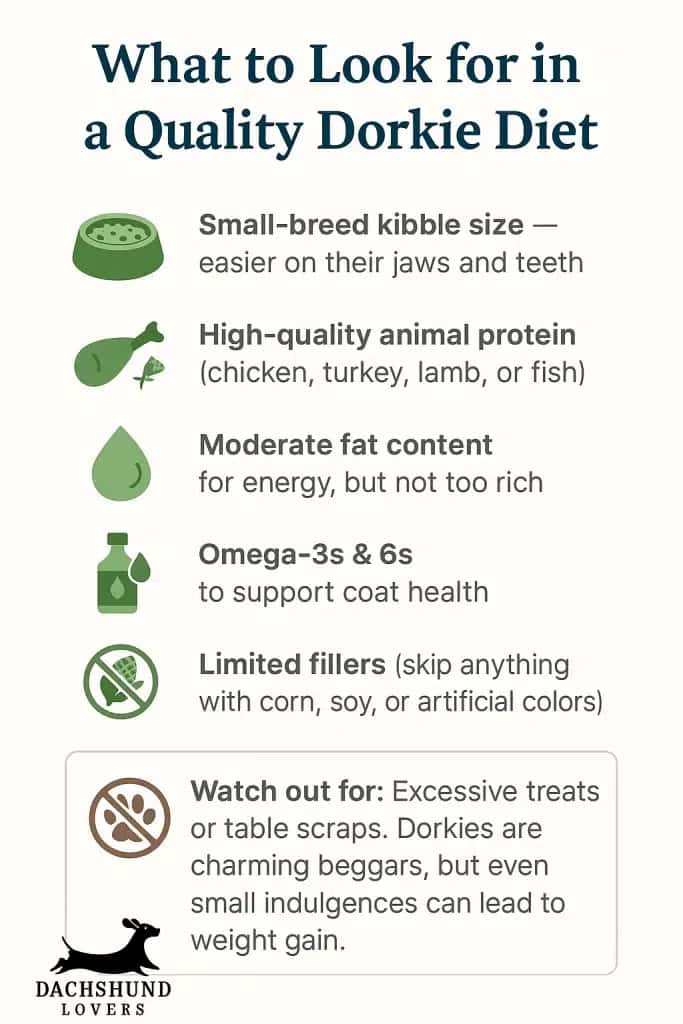
Quick Tip: Because Dorkies are a small mixed breed with a tendency toward dental issues and sensitive stomachs, choosing the right diet isn’t just about filling the bowl — it’s a cornerstone of lifelong health.
Feeding Fundamentals
Dorkies typically weigh between 7–12 pounds when fully grown. That small frame means they need a diet that’s nutrient-dense but portion-controlled. Too much, and they’ll gain quickly; too little, and their energy dips.
Daily Caloric Needs:
- Puppies (under 12 months): ~200–300 calories/day (3–4 meals)
- Adults: ~150–250 calories/day (2 meals)
- Seniors: Often slightly less, depending on activity level
What to Look for in a Quality Dorkie Diet
- Small-breed kibble size — easier on their jaws and teeth
- High-quality animal protein (chicken, turkey, lamb, or fish)
- Moderate fat content for energy, but not too rich
- Omega-3s & 6s to support coat health
- Limited fillers (skip anything with corn, soy, or artificial colors)
Watch out for: Excessive treats or table scraps. Dorkies are charming beggars, but even small indulgences can lead to weight gain.
Fresh, Dry, or Raw?
Each feeding style has its pros and cons. Here’s a quick breakdown:
- Dry (Kibble):
- Convenient, shelf-stable
- Can help clean teeth during chewing
- Convenient, shelf-stable
- Wet/Canned:
- More palatable, especially for picky eaters
- Higher moisture content, but less dental benefit
- More palatable, especially for picky eaters
- Fresh (Cooked or Raw):
- Tailored and minimally processed
- Can be great for sensitive dogs — just make sure it’s balanced
- Tailored and minimally processed
Always consult your vet before switching to a raw or home-cooked diet — especially for small breeds prone to nutrient imbalances
Dorkies are smart, eager, and deeply people-oriented — but they’re also a little headstrong. The combination of a dachshund’s independence and a Yorkie’s sass means early training isn’t optional — it’s essential.
The Dorkie Temperament in Training
While they often respond well to praise and treats, Dorkies can also be:
- Stubborn: If they don’t see the point, they might tune out.
- Vocal: They’re quick to alert you… and your neighbors.
- Sensitive: Harsh corrections can damage trust.
The solution? Consistency, calmness, and turning training into a daily ritual — not a punishment.
Socializing your Dorkie before 16 weeks of age lays the foundation for a well-adjusted dog. This is especially important if your pup leans more dachshund, as they can become wary of strangers and other dogs.
Age Range | Key Focus |
|---|---|
8-10 weeks | Gentle handling, meeting family & familiar faces |
10-12 weeks | Exposure to street sounds, harness training |
12-16 weeks | Safe interaction with other dogs, new locations |
16+ weeks | Begin structured obedience and ongoing social play |
If you’re unsure where to start, local puppy schools or dog-friendly cafés are great low-stakes environments. Be mindful of overstimulation, and let your Dorkie retreat when needed.
Commands That Matter Most
Start with short, 5-minute sessions 2–3 times a day. Keep your tone light and your rewards meaningful.
Essential First Commands:
- Sit — Builds patience
- Stay — Increases impulse control
- Leave it — Prevents chewing hazards
- Come — Crucial for safety and off-leash trust
Avoid training fatigue by ending sessions on a high note — and don’t be afraid to mix in play between lessons.
Exercise Needs & Activity Levels for Dorkies
Dorkies may be small, but they don’t lack energy. This dachshund–Yorkie mix tends to inherit a spirited playfulness from both parent breeds, making daily activity a must—not just for physical health, but for mental balance.
How Much Exercise Does a Dorkie Need?
While they’re not high-endurance dogs, Dorkies thrive on regular movement. Think less about distance, and more about frequency and stimulation.
Daily Movement Guidelines:
- Walks: Two short walks per day (15–20 minutes each) is usually ideal.
- Indoor Play: Interactive games like tug or hide-and-seek help burn energy.
- Mental Stimulation: Puzzle toys or short scent-based games reduce boredom-induced barking or chewing.
Keep in mind: too much high-impact exercise isn’t suitable, especially for younger Dorkies or those prone to joint issues. Always let them set the pace.
Matching Activity to Personality
Some Dorkies are content curling up under a blanket after a stroll, while others seem ready to sprint at a moment’s notice. It often comes down to which parent breed is more dominant in their genetics.
Trait | Yorkie-Leaning Dorkie | Dachshund-Leaning Dorkie |
|---|---|---|
Energy Level | High and alert | Moderate but stubbornly playful |
Preferred activity | Quick bursts and chasing toys | Sniffing trails, digging in grass |
Endurance | Needs frequent short activity | Can tire quickly, but pushes on |
Playfulness | Loves attention-seeking games | Can be independent and focused |
Dorkies & Apartment Living
You don’t need a backyard to meet a Dorkie’s activity needs. In fact, they make great apartment dogs as long as their walks and playtime are consistent. Just be mindful of barking—especially if your Dorkie gets bored.
Tips for Keeping Them Engaged Indoors:
- Rotate their toys weekly to keep things novel.
- Use feeding mats or slow-feeders to turn meals into enrichment time.
- Set up a “watch spot” near a window if they like to observe the world outside.
Dorkie Shedding & Allergy Considerations
While Dorkies are often praised for their cute coats and cuddly size, grooming and allergy potential are key considerations before bringing one into your home. Because they’re a crossbreed, their shedding and allergy traits can vary — depending largely on which parent they take after.
Let’s break it down.
Do Dorkies Shed?
The short answer: yes — but how much depends on coat type.
Coat Type | Shedding Level | Notes |
|---|---|---|
Smooth (Dachshund-style) | Low to moderate | Minimal brushing needed, but seasonal sheds can occur |
Long, silky (Yorkie-style) | Very Low | Often considered “hypoallergenic”; shedding is almost unnoticeable |
Wire-haired (rare) | Moderate | May shed more, especially without routine brushing or hand-stripping |
Yorkshire Terriers are famously low-shedding, while dachshunds — especially smooth-coated ones — do shed lightly year-round. If your Dorkie inherits more Yorkie traits, they may be close to non-shedding. If they lean dachshund, expect some loose fur on your couch.
Are Dorkies Hypoallergenic?
No dog is 100% hypoallergenic, but Dorkies with long, silky Yorkie coats tend to be a better choice for allergy-sensitive homes.
According to the American College of Allergy, Asthma, and Immunology, people with dog allergies react to proteins found in saliva, dander (skin flakes), and urine — not the fur itself. That means:
- Low-shedding dogs produce less dander in the environment
- Dorkies with more Yorkie DNA may trigger fewer allergic responses
- Regular grooming and cleaning can make a big difference
Managing Allergies with a Dorkie
If someone in your household has mild dog allergies, the following steps can help minimize reactions:
- Brush regularly to remove dander and loose hair (ideally outside)
- Use an air purifier with a HEPA filter
- Keep your Dorkie off fabric-heavy furniture or use washable covers
- Bathe your Dorkie every 4–6 weeks with a gentle, dander-reducing shampoo
- Designate dog-free zones like bedrooms
Dander, Dust, and Dachshunds: What You Need to Know
Even if your Dorkie doesn’t shed much, dander and environmental allergens can still cling to their coat.
If you’re considering a Dorkie and have allergies, meeting the dog beforehand — or fostering temporarily — is a good step. Even among littermates, shedding and allergen levels can vary.
Grooming for Allergy Control
Grooming isn’t just for beauty — it’s one of the best tools for managing allergens. Here’s a quick allergy-conscious routine:
- Daily brushing (especially for long-haired Dorkies)
- Wipe down paws and belly after outdoor walks
- Vacuum regularly with a pet-specific vacuum
- Wash dog bedding weekly
For those curious about grooming tools, we explore this in our article:
Grooming & Coat Care for Dorkies →
Dorkies vs Other Small Dogs: How Do They Compare?
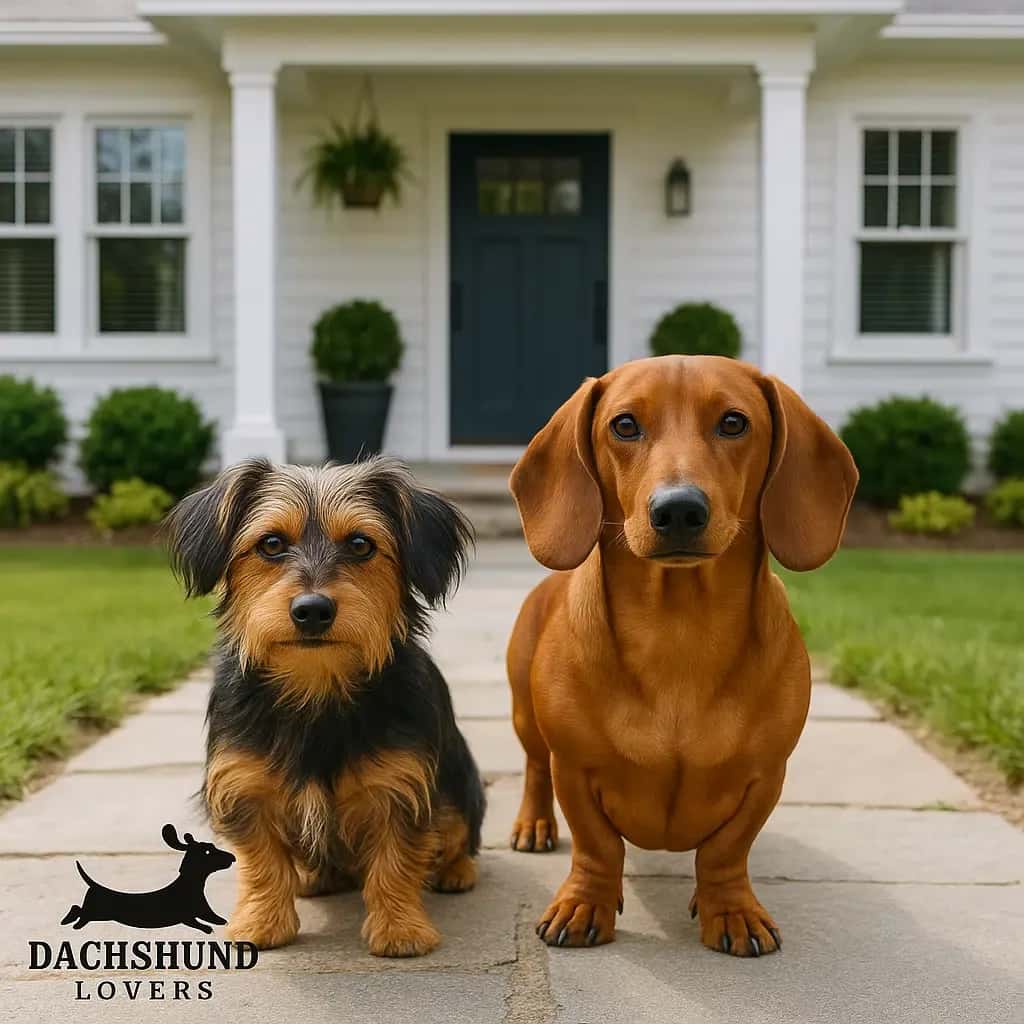
When searching for the right small companion dog, many people end up comparing Dorkies to other pint-sized favorites. Whether you’re drawn to a Dorkie’s dachshund-meets-Yorkie charm or curious how they stack up against similar breeds, this breakdown will help you decide if the Dorkie is truly the right fit.
Comparing Key Traits
Let’s start with a side-by-side look at the Dorkie and some other popular small breeds.
Trait | Dorkie | Yorkshire Terrier | Mini Dachshund | Corgi |
|---|---|---|---|---|
Size | 5–12 lbs | 4–7 lbs | 7–11 lbs | 22–30 lbs |
Coat Type | Silky, short, or wiry | Long, silky | Smooth, long, or wire-haired | Thick double coat |
Shedding | Low to moderate | Very low | Moderate | High |
Energy Level | Medium | High | Medium | High |
Temperament | Loyal, clever, affectionate | Bold, spunky, devoted | Brave, stubborn, affectionate | Playful, independent, herding instinct |
Trainability | Moderate (can be stubborn) | High (but sometimes sassy) | Can be challenging | Highly trainable but needs engagement |
Grooming Needs | Moderate (depends on coat) | High (daily brushing) | Low to moderate | Moderate to High |
Best For | Apartment living, small families | Single owners, lap dog lovers | People with patience for training | Active households, families with kids |
Breed-by-Breed Breakdown
Dorkie vs Yorkie
Yorkshire Terriers are spirited and elegant, often seen as lap dogs but with surprising boldness. Dorkies inherit some of that energy but tend to be a bit more grounded — thanks to the dachshund’s earthier, more independent streak. Dorkies are typically less high-strung than purebred Yorkies.
Dorkie vs Mini Dachshund
Miniature dachshunds are known for their strong prey drive, vocal nature, and deep loyalty. Dorkies often have a more balanced personality — still protective and alert, but with a slightly gentler social edge. In short, a Dorkie may be less intense and more cuddly.
Dorkie vs Corgi
Though not often cross-compared, people drawn to small, charismatic dogs sometimes wonder about the corgi alternative. Dorkies are much smaller and easier to manage in apartments. Corgis, with their high energy and herding instincts, require more daily structure and mental stimulation.
Why Choose a Dorkie?
- Compact size makes them ideal for urban living
- Blended temperament offers a sweet mix of sass and snuggle
- Unique look — from floppy ears to expressive eyes, every Dorkie is a little different
- Lower shedding potential (especially compared to Corgis or pure dachshunds)
What Kind of Owner Fits Best?
Lifestyle | Dorkie Fit? |
|---|---|
Apartment dweller | ✅ Yes |
Active hiker or outdoor runner | 🚫 Not ideal |
Work-from-home pet parent | ✅ Yes |
Family with very young children | ⚠️ Caution |
Retired couple or empty nester | ✅ Perfect fit |
Frequently Asked Questions (FAQs)
More From This Series:
Explore more Dorkie-specific content:
- Dorkie Puppies: Buying, Raising & Care Tips
- Full Grown Dorkie: Size, Weight & Temperament
- Dorkie Price: What to Expect & Budget For
- Long-Haired Dorkies: Grooming, Temperament & Appearance
- Corgi vs Dorkie: Which Small Dog Is Right for You?
- Dapple Dorkie: The Unique Spotted Coat Explained
Authored by
James
James is the founder of Dachshund Lovers and the proud human of Harvey, a mini dapple with a big personality. He writes to empower and connect the dachshund community, blending founder insights with honest, experience-based stories about life with this incredible and special breed. James brings candid, experience-backed opinions to the community and always focused on fewer, better products and ideas that genuinely improve life for dachshunds and their people.
Read moreJames is the founder of Dachshund Lovers and the proud human of Harvey, a mini dapple with a big personality. He writes to empower and connect the dachshund community, blending founder insights with honest, experience-based stories about life with this incredible and special breed. James brings candid, experience-backed opinions to the community and always focused on fewer, better products and ideas that genuinely improve life for dachshunds and their people.
Read moreDisclaimer
This content is for informational purposes only and should not be considered veterinary advice. Always consult with a licensed veterinarian regarding your dog’s health and wellbeing.
There are no comments yet
Leave a comment