8 Week Old Dachshund Puppy
8 Week Old Dachshund Puppy
From crate training to the first vet visit, here's everything I wish I knew when raising my dachshund at 8 weeks old.
James
Posted on October 29, 2025.
Updated on July 21, 2026.
Table of Contents
- 1.Key Takeaways on 8 Week Old Dachshund Puppy
- 2.Developmental Stage at 8 Weeks
- -Quick Reference: 8-Week-Old Dachshund Puppy Development
- 3.Feeding & Nutrition Needs at 8 Weeks
- •Types of Foods
- 4.Health & Vet Care at 8 Weeks
- •Quick Health Checklist for 8-Week-Old Dachshunds
- 5.Training & Socialisation at 8 Weeks
- 6.Sleep & Daily Routine at 8 Weeks
- 7.Bonding & Playtime at 8 Weeks
- 8.Handling & Safety at 8 Weeks
- 9.Toilet Training Progress at 8 Weeks
- 10.Play & Training Foundations at 8 Weeks
- -More from This Series
- -Disclaimer
Share

I’ll never forget when Harvey, our silver dapple dachshund, came home at exactly eight weeks old. His tiny paws clicked across the kitchen tiles, ears far too big for his body, and he had that wide-eyed mix of curiosity and vulnerability that only a puppy at this age carries. Caitlin and I spent the first few days learning what “life with a dachshund puppy” really meant — endless naps, clumsy toilet training attempts, and the challenge of figuring out if his little yelps were hunger, tiredness, or simply a call for attention.
At eight weeks, a dachshund puppy is at a pivotal stage. This is when most breeders allow pups to go to their forever homes — old enough to leave their mother and littermates, yet young enough to soak up critical early training and socialisation. According to the American Kennel Club, this period is essential for bonding, early routines, and introducing the basics of puppy care.
For dachshund owners, it’s also a unique challenge. Their long spines and small bodies make weight control and proper handling especially important from day one. From feeding and sleep schedules to toilet training and early vet visits, what you do now shapes their health and behavior for years to come.
This guide breaks down exactly what to expect with an 8-week-old dachshund puppy — from how much they should eat, to sleep patterns, toilet training, socialisation, and care tips specific to both miniature and standard dachshunds. Along the way, I’ll share what worked (and what didn’t) with Harvey in those early weeks.
Key Takeaways on 8 Week Old Dachshund Puppy
Topic | Summary | Key Notes |
|---|---|---|
Age Milestone | Eight weeks is when most dachshund puppies go to their forever homes. | Separation from littermates makes this the ideal time for bonding and early training. |
Size & Weight | Minis: ~2–4 lbs (1–2 kg). Standards: ~5–7 lbs (2.2–3.2 kg). | Growth should be steady; sudden weight gain risks spine health. |
Feeding | 3–4 small meals per day of puppy-formulated food. | Stick to “growth” diets. See Dachshund Puppy Diet. |
Sleep Needs | 18–20 hours/day. | Puppies tire quickly; naps are essential for brain development. |
Toilet Training | Housebreaking starts here. | Use routine potty breaks after meals, play, and naps. Reference How Much to Feed a Dachshund Puppy. |
Socialisation | Crucial “imprint period.” | Safely expose to new people, sounds, and gentle handling. |
Vet Care | 1st or 2nd round of vaccinations usually given. | Check worming schedule, flea/tick prevention, and microchipping. |
Handling & Safety | Avoid stairs, couches, or rough play. | Protect developing spine from day one. |
Play & Training | Short bursts of play and simple commands. | Keep sessions fun; avoid over-exercising joints and back. |
Developmental Stage at 8 Weeks

By eight weeks old, dachshund puppies are at a fascinating crossroads. They’re no longer fragile newborns, but they’re still very much babies with rapidly developing bodies and minds. This is also the most common age when breeders allow puppies to leave for their forever homes — meaning for many families, it’s the first time they’ll meet their dachshund pup.
This stage is equal parts adorable and challenging: owners are juggling house training, nutrition, and bonding, while puppies are absorbing more in a few weeks than they will at any other point in their lives.
Size & Appearance
- Mini dachshund puppies at this age usually weigh 2–4 lbs (1–2 kg), while standards may tip the scales at 5–7 lbs (2.2–3.2 kg).
- They’ve lost the “newborn look,” but still carry soft, rounded features.
- The dachshund’s trademark silhouette is already forming — long back, short legs, and an eager gaze.
- Coat type (smooth, long, or wire) is evident, but full adult texture won’t appear for months.
Behavior & Energy Levels
- Puppies sleep most of the day — 18–20 hours is normal — punctuated by short bursts of clumsy play.
- Coordination is still developing, so stumbling or awkward movements are nothing to worry about.
- Personality traits begin to shine. Some pups will explore confidently, others will stay close to their new humans.
Bonding & Socialisation
- The socialisation window is wide open at this age. Gentle, positive exposure now sets the tone for adulthood.
- Introduce safe experiences: handling paws and ears, soft household noises, new textures underfoot, and meeting calm dogs or people.
- Keep things low-stress — traumatic or frightening experiences at this stage can leave lasting marks.
Health & Vet Care
- By eight weeks, most puppies will have had their first vaccination. The second is usually scheduled within the next few weeks.
- Deworming should be ongoing (often every two weeks until 12 weeks).
- Begin (or continue) flea and tick prevention.
- Microchipping is often completed around this stage, either by breeders or new owners.
What Harvey Was Like
When Harvey came home at 12 weeks, Caitlin and I still remember how he would play furiously with a toy for ten minutes, then collapse dramatically into our laps as if the world had worn him out. At 8 weeks, your dachshund will be even smaller and more delicate — expect even shorter playtimes, even longer naps, and a huge opportunity for bonding through quiet, gentle interactions.
Quick Reference: 8-Week-Old Dachshund Puppy Development
Area | What to Expect at 8 Weeks | Notes for Owners |
|---|---|---|
Weight | Minis: 2–4 lbs (1–2 kg) Standards: 5–7 lbs (2.2–3.2 kg) | Weight varies by genetics and diet — steady gain is key. |
Sleep | 18–20 hours/day | Puppies need far more rest than play. |
Play | 10–15 minutes at a time | Expect clumsy, uncoordinated bursts of energy. |
Personality | Emerging traits visible | Bold vs cautious differences appear now. |
Socialisation | ritical window open | Introduce gently to handling, sounds, surfaces. |
Health | First vaccination complete Deworming ongoing | Vet check-ins keep growth on track. |
Feeding & Nutrition Needs at 8 Weeks
At eight weeks old, your dachshund puppy is ready to leave their mother’s milk behind and thrive on a carefully balanced puppy diet. This is a pivotal time: the right nutrition supports bone development, muscle growth, and a strong immune system — while poor feeding habits can lead to obesity or deficiencies down the track.
Feeding Frequency & Routine
Most 8-week-old dachshunds should be fed 3–4 small meals per day, spaced evenly to avoid hunger spikes or dips in blood sugar. Puppies have tiny stomachs but high energy demands, so little and often works best. Sticking to a set schedule also helps with toilet training, as predictable feeding leads to predictable bathroom breaks.
Portion Size Guidelines at 8 Weeks
Exact amounts depend on whether you have a mini or standard dachshund. Always start with the recommendation on your chosen puppy food’s packaging, then adjust slightly for your puppy’s activity level and growth rate.
Puppy Type | Portion Size (Daily Total) | Feeding Notes |
|---|---|---|
Mini Dachshund | ¼–⅓ cup | Split across 3–4 meals |
Standard Dachshund | ½–¾ cup | Split across 3–4 meals |
Types of Foods
- Dry kibble (puppy formula): Convenient and portion-controlled. Look for formulas with DHA for brain development.
- Wet food: Tasty and hydrating, but calorie-dense — measure carefully.
- Mixed feeding: Combining wet and dry adds variety without losing balance.
Transitioning from Early Weeks
If your breeder introduced solids at 3–6 weeks, your puppy should now be fully weaned. Sudden changes can upset their stomach, so continue blending old and new foods over 7–10 days when transitioning.
A Note on Minis vs Standards
Miniature dachshunds burn fewer calories than their standard cousins, meaning they’re more prone to weight gain even at this early stage. If you have a mini, stick closely to the lower end of portion ranges.
What Harvey Taught Us
When Harvey was a pup, Caitlin and I quickly learned that “a few extra kibbles” really did make a difference. Even at 8 weeks, we could see how quickly he’d gain if we weren’t careful. Using a digital scale for portions kept us on track and gave us peace of mind that we were supporting his growth without overloading his little frame.
Health & Vet Care at 8 Weeks

By eight weeks, a dachshund puppy is right at the start of its lifelong healthcare journey. For many owners, this will be the first time they take their pup to the vet — setting the stage for good habits and preventive care that protect dachshunds’ delicate backs and small frames.
Vaccinations & Parasite Prevention
- According to the American Kennel Club, eight weeks is typically when puppies receive their second vaccination (after the first at 6–8 weeks). This may include distemper, parvovirus, adenovirus, and parainfluenza.
- A deworming schedule should already be underway, often starting as early as 2–3 weeks and repeating every two weeks until 12 weeks.
- Flea and tick prevention is also introduced around this age, since dachshunds are low to the ground and more exposed during outdoor play.
Microchipping & Identification
- In Australia, RSPCA NSW highlights that microchipping is both a legal requirement and a safety measure — ensuring your pup can be returned if lost.
- Many breeders will complete microchipping before puppies go home, but if not, your vet can handle it during an early appointment.
Vet Checkups & Growth Tracking
- Your vet will examine your puppy’s weight, teeth, coat, and joints. For dachshunds, particular attention is paid to spinal health and body condition, since obesity at this age can increase risks of IVDD (intervertebral disc disease) later on.
- Growth should follow a steady curve. Owners can cross-reference with our guide on 3 Week Old Dachshund Puppies for early milestones, and compare to current development at 8 weeks.
Dental & Ear Health
- Even though baby teeth are still present, gentle brushing can begin now to build tolerance.
- Long-haired or floppy-eared dachshunds are especially prone to ear issues. Weekly ear checks can prevent infections.
Harvey’s Experience
When Harvey came home at 12 weeks, Caitlin and I booked his vet visit straight away. We quickly learned that dachshund pups aren’t just small — they’re fragile in ways you don’t realise until you’re holding one in your arms on the exam table. The vet reminded us to always monitor Harvey’s weight carefully and to start thinking about back support from day one. Looking back, if he’d come home at eight weeks, we would’ve felt even more cautious — but it’s also the perfect age to start setting healthy routines.
Quick Health Checklist for 8-Week-Old Dachshunds
Care Aspect | Why It Matters | Notes for Dachshunds |
|---|---|---|
Vaccinations | Builds immunity against serious diseases | Second round due at 8 weeks |
Deworming | Prevents intestinal parasites | Every 2 weeks until 12 weeks |
Flea/Tick Prevention | Dachshunds’ low frame increases risk | Vet can recommend puppy-safe product |
Microchipping | Ensures safety and legal compliance | Often done by breeder or vet |
Weight Checks | Prevents obesity & IVDD later in life | Minis especially at risk |
Dental & Ear Care | Early habits prevent future issues | Start brushing & weekly ear checks |
For a full overview of long-term nutrition and health planning, see our guide on Dachshund Puppy Diet.
At eight weeks old, dachshund puppies are like sponges — soaking up every sound, sight, and touch. This stage marks the heart of the critical socialisation window (lasting until around 16 weeks), which shapes how your pup will interact with people, other dogs, and the wider world. For dachshunds, who can lean stubborn and wary, early, positive exposure is everything.
House Training Foundations
- Puppies this young don’t yet have full bladder control, so expect accidents. Consistency is the key: frequent potty breaks (every 2 hours during the day, plus after meals, play, and naps).
- Many owners find crate training effective, since it gives pups a den-like space and helps prevent accidents overnight.
- You can cross-reference with our guide on How Much to Feed a Dachshund Puppy to align meal times with toilet training schedules.
Basic Commands & Bonding
- At this stage, training should focus on simple cues like sit, come, and stay. Keep sessions short (2–3 minutes), positive, and reward-based.
- Dachshunds are food-motivated, so treats work well — but portion control matters. See our full Dachshund Puppy Diet for healthy training treat options.
Exposure to People & Places
- The American Veterinary Society of Animal Behavior notes that puppies should be introduced to safe, controlled environments early, even before their full vaccination series is complete (carried in arms if necessary). This reduces fear later in life.
- Harvey, even as a tiny silver dapple pup, thrived when Caitlin and I carried him around Cronulla Mall, letting him experience new sights and sounds without being overwhelmed.
Meeting Other Dogs & Pets
- Early interactions with calm, vaccinated dogs are valuable for teaching manners.
- If your household has other pets, take introductions slowly. Dachshunds can be territorial, but with positive reinforcement, they often bond well.
Preventing Future Stubbornness
- A dachshund’s independent streak starts young. Socialisation and gentle training now reduce the likelihood of barking, digging, and guarding behaviors later.
- Linking training to fun — like puzzle toys or short play sessions — keeps them engaged.
Checklist for 8-Week Socialisation Goals
- Handle your pup’s ears, paws, and mouth daily to build tolerance.
- Introduce 5–10 new sounds (vacuum, doorbell, cars) in a calm way.
- Meet at least 2–3 new people weekly.
- Begin car rides in short, positive sessions.
- Practice calm crate or playpen time daily.
Harvey’s Experience
Harvey’s early days with us were filled with “mini-adventures.” From short car rides down to Lilli Pilli to gentle introductions with family friends, every outing built his confidence. Now, whenever we take him on longer trips, he adapts quickly because those foundations were set in puppyhood.
Sleep & Daily Routine at 8 Weeks

If there’s one thing you can count on with an eight-week-old dachshund puppy, it’s sleep — and lots of it. At this stage, most pups sleep 18–20 hours a day, waking only for short bursts of play, meals, toilet breaks, and bonding.
Why Sleep Matters
According to the American Kennel Club, sleep is when puppies consolidate learning, grow muscle, and strengthen their immune system. A well-rested dachshund puppy will be calmer, easier to train, and healthier overall.
Structuring the Day
- Morning: Potty break, breakfast (see our Dachshund Puppy Diet guide), and 5–10 minutes of play.
- Midday: Nap, potty, light training or socialisation exposure, another nap.
- Afternoon: Lunch, more play and short walks (if vaccinations allow), then another nap.
- Evening: Dinner, family bonding time, toilet break, and winding down before bedtime.
Crate & Sleep Training
Many owners choose crate training to create a safe, den-like space. For dachshund puppies, it also helps reduce nighttime accidents and teaches independence. Puppies typically need 1–2 bathroom breaks overnight until their bladders mature.
Signs of Overtiredness
Like toddlers, dachshund puppies can become cranky when overtired. Zoomies, excessive biting, or whining may actually mean it’s time for bed.
Harvey’s Routine
When Harvey came home, Caitlin and I were surprised at how much of his first weeks were spent snoozing. He’d have an energetic dash around the living room, then collapse dramatically into his bed (or on Caitlin’s lap) for hours. By respecting his rhythm, we found he was happier, calmer, and much easier to train.
Bonding & Playtime at 8 Weeks
At eight weeks, playtime isn’t just about burning energy — it’s about building trust, teaching boundaries, and strengthening your bond with your dachshund puppy. Every game, cuddle, and training session lays the foundation for your lifelong relationship.
Types of Play
- Interactive play: Gentle games like tug with a soft toy or rolling a small ball help develop coordination.
- Training as play: At this age, puppies are sponges. Keep it fun with 2–3 minute sessions teaching “sit” or “come.”
- Solo play: Provide safe chew toys or plushies to keep them entertained when you’re busy.
Why Play Matters
According to PetMD, play boosts confidence, prevents boredom, and supports brain development. For dachshunds — a breed bred to chase and dig — it also provides a safe outlet for their instincts.
Social Play & Boundaries
Puppies also learn bite inhibition and manners through play. If your dachshund nips too hard, redirect to a toy or briefly pause play to teach them what’s acceptable.
Bonding Tips for Owners
- Keep sessions short — their attention spans are limited.
- Pair play with gentle handling (touching paws, ears) to prepare for future grooming.
- Rotate toys weekly to keep things exciting.
Harvey’s Playtime at 8 Weeks
When Harvey was a pup, he’d chase a tiny squeaky ball and this little pink pig with a squeaker across our living room, pounce on it, then proudly strut back with his tail wagging. These small, daily moments built his confidence and gave us a way to teach recall and sharing.
Handling & Safety at 8 Weeks
An eight-week-old dachshund puppy may look sturdy, but their long backs and delicate joints make them especially vulnerable. How you handle and protect your pup in these early weeks sets the stage for a lifetime of spinal health and confidence.
Safe Handling Basics
- Always support both the chest and hindquarters when lifting your dachshund puppy. Scooping from underneath avoids putting pressure on their elongated spine.
- Avoid lifting under the front legs alone — this can strain shoulders and back muscles.
- Teach children gentle handling rules early. Dachshund puppies are small and fragile, so one rough squeeze or fall can cause lasting injury.
Protecting the Spine
- Stairs, couches, and beds are off-limits at this age. Jumping from heights is one of the most common causes of spinal injury (IVDD) in dachshunds.
- If your home has stairs, use baby gates to block access until your puppy is older and trained.
- Provide soft, non-slippery flooring in play areas to reduce strain on growing joints.
Supervised Playtime
- Rough play with bigger dogs should be avoided for now — their fragile size puts them at risk.
- Offer age-appropriate chew toys and soft plushies instead of tug-of-war games that could jolt their neck or spine.
Linking to Temperament
Your puppy’s developing personality also plays a role in safety. Bold, adventurous pups may try to leap off furniture, while cautious ones may cling to you more. Either way, structure and gentle boundaries keep them safe. For more insight, see our guide on Dachshund Puppies Temperament.
Expert Note
According to PetMD, dachshunds are one of the breeds most predisposed to IVDD, and prevention starts from puppyhood with careful handling and weight management. What you do now can dramatically lower their risk later.
Harvey’s Experience
When Harvey first came home, Caitlin and I quickly realised he wanted to be with us everywhere — couch, bed, even following us up the stairs. We had to create “safe zones” with baby gates and ramps to protect his back. It wasn’t easy, but setting those rules early paid off. Today, Harvey knows how to wait for us to lift him rather than attempting dangerous jumps.
Toilet Training Progress at 8 Weeks
At eight weeks, dachshund puppies are only just beginning to understand the concept of house training. Their bladders are tiny, their control is limited, and accidents are simply part of the process. Patience and consistency are the keys to success during this stage.
Bladder Control & Timing
- Puppies this age need to go outside every 2 hours during the day, plus immediately after eating, waking from naps, and finishing playtime.
- Overnight, expect 1–2 bathroom breaks until their bladder matures.
- Keep a consistent routine — feeding and potty times should align for predictability. See our full guide on How Much to Feed a Dachshund Puppy for tips on syncing meal schedules with toilet training.
Crate Training Support
- Many owners find crate training an effective way to fast-track housebreaking. Dogs are naturally less likely to soil their sleeping space, which encourages them to “hold it” a little longer.
- Choose a crate just large enough for your puppy to stand, turn, and lie down comfortably. Oversized crates can backfire by allowing them to toilet in one corner and sleep in another.
Reward-Based Learning
- Praise and reward immediately after your puppy eliminates in the right spot. Dachshunds are food-motivated, so small treats can be powerful reinforcers.
- Never punish accidents — at this age, they simply don’t have the physical control yet.
Common Challenges
- Dachshunds are known to be a little more stubborn than some breeds when it comes to house training. Consistency and positivity are more effective than frustration.
- Weather can play a role — some puppies refuse to go outside in rain or cold. Puppy pads can be used temporarily but should not replace outdoor training.
Harvey’s Toilet Training Story
When Harvey first came home, we learned quickly that “sniffing circles” meant an urgent bathroom trip. If we missed the signs, there’d be a puddle on the tiles. What worked best was scooping him up right after meals and naps and heading outside straight away. Within a couple of weeks, we started to see real progress.
Quick Tips for Success
- Take your puppy to the same outdoor spot each time — the scent reminds them what to do.
- Use a consistent command like “go potty” to build association.
- Keep supplies (cleaning products, puppy pads, treats) ready for quick responses.
Refer to our extensive guide to potty training for all situations and stages of a dachshunds life.
Play & Training Foundations at 8 Weeks
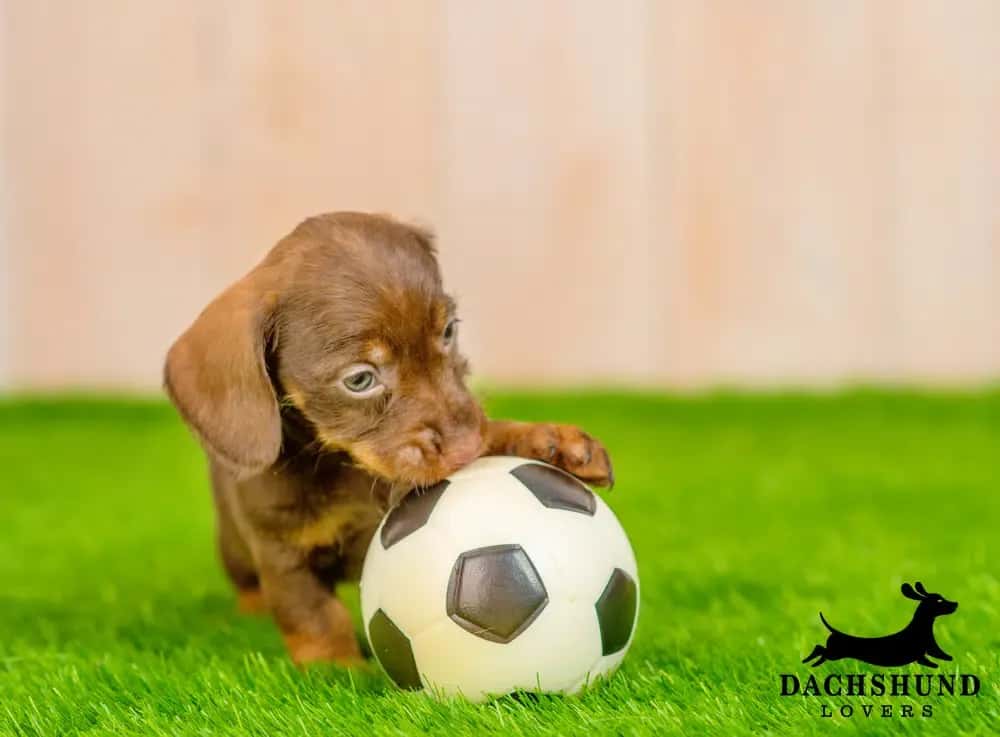
At eight weeks old, dachshund puppies are curious, playful, and eager to learn — but their attention spans are very short. Training at this stage should feel like play, with lots of positive reinforcement and tiny steps forward.
Short Bursts of Play & Learning
- Keep play sessions to 5–10 minutes, then allow naps. Overdoing it can lead to crankiness or accidents.
- Early games like fetch (with a soft toy), gentle tug, or hide-and-seek with treats are great ways to stimulate their mind and body.
Basic Commands Begin Here
- Start with simple cues such as sit, come, and stay.
- Keep training sessions to 2–3 minutes at a time. Anything longer risks losing their focus.
- Use tiny food rewards for motivation, but balance with healthy choices. See our Dachshund Puppy Diet guide for safe puppy training treats.
Social Play
- Puppies learn bite inhibition through play. If your dachshund nips too hard, calmly pause play and redirect to a toy.
- Encourage positive play with family members and supervised interactions with other pets.
Confidence-Building
- Introduce puzzle feeders or interactive toys to keep their minds busy. Dachshunds are problem-solvers at heart, and these games reduce boredom.
- Every successful interaction (responding to their name, sitting for a treat) builds trust and strengthens your bond.
Harvey’s Early Training
When Harvey was a puppy, Caitlin and I found that using play as training worked wonders. A squeaky toy helped him learn recall: he’d chase it, bring it back halfway, and with encouragement (and a small treat), he eventually mastered “come.” Keeping it playful stopped frustration and made training part of our daily bonding.
Quick Play & Training Tips
- Keep training fun — never scold for mistakes at this stage.
- Rotate toys weekly to keep play fresh.
- Always end play sessions on a positive note, with praise or a cuddle
Frequently Asked Questions About Feeding Dachshund Puppies
More from This Series
Explore the rest of our dachshund puppy series:
- About Dachshund Puppies – A complete overview of dachshund puppies.
- Mini Dachshund Puppies – Everything you need to know about raising mini dachshunds.
- Long-Haired Dachshund Puppies – Grooming, personality, and care insights.
- Dapple Dachshund Puppies – A closer look at this beautiful coat pattern.
- Dachshund Puppies Temperament – Understanding how their personality develops.
- How Much to Feed a Dachshund Puppy – Feeding schedules and portion guidance.
- 8 Week Old Dachshund – Milestones, training, and care tips at this critical stage.
- Puppy Names for Dachshunds – Creative ideas for naming your new pup.
- Dachshund Puppy Diet – Nutrition essentials for a healthy start.
- 3 Week Old Dachshund Puppies – Early development and care insight
Authored by
James
James is the founder of Dachshund Lovers and the proud human of Harvey, a mini dapple with a big personality. He writes to empower and connect the dachshund community, blending founder insights with honest, experience-based stories about life with this incredible and special breed. James brings candid, experience-backed opinions to the community and always focused on fewer, better products and ideas that genuinely improve life for dachshunds and their people.
Read moreJames is the founder of Dachshund Lovers and the proud human of Harvey, a mini dapple with a big personality. He writes to empower and connect the dachshund community, blending founder insights with honest, experience-based stories about life with this incredible and special breed. James brings candid, experience-backed opinions to the community and always focused on fewer, better products and ideas that genuinely improve life for dachshunds and their people.
Read moreDisclaimer
This content is for informational purposes only and should not be considered veterinary advice. Always consult with a licensed veterinarian regarding your dog’s health and wellbeing.
There are no comments yet
Leave a comment