Dachshund Eye Problems
Dachshund Eye Problems
Dachshunds can be prone to eye conditions like cataracts and PRA. Learn how to recognise symptoms early and what to ask your vet.
James
Posted on October 31, 2025.
Updated on July 25, 2026.
Table of Contents
- 1.Key Takeaways: Dachshund Eye Problems
- 2.Common Eye Conditions in Dachshunds
- •1. Cataracts
- •2. Progressive Retinal Atrophy (PRA)
- •3. Glaucoma
- •4. Dry Eye (Keratoconjunctivitis Sicca – KCS)
- •5. Cherry Eye
- •6. Corneal Ulcers
- •7. General Irritation & Allergies
- 3.Early Signs & Symptoms Owners Should Watch For
- •Common Red Flags to Watch
- •Why Early Action Matters
- •Harvey’s Reminder
- 4.Treatment & Veterinary Care Options
- •How Vets Diagnose Eye Problems
- •Common Treatment Options
- •Managing Progressive Conditions
- •Harvey’s Lesson
- 5.Prevention & At-Home Care Tips
- •1. Make Eye Checks Routine
- •2. Keep Eyes Clean and Irritant-Free
- •3. Manage the Environment
- •4. Harness Over Collar
- •5. Regular Grooming Around the Eyes
- •6. Nutrition for Eye Health
- •7. Schedule Vet Visits Proactively
- •8. Adjust Care for Seniors
- •9. Never Wait & See
- -More from This Series
- -Disclaimer
Share

When Harvey was about two years old, Caitlin and I noticed something unusual in a photo — one of his eyes looked slightly glassier than the other under the kitchen lights. At first, we brushed it off as a reflection, but a quick check with our vet revealed the early stages of a minor eye issue. For dachshund owners, this is a reminder of how easily eye conditions can creep up unnoticed until they’re more advanced.
Dachshunds are genetically predisposed to several eye problems, ranging from mild irritations to serious conditions that can affect vision or lead to blindness if untreated. According to the American Kennel Club, common issues include cataracts, glaucoma, and progressive retinal atrophy (PRA), many of which have a hereditary link in the breed. The RSPCA NSW also notes that early detection and regular vet checks are key to protecting a dog’s long-term quality of life.
For dachshund lovers, understanding these risks means you can spot symptoms earlier, seek veterinary care quickly, and protect your dog’s eyesight for years to come.
Key Takeaways: Dachshund Eye Problems
Problem | Summary | Key Notes |
|---|---|---|
Cataracts | Clouding of the eye lens causing vision impairment. | Common in older dachshunds; surgery is often required in advanced cases. |
Glaucoma | Increased eye pressure damaging the optic nerve | Painful, urgent condition; requires immediate veterinary care. |
Progressive Retinal Atrophy (PRA) | Genetic degeneration of retinal cells leading to blindness. | Inherited condition; no cure, but early testing and monitoring help manage it. |
Dry Eye (KCS) | Lack of tear production causing irritation and corneal damage. | Treatable with medicated eye drops prescribed by a vet. |
Cherry Eye | Prolapse of the third eyelid gland. | Visible red lump in the corner of the eye; usually corrected surgically. |
Corneal Ulcers | Scratches or injuries to the cornea. | Painful; requires prompt treatment to prevent permanent damage. |
General Irritation | Allergies, dust, or infections causing redness or discharge. | Often treatable, but can also signal a deeper underlying condition. |
Common Eye Conditions in Dachshunds
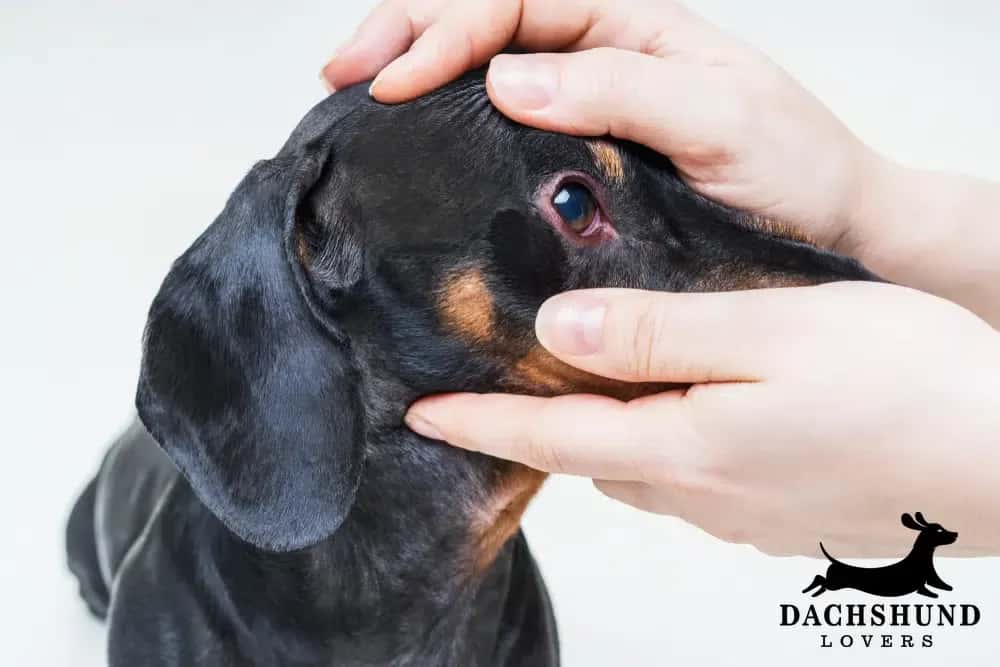
Dachshunds may be small in size, but their eyes tell you so much about their personality — from curiosity on walks to that unmistakable “feed me now” look at dinnertime. Unfortunately, their breed genetics mean they are more prone to certain eye problems than the average dog. Knowing the common conditions and their early signs helps owners catch issues before they become life-changing.
1. Cataracts
Cataracts cause the normally clear lens of the eye to become cloudy, blocking light and reducing vision. In Harvey’s case, when we noticed his glassy eye in photos, our vet explained that while dachshunds often develop cataracts with age, they can also occur earlier due to genetics or conditions like diabetes.
- Symptoms: Cloudy or bluish-grey eye, bumping into furniture, hesitation in low light.
- Treatment: Early monitoring, with surgery as the main option for advanced cases.
- Prevention: Regular vet eye checks, especially in senior dachshunds.
You can learn more about associated risks in our broader guide on Dachshund Health Issues.
2. Progressive Retinal Atrophy (PRA)
PRA is one of the most serious inherited conditions in dachshunds. It causes gradual degeneration of the retina, ultimately leading to blindness. The American College of Veterinary Ophthalmologists notes that early signs often appear at night, when dogs struggle with low-light vision.
- Symptoms: Night blindness, hesitancy on stairs, walking into walls.
- Treatment: No cure, but antioxidant supplements and supportive care may help slow progression.
- Prevention: Responsible breeding practices — ask your breeder if puppies are DNA-tested for PRA.
3. Glaucoma
Glaucoma occurs when pressure builds inside the eye, damaging the optic nerve. It’s not just a threat to vision — it’s extremely painful. This is considered a veterinary emergency.
- Symptoms: Redness, tearing, cloudy cornea, bulging eye, signs of pain (pawing at eye, reluctance to move).
- Treatment: Medications to lower pressure, surgery in severe cases.
- Owner Note: If you ever suspect glaucoma, contact your vet immediately. Waiting even hours can lead to permanent vision loss.
4. Dry Eye (Keratoconjunctivitis Sicca – KCS)
Some dachshunds suffer from reduced tear production, leading to constant irritation and the risk of corneal ulcers.
- Symptoms: Thick discharge, red or inflamed eyes, frequent blinking.
- Treatment: Vet-prescribed medicated drops or ointments, often lifelong.
- Tip: Don’t confuse this with mild seasonal irritation — if discharge looks sticky or green, see a vet.
5. Cherry Eye
Although less common in dachshunds than some breeds, cherry eye can still occur. It’s caused by the prolapse of the gland of the third eyelid.
- Symptoms: A round, red lump in the inner corner of the eye.
- Treatment: Surgery is usually required to reposition the gland.
- Prognosis: Most dachshunds recover well, but untreated cherry eye can cause chronic irritation.
6. Corneal Ulcers
With their low-to-the-ground build, dachshunds are more likely to pick up eye injuries from dust, grass seeds, or play. Scratches on the cornea are painful and can worsen quickly.
- Symptoms: Squinting, pawing at the eye, tearing, or visible cloudiness.
- Treatment: Urgent vet care with medicated drops, sometimes surgery in severe cases.
7. General Irritation & Allergies
Not all eye problems are genetic or severe. Sometimes, redness or discharge is linked to environmental allergies, dust, or infections. Harvey once developed a minor eye irritation after a spring walk through long grass near Lilli Pilli. Luckily, a quick vet visit confirmed it was nothing serious, but it was a reminder of how sensitive dachshund eyes can be.
- Symptoms: Mild redness, clear discharge, pawing at eyes.
- Treatment: Vet exam to rule out deeper issues, antihistamines, or eye drops where appropriate.
By understanding these conditions, dachshund owners can act fast and avoid long-term complications.
Early Signs & Symptoms Owners Should Watch For
When Harvey was still a pup, Caitlin and I learned very quickly that dachshund eyes tell their own story. A glassy reflection, an extra blink, or even a little pawing at the face can signal something’s not quite right. Because dachshunds are predisposed to eye issues, spotting the early signs can make all the difference.
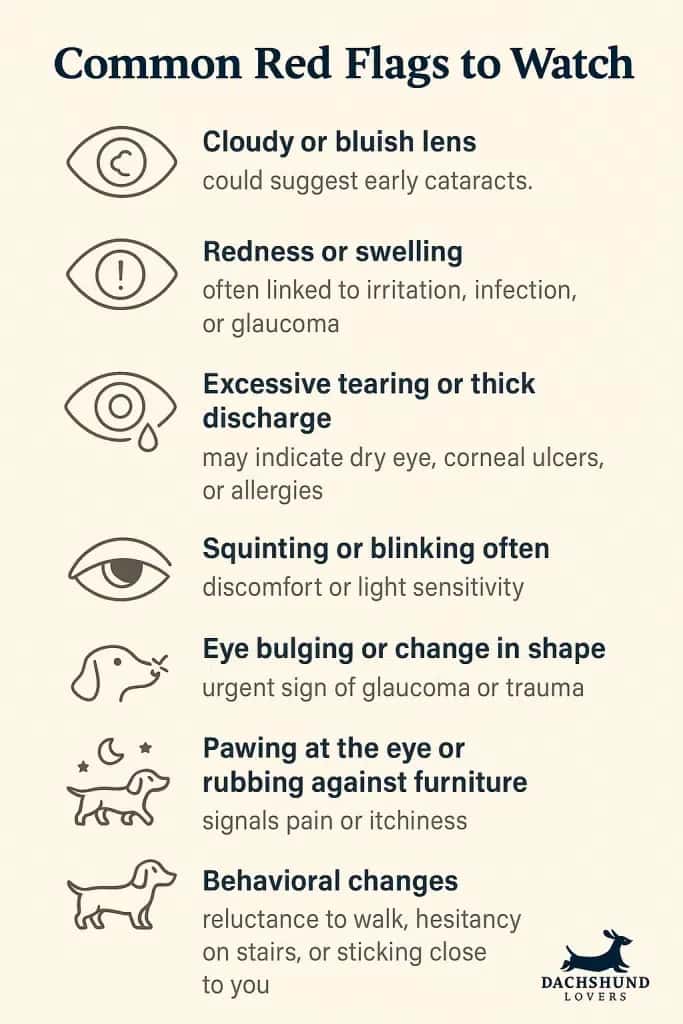
Common Red Flags to Watch
Here’s a simple checklist to guide you:
- Cloudy or bluish lens – could suggest early cataracts.
- Redness or swelling – often linked to irritation, infection, or glaucoma.
- Excessive tearing or thick discharge – may indicate dry eye, corneal ulcers, or allergies.
- Squinting or blinking often – discomfort or light sensitivity.
- Eye bulging or change in shape – urgent sign of glaucoma or trauma.
- Pawing at the eye or rubbing against furniture – signals pain or itchiness.
- Night hesitancy – bumping into objects in low light may suggest PRA.
- Behavioral changes – reluctance to walk, hesitancy on stairs, or sticking close to you.
Why Early Action Matters
According to VCA Animal Hospitals, eye conditions in dogs progress quickly. What starts as a small irritation can become permanent damage in days. That’s why regular at-home observation — combined with yearly vet check-ups — is the best preventive care.
Harvey’s Reminder
In Harvey’s case, that first glassy eye reflection turned out to be nothing more than a minor irritation. But our vet told us that had it been cataracts or early glaucoma, spotting it quickly would have been crucial. The lesson: never wait and see with dachshund eye problems — always check.
Treatment & Veterinary Care Options
If you notice something off with your dachshund’s eyes, the next step is always the vet. Unlike a skin rash or minor limp, eye issues can’t wait — they progress fast and can permanently affect sight.
How Vets Diagnose Eye Problems
Your vet may perform a series of simple but powerful tests, including:
- Ophthalmoscope exam – to check the lens, retina, and optic nerve.
- Fluorescein dye test – highlights scratches or ulcers on the cornea.
- Tonometry – measures eye pressure to detect glaucoma.
- Tear production test – checks for dry eye (KCS).
For suspected inherited conditions like PRA, vets may recommend referral to a veterinary ophthalmologist for advanced imaging or genetic testing.
Common Treatment Options
- Medicated eye drops or ointments – for infections, dry eye, and mild ulcers.
- Oral medications – to manage pressure in glaucoma or reduce inflammation.
- Surgery – cataract removal, cherry eye correction, or corneal grafts for deep ulcers.
- Laser therapy – sometimes used for advanced glaucoma cases.
- Specialist referral – in complex cases, your vet may recommend an eye specialist.
Managing Progressive Conditions
Sadly, some inherited conditions like PRA don’t have a cure. In these cases, treatment focuses on slowing progression and adapting the home environment. For example, keeping furniture in consistent places, using rugs as “pathways,” and maintaining strong verbal cues can help dogs adjust to low vision or blindness.
Harvey’s Lesson
While Harvey hasn’t needed eye surgery, our vet explained that if he ever developed cataracts, the best outcome would depend on early detection and a swift referral to a veterinary ophthalmologist. Knowing what to expect gave Caitlin and me peace of mind that we’d recognise the next step quickly if it ever came up.
Prevention & At-Home Care Tips

One of the best ways to protect your dachshund from serious eye issues is by weaving simple habits into your daily and weekly care routine. While genetics play a large role in conditions like Progressive Retinal Atrophy (PRA) or cataracts, early detection and prevention strategies can make all the difference in your dog’s comfort and long-term vision.
When Harvey was a puppy, Caitlin and I quickly learned that dachshund eyes are more delicate than we thought. Being so close to the ground, they pick up irritants quickly, and even a day of exploring in long grass could leave his eyes looking red or watery. Over time, we developed a care routine that gave us peace of mind and helped us spot changes before they became bigger problems.
1. Make Eye Checks Routine
A simple, gentle check once or twice a week can help you catch issues early.
- What to do:
- Look at the clarity of the lens (should appear bright, not cloudy).
- Check for redness, swelling, or any unusual lumps.
- Notice if discharge is clear (usually harmless) or thick/yellow-green (infection).
- Look at the clarity of the lens (should appear bright, not cloudy).
- Why it matters: The RSPCA NSW advises that eye problems in dogs can deteriorate in a matter of days, so a quick visual inspection could prevent permanent damage.
With Harvey, it became second nature — a quick check while giving him a pat on the head.
2. Keep Eyes Clean and Irritant-Free
Because dachshunds are low to the ground, they’re magnets for dust, pollen, and grass seeds.
- Use a damp cotton pad to gently wipe around the eyes, always wiping away from the eye itself.
- For mild daily discharge, vet-approved wipes can help keep the area clean.
- Avoid household products like baby wipes or shampoos near the eyes, as they can cause irritation.
On spring walks through bush trails near Lilli Pilli, Harvey often picked up bits of pollen that made his eyes watery. A quick clean after the walk prevented things from escalating.
3. Manage the Environment
A few small adjustments at home can help prevent accidents or irritations.
- Keep floors and outdoor areas free of sharp debris like sticks or burrs.
- Avoid allowing your dachshund to roam in long grass, especially in summer when grass seeds can lodge in the eye.
- Indoors, keep furniture edges padded if your dachshund shows signs of declining vision — this reduces injury from accidental bumps.
4. Harness Over Collar
This is an underrated but powerful tip. Using a harness instead of a collar helps reduce strain not only on the neck and trachea but also indirectly on the eyes. Pressure from collars can affect blood flow to the head and exacerbate certain conditions, especially in small breeds. Harvey has always worn a harness, and it’s given us peace of mind on walks.
5. Regular Grooming Around the Eyes
For long-haired dachshunds in particular, grooming plays a big role in eye care.
- Trim excess fur around the eyes to prevent hairs from poking or rubbing against the cornea.
- Keep ears clean too — infections can sometimes cause inflammation that spreads to the eyes.
- If your dachshund is prone to tear staining, gentle wiping prevents skin irritation under the eyes.
T
his grooming habit also doubles as a bonding moment. Harvey loves being brushed, and adding an eye check into the routine makes it easier to spot subtle changes.
6. Nutrition for Eye Health
Diet plays a surprisingly important role in maintaining eye health.
- Antioxidants: Found in foods rich in vitamins A, C, and E, these help slow down retinal degeneration.
- Omega-3 fatty acids: Support eye and brain health, often recommended for dogs with PRA.
- Avoid obesity and diabetes: Both increase the risk of cataracts in dachshunds.
For portioning and tailored diet advice, see our Dachshund Puppy Diet and Overweight Dachshund guides.
7. Schedule Vet Visits Proactively
Even if everything looks fine, regular vet visits are essential.
- Puppies and young adults: Annual health checks including eye exams.
- Seniors (7+ years): Twice-yearly exams, as risks for cataracts and glaucoma increase with age.
- What vets check: Eye pressure (to rule out glaucoma), lens clarity, tear production, and overall eye health.
Our vet always reminds us: dachshund owners shouldn’t wait for visible problems — proactive checks are the key.
8. Adjust Care for Seniors
As dachshunds age, changes in their eyes are more common. Supporting them through vision loss or discomfort is as important as prevention.
- Keep furniture layout consistent — moving things around can confuse a vision-impaired dog.
- Use rugs as “pathways” to guide them between rooms.
- Add extra lighting at night to help with low-light vision.
If your dachshund does begin to lose sight, they can still live a full and happy life with the right support. Harvey hasn’t had these issues yet, but friends of ours with senior doxies say their dogs adjusted well with small changes to the home.
9. Never Wait & See
The most important rule? Don’t ignore small signs. A watery eye today could be an ulcer tomorrow. The PetMD team emphasises that eye conditions progress quickly and can cause irreversible damage within days.
For Harvey, even minor irritations led us to call the vet — and while sometimes it was nothing, the reassurance was always worth it.
Key Takeaway: Prevention isn’t about eliminating every risk — it’s about vigilance. By building small habits into your routine, you’ll catch problems early and give your dachshund the best chance of keeping those soulful eyes healthy for years to come.
Frequently Asked Questions About Dachshund Eye Problems
More from This Series
Explore the full Dachshund Health Content Cluster for in-depth guides on every major health concern:
- Dachshund Eye Problems
- CDA in Dachshunds
- Dachshund Brain Size
- Dachshund Back Surgery
- Dachshund Dragging Back Legs
- Dachshund Neck Size
- Dachshund Back Brace
- Dachshund Back Problems
- Dachshund Skin Issues
- Dachshund Health Issues
- Dachshund Feet
- Dachshund Ribs
- Overweight Dachshund
- Dachshund Teeth
- Dachshund Allergies
- Dachshund Ears
- Dachshund Hip Dysplasia
- Dachshund Constipation
- Dachshund Bad Breath
Authored by
James
James is the founder of Dachshund Lovers and the proud human of Harvey, a mini dapple with a big personality. He writes to empower and connect the dachshund community, blending founder insights with honest, experience-based stories about life with this incredible and special breed. James brings candid, experience-backed opinions to the community and always focused on fewer, better products and ideas that genuinely improve life for dachshunds and their people.
Read moreJames is the founder of Dachshund Lovers and the proud human of Harvey, a mini dapple with a big personality. He writes to empower and connect the dachshund community, blending founder insights with honest, experience-based stories about life with this incredible and special breed. James brings candid, experience-backed opinions to the community and always focused on fewer, better products and ideas that genuinely improve life for dachshunds and their people.
Read moreDisclaimer
This content is for informational purposes only and should not be considered veterinary advice. Always consult with a licensed veterinarian regarding your dog’s health and wellbeing.
There are no comments yet
Leave a comment