About Dachsador
About Dachsador
Big personality, long body, and a Labrador’s grin. The Dachsador is an odd but lovable mix. Learn about care, size, and surprises from experience.

Ellie
Posted on November 10, 2025.
Updated on July 21, 2026.
Table of Contents
- 1.Key Takeaways on About Dachsador
- 2.What is a Dachsador?
- •Dachsador Appearance
- 3.Dachsador Temperament & Personality
- 4.Training & Exercise Needs
- -Exercise Requirements
- 5.Grooming & Care
- 6.Dachsador Health & Lifespan
- 7.Dachsador Price & Adoption
- -Price Overview by Country
- -What Affects the Price of a Dachsador?
- -Adoption: A Cost-Effective Alternative
- -Tips for Buying or Adopting
- -More From This Series:
- -Disclaimer
Share

I first met a Dachsador when we went up to the Hunter Valley for a wine weekend with our family . From a distance, I couldn’t tell if it was a small Labrador or an unusually stocky dachshund until it trotted up, tail wagging, ears slightly too big for its head. The owner laughed, “He’s a Lab-Dachshund mix. We call him a Dachsador.” It was one of those moments where you realize how inventive crossbreeding can be.
The Dachsador is not a recognized breed by organizations like the American Kennel Club (AKC) because it’s a hybrid part dachshund, part Labrador Retriever. But these mixes have been gaining popularity for their unique personality blend: the bold, sometimes stubborn charm of a dachshund combined with the Labrador’s easy-going, family-friendly nature.
According to PetMD, hybrid dogs like the Dachsador can inherit traits from either parent, meaning no two mixes look or behave exactly alike. That’s part of the appeal — they’re dogs with character, often wrapped up in a medium-sized package that’s easier to manage than a full-sized Lab but sturdier than a standard dachshund.
This guide pulls together everything you need to know before welcoming a Dachsador into your life: from appearance and temperament to grooming needs, health considerations, and price. Throughout, I’ll link to related resources like our Dachsador Puppies Guide , so you can explore each topic in depth.
Key Takeaways on About Dachsador
Topic | Summary |
|---|---|
Breed Type | A cross between a dachshund and a Labrador Retriever, combining the playfulness of a Lab with the bold personality of a doxie. |
Size | Typically medium-sized (25–40 lbs), though size varies depending on which parent’s genes dominate. |
Temperament | Friendly, loyal, and outgoing — with a mix of the Lab’s sociability and the dachshund’s stubborn streak. |
Exercise Needs | Moderate to high. Daily walks, play sessions, and mental stimulation are essential to prevent boredom. |
Grooming | Low to moderate maintenance, depending on coat type (short or slightly longer hair). |
Health Concerns | May inherit back issues from the dachshund side (IVDD risk) and hip dysplasia tendencies from Labs (AKC guide on Labrador health). |
Lifespan | 12–14 years with proper care and a healthy lifestyle. |
Ideal For | Active families, singles, or couples who want a loyal, medium-sized companion with a fun personality. |
Price Range | $500–$1,200 depending on breeder reputation, location, and lineage. Adoption is often cheaper. |
The sections ahead will break down these key points from appearance and grooming to health and costs — so you know exactly what to expect when living with a Dachsador.
What is a Dachsador?

The Dachsador is a mixed breed created by crossing the dachshund — famous for its long body and fearless personality — with the Labrador Retriever, one of the most popular family dogs in the world. Unlike purebred dogs, the Dachsador doesn’t have a standardized breed history or official recognition by organizations like the American Kennel Club (AKC). However, its parent breeds have long-standing reputations, which can give us insight into what to expect from this hybrid.
Parent Breed Overview:
- Dachshund: Originally bred in Germany for hunting badgers, the dachshund is known for its bold, independent nature and sharp nose. According to the AKC dachshund profile, these dogs are smart, playful, and loyal — but they can be stubborn if training isn’t consistent.
- Labrador Retriever: The Labrador is one of the most popular dog breeds in the world, consistently topping lists for its friendly, trainable temperament. Labs are known for being gentle family companions and highly intelligent, making them a favorite for therapy work, search-and-rescue, and guide dog programs (AKC Labrador profile).
Why Cross These Two Breeds?
The appeal of the Dachsador lies in its blend of personalities. Owners often report getting a dog that has the energy and friendliness of a Lab but with the quirky, sometimes comical behavior of a dachshund. It’s also smaller than a full-sized Labrador, making it easier to manage in apartments or homes with limited space.
However, because this is a hybrid, appearances and temperaments can vary widely, even within the same litter. Some puppies may take after the dachshund, with shorter legs and a compact frame, while others might resemble a scaled-down Labrador. This unpredictability is something to consider before adopting a Dachsador.
Quick Note on Popularity:
Though still relatively rare, Dachsadors are popping up more often with families who want a dog that’s both affectionate and playful. Their adaptability and manageable size have made them especially appealing to urban pet owners looking for a dog that can thrive in smaller spaces while still enjoying an active lifestyle.
Dachsador Appearance
Describing a Dachsador’s appearance isn’t straightforward because of the genetic mix at play. No breed standard exists, so their looks can range from “mini Lab” to “slightly stretched-out retriever.” However, there are some common traits to watch for:
Size and Build:
Most Dachsadors are medium-sized, weighing between 25 and 40 pounds and standing 12 to 18 inches tall at the shoulder. This range depends on the size of the dachshund parent (standard vs. miniature) and the Labrador used in breeding. Unlike the purebred dachshund, which has a pronounced elongated back, the Dachsador often has a slightly longer torso but with sturdier legs, reducing some of the spinal strain common in purebred doxies.
Coat Type:
Their coat can be short and sleek like a Lab’s, or slightly coarser with some feathering, depending on which parent’s genes dominate. Most have double coats, which means moderate shedding year-round and heavier seasonal sheds. If grooming is a concern, this is something to consider — brushing once or twice a week is typically needed to manage loose hair.
Colors and Patterns:
Common coat colors include black, chocolate, yellow, or cream, often in solid patterns, though some Dachsadors may inherit the dachshund’s signature dapple or brindle markings. This variety adds to their individuality — no two Dachsadors look exactly the same.
Facial Features:
They often have a Labrador-style head with expressive, almond-shaped eyes and medium-length floppy ears reminiscent of the dachshund. The muzzle can vary from slightly elongated (like a Lab) to shorter and more compact (like a doxie).
Tail and Paws:
Dachsadors tend to have a medium-length tail that tapers to a point, often wagging enthusiastically like their Lab parent. Paws are typically strong and slightly larger than what you’d expect for their size — a nod to the retriever side.
Are Dachsadors Hypoallergenic?
No. Like both parent breeds, Dachsadors are not hypoallergenic. If you’re prone to allergies, regular grooming and vacuuming will be necessary to reduce dander.
Next Up: We’ll dive into Dachsador Temperament & Personality, exploring what it’s like to live with this mix and how their parent breeds shape their behavior.
Dachsador Temperament & Personality

The Dachsador’s personality is a fascinating mix of the dachshund’s spirited independence and the Labrador’s easy-going nature. If you’ve spent time around either breed, you’ll recognize familiar traits — the Lab’s eagerness to please and the dachshund’s tendency to follow its nose into whatever trouble it can find.
Friendly but Independent:
Most Dachsadors are social and affectionate, often bonding closely with their family. They enjoy being included in daily activities, whether it’s lounging on the couch or tagging along for weekend adventures. That said, the dachshund genes can bring a stubborn streak. You might notice your Dachsador pausing mid-walk to sniff out every blade of grass or taking their time to come when called — not because they don’t love you, but because their hunting instincts are strong.
Good with Families and Kids:
Labradors are famously great family dogs, and many Dachsadors inherit this patient, gentle nature. However, dachshunds can be a little less tolerant of rough handling, so early socialization and teaching children how to interact respectfully are essential. According to PetMD’s family dog guide, mixed breeds like the Dachsador often excel as family pets when they receive consistent training and mental stimulation.
Watchful and Loyal:
The dachshund side often adds a keen watchdog instinct. While they’re rarely aggressive, Dachsadors tend to alert their owners to anything out of the ordinary — a useful trait if you appreciate a dog with a little protective edge.
Energy Levels:
This is not a couch-potato mix. Most Dachsadors are moderately active and thrive in households where they get both physical and mental exercise. Without enough stimulation, they can get bored and resort to digging or chewing.
Temperament Quick Snapshot:
- Loyal and affectionate: They form strong bonds with their owners.
- Sociable: Enjoy the company of other dogs (especially if socialized early).
- Alert but not aggressive: They make excellent family companions but may bark at unfamiliar noises.
Playful: A natural entertainer, especially around kids.
Training & Exercise Needs
Training a Dachsador requires patience and a positive approach. Both parent breeds are intelligent, but their motivations differ: Labradors are people-pleasers, while dachshunds have a more independent streak.
Start Early:
Early training is essential to establish good behavior habits. Using positive reinforcement — treats, praise, or play — works best for this hybrid. According to the AKC’s training guidelines, short, consistent sessions (10–15 minutes) are more effective than long, repetitive drills.
Socialization:
Introduce your Dachsador to a variety of people, dogs, and environments from a young age. This helps reduce shyness and prevents unwanted behaviors like excessive barking or guarding tendencies. Puppy classes are a great way to build confidence and basic manners.
Common Training Challenges:
- Stubborn streak: This can come from the dachshund parent, requiring a bit of extra patience.
- Food motivation: Fortunately, both breeds love food, which makes treat-based training very effective — just watch the calorie count to avoid weight gain.
- Recall: Off-leash reliability can be tricky due to their scent-driven nature.
Exercise Requirements
The Dachsador thrives on activity. While they don’t need as much exercise as a full-sized Labrador, they require more than the average dachshund.
Daily Walks:
Plan for at least 45–60 minutes of walking per day, broken into two sessions if possible. Walks not only meet their physical needs but also offer mental stimulation as they explore their environment.
Playtime & Mental Stimulation:
Games like fetch, tug-of-war, or puzzle toys can help keep them engaged. Because dachshunds were bred to dig, many Dachsadors enjoy activities like supervised digging zones or interactive toys that mimic hunting.
Avoid Overexertion:
Due to potential back issues (inherited from the dachshund side), avoid strenuous activities like jumping off high furniture or running on hard surfaces for extended periods. PetMD’s exercise recommendations stress the importance of controlled exercise, especially for dogs with mixed structural traits.
Apartment vs. Yard:
Dachsadors can adapt to apartment living if they receive enough outdoor time, but they truly thrive in homes with a secure yard where they can play freely.
James’ Note:
When testing exercise routines with Harvey (our mini dapple dachshund), I learned that short bursts of play combined with sniff walks keep him happy. A Dachsador, with its extra Lab energy, will need a little more — think of it as a balance between brain games and physical activity.
Grooming & Care
The Dachsador’s grooming needs depend largely on which parent breed it takes after. While Labs have short, dense double coats that shed moderately year-round, dachshunds can have smooth, long-haired, or wire-haired coats — each with its own maintenance requirements. Most Dachsadors have short to medium-length coats, but some may inherit slightly longer hair.
Brushing & Shedding:
Weekly brushing is often enough to keep your Dachsador’s coat healthy and reduce shedding. During seasonal transitions (spring and autumn), shedding may increase, requiring more frequent brushing. Using a de-shedding tool, like the FURminator, can help remove loose undercoat fur efficiently.
Bathing:
Unlike some breeds, Dachsadors don’t need frequent baths — once every 6–8 weeks is usually enough, unless they get particularly muddy or smelly. Overbathing can strip the coat of natural oils, leading to dry skin.
Ears & Eyes:
With those floppy ears (inherited from both parents), regular ear cleaning is important to prevent infections. A simple routine — checking and wiping ears weekly with a vet-approved cleaner — can reduce the risk. Also, keep an eye on tear staining or discharge, especially if your Dachsador has lighter-colored fur.
Nail Trimming:
Like most dogs, Dachsadors need their nails trimmed every 3–4 weeks. If you can hear nails clicking on the floor, it’s time for a trim.
Dental Care:
Dental health is crucial for smaller or mixed breeds prone to plaque buildup. Brushing your Dachsador’s teeth 2–3 times per week with a dog-safe toothpaste can prevent tartar and gum issues. The AKC dental guide highlights that good oral hygiene can also extend a dog’s lifespan.
Exercise & Weight Management:
Part of “grooming” your dog includes keeping their body in good condition. Labradors are prone to weight gain, and dachshunds’ long backs mean extra weight can lead to spinal stress. Monitor your Dachsador’s weight closely, and combine exercise with a balanced diet (ask your vet about portion sizes and the best food for mixed breeds).
Dachsador Health & Lifespan
As with all hybrid breeds, the Dachsador can inherit health concerns from either parent breed. While mixed-breed dogs sometimes benefit from “hybrid vigor” — meaning fewer genetic health issues due to diverse gene pools — there are certain conditions worth knowing about.
Common Health Concerns:
- Intervertebral Disc Disease (IVDD): This spinal issue, common in dachshunds, can also appear in Dachsadors, particularly those with longer backs. Avoid excessive jumping and support their spine when lifting. VetStreet emphasizes that maintaining a healthy weight is one of the best ways to prevent IVDD.
- Hip Dysplasia: This condition is more common in Labradors and can affect Dachsadors, especially those on the larger side. Keeping your dog at a healthy weight and providing joint-supporting supplements (with vet guidance) can help.
- Obesity: A mix of two food-loving breeds means weight gain is a real risk. According to PetMD’s guide to canine obesity, overweight dogs face higher risks of diabetes, joint problems, and heart disease.
- Ear Infections: Floppy ears can trap moisture and bacteria, making ear care an essential routine.
- Allergies & Skin Issues: Some Dachsadors inherit sensitive skin or allergies, which can be managed with proper grooming, diet adjustments, and vet-prescribed treatments.
Routine Vet Care:
Annual vet checkups (or twice-yearly for older dogs) are non-negotiable. Your vet may recommend hip evaluations or spinal X-rays if your Dachsador shows signs of discomfort.
Lifespan:
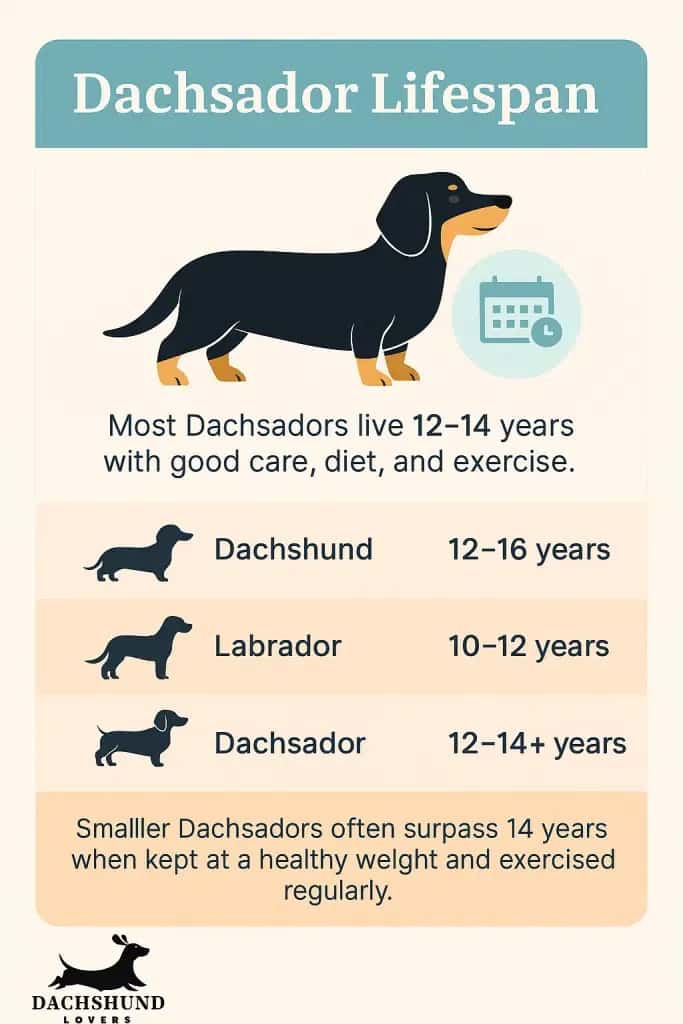
Most Dachsadors live between 12–14 years with good care, diet, and exercise. Dachshunds can live up to 16 years, while Labradors average around 10–12 years. A healthy Dachsador, particularly one on the smaller side, can often surpass the 14-year mark.
Diet & Nutrition Tips:
- Use high-quality dog food with balanced protein, fat, and carbs.
- Avoid overfeeding — stick to 2 measured meals per day rather than free feeding.
- Supplement with omega-3 fatty acids (with vet approval) to support skin, coat, and joint health.
James’ Note:
When we trial products for Harvey, I always look for gear that’s lightweight and ergonomic — especially ramps and harnesses that don’t strain his back. For a Dachsador, I’d double down on supportive harnesses and avoid collars that put unnecessary pressure on the neck.
Dachsador Price & Adoption
The Dachsador is still a relatively uncommon hybrid, which means pricing can fluctuate based on demand and the quality of the breeding program. Because this mix combines two popular parent breeds — the Labrador Retriever and the dachshund — breeders often market them as “designer dogs,” which can push up the price.
Price Overview by Country
United States (US):
- Average Price Range: $700 – $1,200 USD
- High-End Prices: Some breeders in metropolitan areas (e.g., Los Angeles or New York) charge up to $1,500 – $2,000 USD for puppies with rare coat patterns (e.g., dapple, brindle, or cream).
- Adoption Fees: Shelters and rescues typically charge between $150 – $350 USD, often including vaccinations, microchipping, and spay/neuter.
Australia (AUS):
- Average Price Range: $900 – $1,800 AUD
- High-End Prices: In cities like Sydney or Melbourne, expect prices of $2,000 AUD or more, particularly if the Lab parent has working dog lineage or the puppies are marketed as “mini Labs.”
- Adoption Fees: Rescues such as Dachshund Rescue Australia or RSPCA branches typically charge $300 – $500 AUD, including basic vet care.
United Kingdom (UK):
- Average Price Range: £600 – £1,200 GBP
- High-End Prices: Designer breeders in London or Manchester may list Dachsador puppies for £1,500 GBP or more, particularly for rare coat colors or if the Lab parent is Kennel Club registered.
- Adoption Fees: Shelters like Dogs Trust or Blue Cross often have mixed-breed dogs available for £150 – £350 GBP, which usually includes microchipping and initial vaccinations.
What Affects the Price of a Dachsador?
- Breeder Reputation & Experience:
Responsible breeders who health-test both parents (e.g., hip evaluations for Labs, spine checks for dachshunds) will charge more. Look for breeders who are transparent about their dogs’ health and living conditions. - Coat Colors and Markings:
Unique or rare coat colors like chocolate, dapple, or cream can increase the price due to their popularity. - Demand in Urban vs. Regional Areas:
Urban centers (New York, Sydney, London) often have higher demand, while regional breeders may charge less due to lower operating costs. - Parent Pedigree:
If the Labrador parent is from a show or working line, the breeder may price puppies higher to reflect lineage.
Adoption: A Cost-Effective Alternative
While buying from a breeder may seem appealing for predictability (e.g., knowing the parent breeds), adoption is often the more ethical and cost-effective choice. Many Dachsadors or similar Lab-dachshund mixes end up in rescues due to their energy levels or the need for consistent training — not because they’re “problem dogs.”
Where to Look:
- US: Petfinder, Adopt-A-Pet, and regional humane societies.
- AUS: PetRescue, Dachshund Rescue Australia, and RSPCA shelters.
- UK: Dogs Trust, Blue Cross, and local rescue charities.
Adoption Advantages:
- Lower costs (usually includes desexing, microchipping, and vaccines).
- A chance to give a home to a dog in need.
- Adult dogs from rescues often have some basic training already.
Tips for Buying or Adopting
- Ask for Health Records: Whether from a breeder or a rescue, ensure you get vaccination history, vet checks, and details of any potential hereditary issues.
- Meet Both Parents (Breeders): This will help you gauge temperament and potential health risks.
- Beware of “Puppy Farms”: Avoid breeders unwilling to let you visit or video-call to see the puppy’s environment.
- Factor in Ongoing Costs: Beyond the purchase price, expect annual costs of $1,000–$1,500 USD, $1,200–$1,800 AUD, or £900–£1,300 GBP for food, vet care, and accessories.
- Consider Pet Insurance: Due to potential IVDD or hip dysplasia, monthly insurance can save significant costs later.
FAQs About the Dachsador (Dachshund Lab Mix)
More From This Series:
If you’re considering a Dachsador, you might want to dive deeper into specific aspects of this unique mix. We’ve created dedicated guides that break down the details:
- Dachsador Puppies: Buying, Raising & Care Tips – Everything you need to know about finding a healthy puppy, early socialization, and training.
- Dachsador Lifespan & Health: How Long Do They Live? – A closer look at common health issues, preventative care, and what affects their longevity.
- Dachsador Size & Growth: Full Grown Dachsador Guide – Helpful if you’re wondering how big your mix might get and how to manage their growth stages.
- Dachsador Price & Adoption Guide – An in-depth look at pricing trends across the US, Australia, and UK, plus tips for responsible buying and adoption.
Each guide is written with our brand’s practical, design-first approach — informed by real experiences with dachshunds and insights from trusted sources like AKC and PetMD.
Authored by
Ellie
Ellie is a lifelong dachshund lover and the proud human of Maple, a long-haired brown doxie with a regal side-eye. While not a vet, Ellie brings honest, researched, and experience-based insights into every article she writes for the Dachshund Lovers community.
Read moreEllie is a lifelong dachshund lover and the proud human of Maple, a long-haired brown doxie with a regal side-eye. While not a vet, Ellie brings honest, researched, and experience-based insights into every article she writes for the Dachshund Lovers community.
Read moreDisclaimer
This article was written by Ellie, a dachshund owner and enthusiast — not a veterinarian. Please consult your vet for personalized guidance.
There are no comments yet
Leave a comment